

13 Signs You Are In a Relationship With a Narcissist
A narcissistic relationship is built on control, emotional manipulation, and the narcissist’s need for constant validation. The partner with narcissistic traits uses shame, denial, and a false persona to maintain dominance while systematically eroding your sense of self. Unlike healthy relationships where both partners take responsibility for their emotional impact, narcissistic relationships trap you in the Worst Day Cycle™—a trauma pattern where you’re constantly triggered, blamed, and emotionally drained. Understanding these 13 signs isn’t about labeling your partner; it’s about recognizing whether you’re in a dynamic that serves your emotional health and authentic self.
TL;DR: Narcissistic relationships center on the other person’s needs, involve constant criticism and blame-shifting, create shame and self-doubt, demand you manage their emotions, and leave you feeling invisible. The Worst Day Cycle™ repeats because their trauma-driven survival persona can’t access the Authentic Self Cycle™ without intervention.
Table of Contents
- What Is Narcissism? The Survival Persona at Work
- 7 Signs in Family Relationships
- 6 Signs in Romantic Relationships
- 5 Signs in Friendships
- 4 Signs in Work Relationships
- 3 Signs Affecting Your Body and Health
- The Worst Day Cycle™: How Narcissism Perpetuates
- The Emotional Authenticity Method™: Breaking Free
- The Authentic Self Cycle™: Reclaiming Your Worth
- People Also Ask
- The Bottom Line
- Recommended Reading
- Next Steps
What Is Narcissism? The Survival Persona at Work
If you want to go deeper on this, I walk through the full framework in this video: Narcissist Women: Recognizing the Signs.
Narcissism isn’t vanity. It’s a trauma response—a survival persona built to protect a wounded child from unbearable shame.
Here’s what happened: In childhood, the narcissist experienced relentless criticism, conditional love, or emotional neglect. Their brain created a chemical addiction to the stress response (cortisol, adrenaline, dopamine misfires). To survive the pain, they abandoned their authentic self and built a false, inflated identity—what we call the falsely empowered survival persona. This persona says: “I’m better than everyone. I don’t need anyone. I’m special. I’m right, and you’re wrong.”
The problem? This survival persona can’t experience genuine intimacy, accountability, or emotional regulation. It can only control, dominate, and blame. And because the brain is wired to repeat what it knows, the narcissist unconsciously recreates the shame patterns from their childhood—often with you as the target.
That’s you in a narcissistic relationship: constantly trying to understand behavior that operates from a completely different operating system. Your logic doesn’t work because they’re not governed by responsibility or empathy. They’re governed by the need to maintain the survival persona at all costs.
7 Signs in Family Relationships
Sign 1: Your Parent (or Sibling) Controls Through Conditional Love
A narcissistic parent’s love has strings attached. You earned approval by meeting their expectations—good grades, the right career, the right partner, the right appearance. When you didn’t comply, love was withdrawn.
This wasn’t parenting. This was shame-based control.
Today, you still feel the hit in your stomach when they call. You still rehearse conversations. You still feel that familiar panic: “What did I do wrong?” Sound familiar? That’s the Worst Day Cycle™ operating on repeat. Your nervous system learned that love = performance. Safety = compliance.
What it looks like: “I’m so proud of you… but have you considered…” | “I’ve done so much for you…” | “After all I sacrificed…” | Sudden withdrawal of affection when you set a boundary.
Sign 2: You Feel Responsible for Their Emotions
A narcissistic family member makes you their emotional manager. They dump their frustration, anxiety, or shame on you—then expect you to fix it, validate it, or absorb it.
You learned to read their moods like a sonar system. You know exactly which topic will set them off. You monitor their emotional weather and adjust your presence accordingly. That’s you performing emotional labor that was never your job.
What it looks like: They vent endlessly; you listen for hours. They blame you for their bad mood. They say, “If you loved me, you’d understand my pain.” They guilt you: “No one cares about me like you do.”
Sign 3: There’s a “Golden Child” and a “Scapegoat”
In narcissistic families, roles are assigned. One sibling is perfect (the golden child who mirrors the narcissist’s survival persona). Another is blamed for everything (the scapegoat who carries the family’s shame).
This splitting keeps both children trapped in the Worst Day Cycle™. The golden child performs endlessly. The scapegoat internalizes blame. Neither develops their authentic self.
What it looks like: “Your sister is so responsible. Why can’t you be more like her?” | One sibling gets endless praise; another is always criticized for the same behavior.

Sign 4: Your Boundaries Are Dismissed or Punished
When you say “no” to a narcissistic family member, they respond with rage, guilt, silent treatment, or legal threats. Setting a boundary feels dangerous because it historically has been.
Healthy parents respect boundaries. Narcissistic ones see boundaries as betrayal. That’s the falsely empowered survival persona at work: “How dare you say no to me. I gave you everything.”
What it looks like: You say you can’t visit this weekend. They explode or guilt you for days. You try to keep a secret. They say, “We don’t keep secrets in this family.” You refuse to give them your partner’s private information. They cut you off.
Sign 5: They Gaslight About Family History
Narcissistic parents rewrite history. They deny they said hurtful things. They claim they were “only joking” when they criticized you. They insist family dinners were happy when you felt terrified.
This is denial in action—the survival persona’s last defense. Admitting the truth would require confronting the shame they’ve spent a lifetime avoiding. So instead, they rewrite it.
Sound familiar? You start doubting your own memory. Maybe you are too sensitive. Maybe it wasn’t that bad. This is your nervous system being conditioned into the Worst Day Cycle™.
Sign 6: They Compete With You or Your Siblings
A narcissistic parent doesn’t just want to be your parent. They want to be your peer, your rival, your superior. They brag about their achievements and diminish yours. They tell the same story from their childhood every time you share something important.
This is the falsely empowered persona’s need to maintain dominance. They can’t celebrate you without feeling diminished. Your success feels like their failure.
What it looks like: You get promoted. They immediately tell you about a better promotion they had. You share something vulnerable. They counter with a story about how they handled it better. You achieve something. They remind you of their bigger achievement.
Sign 7: You Can’t Relax Around Them
Your nervous system is always on high alert. You monitor every word. You calculate how they’ll react. You feel a deep dread before visits. You exhaust yourself trying to prevent their anger.
Healthy family relationships are a refuge. Narcissistic ones are a minefield. Your body knows the difference.
6 Signs in Romantic Relationships
Sign 8: They Love-Bombed You, Then Devalued You
In the beginning, they were perfect. They texted constantly. They showered you with compliments. They talked about your future together. They said, “I’ve never met anyone like you.”
Then something shifted. The attention stopped. The criticism started. They pull back emotionally but stay physically. They test your loyalty constantly. That’s you in the classic narcissistic cycle: idealization, then devaluation, then discarding (and sometimes re-idealization).
Here’s why: The narcissist doesn’t see you as a person. They see you as an extension of themselves—a mirror to reflect back their survival persona. When reality breaks the fantasy (you set a boundary, you have a bad day, you’re human), the mirror breaks. And they hate the person who broke it.
What it looks like: “I love you so much” becomes “You’re so needy.” | “You’re my soulmate” becomes “I’m not sure I love you anymore.” | They’re either all in or all out. No middle ground.
Sign 9: Everything Is Your Fault
When something goes wrong, it’s because of you. You didn’t support them enough. You were too needy. You triggered them. You made them cheat. You made them rage.
A narcissist literally cannot take responsibility for their own emotional impact. Their survival persona cannot survive the shame of “I was wrong.” So they externalize it all onto you.
This is blame-shifting—a trauma response that keeps their survival persona intact. And the more you protest (“That’s not fair!”), the more evidence they use against you: “See? You always make everything about yourself.”
Sound familiar? You’ve stopped defending yourself because nothing you say matters. The argument isn’t about logic. It’s about them maintaining control of the shame narrative.
Sign 10: They Isolate You From Support
They create drama with your friends. They criticize your family. They convince you that people don’t understand your relationship. They need you to choose: them or everyone else.
This isn’t love. This is control. Isolation is how abuse works. When you have no outside perspective, you lose your reality check. You become entirely dependent on their version of truth.
What it looks like: “Your friends are toxic.” | “Your family never liked me.” | “Everyone’s jealous of us.” | “You don’t need anyone but me.” | They “accidentally” make plans that conflict with your commitments to others.
Sign 11: They Use Your Vulnerabilities Against You
You trusted them with your deepest fears and insecurities. Then, in a fight, they weaponize those exact vulnerabilities. “You’re just like your mother.” “You’ll always be insecure.” “No wonder your ex left you.”
They know exactly where it hurts because you showed them. And they use that knowledge as a weapon. This isn’t a lapse in judgment. This is calculated cruelty dressed up as passion.
What it looks like: You share that you struggle with self-worth. Later, they say, “You have no reason to feel confident.” | You mention childhood trauma. They say, “That explains why you’re so broken.” | You confess a fear. They use it as a criticism in every argument.
Sign 12: They Cheat, Lie, or Create Drama—Then Blame You for Your Reaction
They cheat. You’re devastated. Instead of taking responsibility, they attack you: “Why are you so insecure? Why do you need constant attention? You’re controlling.” They’ve flipped the entire dynamic. Now you’re the problem, and you’re apologizing for being hurt.
This is sophisticated emotional manipulation. The original betrayal gets buried under a new narrative: “If you weren’t so needy, I wouldn’t have needed to…” It’s the falsely empowered survival persona in full denial.
What it looks like: Lying about small things (where they were, who they were with). Creating emotional crises that distract from their betrayals. Gaslighting you about what happened. Making you question whether you even have a right to be angry.
Sign 13: The Relationship Feels Like Walking on Eggshells
You’re constantly hypervigilant. You monitor their mood. You watch what you say. You’ve learned which topics trigger them. You adjust your behavior to prevent their anger. You feel relief when they’re happy because it means the house is safe.
This isn’t love. This is fear-based survival. Your nervous system is stuck in the Worst Day Cycle™, and your body knows: this relationship is a threat to your emotional safety.
That’s you in a narcissistic relationship: performing emotional gymnastics to keep another person’s fragile ego intact while your authentic self slowly disappears.
5 Signs in Friendships
Here’s the video where I unpack this in full: Dealing With the Isolation of a Narcissistic Relationship.
Narcissistic Friendships: The Friendship Is One-Sided
You’re the listener. You’re the supporter. You’re the one who shows up. They’re the one who’s always busy, always stressed, always the protagonist in their own story.
When you share, they redirect to themselves. When you need support, they’re unavailable or they make it about their pain. That’s the falsely empowered survival persona: “My story is more important. My pain is bigger. Your needs aren’t as valid as mine.”
What it looks like: You cry to them. They say, “That reminds me of when I…” | You ask for advice. They tell you about a similar situation where they were the victim. | You’re going through a hard time. They’re too busy with their own life to check in.
They’re Nice to You in Public, Mean in Private
In a group, they’re charming and friendly. Alone with you, they’re critical and cold. This split between public persona and private behavior is textbook narcissism.
They can’t afford for others to see the real them. So they perform for the audience. But with you, the facade drops because they believe you’re trapped (and you might be).
What it looks like: They laugh at their own jokes to the group. Alone, they tell you that you don’t have a sense of humor. They’re affectionate in front of others. Alone, they’re dismissive. They post loving messages about you on social media while treating you poorly in private.
They Make Everything a Competition
You get a new job. They tell you about their better job. You buy a house. They describe their bigger house. You lose weight. They lost more weight. There’s no celebrating you. There’s only the chance to prove they’re superior.
They Demand Loyalty While Betraying Your Trust
They expect you to keep their secrets, yet they freely share yours. They demand your allegiance, but they’ll throw you under the bus if it benefits them. Sound familiar? That’s because in their mind, they’re special. They’re above the rules. The loyalty code applies to you, not to them.
You Dread Seeing Them, But You Can’t Leave
You know the friendship is draining. But you’re afraid to leave. Maybe you’ve invested too much time. Maybe they’ve convinced you no one else will be your friend. Maybe you feel responsible for their emotional well-being.
This is the shame-based control pattern from the Worst Day Cycle™ applied to friendship. You’re staying because leaving feels like abandonment, even though staying is slowly destroying you.
4 Signs in Work Relationships
Your Boss or Colleague Takes Credit for Your Work
You present an idea. They present it as their own. You solve a problem. They take the credit. You feel invisible and angry, but you say nothing because you fear retaliation.
A narcissistic leader cannot celebrate others’ wins because it threatens their survival persona. So they appropriate the win and make it theirs.
They’re Charming to Clients, Brutal to Staff
With clients and upper management, they’re golden. With you and other staff, they’re demanding, critical, and disrespectful. The staff sees the real personality. The clients see the performance.
What it looks like: They laugh and schmooze in meetings, then snap at you for a minor typo. They’re generous with client praise, stingy with staff appreciation. They remember clients’ birthdays but not their staff’s names.
They Play Favorites and Create Internal Drama
Some employees are in the inner circle (the golden children). Others are blamed for everything (the scapegoats). They fuel gossip and competition to keep people divided.
Divided teams can’t unite against the leader. That’s the whole point. This is control through chaos.
You Feel Anxious Before Work and Drained After
Your nervous system is hypervigilant. You don’t know if today will be a good day or a day of criticism and shame. You come home exhausted because you’ve spent eight hours managing another person’s emotions and controlling your own.
3 Signs Affecting Your Body and Health
Your Body Is Stuck in Fight-or-Flight
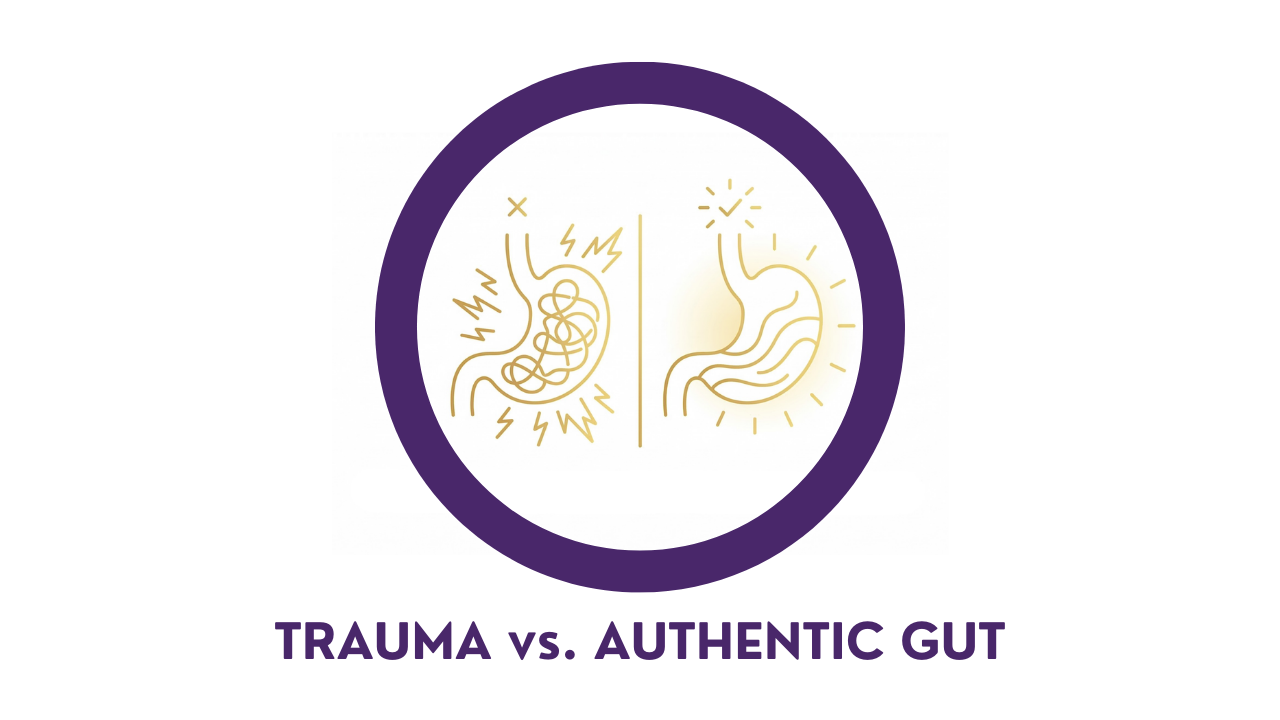
When you’re in a prolonged relationship with a narcissist, your nervous system learns to expect threat. Your cortisol levels stay elevated. You feel tired all the time, but you can’t sleep. Your stomach is always in knots.
This is the Worst Day Cycle™ written in your biology. Trauma → Fear → Shame → Denial cycles over and over, and your nervous system gets exhausted from the repetition.
What it looks like: Chronic tension headaches. Digestive issues. Insomnia. Racing thoughts at night. A persistent sense of dread. Your doctor finds nothing physically wrong, but you feel terrible.
You’ve Lost Touch With Your Body’s Signals
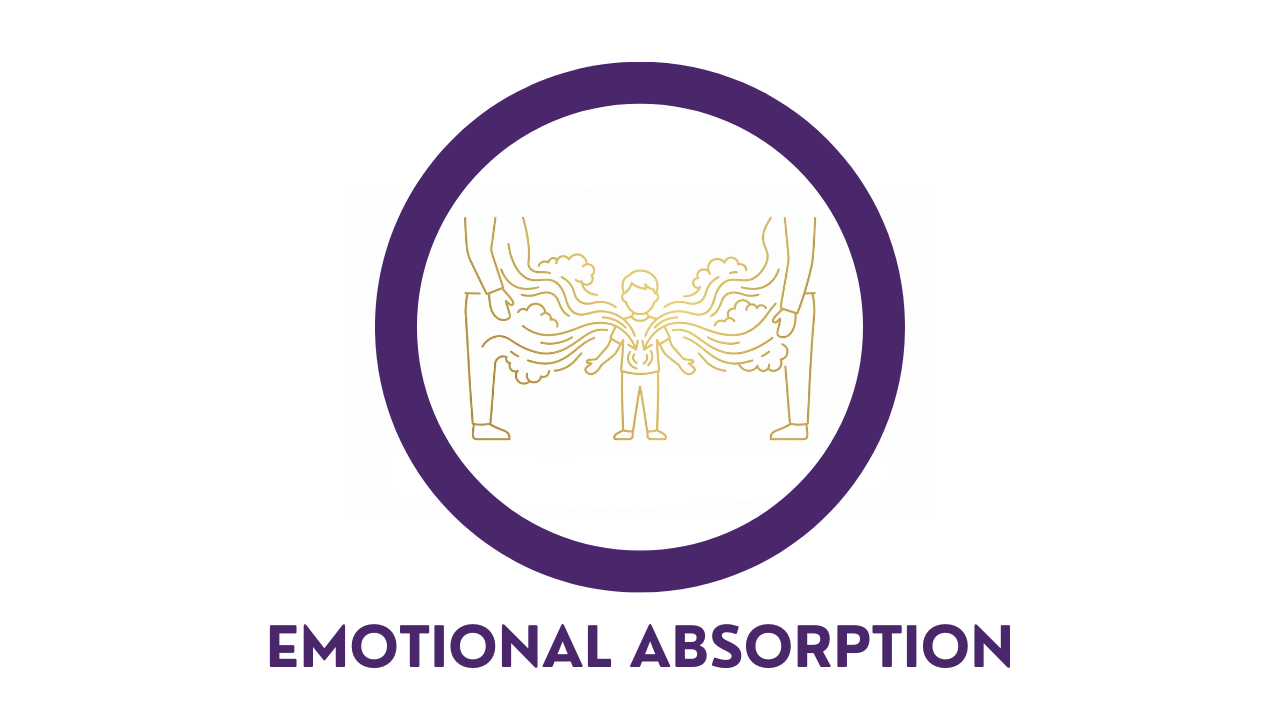
You used to know when you were hungry, tired, or triggered. Now you can’t read your own signals because you’ve spent so long reading someone else’s. Your intuition—your authentic gut feeling—has been overridden by the need to manage another person’s emotions.
This is called emotional absorption. You’ve absorbed so much of their emotional weather that you’ve lost your own weather report.
You Have Sudden, Unexplained Reactions
Someone raises their voice, and you freeze. Someone criticizes you gently, and you feel shame pour through your whole body. A text that seems neutral triggers panic.
These aren’t overreactions. These are neural pathways that have been conditioned by the Worst Day Cycle™. Your body learned: criticism = danger. Raised voice = incoming rage. Withdrawal of attention = abandonment and shame.
Your reactions make sense. They’re just being triggered by the wrong things because your nervous system is still in the narcissistic relationship’s operating system.
The Worst Day Cycle™: How Narcissism Perpetuates
The Worst Day Cycle™ is a four-stage trauma loop that explains why narcissistic relationships are so hard to leave and why narcissists keep repeating the same destructive patterns.
Here’s how it works:
Stage 1: Trauma (The Original Wound)
Childhood trauma isn’t just a bad event. It’s a painful meaning created from that event. A parent’s withdrawal meant “I’m not worthy of love.” A parent’s criticism meant “I’m fundamentally flawed.” A parent’s unpredictability meant “The world isn’t safe, and I can’t trust anyone.”
These meanings become the blueprint for how the brain operates. And the brain—trying to conserve energy—keeps repeating these patterns because repetition = safety in the brain’s logic, even if it’s safety through suffering.
Stage 2: Fear (The Chemical Addiction)
When the trauma was happening, the hypothalamus released a chemical cocktail: cortisol (the stress hormone), adrenaline (the emergency hormone), dopamine misfires (the reward system breaking), and oxytocin gone wrong (love that feels like possession).
The brain became addicted to these chemicals. Now, 30 years later, the brain unconsciously recreates the conditions that trigger these chemicals because it’s neurologically familiar. The narcissist’s rage, the cold shoulder, the devaluation—these trigger the same chemical cocktail. Painful? Yes. But neurologically known. And known feels safer than unknown, even when it’s destroying you.
Stage 3: Shame (The Loss of Self)
At some point in childhood, you internalized the message: “The problem isn’t what they did. The problem is me.” This is where shame is born. Not guilt (guilt is “I did something bad”). Shame is “I AM bad.”
Shame becomes your identity. And an identity is hard to shed because it’s woven into every cell of your being. In a narcissistic relationship, shame is constantly refreshed: “You’re too needy. You’re too sensitive. You’re never enough.”
You start to believe it. And the more you believe it, the more you accept mistreatment as deserved.
Stage 4: Denial (The Survival Persona)
To survive unbearable shame, the mind creates a survival persona — an identity built to protect you from the pain. There are three types:
- The Falsely Empowered Persona: “I’m better than everyone. I don’t need anyone. I’m special, powerful, and right.” This is the narcissist’s go-to. It protects against shame by inflating the self.
- The Disempowered Persona: “I’m broken. I can’t do anything right. I need to make myself small.” This is the people-pleaser’s go-to. It protects against shame by preemptively accepting blame.
- The Adapted Wounded Child: This persona oscillates between the other two—sometimes falsely empowered (aggressive, controlling), sometimes disempowered (collapsed, victimized). Most of us live in this third type in narcissistic relationships.
That’s you in a narcissistic relationship: living in survival mode. Your authentic self (the part that knows your true worth) is hidden. Your survival persona (the part trying to keep you safe) is running the show. And the cycle repeats: Trauma → Fear → Shame → Denial → repeat.
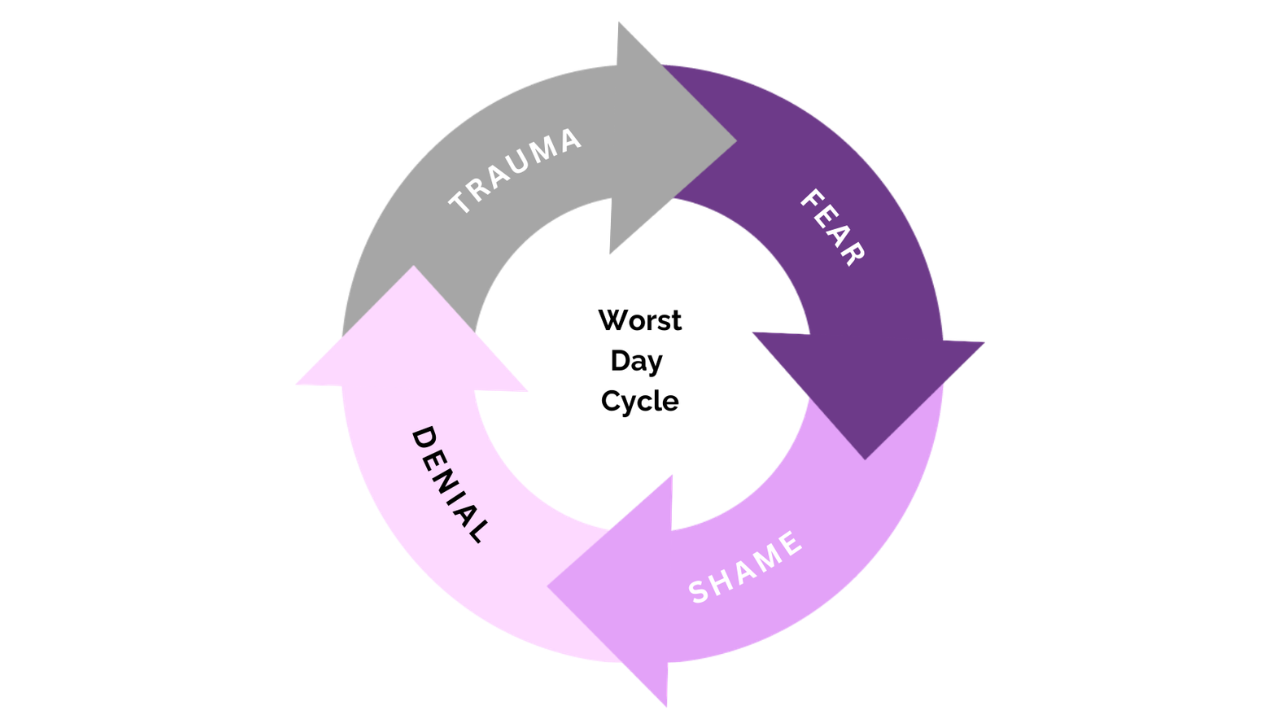
Citation: The Worst Day Cycle™ is rooted in neuroscience and attachment theory. Trauma research shows that repeated exposure to emotional threat rewires the amygdala (threat detection), weakens the prefrontal cortex (rational thinking), and conditions the nervous system to expect danger. Narcissistic relationships keep you in this cycle because the narcissist’s own Worst Day Cycle™ prevents them from providing safety, accountability, or repair. The chemical patterns your brain created in childhood are being refreshed daily by the narcissistic relationship.
The Emotional Authenticity Method™: Breaking Free From Narcissistic Patterns
The Emotional Authenticity Method™ Method™ is a five-step process to interrupt the Worst Day Cycle™ and return to your authentic emotional self. This is how you start to reclaim your nervous system and rebuild trust in your own gut feeling.
Step 1: Somatic Down-Regulation (With Optional Titration)
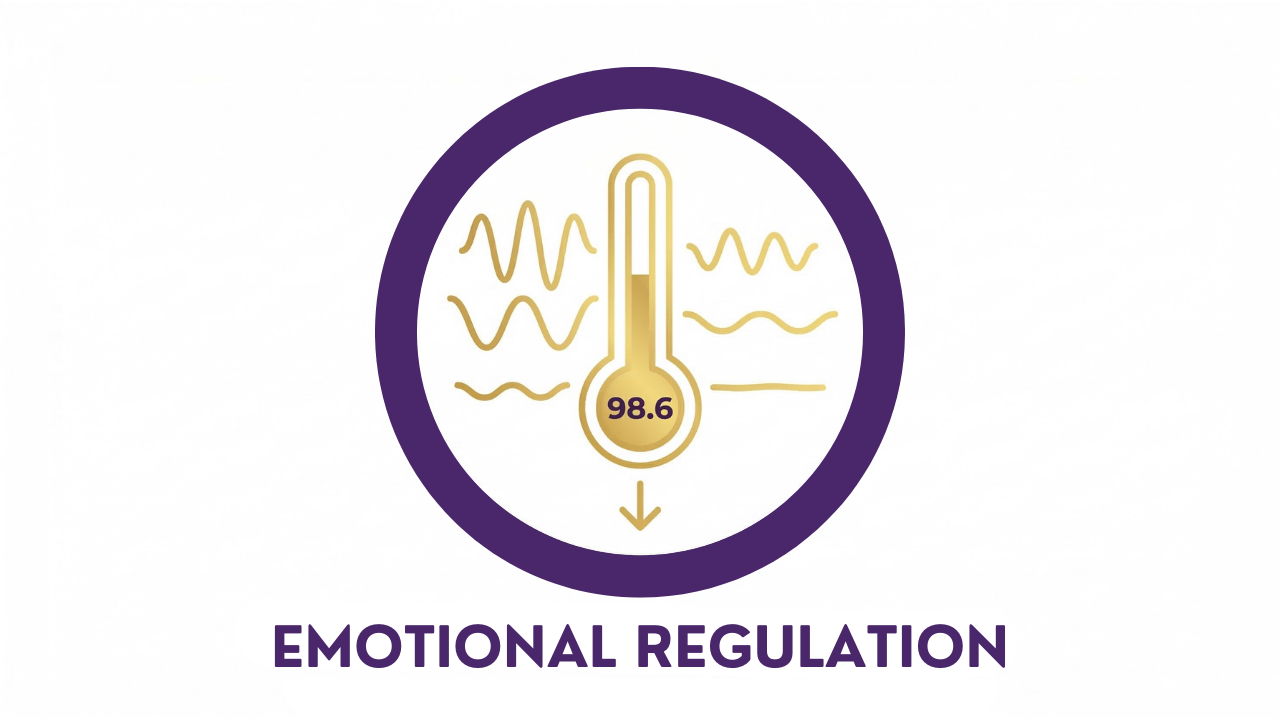
Before you can think clearly, your nervous system needs to feel safe. You’re in fight-or-flight. Your body is flooded with cortisol and adrenaline.
Somatic down-regulation means using your body to signal safety to your brain. This isn’t meditation or breathing exercises (though those help). This is active, engaged nervous system reset.
How: Cold water on your face (shock resets the vagus nerve). Intense exercise (burns off the excess cortisol). Shaking or dancing (discharges trauma from the nervous system). Grounding (feet on the earth, hands on something solid). Talking to someone safe (co-regulation through connection).
Optional Titration: If the trauma is too big, you might need to titrate—to experience only a small piece of it at a time. Sit with the feeling for 30 seconds, then look away. Come back to it for 30 seconds. This trains your nervous system: “This is uncomfortable, but it’s not killing me. I can handle pieces of this.”
Step 2: What Am I Feeling? (Emotional Granularity)
Most people in narcissistic relationships are numb or flooded. You can’t name what you’re feeling because your emotional vocabulary was never developed.
Emotional granularity means moving from “I feel bad” to “I feel shame, abandonment fear, and rage.” The more specific you get, the more you reclaim your agency. You’re no longer a victim of vague emotion. You’re a person experiencing named, understandable feelings.
How: Use the Feelings Wheel. Start with the six core emotions (anger, sadness, fear, disgust, shame, joy). Then drill down to the specific flavor: Is your anger rage or frustration? Is your sadness grief or emptiness?
Step 3: Where in My Body Do I Feel It?
Emotions live in the body. Shame lives in the chest and throat (that lump). Anxiety lives in the stomach (that knot). Fear lives in the heart (that racing). Abandonment lives in the limbs (that trembling).
By locating the feeling in your body, you’re bringing your brain online. You’re using the prefrontal cortex (thinking brain) to observe the limbic system (feeling brain). This is where healing happens.
How: Close your eyes. Ask the feeling, “Where do you live in my body?” Don’t overthink. The first location you notice is usually right. Place your hand there. Breathe into it. Describe it: sharp or dull, hot or cold, tight or open, present or scattered.
Step 4: What’s My Earliest Memory of This Feeling?
Here’s where the magic happens. That feeling you’re experiencing right now? It probably isn’t about today. It’s about a moment in childhood where you learned to feel this way.
The narcissist triggers your original trauma. They say something that reminds your nervous system of a parent’s criticism. They withdraw, and your nervous system remembers parental abandonment. The current event activates the original blueprint.
How: With the feeling still present in your body, ask: “When is the first time I remember feeling exactly like this?” Let an image, memory, or sensation come. Don’t force it. You might remember a specific moment, or you might get a color, a sensation, a sense of age. Trust what comes.
What you’ll likely find: The feeling isn’t about your narcissistic partner. It’s about an old wound that your partner is reactivating. This distinction is crucial. It means the narcissist isn’t creating the feeling; they’re triggering the feeling you already have stored in your nervous system from childhood.
Step 5: Who Would I Be If I Never Had This Feeling Again?
This is the vision step. This is where you move from the Worst Day Cycle™ into the Authentic Self Cycle™.
How: With your eyes closed, imagine the opposite. What would it feel like to know, beyond doubt, that you are worthy of love? That you don’t have to perform to be valued? That your boundaries will be respected? That you can trust your own intuition?
What does that version of you look like? How does she stand? How does she speak? What does she do first thing in the morning? What does she say no to? What does she say yes to?
Hold this vision. Don’t try to get there. Just get familiar with what’s possible. Your nervous system needs to know: there’s a different way to be.
The Authentic Self Cycle™: Reclaiming Your Worth After Narcissism
If this is hitting close to home, here’s the video where I walk through the exact blueprint: Take Ownership of Your Narcissistic Relationships.
The Authentic Self Cycle™ is the healing counterpart to the Worst Day Cycle™. It’s how you rewire your nervous system, rebuild your sense of self, and reclaim emotional authenticity.
Stage 1: Truth (Name the Blueprint)
You stop pretending. You name what’s actually happening: “This relationship is harming me.” “My parent was abusive.” “I’ve been in denial about this dynamic.” “This isn’t about me being broken. This is about a pattern I learned to survive.”
Truth is the foundation. You can’t heal what you won’t see. And the narcissist’s world thrives in denial. So speaking truth—even quietly, to yourself—is an act of rebellion against the Worst Day Cycle™.
Stage 2: Responsibility (Own Your Reaction Without Blame)
This isn’t blame. This is agency. You can’t control the narcissist. You can’t make them change or take responsibility. But you can own your choices: “I’m staying in this relationship knowing it’s harmful.” “I’m accepting blame that isn’t mine.” “I’m abandoning myself to keep peace.”
Responsibility is where your power lives. The moment you stop blaming the narcissist for your situation and start owning your choices, you’re out of victim mode. You’re in creator mode.
Stage 3: Healing (Rewire the emotional blueprint)
This is the work. This is where you use the Emotional Authenticity Method™ to retrain your nervous system. It’s not about forgetting the past. It’s about changing how your nervous system responds to familiar triggers.
You’re teaching your brain: “Criticism doesn’t mean I’m worthless.” “Withdrawal doesn’t mean I’m unlovable.” “Shame doesn’t mean I’m broken.” The neural pathways from childhood get rewired. The chemical addiction to familiar pain gets interrupted.
Sound familiar? This is hard work. It doesn’t happen in one therapy session. It happens through repetition, through patience, through the willingness to feel every emotion that you’ve been denying for decades.
Stage 4: Forgiveness (Release the Inherited Blueprint)
This doesn’t mean reconciliation. It doesn’t mean “what they did was okay.” Forgiveness means: “I release the grip this has on me. I no longer need them to change or apologize for me to be okay.”
You forgive the narcissist (not for their sake, but for yours). You forgive your parents (for passing on the trauma pattern). Most importantly, you forgive yourself (for surviving the only way you knew how).
When you forgive, the Worst Day Cycle™ loses its power. It can no longer hijack your nervous system because you’re no longer waiting for them to fix it or acknowledge it. You’ve moved on. You’ve reclaimed your authentic self.
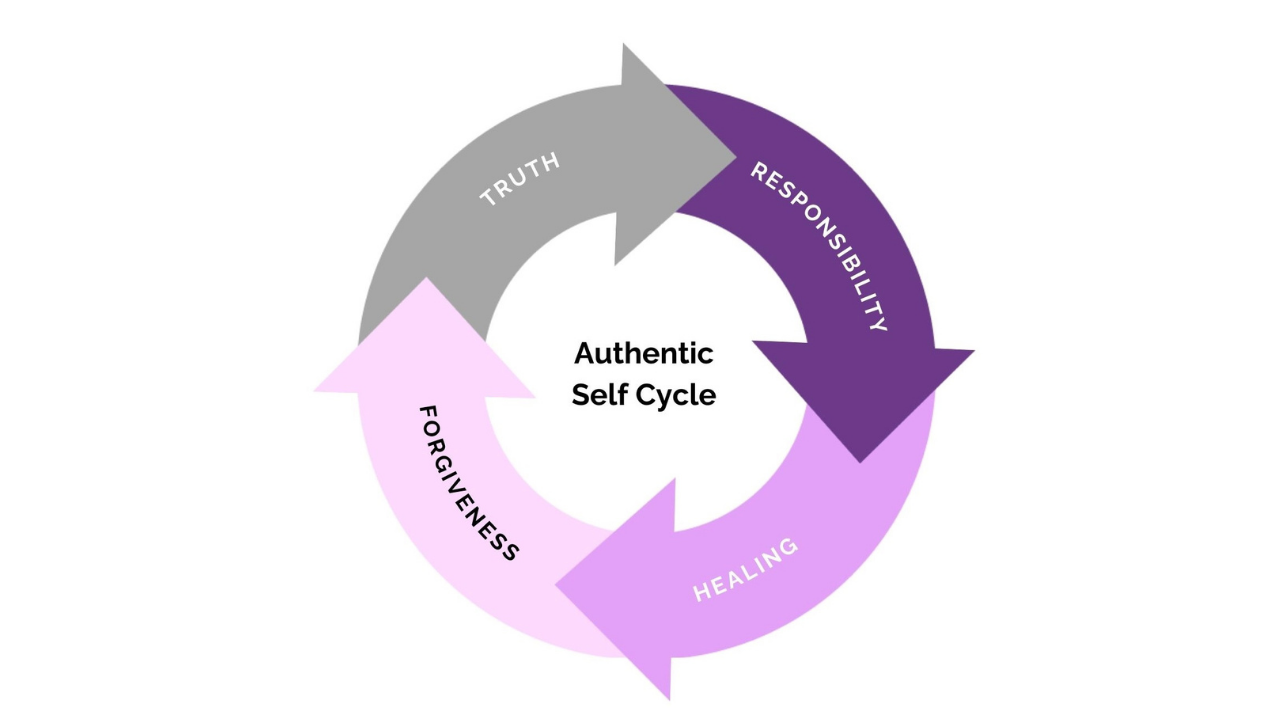
Citation: The Authentic Self Cycle™ integrates trauma-informed therapy, somatic nervous system work, and identity reclamation. Research on complex trauma shows that healing requires naming the truth (left-brain processing), taking responsibility for choices without shame (middle-brain activation), rewiring emotional responses through somatic work (bottom-up nervous system regulation), and releasing the inherited pattern (integration across the whole system). Forgiveness—not for the perpetrator but for yourself—is the marker of true recovery.
People Also Ask
Can a Narcissist Ever Change?
A narcissist can change only if they’re willing to do the same work you’re doing: acknowledge the truth, take responsibility for their impact, rewire their nervous system through sustained effort, and rebuild their sense of self. That requires admitting the survival persona is a lie. That requires experiencing the shame they’ve spent a lifetime denying. Most narcissists won’t do this work.
The healthier question isn’t “Can they change?” It’s “What’s my responsibility in this relationship, and is it sustainable?” If they’re unwilling to seek help and you’re exhausted, the answer might be that the most loving thing you can do is leave.
Am I the Narcissist?
If you’re asking this question, you probably aren’t. Someone with true narcissistic traits is unlikely to have the self-doubt required to ask. That said, after living with a narcissist, you might have developed some protective behaviors that look narcissistic: defensiveness, minimization, occasional rage. This isn’t narcissism. This is what happens when your nervous system is traumatized.
The key difference: Are you open to feedback and willing to take responsibility? Do you feel empathy when someone is hurt? Can you adjust your behavior when you realize you’ve caused harm? If yes, you’re not a narcissist. You’re someone recovering from narcissistic trauma.
How Do I Leave a Narcissistic Relationship?
Leaving is the hard part because your nervous system is chemically addicted to the familiar pain. You’ll feel withdrawal. You’ll doubt yourself. You’ll rationalize going back. This is normal.
The strategy: Rebuild your support system first. Set boundaries while still in the relationship (practice for solo living). Create a safety plan. Get legal counsel if needed. Prepare for hoovering (when they try to suck you back in). Most importantly, use the Emotional Authenticity Method™ to stay grounded in your own nervous system. Every time you want to go back, ask: “What feeling am I trying to avoid?” That feeling is where the healing lives.
What If I Have Kids With a Narcissist?
Co-parenting with a narcissist is possible, but it requires firm boundaries and an unshakeable commitment to your own healing. Use tools like a negotiables and non-negotiables list to decide what you will and won’t tolerate. Document everything. Don’t use your kids as messengers. And most importantly, model emotional authenticity for them. Show them what healthy looks like. That’s your superpower. If you’re seeing narcissistic patterns developing in your child, this guide on the narcissistic child dynamic can help you intervene early.
Is This Enmeshment or Narcissism?
Enmeshment is when boundaries blur and identities merge. Narcissism is when one person uses power to control another. Often, narcissistic relationships have both. A parent who is enmeshed with you (sees you as an extension of themselves) and narcissistic (uses your life to validate their own) is common. Read more in our guide to enmeshment.
Why Do I Keep Attracting Narcissists?
Because your nervous system recognizes the familiar pattern from childhood. A narcissist’s devaluation feels like a parent’s withdrawal. Their control feels like a parent’s conditional love. Your brain says, “I know this. Maybe this time I can fix it. Maybe this time I can earn their love.” This is the Worst Day Cycle™ repeating in your choice of partners.
The healing happens when you rewire your nervous system so that healthy, consistent, emotionally available partners feel boring and unfamiliar at first (because they are). That’s when you know you’re ready. The work is learning to find intimacy in stability instead of in chaos.
The Bottom Line
A narcissistic relationship is a slow erasure of self. It starts with love-bombing and ends with you believing you’re the problem. It uses shame as a weapon and denial as a shield. It traps you in the Worst Day Cycle™—the same trauma pattern you learned to survive in childhood.
But here’s what matters: You are not the problem. And you are not stuck forever.
The narcissist’s behavior is a symptom of their own unhealed trauma. Their falsely empowered survival persona can’t access genuine connection, accountability, or change without professional help. That’s their work, not yours.
Your work is reclaiming your authentic self. Your work is using the Emotional Authenticity Method™ to interrupt the Worst Day Cycle™. Your work is building the Authentic Self Cycle™—one small act of truth, responsibility, healing, and forgiveness at a time.
You weren’t broken by the narcissist. Your nervous system was educated by the narcissist. And what the nervous system learns, it can unlearn. Not overnight. But with patience, support, and the willingness to feel everything you’ve been denying, you can reclaim your emotional authenticity.
That’s not just recovery. That’s reclamation.
Recommended Reading
- Mellody Beattie — Codependent No More (foundational for understanding enmeshment and control)
- Gabor Maté — Scattered: How Attention Deficit Disorder Originates and What You Can Do About It (the neuroscience of trauma and nervous system dysregulation)
- Melody Beattie — The Language of Letting Go (daily wisdom for boundary-setting)
- Brené Brown — Daring Greatly (shame resilience and vulnerability)
- Harriet Lerner — Why Won’t You Apologize? (understanding apologies and accountability)
- Thema Bryant-Davis — Thriving After Trauma (trauma recovery and nervous system healing)
- 7 Signs of Insecurity in Relationships (understand the patterns that keep you stuck)
- 5 Signs of High Self-Esteem (vision of where you’re heading)
- 10 Dos and Don’ts for a Great Relationship (healthy relationship blueprint)
Next Steps: Reclaim Your Emotional Authenticity
Recognizing the 13 signs is the first step. But understanding alone doesn’t rewire your nervous system. You need sustained work, community support, and frameworks that actually work.
That’s why Kenny created courses specifically designed to interrupt the Worst Day Cycle™ and build your Authentic Self Cycle™:
- Emotional Blueprint Starter Course — Individual ($79) — A foundational course on understanding your personal trauma blueprint and how it shows up in relationships.
- Relationship Starter Course — Couples ($79) — For those wanting to understand both partners’ blueprints and how they collide in the relationship.
- Why We Can’t Stop Hurting Each Other ($479) — A deeper dive into the Worst Day Cycle™ and how it manifests in conflict.
- Why High Achievers Fail at Love ($479) — Designed for successful people who keep choosing narcissistic partners and wondering why.
- The Shutdown Avoidant Partner ($479) — Understanding the disempowered and adapted wounded child survival personas in relationships.
- Tier 1: Mapping the Blueprint ($1,379) — The most comprehensive course on the Emotional Authenticity Method™ and the full journey through the Authentic Self Cycle™.
Start here: Complete the Feelings Wheel exercise. This is your first step toward reclaiming your emotional literacy. Once you can name what you’re feeling, you’ve already started to reclaim your power.
You deserve emotional authenticity. You deserve a relationship where you’re seen, valued, and chosen daily. And that journey starts with the willingness to face the truth about the relationship you’re in.
The question isn’t whether you can leave. It’s whether you’re ready to stay with yourself the way the narcissist never could.