
Self-confidence isn’t built through willpower or positive affirmations—it’s destroyed by habits rooted in childhood survival. These five patterns don’t emerge from weakness; they emerge from early messages that told you your worth was conditional, your voice was unsafe, and your needs were burdens. The habits that damage your self-confidence today are the exact strategies that kept you safe as a child. Understanding why you developed them is the first step toward dismantling them and reclaiming authentic self-worth that doesn’t depend on performance, approval, or perfection.
TL;DR: Low self-confidence stems from childhood shame patterns—self-abandonment, unprocessed emotions, people-pleasing, validation-seeking, and shame-based self-talk. These aren’t character flaws; they’re survival strategies. The Authentic Self Cycle™ teaches you to move from shame to self-worth through truth, responsibility, healing, and forgiveness.
Table of Contents
- What Really Damages Self-Confidence
- Why Self-Confidence Can’t Be “Built” Through Willpower
- Habit 1: Going Against Your Own Values (Self-Abandonment)
- Habit 2: Positive Thinking Without Emotional Processing
- Habit 3: Not Saying No (People-Pleasing)
- Habit 4: Seeking Validation Instead of Self-Worth
- Habit 5: Shame-Based Self-Talk
- The Worst Day Cycle™: Why These Habits Exist
- The Three Survival Personas and Confidence
- The Emotional Authenticity Method™: 6 Steps to Real Confidence
- The Authentic Self Cycle™: From Shame to Self-Worth
- How Low Self-Confidence Shows Up Across Your Life
- People Also Ask
- The Bottom Line
- Recommended Reading
What Really Damages Self-Confidence
Confidence isn’t a personality trait you’re born with or without. It’s a direct reflection of how safe you feel being yourself—how aligned your actions are with your values, how truthfully you speak, and how much you trust your own judgment. When these align, confidence flows naturally. When they don’t, confidence collapses.
That’s you if you say yes to everything, then resent the people you said yes to. That’s what happens when your actions betray your values. Self-confidence doesn’t survive contradictions between what you believe and what you do.
Habits that damage self-confidence aren’t random. They’re inherited. They come from a childhood where your survival depended on reading the room, shrinking yourself, performing for approval, or hiding your true feelings. These patterns protected you once. Now they’re suffocating you.
When you understand that these five habits are survival strategies—not character flaws—you can finally address them at their root instead of just white-knuckling through self-help worksheets.
Why Self-Confidence Can’t Be “Built” Through Willpower
If you want to go deeper on this, I walk through the full framework in this video: How to Build Confidence That Lasts.
Here’s what most self-help misses: you can’t build confidence on top of shame. It’s like constructing a skyscraper on a foundation of sand. Every time you try to “think positive” or “fake it till you make it,” you’re actually reinforcing the underlying belief that something is wrong with you and you need to hide it.
Real confidence emerges when shame stops running the show. Shame is the feeling of having little-to-no self-worth. It’s not guilt (I did something bad). It’s identity collapse—the belief that I am bad. And when shame is active, no amount of affirmation can touch it.
That’s the real problem. You’re not lacking confidence. You’re carrying inherited messages of worthlessness that override any confidence you try to manufacture.
The habits you’re about to read aren’t character defects to overcome through motivation. They’re symptoms of an underlying belief system that needs to be healed, not bypassed. That’s why the Emotional Authenticity Method™ works—it addresses the root, not just the branch.
Habit 1: Going Against Your Own Values (Self-Abandonment)
You know what you believe. You know what matters to you. And then you do something completely different.
Maybe you believe in honesty, but you lie to avoid conflict. Maybe you value your time and energy, but you say yes to every request. Maybe you believe in healthy boundaries, but you loan money you can’t afford to lose or take on projects that aren’t yours.
Sound familiar? This is self-abandonment. And every time you go against your own values, self-confidence dies a little.
Self-abandonment emerges from early messages: “Your needs don’t matter.” “Keep the peace.” “If you upset others, you’re selfish.” So you learned to prioritize everyone else’s comfort over your own integrity. Now, decades later, you’re still doing it—and wondering why you feel like a fraud.
Self-confidence requires alignment. It requires that you trust yourself to do what you say you believe. When you abandon your own values to manage other people’s emotions, you’re essentially telling yourself: My integrity doesn’t matter as much as their mood. That’s not humility. That’s self-betrayal. And self-confidence cannot exist alongside self-betrayal.
The cost of this habit isn’t just damaged confidence—it’s resentment, exhaustion, and a gnawing sense that your life isn’t actually yours.
Habit 2: Positive Thinking Without Emotional Processing
You’ve been told that the solution to low self-confidence is to “think positive,” “reframe,” or “focus on gratitude.” So you slap a smile on it and move forward. You never actually feel what’s underneath.
That’s emotional bypass. And it’s one of the most destructive confidence-killers on the list.
Here’s what happens: You have a setback. Your brain immediately wants to protect you from shame by moving into positive thinking. “It’s not that bad.” “I’m lucky.” “I should be grateful.” Except the hurt, anger, disappointment, or fear is still there—it’s just been pushed underground. And underground emotions don’t disappear. They metastasize into self-doubt, anxiety, and low-grade depression.
That’s the trap of positivity without processing. You’re not healing. You’re just getting better at lying to yourself about how you feel.
Real confidence includes the ability to feel difficult emotions without being destroyed by them. It’s the capacity to say, “I’m angry about this,” or “I’m disappointed in myself,” and not collapse into shame. But when you skip the feeling part and jump straight to the positive reframe, you’re training yourself that your emotions are unacceptable—which is exactly the message that created low confidence in the first place.

The Emotional Authenticity Method™ Method™ teaches you to feel first, then integrate. Not to skip the feeling and go straight to the integration.
Habit 3: Not Saying No (People-Pleasing)
People-pleasing isn’t generosity. It’s a confidence killer disguised as kindness.
When you can’t say no, you’re not being nice—you’re being unsafe with your own resources. You’re training people to expect that your time, energy, and boundaries belong to them. And every “yes” you give when you mean “no” is a vote against your own worth.
That’s the confidence cost of people-pleasing. You’re constantly abandoning yourself to manage other people’s disappointment.
This habit typically emerges from a childhood where your safety or love was conditional on being “good”—which usually meant being accommodating, invisible, or over-responsible for other people’s emotions. So you learned: saying no is dangerous. Disappointing others is dangerous. Your needs coming first is selfish.
That’s you if you’ve ever said “sure, no problem” while your stomach was screaming “absolutely not” — your body knew the truth before your mouth did.
Now, as an adult, you’re stuck saying yes to things that drain you, resenting the people you said yes to, and wondering why you feel so powerless. That’s not generosity. That’s self-abandonment in a charity costume.
Understanding your negotiables and non-negotiables is the first step toward reclaiming your confidence. A boundary is simply a clear “no” to what doesn’t work for you.
Habit 4: Seeking Validation Instead of Self-Worth
You did something good. Your first instinct is to tell someone. Not because you’re proud—but because you need them to tell you it was good. That’s validation-seeking. And it’s a bottomless pit.
Real self-worth is internal. It doesn’t depend on what others think. But when you’ve been raised in an environment where your value was determined by external approval—grades, accomplishments, how happy you made others—you learned to outsource your worth to the people around you.
That’s the problem with validation-seeking. It’s a confidence destroyer because it makes you dependent on external input that you can’t control. You’re always on the hunt for the next hit of approval. And no amount of compliments will ever feel like enough.
The difference between confidence and validation-seeking is this: Confident people do things because they matter to them. Validation-seekers do things hoping someone will notice and validate the doing. One is grounded. The other is desperate.
When you need constant external validation, you’re essentially admitting: “I don’t trust my own judgment about whether I’m worthy. I need you to tell me.” That’s not confidence. That’s dependence.
Sound familiar? That’s the exhausting loop of outsourcing your worth — always on the treadmill of approval and never feeling like you’ve arrived.
Breaking this habit means developing an internal compass—one that asks: “What do I think?” not “What will they think?”
Habit 5: Shame-Based Self-Talk
Here’s the video where I unpack this in full: How to Tame a Pitiless Inner Critic.
Listen to what you say about yourself when you think nobody’s listening. “I’m so stupid.” “What was I thinking?” “I’m such a failure.” “Nobody likes me.” “I’m too much.” “I’m not enough.” This is shame speaking. And you’re helping it do its job.
Shame-based self-talk reflects internalized worthlessness. When you belittle yourself, you’ve knocked yourself off maturity and moderation. You’re validating the core belief that something is fundamentally wrong with you. And every time you say it, you’re reinforcing the neural pathways that make it feel true.
That’s the damage these shame mantras do. They become self-fulfilling prophecies. “I don’t make good decisions”… “I’m too nice”… “What’s the point?” These aren’t observations. They’re permission slips to avoid growth, to shrink, to give up.
Self-talk that resembles “I’m so stupid…what was I thinking?” is shame manifesting as harsh internal dialogue. It’s your internalized critic—a voice that was once external (a parent, a teacher, a sibling) that you’ve now made part of your internal machinery.
Here’s what’s true: At all times, no matter what you’re thinking, feeling, believing, or doing, you always have value and worth. At all times. Not when you’re perfect. Not when you’re successful. Not when others approve. Always.
Breaking the shame-talk habit means catching yourself mid-spiral and asking: “Would I talk to my best friend this way?” If not, you don’t get to talk to yourself that way either.
The Worst Day Cycle™: Why These Habits Exist
These five habits don’t exist in isolation. They’re all part of a larger pattern called the Worst Day Cycle™—a four-stage process that starts in childhood and repeats for decades if left unexamined.
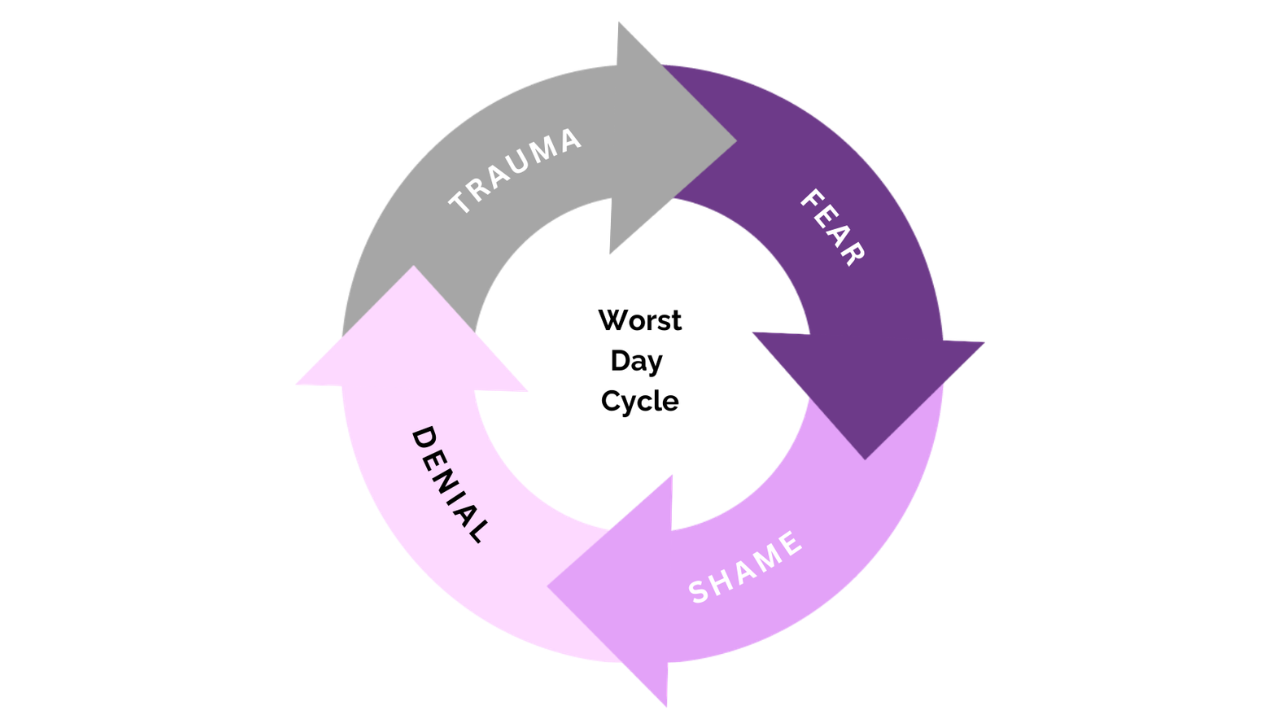
Stage 1: Trauma. Something happens that creates pain, fear, or shame. Maybe it’s rejection, failure, abandonment, or criticism. For a child, even normal developmental experiences—not getting picked first, making a mistake, being corrected—can feel like trauma if there’s no emotional attunement to help process them.
Stage 2: Fear. Your nervous system registers danger. “This is too much to feel. This will destroy me. I need to protect myself.” Fear is the body’s attempt to keep you safe from more pain.
Stage 3: Shame. The pain and fear get internalized as identity. The event (“I made a mistake”) becomes the story (“I am a mistake”). Shame collapses identity. It’s no longer about what happened; it’s about what’s wrong with you.
Stage 4: Denial. Facing the shame feels unbearable, so you go into denial—self-deception. You minimize, rationalize, intellectualize, or spiritually bypass what happened. “It wasn’t that bad.” “I should be over this.” “I just need to think positively.” Denial lets you function without feeling the full weight of the shame.
That’s the Worst Day Cycle™ in full rotation. And those five habits you just read about? They’re all denial strategies—ways of avoiding the shame underneath.
When you self-abandon, you deny that your needs matter. When you use positive thinking without processing, you deny the pain. When you people-please, you deny your own worth. When you seek validation, you deny your internal compass. When you shame-talk yourself, you deny that you deserve compassion.
Low self-confidence is what the Worst Day Cycle™ creates when it runs uninterrupted. Understanding this cycle is the first step toward breaking it.
The Three Survival Personas and Confidence
As a child, you developed a survival persona—a strategy for staying safe in an unsafe emotional environment. This persona protected you. It also became the prison your authentic self lives in.
There are three primary survival personas, and understanding which one you inhabit is crucial for reclaiming confidence:
The Falsely Empowered Persona. This is the overachiever, the perfectionist, the person who elevates themselves above others to hide shame. “I’m better than this. I don’t need help. I can handle it all.” The falsely empowered persona looks confident from the outside but is terrified on the inside. Any sign of need or struggle feels catastrophic because their entire self-worth rests on being superior, having it all together, or being the strongest in the room. Real confidence is inaccessible to them because it would require vulnerability—which feels like death.
The Disempowered Persona. This is the person who shrinks, apologizes for existing, accepts blame that isn’t theirs, and sees themselves as fundamentally flawed. “I’m not good enough. I’m too much/not enough. I deserve this.” The disempowered persona wears shame on the outside. They’re visibly lacking confidence. They attract people who exploit their self-abandonment. Real confidence feels impossible because they’ve internalized the belief that they don’t deserve it.
The Adapted Wounded Child Persona. This is the caretaker, the peacekeeper, the person who reads the room obsessively and adjusts themselves to make everyone comfortable. “If I can just figure out what you need, I’ll be safe. If I make everyone happy, I won’t be abandoned.” The adapted wounded child looks helpful and caring from the outside but is actually running on terror. Confidence is inaccessible because their entire system is oriented toward external attunement instead of internal authenticity.
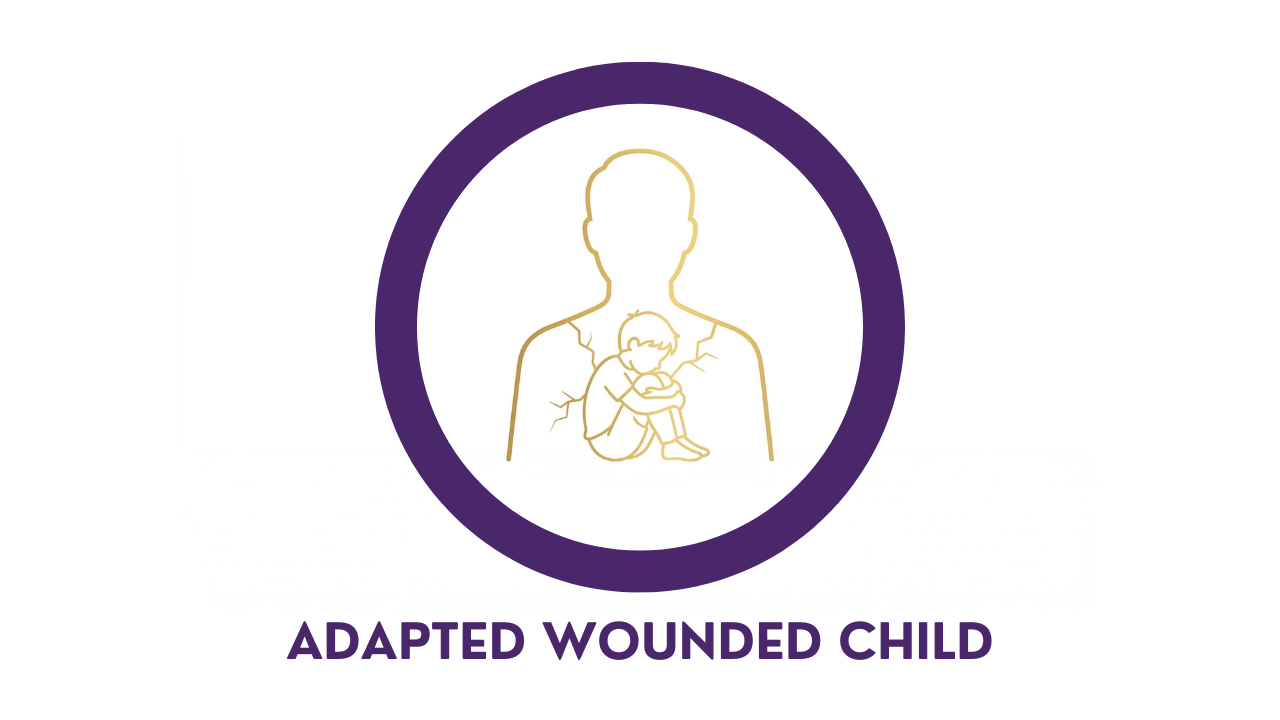
That’s the cost of survival personas. They work as protection, but they prevent real confidence from emerging. Real confidence requires showing up as yourself—not the persona. And the persona has spent decades convinced that the real you isn’t safe.
Identifying your primary survival persona is the foundation for moving toward authentic self-worth. Because confidence can’t emerge from a survival persona. It can only emerge from truth.
The Emotional Authenticity Method™: 6 Steps to Real Confidence
The Emotional Authenticity Method™ is a six-step process designed to move you from shame-based habit patterns into authentic self-worth. It’s not about fixing yourself. It’s about revealing the self that was never broken to begin with.
Step 1: Somatic Down-Regulation. Before your thinking brain can engage, you must settle your nervous system. When you’re triggered — when shame floods your body, when your inner critic starts screaming, when you’re about to abandon yourself — focus on what you can hear for 15-30 seconds. If you’re highly dysregulated, use titration: cold water on your face, step outside, hold ice. Your thinking brain can’t come online while your amygdala is running the show.
That’s you if you’ve ever said something cruel to yourself while your heart was pounding — your nervous system was hijacked before your wisdom had a chance to show up.
Step 2: What am I feeling right now? Use the Feelings Wheel to name the emotion with precision. Not “I feel bad.” Are you feeling ashamed? Rejected? Dismissed? Invisible? Codependent people are trained to ignore their emotional life. Naming it with specificity reconnects you to your authentic self and activates your thinking brain.
Step 3: Where in my body do I feel it? Emotions aren’t abstract — they’re somatic. Tightness in your chest? Heat in your face? Heaviness in your stomach? This grounds you in the present moment and breaks the dissociation that shame creates. All emotional trauma is stored physically.
Step 4: What is my earliest memory of this exact feeling? Here’s where you connect present to past. The shame you feel right now likely echoes an earlier version of itself. That inner critic telling you you’re not good enough? That’s not your voice. That’s a message you inherited from childhood. When you see this connection, everything shifts — because it means your confidence problem isn’t about today.
That’s you if you’ve overreacted to a small failure and thought “Why does this devastate me?” — the answer is almost always childhood.
Step 5: Who would I be if I never had this thought or feeling again? This is the visioning step. It’s not about pushing the feeling away. It’s about asking: “What would become possible if this shame was healed? How would I show up? What risks would I take? What would I say?” This reconnects you to your Authentic Self — the you that exists beneath the survival persona.
Step 6: Feelization. Sit in the feeling of the Authentic Self and make it strong. Don’t just picture it — feel it. Feel the confidence. The groundedness. The worthiness. Create a new emotional chemical addiction to replace the old shame blueprint. Ask yourself: “How would I respond to this situation from this feeling? What would I say? What would I do?” Visualize and FEEL yourself operating from your Authentic Self. This is the emotional blueprint remapping and rewiring step — where real confidence is born.
That’s the Emotional Authenticity Method™ — six steps to show up as yourself instead of your survival persona. Practice it daily, and you’ll be building confidence from the inside out.
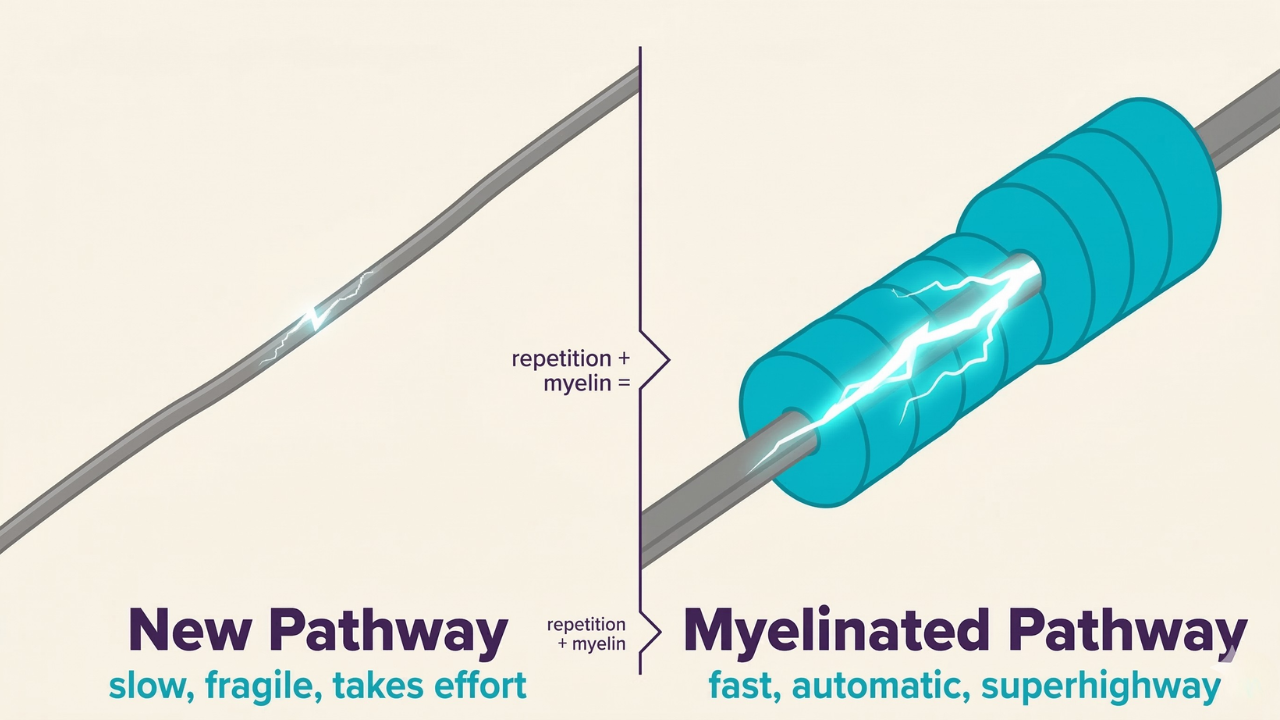
The Emotional Authenticity Method™ isn’t about fixing the five habits directly. It’s about healing the shame that makes those habits feel necessary. Once the shame is processed, the habits fall away naturally. You don’t have to white-knuckle your way to confidence. You have to heal your way there.
Research Validation: Neuroscience confirms that shame-based habits are encoded in implicit memory—the part of your brain that runs automatic patterns without conscious awareness. Healing requires moving beyond intellectual insight into somatic, emotional processing. This is why willpower fails: you’re trying to override implicit memory with conscious effort, which creates exhaustion instead of sustainable change.
The Authentic Self Cycle™: From Shame to Self-Worth
While the Worst Day Cycle™ is the pattern that created your low confidence, the Authentic Self Cycle™ is the pattern that builds real confidence.
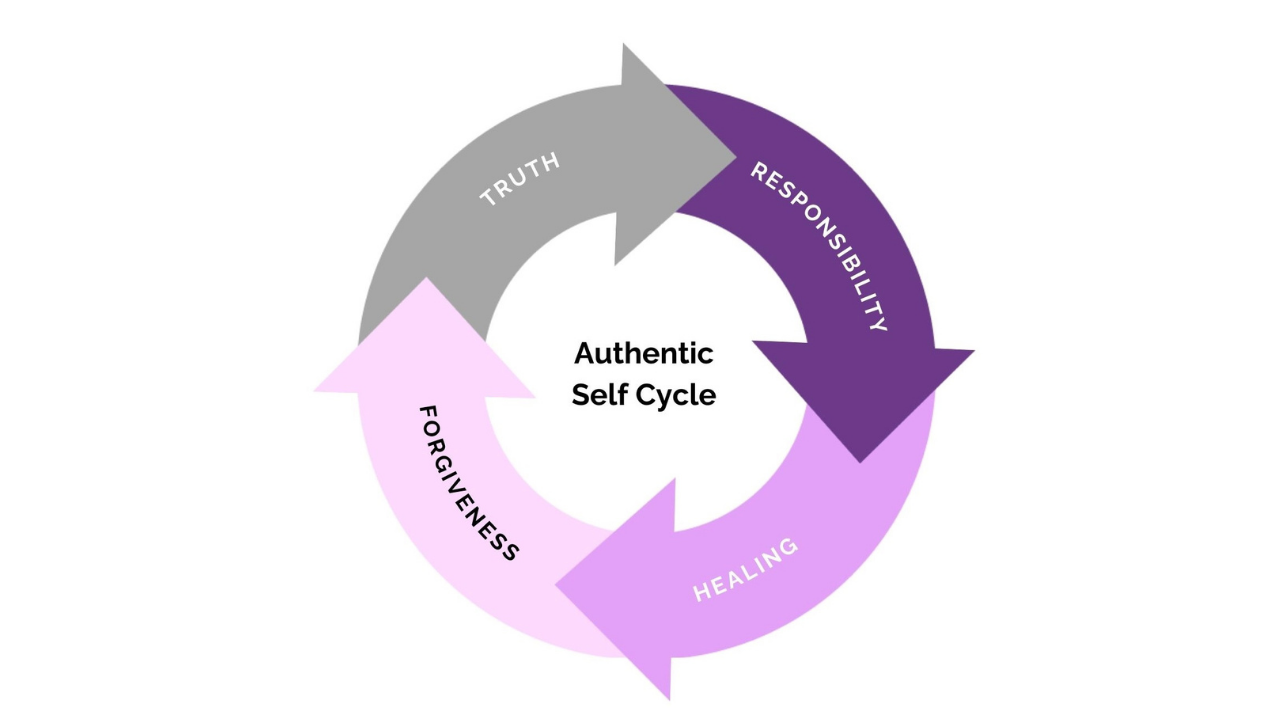
Stage 1: Truth. You face what actually happened instead of the version you’ve been telling yourself to survive it. You name the messages you received. You acknowledge the ways you learned to abandon yourself. This is the opposite of denial.
Stage 2: Responsibility. You recognize that you’re the only one who can change your response to the past. Not responsibility as blame—responsibility as the acknowledgment that your power lives in your choices. This is where victimhood transforms into agency.
Stage 3: Healing. You grieve. You rage. You process. You comfort the part of you that was hurt. You build new neural pathways through consistent emotional processing. This is the long game. Real confidence is built through sustained healing, not through a single epiphany.
Stage 4: Forgiveness. You release the story that you’re broken. You forgive yourself for the ways you’ve hurt yourself trying to survive. You release others from the role of villain and yourself from the role of victim. You become the author of your own life.
That’s the Authentic Self Cycle™. Unlike the Worst Day Cycle™, which loops endlessly in shame, the Authentic Self Cycle™ moves you progressively toward integration, self-trust, and genuine confidence.
How Low Self-Confidence Shows Up Across Your Life
If this is hitting close to home, here’s the video where I walk through the exact blueprint: This Is What True Confidence Looks Like.
Low self-confidence doesn’t stay confined to one area. It bleeds into everything. Here’s how it shows up:
In Your Family. You can’t set boundaries with parents. You apologize for things that aren’t your fault. You take on emotional labor that isn’t yours to carry. You feel invisible or over-responsible. You struggle with the patterns of enmeshment that were modeled for you growing up. Your family system depends on your self-abandonment, so your confidence threatens the system.
That’s you if your parent’s mood still determines your entire day — even though you’re an adult who doesn’t live under their roof anymore.
In Romantic Relationships. You settle for less than you deserve. You tolerate disrespect. You can’t advocate for your own needs. You interpret your partner’s criticism as confirmation that something is wrong with you. You experience insecurity in relationship that no amount of reassurance can fix—because the problem isn’t their love. It’s your belief that you’re unlovable. You might even self-sabotage good relationships because unconsciously you believe you don’t deserve them.
In Your Friendships. You over-give. You attract people who take advantage. You can’t express disagreement without fearing abandonment. You monitor yourself constantly, wondering if you’re too much or not enough. Your friendships are built on your utility, not on the realness of you.
In Your Work. You don’t ask for promotions you’ve earned. You take on extra projects without asking for credit. You minimize your accomplishments. You assume others are smarter, more qualified, more deserving. High self-esteem is reserved for people without your history. You’re waiting for someone to give you permission to take up space.
That’s you if you’ve been promoted for the very pattern that’s destroying you — overworking, people-pleasing, and never asking for what you need.
In Your Body and Health. You ignore your physical needs. You don’t rest because you feel like you haven’t “earned” it. You eat to self-soothe. You avoid the mirror. You’re in your body, but not at home in it. You treat your body like something that needs to be fixed instead of something that deserves care.
That’s the pervasive cost of low self-confidence. It doesn’t just affect one relationship or one area. It colors everything. The good news is that healing in one area creates momentum for healing everywhere else.
People Also Ask
Can you rebuild self-confidence if you lost it? Yes, but not by trying harder. Self-confidence is rebuilt through healing the shame underneath the habits. The five habits are symptoms. Shame is the root. Address the root—through the Emotional Authenticity Method™—and confidence emerges naturally as a byproduct of authenticity.
Is imposter syndrome related to low self-confidence? Completely. Imposter syndrome is what happens when you’re achieving externally but feeling like a fraud internally. The disconnect between who you appear to be and who you believe you are is the definition of low confidence rooted in shame. Real confidence means your internal belief matches your external reality.
How long does it take to build real confidence? This is the wrong question. Confidence isn’t built in a timeline. It’s built through consistent emotional processing and healing. Some people feel shifts in weeks. Others take months or years. The speed depends on how deep the shame goes and how committed you are to facing it instead of denying it. Patience is part of the process.
What’s the difference between arrogance and real confidence? Arrogance is the falsely empowered persona wearing a disguise. It’s shame turned outward—elevating yourself above others to avoid facing your own worthlessness. Real confidence is quiet. It doesn’t need to prove anything. It doesn’t diminish others. It’s rooted in the knowledge that you have worth regardless of performance, approval, or position.
Can therapy help with confidence issues rooted in childhood? Yes, but not all therapy is equal. Cognitive behavioral approaches that focus on thought patterns miss the emotional and somatic roots of shame. What works is somatic therapy, emotionally focused therapy, or trauma-informed approaches that address the whole nervous system—not just the thinking brain. Healing happens in the body, not just in the mind.
What’s the first step to improving my self-confidence? Stop trying to improve it. Start examining it. Look at the five habits and ask: Which ones am I doing? What happened in childhood that made these strategies feel necessary? What are they protecting me from feeling? This honest self-examination is the foundation. Once you understand why you developed these patterns, you can actually address them instead of just trying to override them with willpower.
The Bottom Line
The five habits that damage your self-confidence aren’t character flaws. They’re survival strategies that made sense when you were small and unsafe. They don’t make sense anymore. They’re costing you your authenticity, your boundaries, your peace, and your ability to trust yourself.
Real confidence isn’t built through forced positivity, self-help worksheets, or willpower. It’s built through the courage to face what you’ve been denying, to feel what you’ve been suppressing, to heal what’s been broken, and to forgive what’s been hurting you.
The Emotional Authenticity Method™ and the Authentic Self Cycle™ are the frameworks that make this possible. They’re not about fixing you. They’re about revealing you—the you that was never actually broken, just buried under survival strategies and inherited shame.
Your confidence is waiting on the other side of the shame. The path there requires honesty, vulnerability, and the willingness to feel. It’s the most difficult path. It’s also the only one that actually works.
You don’t need to be better. You need to be true. Start there.
Recommended Reading
- Mellody Beattie — Codependent No More and How to Stop Controlling Others (foundational work on self-abandonment and people-pleasing)
- Gabor Maté — When the Body Says No and Scattered (trauma, shame, and the nervous system)
- Brené Brown — Daring Greatly and I Thought It Was Just Me (vulnerability and shame resilience)
- Peter Levine — Waking the Tiger (somatic trauma processing)
- Bessel van der Kolk — The Body Keeps the Score (how trauma lives in the nervous system)
Ready to Reclaim Your Confidence?
Understanding these five habits is the beginning. Healing them is the work. We’ve created several programs specifically designed to guide you through the Emotional Authenticity Method™ and the Authentic Self Cycle™:
Self-Discovery Programs
- Emotional Blueprint Starter Course — Individual — $79 | Map your personal journey through shame, survival patterns, and authentic self-worth
- Relationship Starter Course — Couples — $79 | Understand how both partners’ shame patterns interact in relationships
Deep-Dive Courses
- Why We Can’t Stop Hurting Each Other — $479 | How survival personas and shame cycle through relationships
- Why High Achievers Fail at Love — $479 | The falsely empowered persona and why success doesn’t equal intimacy
- The Shutdown Avoidant Partner — $479 | Healing avoidance patterns rooted in childhood emotional neglect
- Tier 1: Mapping the Blueprint — $1,379 | The complete system for moving from shame to self-worth
Every program teaches the frameworks you’ve just read—the Worst Day Cycle™, the Authentic Self Cycle™, the three survival personas, and the Emotional Authenticity Method™. The deeper you go, the more you heal.
Start with the free resource: The Feelings Wheel Exercise is a foundational tool for emotional authenticity. It teaches you how to name and feel emotions without being destroyed by them. This is the foundation of everything else.
For more on how these patterns show up in your relationships, read: