Healing from narcissistic abuse recovery means recovering from a relationship with someone who operates from a place of deep emotional wounding and uses control, manipulation, and emotional withdrawal to manage their own internal chaos. The narcissist isn’t trying to hurt you — they’re trying to regulate themselves. But that doesn’t make the damage any less real. If you’re reading this, you know: the aftermath of narcissistic abuse is one of the most painful emotional journeys you can walk.
The good news? You’re not broken. You’re not crazy. And you’re not doomed to repeat this pattern forever.
TL;DR: Healing from narcissistic abuse requires grieving the fantasy, owning your role without blame, rewiring your emotional blueprint, and moving through five stages: naming your trauma bond, understanding your Worst Day Cycle™, recognizing your survival persona, processing your grief, and rebuilding your authentic self through the Emotional Authenticity Method™.
Table of Contents
- Step 1: Name the Trauma Bond and Stop the Denial
- Step 2: Grieve the Fantasy, Not Just the Person
- Step 3: Understand Your Worst Day Cycle™
- Step 4: Identify Your Survival Persona
- Step 5: Own Your Role Without Self-Blame
- Step 6: Rewire With the Emotional Authenticity Method™
- Step 7: Activate the Authentic Self Cycle™
- Frequently Asked Questions
Step 1: Name the Trauma Bond and Stop the Denial
The hardest part of healing isn’t leaving the narcissist. It’s admitting that you stayed. It’s facing the fact that you allowed someone into your life who harmed you. And here’s what most healing teachers get wrong: they tell you “none of it was your fault.” That sounds compassionate until you realize it leaves you powerless.
Here’s the truth: Nobody, no person, place or thing gets near our life unless we allow it. Therefore we played a part in it. This isn’t blame. This is power.
A trauma bond isn’t love. It’s a neurochemical addiction to someone who cycles between cruelty and intermittent reinforcement. The narcissist gives you just enough hope to keep you stuck. You obsess about them. You replay conversations. You try to figure out what you did wrong, how to fix it, how to make them see your worth.
That’s you if you still check their social media. That’s you if you imagine scenarios where they finally understand you. That’s the trauma bond working exactly as designed.
The denial stage is where most people get stuck. Denial is one of the three primary survival personas — your nervous system’s way of protecting you from unbearable truth. But denial also keeps the narcissist’s hooks in you. Until you name it, you can’t break it.
Action step: Write down three specific ways this person harmed you. Not “they were mean.” Specific: “They said I was too sensitive when I expressed my needs, then later used my sensitivity against me to prove I was unstable.”
Step 2: Grieve the Fantasy, Not Just the Person
Most people trying to recover from narcissistic abuse get stuck in anger and bargaining. They obsess. They journal about the narcissist. They tell everyone how awful they are. They do this because it’s easier than feeling the sadness.
Here’s why: The sadness was already there before the narcissist arrived.
The narcissist didn’t create your emotional blueprint — they exploited it. The reason they were attractive to you in the first place is because their emotional unavailability matched your childhood abandonment. Your nervous system recognized it as “home,” and home means familiar, not safe. This is how enmeshment works — your boundaries dissolve because the emotional blueprint says merging equals love.
Real grief is moving through sadness, not stuck in anger. Kenny recommends scheduling 30 minutes of grief daily — sitting with the loss of the fantasy: the fantasy that they would change, that you could fix them, that your love was enough. After 30 minutes, switch to self-care (painting, walks, time in nature) to interrupt the learned helplessness.
If you still have rage, anger, or resentment — you have not grieved. And if you haven’t grieved, the narcissist still owns and controls you without even being in your life.
Action step: Set a timer for 30 minutes. Sit with the loss. Feel the sadness. Don’t try to fix it or move past it. Just feel it. When the timer goes off, do something nurturing.
Step 3: Understand Your Worst Day Cycle™
The Worst Day Cycle™ is why you were vulnerable to the narcissist in the first place. It’s a four-stage loop: Trauma → Fear → Shame → Denial, repeating endlessly until you interrupt it.
Stage 1: Trauma
Childhood trauma isn’t just major events. It’s any negative emotional experience that created painful meanings. Your parent withdrew during conflict. Your sibling was always favored. You had to be perfect to receive love. Your emotions were mocked. Any of these creates a massive chemical reaction in your nervous system.
Stage 2: Fear
Your brain generates chemical cocktails — cortisol, adrenaline, dopamine, oxytocin misfires. The hypothalamus becomes addicted to these states because the brain conserves energy by repeating known patterns. It can’t tell right from wrong; it only knows known versus unknown. That’s you if unfamiliar safety feels scarier than familiar pain.
Stage 3: Shame
This is where you lost your inherent worth. Approximately 70% of childhood messaging is negative and shaming. You learned that “I am the problem.” Not “I made a mistake” (responsibility), but “I AM a mistake” (shame). This becomes your baseline emotional state.
Stage 4: Denial
Your nervous system creates a survival persona — a false identity that protects you from shame. This is where you hide from yourself and others.
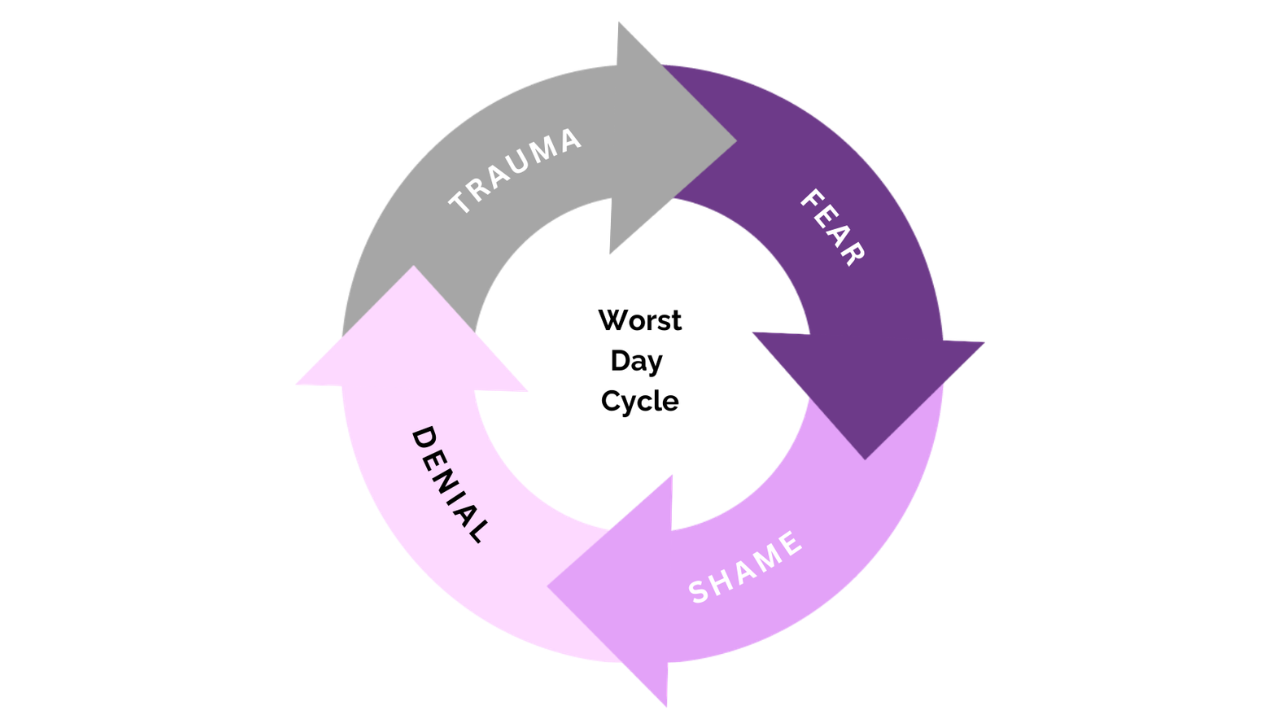
That’s you if you feel like you’re living a double life — one you show the world, one you keep hidden. The denial stage keeps the cycle spinning because you’re not actually addressing the shame; you’re just hiding from it.
Action step: Identify your earliest trauma. What painful meaning did you create? (“Love means abandonment.” “I’m not worth staying for.” “My needs don’t matter.”) Write it down.
Step 4: Identify Your Survival Persona
Your survival persona is the identity you built to survive your childhood. It’s not your fault that you created it — it was brilliant, necessary, and it kept you alive. But now it’s keeping you stuck in narcissistic patterns.
There are three primary survival personas:
The Falsely Empowered Persona
You control, dominate, rage, or withdraw to manage your shame. That’s you if your childhood taught you that being powerful meant being safe. You attract people you can manage — at first. Then the narcissist arrives, and you finally meet someone you can’t control. The power struggle begins.
The Disempowered Persona
You collapse, people-please, sacrifice, and disappear into relationships. That’s you if you lost yourself in the narcissist. You thought loving them harder would fix them. You thought if you just gave more, they’d finally see your worth. This persona attracted the narcissist because you were an excellent source of narcissistic supply — emotional fuel.
The Adapted Wounded Child
You oscillate between both — sometimes controlling, sometimes collapsing, never grounded. That’s you if you feel like a different person depending on who’s in the room. You’re hypervigilant to others’ emotions. You shift constantly to try to keep the peace.
Action step: Which persona shows up most? When does the other one emerge? Write a scene where you see yourself in that persona. Map out your negotiables and non-negotiables to understand what you truly value versus what your survival persona demands.
Step 5: Own Your Role Without Self-Blame
This is where most healing work gets confusing. You need to own your role without drowning in blame. Here’s the distinction:
Blame: “I’m broken. I deserved this. I should have known better. I’m stupid for believing them.”
Responsibility: “I stayed because my emotional blueprint made them feel like home. I didn’t set boundaries because my childhood taught me my needs don’t matter. I can see that pattern now, and I can choose differently.”
That’s you if you’ve been blaming yourself for staying. Stop. You didn’t stay because you’re weak. You stayed because your nervous system was trying to heal an old wound by repeating a familiar pattern. That’s not weakness — that’s neurobiology.
Here’s what professional support does: the narcissist strips us so much of our identity that our solutions and thinking processes are very distorted. You need someone outside the fog to help you see clearly. Not because you’re broken, but because the abuse literally scrambles your perception.
The Victim Position Paradox is crucial here: if the narcissist is 100% responsible, then you have zero power to change your future. But if you own your role — not the abuse itself, but why you allowed it — you reclaim your agency.
Action step: Finish these sentences without shame:
• “I stayed because…”
• “I didn’t leave when…”
• “I accepted the blame because…”
• “I could change this by…”
Step 6: Rewire With the Emotional Authenticity Method™ Method™
The Emotional Authenticity Method™ is a six-step process to literally rewire your nervous system. This isn’t talk therapy. This is somatic, chemical, neurological rewiring.
Step 1: Somatic Down-Regulation
When you’re dysregulated (flooded with emotion, spinning in thoughts), your prefrontal cortex is offline. You can’t access wisdom or perspective. Focus on what you can hear for 15-30 seconds. Wind. Traffic. Your breath. This simple act activates your parasympathetic nervous system and brings you back online.
Step 2: Name the Feeling
Not “I feel bad.” Emotional granularity using the Feelings Wheel. Are you angry, sad, afraid, ashamed? The more specific you are, the more you interrupt the survival persona’s vagueness.
Step 3: Where in Your Body?
Emotions are chemical states that live in your body, not your head. Sadness might be a heaviness in your chest. Shame might be heat in your face. Fear might be tightness in your stomach. That’s you if you’ve been “in your head” trying to think your way out of feelings.
Step 4: Earliest Memory
Where’s the oldest version of this feeling? When was the first time you felt this exact sensation? This is where you connect present-day triggers to childhood wounds. The narcissist isn’t causing the feeling; they’re triggering the old blueprint.
Step 5: Who Would You Be?
Sit with this: Who would I be if I never had this thought or feeling again? Not “I’d be happy.” Specific: “I’d be someone who doesn’t check their ex’s social media. I’d be someone who believes I’m worth staying for. I’d be someone who can say no without guilt.” This plants the seed of your authentic self.
Step 6: Feelization — The New Chemical Addiction
Your survival persona is a chemical addiction to old emotional states. To break it, you need a new addiction. Sit in the feeling of who you’d be — the authentic self. Make it strong. Feel it in your body. Recreate the chemical cocktail of wholeness, worthiness, and peace. This becomes your new baseline.
That’s you if you’ve never been taught that you can literally rewire your nervous system by changing what you practice feeling.
Action step: Tonight, walk through all six steps with one feeling that came up today. Start with Step 1: What can you hear? Don’t skip the steps.
Step 7: Activate the Authentic Self Cycle™
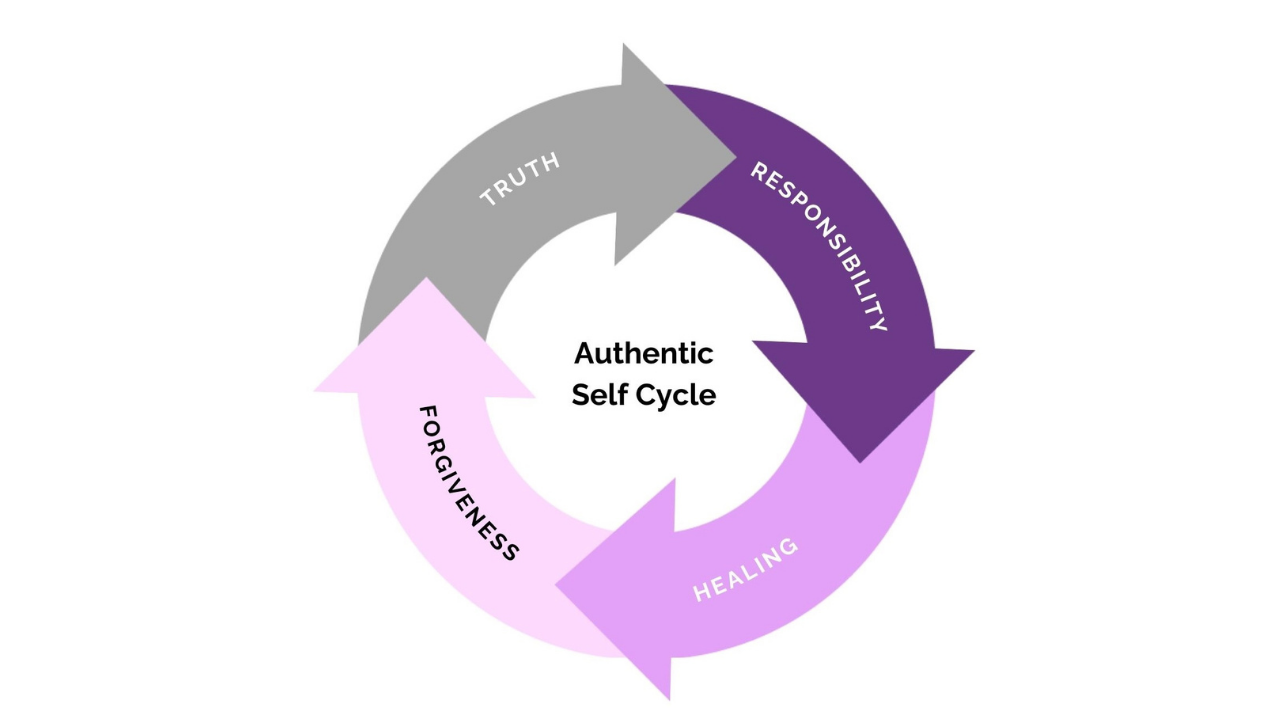
The Authentic Self Cycle™ is the antidote to the Worst Day Cycle™. It has four stages: Truth → Responsibility → Healing → Forgiveness.
Stage 1: Truth
Name your blueprint. “This isn’t about today. This is about a meaning I created in childhood: that love means abandonment. The narcissist didn’t create this — they exploited it.” That’s you if you’re finally seeing the pattern.
Stage 2: Responsibility
Own your emotional reactions without blame. “I chose to stay. I didn’t set boundaries. I tolerated disrespect because I didn’t believe I deserved better.” Not “I’m bad for staying.” But “I’m responsible for my choices moving forward.”
Stage 3: Healing
Rewire the blueprint through the Emotional Authenticity Method™. Practice new emotional states. Let boring people become attractive. When boring people become attractive — that’s when you know you’ve healed. Your nervous system is no longer seeking the chemical intensity of the Worst Day Cycle.
Stage 4: Forgiveness
Not forgetting. Not condoning. You’ll know you’ve broken the cycle when you adore your narcissist — not that you condone what they did, but you see they were your greatest teacher. The pain was the education. The relationship was the curriculum for healing your childhood.
Action step: Which stage are you in right now? Where do you need support?
Recognizing Healing Across Your Life
Healing isn’t linear, and it doesn’t look the same for everyone. But there are clear signs by life area:
Family Relationships
You stop defending the narcissist to your family. You can talk about the relationship without rage or shame. That’s you if you’ve stopped making excuses for them. You set boundaries without guilt. You see your parents’ wounds more clearly — including how their unhealed trauma created your blueprint.
Romantic Relationships
You attract different people. Sound familiar — you’re suddenly drawn to emotionally available, stable, genuinely kind people? They feel boring at first because there’s no drama. But you stay because there’s peace. You don’t obsess. You can disagree without fear of abandonment. You recognize the signs of relationship insecurity and address them. You believe you deserve care.
Friendships
You stop being the fixer. That’s you if you finally said no without overexplaining. You have friendships where both people invest equally. You’re not constantly monitoring others’ emotions or sacrificing yourself to keep peace.
Work and Achievement
You stop performing for approval. You do good work because you value it, not because you’re trying to prove your worth. You develop genuine self-esteem — the quiet kind that doesn’t need external validation. That’s the difference between high achievement from authenticity versus high achievement from shame. You can celebrate wins without waiting for someone else to validate them.
Body and Health
You notice what feels good instead of just pushing through. You can rest without guilt. You move your body for joy, not punishment. That’s you if you’re finally listening to your body instead of ignoring it. You set boundaries around food, sleep, touch. You stop using your body to earn love.
The Bottom Line: You’re Not Stuck Forever
Healing from narcissistic abuse isn’t about forgetting what happened or erasing the person from your story. It’s about reclaiming your emotional blueprint — the one that was there before them and will be there after.
The narcissist didn’t break you. But they did expose the places where you were already broken, where you were already carrying old wounds, where you were already seeking to heal something that happened decades ago.
That’s actually the gift, even though it doesn’t feel like one. You now have clarity about your pattern. You can see the Worst Day Cycle spinning. You can feel the survival persona activating. And now — with the Emotional Authenticity Method™ and the Authentic Self Cycle™ — you have tools to rewire it.
The narcissist was never your problem. Your emotional blueprint was. And you have 100% control over rewriting that.
Frequently Asked Questions
How long does it take to heal from narcissistic abuse?
There’s no timeline. Some people move through the stages in months; others take years. The speed depends on how much professional support you get, how deep your childhood wounds run, and how committed you are to rewiring your blueprint. Most people see significant shifts within 6-12 months of consistent work.
Do I have to forgive the narcissist to heal?
No. Forgiveness is Stage 4 of the Authentic Self Cycle™, and it’s not about saying they were right. It’s about releasing the grip they have on your emotional life. Some people get there; others don’t. Both are valid. What matters is that you stop letting their actions drive your choices.
What if I keep attracting narcissists?
This is your emotional blueprint on repeat. Your nervous system recognizes narcissistic patterns as “home” because they match your childhood. The Emotional Authenticity Method™ literally rewires this. As you change your baseline emotional state, you’ll attract different people. That’s you if you’ve noticed you keep picking the same type of person.
Can a narcissist change?
Change requires the capacity for shame and remorse. Most narcissists don’t have this because shame is what they’re running from. It’s possible, but incredibly rare and usually only happens with intensive trauma work. Focus on changing yourself, not them.
Is it ever safe to co-parent with a narcissist?
Yes, but it requires strict boundaries and emotional disengagement. Use parallel parenting: minimal communication, business-like tone, no personal information sharing. You’re managing logistics, not a relationship. Professional support and detailed custody agreements are essential. If you’re concerned about narcissistic patterns in your child, this parent’s guide to the narcissistic child dynamic explains how to respond.
How do I know if I’m actually healed?
You can think about them without rage or obsession. Boring people become attractive. You don’t check their social media. You make decisions based on your values, not their approval. You believe you deserve care. You’re no longer performing for worth.
Recommended Reading
If you’re ready to go deeper into understanding your patterns and healing your emotional blueprint, these resources are essential:
- Facing Codependence by Pia Mellody — The foundational text on how childhood trauma creates survival personas, codependent patterns, and the loss of authentic self.
- The Body Keeps the Score by Bessel van der Kolk — Essential reading on how trauma lives in the nervous system and why healing requires more than talk therapy.
- When the Body Says No by Gabor Maté — How emotional repression and unresolved relationship patterns manifest as physical illness.
- Codependent No More by Melody Beattie — The classic guide to setting boundaries and stopping the cycle of self-abandonment in relationships.
- The Gifts of Imperfection by Brené Brown — A guide to wholehearted living that directly counters the shame keeping you bonded to toxic patterns.
The Next Step: Your Healing Journey
Reading this post is awareness. Awareness is the first step. But awareness without action is just intellectual understanding.
If you’re ready to rewire your emotional blueprint and break the cycle permanently, I offer several pathways:
- Emotional Blueprint Starter Course — Individual ($79) — Your personal roadmap to healing your emotional blueprint at your own pace.
- Relationship Starter Course — Couples ($79) — If you’re in a relationship and want to break old patterns together.
- Why We Can’t Stop Hurting Each Other ($479) — A deep dive into relationship patterns and how to interrupt them.
- Why High Achievers Fail at Love ($479) — If your survival persona shows up as perfectionism and performance.
- The Shutdown Avoidant Partner ($479) — Understanding dismissive-avoidant attachment and how to heal it.
- Tier 1: Mapping the Blueprint ($1,379) — A comprehensive program for deep rewiring of your emotional blueprint.
You survived the narcissist. That took strength. Now it’s time to thrive. Your authentic self — the one beneath the survival persona — is ready to emerge. Learn the do’s and don’ts for healthy relationships and start building from wholeness.