

Boundaries are not walls you build to keep people out—they are emotional safety rails that protect both you and the people you love. A boundary is a clear statement of your limits: what you will tolerate, what you won’t, and what you need from your relationships to feel safe and valued. Without boundaries, you abandon your own needs and merge emotionally with others, losing yourself in the process. Learning to set boundaries is one of the most powerful acts of self-love and the foundation of healthy relationships across every area of your life.
Table of Contents
- What Are Boundaries? A Complete Definition
- Why Boundaries Matter: The Survival Persona Problem
- Internal vs. External Boundaries: Which Comes First?
- The Worst Day Cycle™: How You Lose Your Boundaries
- The Authentic Self Cycle™: How You Reclaim Them
- The Emotional Authenticity Method™: 6-Step Framework
- Survival Personas and Boundary Collapse
- Boundary Violations by Life Area
- The Tennis Court Metaphor
- The Emotional Container
- People Also Ask
- The Bottom Line
- Recommended Reading
- Courses
What Are Boundaries? A Complete Definition
A boundary is a statement of what you will and will not accept in your relationships. Boundaries define the edge between your responsibility and someone else’s. They protect your emotional safety by clearly distinguishing your values, needs, wants, negotiables, and non-negotiables from the values, needs, and behaviors of others. Boundaries are not selfish. They are not punitive. They are not walls. Boundaries are the emotional infrastructure that allows two whole people to show up authentically in a relationship.
That’s you if you’ve ever felt responsible for someone else’s feelings, stayed silent to keep the peace, or rearranged your entire life to make room for someone else’s needs.
When you lack boundaries, you live in a state called enmeshment—a blending of your emotional world with someone else’s. You feel their pain as if it were yours. You carry their problems. You apologize for their feelings. You shape yourself to fit their expectations. And you lose the ability to access your Authentic Self because you’re too busy managing the emotional world of another person.
Why Boundaries Matter: The Survival Persona Problem
Every person develops a survival persona—a protective adaptation created in childhood to keep them safe from harm, criticism, abandonment, or shame. There are three primary types: the falsely empowered persona (the controller, the caretaker, the over-functioner), the disempowered persona (the collapser, the helpless one, the people-pleaser), and the adapted wounded child (the chameleon, the perfectionist, the “good kid” who learned not to have needs).
Without boundaries, your survival persona runs your relationships. The falsely empowered persona takes responsibility for others’ emotions and attempts to control the outcome. The disempowered persona gives away all power and relies on others to make decisions. The adapted wounded child performs the role of the “good person” and suppresses any need that might burden another.
That’s you if you find yourself managing other people’s moods, sacrificing your own needs without being asked, or feeling resentful because no one seems to care about what you need.
Your boundaries are the container that holds your Authentic Self safe. When your boundaries collapse, your survival persona emerges. When your boundaries are strong, your whole, real, vulnerable self can show up.
Internal vs. External Boundaries: Which Comes First?
There are two types of boundaries: internal and external. Internal boundaries are about emotional regulation, self-awareness, and the ability to observe your own thoughts and feelings without being controlled by them. External boundaries are the words you speak—the “no,” the clear statement of your limits, the conversation where you tell someone what you need.
Internal boundaries come first. You cannot hold an external boundary with another person until you have built an internal boundary with yourself. An internal boundary is the ability to say, “I’m feeling triggered right now, and I’m not going to let this feeling drive my behavior.” It’s the power to choose your response rather than reacting automatically from your survival persona.
That’s you if you react defensively, snap at people you love, or make decisions in the heat of emotion that you later regret.
External boundaries are only as strong as your internal boundaries. If you haven’t built the ability to manage your own emotions, your external boundary will crumble the moment someone pushes back, disagrees, or rejects it.
The Worst Day Cycle™: How You Lose Your Boundaries
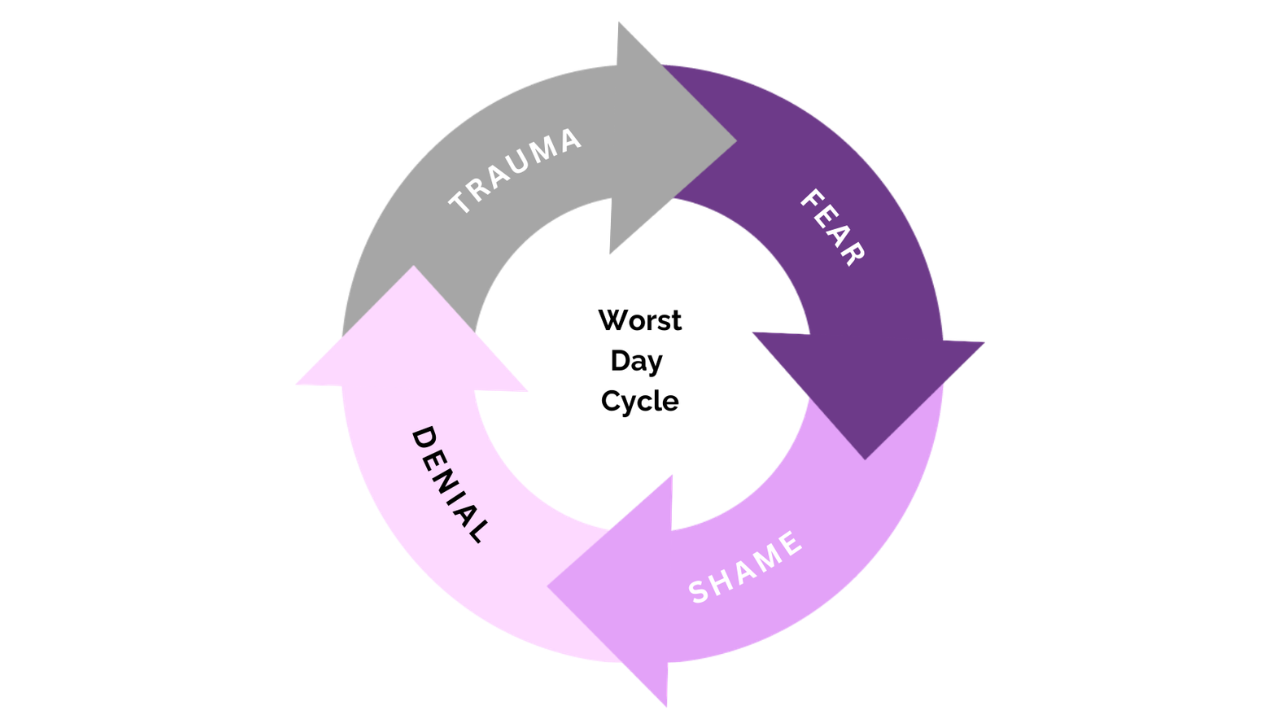
Understanding how you lose your boundaries requires understanding the Worst Day Cycle™—the four-stage neurological loop that activates every time your boundaries are tested.
Stage 1: Trauma. Childhood trauma is any negative emotional experience that created painful meanings about yourself. Your nervous system stores every painful moment as threat. A partner’s criticism, a parent’s disappointment—these activate your threat response as if you’re a child again. The hypothalamus generates chemical cocktails (cortisol, adrenaline, dopamine misfires) and your brain becomes addicted to these emotional states because they’re the only emotional home you know.
Stage 2: Fear. Fear drives repetition. Your brain thinks repetition equals safety. Since 70%+ of childhood messaging is negative and shaming, adults repeat these painful patterns. Your brain can’t tell right from wrong, only known versus unknown. And unknown feels dangerous.
Stage 3: Shame. Shame is where you lost your inherent worth. Where you decided “I am the problem.” Not “I made a mistake” but “I AM a mistake.” This is what makes you abandon your boundary—shame whispers that your needs don’t matter.
Stage 4: Denial. To survive unbearable shame, your psyche creates a survival persona—a false identity that says “I’m fine,” “It wasn’t that bad,” “Boundaries are selfish.” Three survival persona types emerge: falsely empowered (controls, dominates, rages), disempowered (collapses, people-pleases), adapted wounded child (oscillates between both).
That’s you if you’ve told someone “no” and then backed down when they got upset, or if you keep setting the same boundary that never seems to stick.
Sound familiar? That’s the Worst Day Cycle™ running your boundaries without your permission.
The Authentic Self Cycle™: How You Reclaim Them
The Authentic Self Cycle™ is the healing counterpart to the Worst Day Cycle™—a four-stage identity restoration system that transforms how you relate to boundaries permanently.
Stage 1: Truth. Name the blueprint. See “this isn’t about today.” When someone violates your boundary and you feel crushed, the truth is: “My nervous system is reacting to childhood, not to this moment. My partner isn’t my parent.”
Stage 2: Responsibility. Own your emotional reactions without blame. “My emotional response is mine to manage. I can feel triggered and still choose not to abandon myself.” This is where you reclaim agency.
Stage 3: Healing. Rewire the emotional blueprint so boundary-setting becomes uncomfortable but not dangerous. Space isn’t abandonment. Saying no isn’t selfish. Disagreement doesn’t mean the relationship is over.
Stage 4: Forgiveness. Release the inherited emotional blueprint and reclaim your authentic self. Forgiveness isn’t about excusing what was done to you. It’s about releasing your attachment to the blueprint that taught you boundaries were selfish.
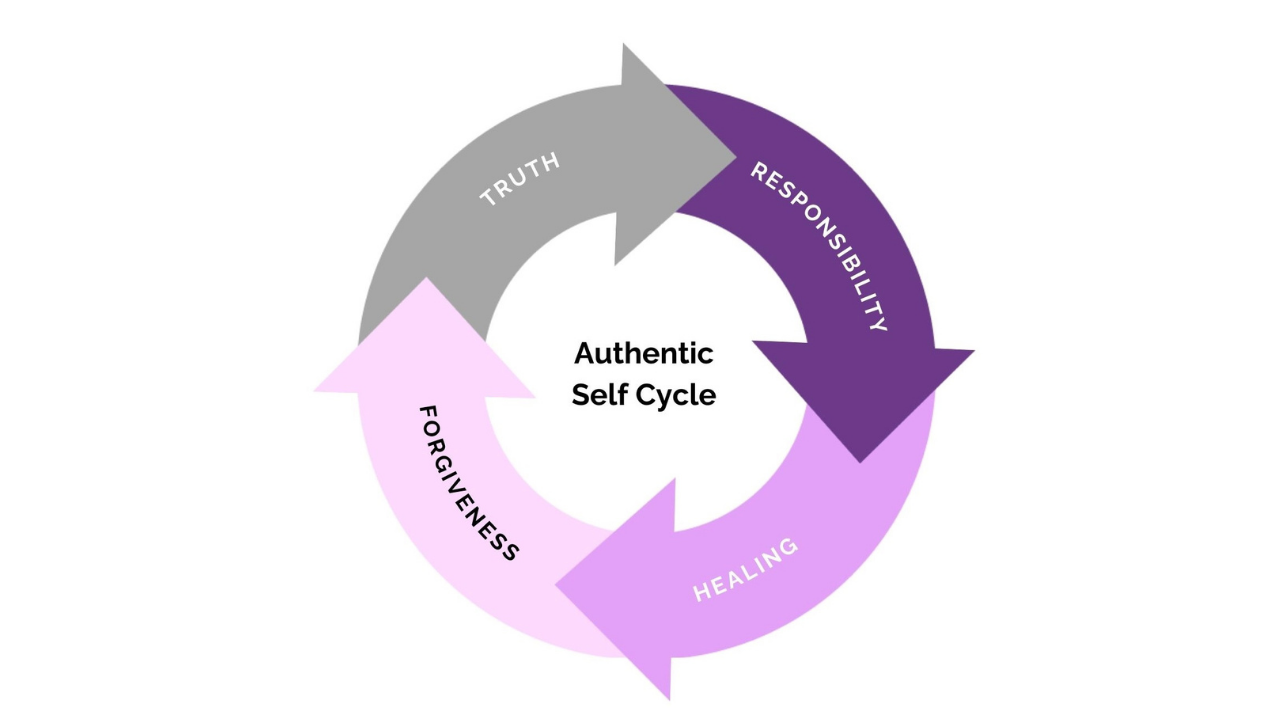
That’s you if you’re ready to stop abandoning yourself and start showing up for yourself with the same loyalty you show to everyone else.
The Emotional Authenticity Method™: 6-Step Framework for setting boundaries
The Emotional Authenticity Method™ is a 6-step process that rewires your nervous system and builds the skill of emotional integrity needed for strong boundaries.
Step 1: Somatic Down-Regulation. Before you set or enforce a boundary, settle your nervous system. Focus on what you can hear for 15-30 seconds. If you’re highly dysregulated, use titration—cold water on your face, stepping outside, holding ice. You cannot set a healthy boundary from a triggered state.
Step 2: What am I feeling right now? Use the Feelings Wheel to identify whether you’re feeling hurt, dismissed, violated, afraid, or furious. Emotional granularity activates your thinking brain and breaks the reactive cycle.
Step 3: Where in my body do I feel it? Emotions live in your body. Tightness in your chest? Knot in your stomach? Heat in your face? Locating the feeling physically grounds you in the present moment.
Step 4: What is my earliest memory of having this exact feeling? The boundary you’re struggling to set now likely echoes a boundary never honored in childhood. Seeing this connection is everything—it means the struggle is not about today.
Step 5: Who would I be if I never had this feeling again? Envision your Authentic Self—the version of you that sets boundaries from self-worth, not from fear. This reconnects you to the you beneath the survival persona.
Step 6: Feelization. Sit in the feeling of the Authentic Self and make it strong. Don’t just picture yourself setting the boundary—feel it. Feel the confidence, the groundedness, the worthiness. Create a new emotional chemical addiction to replace the old blueprint. Ask yourself: “How would I set this boundary from this feeling?” This is the emotional blueprint remapping and rewiring step.
That’s you if you know exactly what you should say but can’t get the words out when the moment arrives—your nervous system hasn’t been updated yet.
Survival Personas and Boundary Collapse: Three Patterns
The Falsely Empowered Persona
The falsely empowered survival persona believes: “I have to take control.” This persona sets boundaries aggressively—to punish, not protect. When the other person pushes back, you escalate, over-explain, and eventually exhaust yourself and collapse the boundary entirely, swinging back to caretaking.
That’s you if you’ve ever set a boundary that sounded more like a threat—your survival persona was controlling, not protecting.
The Disempowered Persona
The disempowered survival persona believes: “My needs don’t matter.” This persona doesn’t set boundaries at all, or sets them so weakly they’re easily dismissed. The collapse happens before the boundary is even tested—you talk yourself out of it.
That’s you if you rehearse boundaries in your head but never say them out loud—your disempowered persona convinced you it wasn’t safe.
The Adapted Wounded Child Persona
The adapted wounded child survival persona believes: “I need to be perfect so no one will hurt me.” This persona sets a boundary but softens it with apology and over-explanation, diluting it until it’s meaningless.
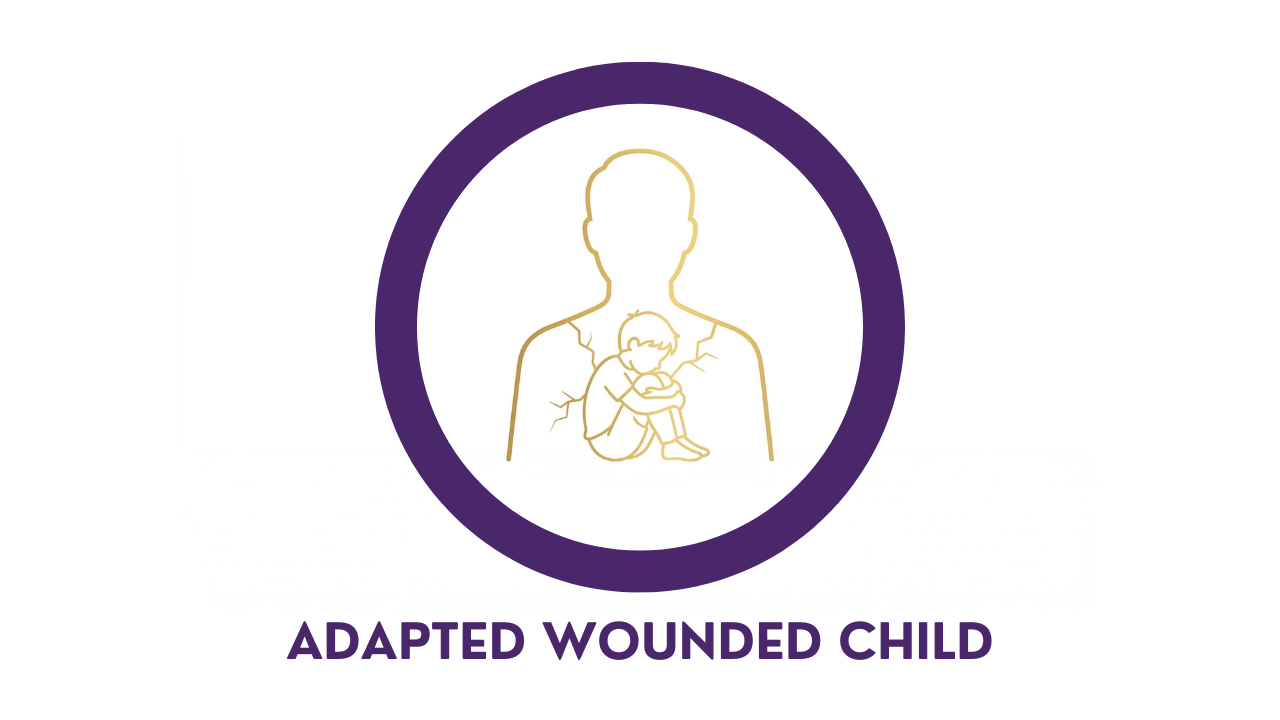
That’s you if you set a boundary and then immediately apologized for it—your adapted wounded child couldn’t tolerate the other person’s discomfort.
Sound familiar? Most of us recognize ourselves in all three of these personas at different times—because they were all brilliant childhood survival strategies.
Boundary Violations by Life Area: Where Do You Struggle?
Family Boundaries
Family is where boundary struggles originate. Signs you need family boundaries: parents showing up unannounced, parents questioning your parenting, siblings borrowing money without repaying, family members criticizing your partner, parents expecting you to manage their emotional well-being, or feeling obligated to attend every family event. Learn more about the signs of enmeshment.
That’s you if your parent’s mood still determines your entire day—even though you’re a grown adult with your own life.
Romantic Boundaries
Signs you need romantic boundaries: your partner criticizing you in front of others, your partner controlling how you spend money, you sacrificing your goals for theirs, you staying silent about needs to keep the peace, or feeling responsible for your partner’s moods. Explore deeper patterns in insecurity in relationships.
That’s you if you’ve ever said “I’m fine” when you weren’t—because speaking up felt more dangerous than suffering in silence.
Friendship Boundaries
Signs you need friendship boundaries: friends canceling plans constantly while expecting you to be available, friends confiding in you but never asking about yours, or feeling like you’re the one who always reaches out.
That’s you if you’re exhausted from being the therapist, the advice-giver, and the problem-solver for everyone while nobody holds space for you.
Work Boundaries
Signs you need work boundaries: your boss emailing after hours expecting immediate response, working through lunch, taking on projects outside your job description, or feeling unable to say no to requests.
That’s the survival persona running your career—you’re being promoted for the very pattern that’s destroying you from the inside out.
Body and Health Boundaries
Signs you need body boundaries: people hugging you when you don’t want to be touched, people commenting on your body, pressure to share medical information, or feeling obligated to be available for sex when you don’t want it.
That’s you if you’re exhausted from managing everyone else’s needs and have no idea what you actually need for yourself.
The Tennis Court Metaphor: Your Court, My Court, the Net Between Us
“We are two distinct individuals whose courts comprise our own morals, values, needs, wants, negotiables and non-negotiables. Everything on my side of the court is my responsibility. Everything on your side is yours. The net is the boundary.”
Most people with weak boundaries are playing tennis on both sides of the net simultaneously. You’re on your side, worried about your own game. You’re also on their side, trying to fix their game, make sure they win, and manage their emotional reaction to the score.
That’s you if you feel responsible for how other people experience you, if you apologize for things that aren’t your fault, or if you feel compelled to fix problems that belong to someone else.
The boundary work is about reinstalling the net. You stay on your side. You maintain your values, needs, and non-negotiables. You let them stay on their side. You stop trying to control their game.
The Emotional Container: Staying Protected and Open
“I want you to think of some sort of container you can put over yourself—thick enough that words and emotions can’t come through. But it needs a door to allow truth in.”
The Emotional Container is not a wall. It’s a protective vessel with a door. The container protects you from emotional manipulation, criticism, and shame-inducing comments. But the door remains open for truth, feedback that serves you, and genuine connection.
Sound familiar? If you absorb everyone’s energy, moods, and opinions like a sponge—the Emotional Container is the tool that will change everything.
People Also Ask
How do I set a boundary with someone who gets angry when I say no?
Their anger is their responsibility, not yours. When you set a boundary and someone reacts with anger, you’ve discovered their survival persona. Your job is not to manage their anger. Your job is to stay in your own Authentic Self Cycle™. Remember: “No one ever makes us feel anything—we always have the choice about how we respond.”
What’s the difference between a boundary and rejection?
A boundary protects yourself. Rejection abandons the other person. When you set a boundary, you’re saying: “I’m not available for this behavior, and I’m still committed to you as a person.” A healthy boundary says: “I won’t tolerate verbal abuse, and I still value our relationship.”
How long does it take for boundaries to actually stick?
Boundaries stick when your nervous system integrates them through Feelization. For most people, this takes consistent practice over weeks. Every time you’re tempted to collapse the boundary, you’re being invited to move through the Authentic Self Cycle™ again. Each cycle strengthens your nervous system.
Can you have boundaries and still be kind?
The most kind thing you can do is set a clear boundary. When you have clear boundaries, people know exactly where they stand with you. Kindness without boundaries is self-abandonment disguised as compassion. True kindness comes from a whole person who knows their limits. Explore this in the dos and don’ts for great relationships.
What do I do if someone violates my boundary repeatedly?
Repeated violations mean either your boundary isn’t clear, your consequence isn’t enforced, or you’re not emotionally committed to it. Start with Feelization. Make sure you’re genuinely connected to your boundary’s rightness. Then review your consequence—are you actually doing what you said you’d do?
How do I know if I’m setting boundaries or being controlling?
A boundary protects you. Control changes someone else. If your “boundary” includes dictating how the other person behaves, that’s control. A boundary says: “I won’t tolerate this behavior in my life.” Control says: “You must change this behavior.” A boundary is about you. Control is about them.
The Bottom Line
Boundaries are not rejection. Boundaries are not walls. Boundaries are not selfish. Boundaries are the most loving thing you can do—for yourself and for everyone in your life.
When you set a boundary, you’re saying: “I matter. My needs matter. My feelings matter. And I’m committed to protecting all of that.” You’re also saying to the other person: “I respect you enough to be honest with you about what I can and cannot do.”
The world doesn’t need you to abandon yourself. Your family doesn’t need you to sacrifice yourself. Your partner doesn’t need you to merge with them. The world needs you—whole, authentic, clear about what you need, and brave enough to say it. That’s what boundaries create. That’s what the Emotional Authenticity Method™ teaches. That’s what healing looks like.
Recommended Reading
- Facing Codependence by Pia Mellody — The foundational text on boundaries, survival personas, and codependence recovery.
- The Body Keeps the Score by Bessel van der Kolk — Essential reading on how trauma lives in the nervous system.
- When the Body Says No by Gabor Maté — How emotional repression and boundary collapse manifest as physical illness.
- Codependent No More by Melody Beattie — The classic guide to setting boundaries and stopping self-abandonment.
- The Gifts of Imperfection by Brené Brown — A guide to wholehearted living and the courage to show up as your authentic self.
Ready to Set Boundaries That Actually Stick?
Emotional Blueprint Starter Course — Individual ($79) — Understand your emotional blueprint and identify your survival persona.
Relationship Starter Course — Couples ($79) — Apply boundary work to romantic relationships and build secure connection.
Why We Can’t Stop Hurting Each Other ($479) — Deep dive into relationship patterns and the complete Worst Day Cycle™.
Why High Achievers Fail at Love ($479) — For the falsely empowered persona who succeeds at work but struggles in relationships.
The Shutdown Avoidant Partner ($479) — Understanding the disempowered partner and how to break the cycle.
Tier 1: Mapping the Blueprint ($1,379) — Complete training in the Emotional Authenticity Method™ with live coaching.
Start with the Feelings Wheel exercise to begin reconnecting with your emotional life today. Then explore the signs of genuine self-esteem to understand what boundary-setting builds toward.