
If you struggle with emotional regulation, you have probably tried every trick in the book. When you feel yourself getting triggered, you try to take deep breaths. You try to walk away. You try to explain your feelings rationally. You try to forcefully “let go” of the anger, the anxiety, or the resentment that seems to constantly bubble up inside of you.
That’s you… doing everything the therapists and self-help books told you to do, and still ending up right back in the same emotional spiral.
Most people try to manage their emotions logically, and trauma survivors try to control them.
But despite all your coping skills, the trigger still wins. You still explode. You still shut down. You still say things you regret, or you still collapse into a shame spiral. And then the guilt sets in, making you wonder, “Why can’t I just control myself? What is wrong with me?”
That’s you… blaming yourself for a reaction your nervous system automated before you were old enough to spell your own name.
If this is you, I want you to hear this loud and clear: There is nothing wrong with you. Your emotional reactions are not overreactions, and they are not flaws or failures.
The reason you cannot manage your emotions is that you are trying to fix a symptom instead of treating the root cause. Here is why trying to “control” your emotions is scientifically backward, what is actually happening in your nervous system when you get triggered, and the exact 3-Step Emotional Authenticity Process you need to use to stop managing your triggers and start healing them at their origin.
Why Are Your Emotions Reactivations of Your Childhood Blueprint, Not Present-Moment Reactions?
Let’s start with the fundamental paradigm shift you need to make to regulate your emotions.
Emotions aren’t created in the present; they’re reactivated from the past.
When you get triggered by your partner’s tone of voice, a vague email from your boss, or a feeling of being ignored, you are not responding to the moment. You are responding to the earliest moment your body learned that specific feeling.
That’s you… thinking the problem is your spouse’s tone when the real problem is the tone your parent used when you were four years old.
Every single adult emotional state traces back to an early childhood emotional blueprint. It traces back to a moment where you felt unseen, a tone of voice that terrified you, a parent’s disappointment you internalized as shame, or the silence you mistook as rejection. Because your body remembers what your mind doesn’t, your nervous system brings that childhood terror right into the present moment.
If you don’t know the origin of your trigger, you will always think your adult emotions are irrational. You will think you are just “too sensitive.” But when you do know the origin, the reaction makes perfect sense.
That’s you… calling yourself “too sensitive” when your nervous system is doing exactly what it was trained to do by a childhood that required constant vigilance.
You don’t need to manage your emotions; you need to understand them, trace them to their origin, and remap the definitions that created your emotional blueprint.
As neuroscientist Dr. Lisa Feldman Barrett’s research demonstrates, emotions are not hardwired reactions to present events — they are predictions your brain constructs based on past experience. Your childhood emotional blueprint is the prediction engine that fires before your conscious mind even registers what happened.

What Actually Happens in Your Nervous System When Two Worst Day Cycle™ Patterns Collide?
To understand how to translate your emotions, we have to look at what a trigger actually is.
A trigger is not the event itself. A trigger is a memory, a meaning, and a nervous-system pattern firing all at once.
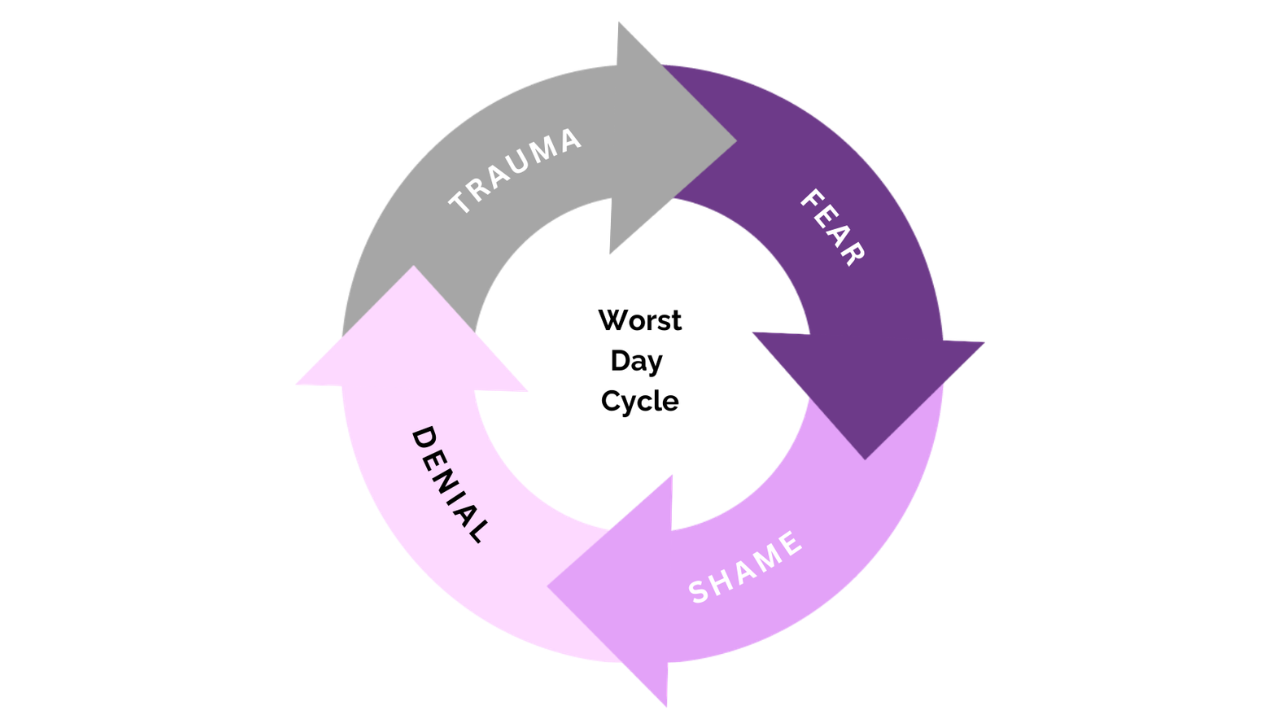
When you experience a stressful event, your brain immediately references your Worst Day Cycle™ to predict danger. It finds an old emotional definition—like “silence means I’m being abandoned” or “criticism means I’m worthless”—and it floods your body with the exact same fear and shame you felt as a child.
That’s you… standing in your kitchen having a conversation about dishes, but your nervous system thinks it’s 1987 and your father is about to explode.
Because you don’t realize this is a memory, you project all of that pain onto the person standing in front of you. You put your critical parent’s face on your spouse. You put your childhood bully’s face on your coworker. You engage in what I call “The Race to the Victim Position,” where both you and your partner become locked in a competition for emotional legitimacy, demanding validation before the conversation can continue.
That’s you… both screaming “You don’t understand me!” when neither of you is actually talking to the person in the room — you’re both talking to the parent who hurt you.
This is not a communication issue; it is a Worst Day Cycle™ collision. You are both reacting from your child-self. And you cannot heal a relationship, or yourself, while the wounded child is driving the car.
This collision plays out through three distinct survival persona patterns: the Falsely Empowered type who controls and dominates to avoid vulnerability, the Disempowered type who collapses and people-pleases to avoid abandonment, and the Adapted Wounded Child who alternates between both extremes depending on which threat feels most immediate.
Why Do Coping Skills Fail When Your Teapot Is Already Screaming?
To give you a visual of why coping skills fail and why we explode, I want you to think of your emotional capacity like a teapot on a stove.
Emotional experiences are like water being poured into a teapot: daily events, absorbing other people’s feelings, over-responsibility, and work stress. If you are a trauma survivor or a high achiever, your survival persona has trained you to ignore the water level. You just keep pouring more and more in, suppressing the feelings, ignoring your boundaries, and turning up the heat.
That’s you… absorbing everyone else’s emotional overflow while pretending your own teapot isn’t about to blow.
Most clients don’t notice the teapot until it’s completely full, sitting on the stove, and screaming like a kettle.
When the teapot screams, what do you do? You explode on the safest person around you—usually your partner or your kids. And then you try to use “Emotional Intelligence” to shove a cork into the spout of a boiling teapot. It doesn’t work. The pressure is too high.
That’s you… reading one more book about emotional intelligence while your teapot is already at full boil and your partner is walking on eggshells.
The corrective practice isn’t learning how to hold the steam in. The corrective practice is learning how to take the teapot off the stove and empty the water at the root.

How Does the 3-Step Emotional Authenticity Process Heal Triggers at Their Childhood Origin?
How do we empty the teapot and stop the trigger at its source? We use the Emotional Authenticity 3-Step Process.

This is the core tool for uncovering the childhood origins of your adult emotional reactions. The next time you feel the heat rising, the chest tightening, or the urge to explode or withdraw, I want you to stop trying to manage the other person. Stop focusing on what they did wrong.
That’s you… about to launch into a lecture about what your partner did wrong when the real question is: what are YOU feeling right now?
Instead, turn inward and ask yourself these three questions:
Step 1: What am I feeling? This anchors you in the emotional present. It interrupts the story, the narrative, the blame, the projection, and the denial persona. You are not analyzing the situation; you are identifying the core emotion. Are you feeling sad, afraid, ashamed, or lonely? Name it.
Step 2: Where do I feel it in my body? Your body carries every emotional blueprint. Locate the sensation. Is it a knot in your stomach? Heaviness in your limbs? Constriction in your throat? By finding the sensation, you bypass the adult story that hides the childhood origin. You are entering the doorway to the original memory.
Step 3: What is my earliest memory of this feeling? This is the breakthrough moment. Follow the physical sensation back in time. Your adult reaction will immediately stop feeling irrational or confusing because you will see: “Oh… this isn’t about today. This is about when I was five.” You reconnect the feeling, the body sensation, the earliest memory, and the emotional meaning you adopted that still runs your life. This is the moment your adult self can finally step forward, empty the teapot safely, and soothe the wounded child.
That’s you… finally understanding that the rage you felt about the unwashed dishes was actually the grief of a five-year-old who was never allowed to have needs.
Download Kenny’s free Feelings Wheel to build the emotional granularity you need for Step 1 — most people cannot name what they actually feel because no one ever taught them.
How Does Somatic Titration Lower Your Nervous System Temperature Before Using the Framework?
Now, I need to give you a crucial warning. If you are highly emotionally dysregulated, you won’t want to start with these three questions. When your teapot is already screaming and boiling over, asking yourself deep, root-cause questions can actually raise your emotional temperature. You first need to lower the heat, take the teapot off the stove, and get somatically grounded so you can access metacognition.
That’s you… trying to do deep inner work while your nervous system is at a 9 out of 10, and wondering why it makes everything worse.
To do this, use the somatic titration process. Start by spending 30 seconds focusing entirely on your physical environment—specifically, what you can hear. Listen to the hum of the fridge or the traffic outside. Then, bring the trigger back up into your consciousness for 30 seconds. Because you grounded yourself, it will already feel a little less intense. Then, shift your focus back to listening to your environment for another 30 seconds.
Do this back-and-forth process three to five times. By doing this, you are unsticking your emotional thermostat, lowering the temperature of your teapot, and bringing your prefrontal cortex back online so you can safely ask the three questions and heal the root.
That’s you… finally having a tool that works BEFORE you try to do the deep work, instead of white-knuckling through another breathing exercise that does nothing.
As Dr. Bessel van der Kolk’s research in The Body Keeps the Score demonstrates, trauma lives in the body’s sensory memory, not in the cognitive narrative. Somatic titration works because it speaks the body’s language — regulating the nervous system through sensation rather than trying to think your way out of a survival response.

What Do Emotional Triggers Look Like Across Every Area of Your Life?
If you are still wondering whether this applies to you, let me show you what unhealed emotional triggers look like when they play out across every area of your life — because the childhood blueprint does not stay in therapy. It follows you everywhere.
Family: You go home for the holidays determined to stay calm. You have your coping skills ready. But thirty minutes in, your mother uses that tone and your entire nervous system floods. You either rage like the Falsely Empowered survival persona or collapse into people-pleasing like the Disempowered type. Later, you tell yourself you “should have handled it better.” But the truth is, your childhood emotional blueprint predicted danger and flooded your body with the same chemistry you felt at age six — before your coping skills ever had a chance to activate.
That’s you… armed with every coping strategy in the book and still becoming a terrified child the moment your mother sighs.
Romantic Relationships: Your partner asks for space and your body floods with abandonment panic. Or your partner gets emotional and your survival persona shuts everything down. You have read the books. You know the communication scripts. But none of it works because every argument is a collision between two Worst Day Cycle™ patterns — two wounded children fighting for survival, not two adults having a conversation. The enmeshment pattern fires before either of you can access your adult self.
That’s you… using “I feel” statements in couples therapy while your nervous system is screaming “DANGER” at a volume no communication technique can override.
Friendships: You over-give until you are depleted, or you keep everyone at arm’s length. You tell yourself this is just “who you are.” But it is actually your survival persona running the same codependent pattern it learned in childhood — and no amount of setting “better boundaries” changes the neural pathway that makes you abandon yourself the moment someone needs something from you.
That’s you… setting a boundary on Monday and completely dissolving it by Wednesday because the guilt your childhood blueprint generates is louder than any self-help book.
Work and Career: One critical email and your shame floods in. One performance review and you spiral for days. Your self-esteem was never built on authentic self-worth; it was built on performance — the Falsely Empowered survival persona’s strategy for earning love through achievement. When the achievement is questioned, the entire foundation collapses because there was never a foundation underneath the performance.
That’s you… running a company, managing a team, and leading meetings — while a single sideways comment from your boss can send you into a shame spiral that lasts three days.
Parenting: Your child pushes back, and you hear your parent coming out of your mouth. You swore you would never yell like that, never control like that, never withdraw like that. But the survival persona does not care about your promises — it cares about survival. When your child triggers the same feeling your parent triggered in you, the same Worst Day Cycle™ fires, and you become the very parent you swore you would never be.
That’s you… reading every parenting book on the shelf and still hearing your mother’s voice come out of your mouth the moment your child defies you.
What Is Your Next Step to Start Healing Your Triggers at the Root?
You don’t need to manage your emotions; you need to trace them back to their origin, translate them, and redefine them. This process doesn’t just make you emotionally strong—it makes you emotionally free.
That’s you… finally understanding that emotional freedom is not about controlling your reactions — it is about healing the childhood wound that makes the reaction automatic.
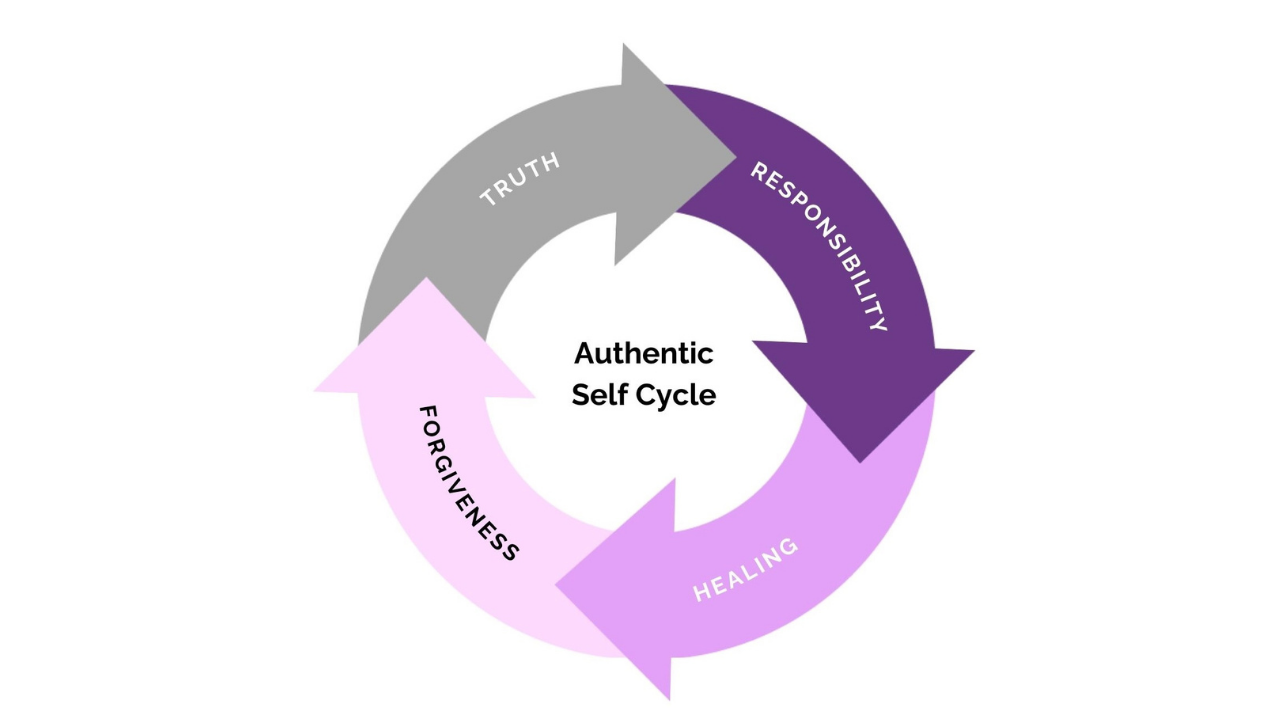
These are just the beginning steps of the Emotional Authenticity Method™ and Authentic Self Cycle™ repair processes. They will get you started.
If you are sitting there right now, feeling overwhelmed and needing immediate guidance, there is something that will really help you. Go to KennyWeiss.net and talk to the brand-new AI clone. I have uploaded my entire brain—every book, every framework, and every solution you need directly into this AI. It is completely free to use, and it is literally like having a one-on-one conversation with me. You can ask it about your triggers, your relationship struggles, or your Worst Day Cycle™, and it will give you the exact, root-cause feedback I would give you. Go test it out and get the help you need right now.
While you are there, you can also take the completely free Childhood Assessment to help you identify the exact emotional origins of your emotional blueprint Worst Day Cycle™. For those of you who are ready to map out your specific survival-persona triggers and stop this loop for good, check out the books, classes, emotional freedom assessments, and private coaching to find what fits your emotional-blueprint remapping journey.
Whatever choice you make, just know that when you are ready, you now have a root-level solution, not a symptom-based topical band-aid approach, that will provide you with the root-level emotional regulation you are looking for.
And don’t forget: You are not to blame, and you are not broken. You were just programmed, and programs can be rewritten. You did the best you could with the information you had at the time. But now that you know more, you can equip yourself with the tools to do more.
If This Article Hit Home, the Book Goes Deeper
Everything I write about on this site — the Worst Day Cycle™, your childhood emotional blueprint, why you keep repeating the same patterns no matter how hard you try — it all started with my first book, Your Journey To Success: How to Accept the Answers You Discover Along the Way.
This is the book readers call “the first time I found a roadmap I could actually understand and that seemed attainable.” It is the book that walks you through WHY your life hasn’t changed despite all the work you’ve done — and shows you, step by step, exactly how to break free. No fluff. No motivational hype. Just the truth about what was done to you, why it stuck, and what to do about it.
If you’ve read this far, you already know something needs to change. This book is where that change starts.
Ready to Stop Understanding the Problem and Start Rewiring It?
The article you just read scratches the surface. My new book, Your Journey To Being Yourself: How to Overcome the Worst Day Cycle & Reclaim Your Authentic Self with Emotional Authenticity, gives you the complete system — the Worst Day Cycle™, the Authentic Self Cycle™, and the full Emotional Authenticity Method™ — all in one place, with the neuroscience behind every step.
This is the book readers call “a genius piece of art in mastering emotion and the art of healing.” It speaks directly to the person who feels stuck, overwhelmed, and confused by the same repeating patterns — the same arguments, the same relationship breakdowns, the same shame — and is done accepting surface-level answers. Every chapter combines powerful stories, clear steps, and practical tools that show you how to rewire your emotional patterns from the inside out.
You are not broken. You were programmed. And this book shows you exactly how to rewrite the program.
Frequently Asked Questions
Can you really stop emotional triggers instantly?
Not by suppressing them or using coping skills in the moment — that is symptom management. You stop triggers by tracing them to their childhood origin using the 3-Step Emotional Authenticity Process. When you reconnect the adult reaction to the earliest memory, the trigger loses its power because your brain updates its prediction. The “instant” shift is the moment of recognition: “This is not about today. This is about when I was five.”
What is the difference between the Emotional Authenticity Method™ and traditional coping skills for emotional regulation?
Coping skills manage the symptom — the boiling teapot. The Emotional Authenticity Method™ traces the trigger to the childhood emotional blueprint that created it and rewires the emotional definition at the root. Coping skills ask “How do I calm down?” The EAM asks “Why does this feeling exist in the first place, and what childhood memory is it connected to?”
What is somatic titration and why do I need it before using the 3-step process?
Somatic titration is a nervous system regulation technique where you alternate between grounding in your physical environment (30 seconds) and briefly touching the trigger (30 seconds), repeated three to five times. You need it because when your nervous system is at a 9 out of 10, asking deep root-cause questions can actually raise your emotional temperature. Titration lowers the heat first so your prefrontal cortex comes back online.
What is the Worst Day Cycle™ and how does it cause emotional triggers?
The Worst Day Cycle™ is Kenny Weiss’s framework for understanding the continuous loop of trauma, fear, shame, and denial that was installed in childhood. When you experience a stressful event, your brain references your Worst Day Cycle™ to predict danger, finds an old emotional definition, and floods your body with the same chemistry you felt as a child — all before your conscious mind registers what happened. Your triggers are your Worst Day Cycle™ firing on autopilot.
Why do I keep having the same emotional reactions even after years of therapy?
Because most therapy approaches manage the symptom rather than healing the root. If your therapy taught you to “notice” your feelings, “reframe” your thoughts, or “breathe through” your triggers, it was working at the level of the boiling teapot, not the fire underneath it. The childhood emotional blueprint that drives your reactions has heavily myelinated neural pathways that require root-cause work — not cognitive reframing — to actually rewire.
How do the three survival persona types show up during emotional triggers?
The Falsely Empowered survival persona triggers into control, dominance, and anger — “I will overpower this threat before it overpowers me.” The Disempowered survival persona triggers into collapse, people-pleasing, and shame — “I will make myself small so the threat passes.” The Adapted Wounded Child alternates between both extremes depending on which threat feels most immediate. All three are automated survival strategies installed in childhood, not conscious choices.
The Bottom Line
Your emotional triggers are not character flaws, personal failures, or signs that something is wrong with you. They are reactivations of a childhood emotional blueprint that was installed before you had any say in the matter. Every explosive reaction, every shutdown, every shame spiral traces back to a specific moment in childhood where your nervous system learned a definition that it has been firing on autopilot ever since. Coping skills cannot reach this blueprint because they work at the level of the symptom, not the root. The 3-Step Emotional Authenticity Process — combined with somatic titration when your nervous system temperature is too high — gives you the framework to trace every trigger to its origin, reconnect the feeling to the earliest memory, and rewire the definition that has been running your life. You were not broken. You were programmed. And programs can be rewritten.
Recommended Reading
Explore more of Kenny Weiss’s root-cause approach to emotional regulation and trauma recovery:
• The Signs of Enmeshment — How childhood boundary violations create the emotional triggers that hijack your adult relationships
• Insecurity in Relationships: 7 Signs — Why your survival persona creates the very insecurity it is trying to protect you from
• Signs of High Self-Esteem — What authentic self-worth looks like when it is built on your Authentic Self instead of your survival persona’s performance
• 10 Do’s and Don’ts for a Great Relationship — Root-cause relationship principles that go beyond communication scripts to address the Worst Day Cycle™ collision
• The Feelings Wheel: A Life-Changing Exercise — Build the emotional granularity you need for Step 1 of the Emotional Authenticity Process
Take Your Next Step With Kenny Weiss
If this article resonated with you and you are ready to stop managing your triggers and start healing them at their childhood origin, explore these resources:
Start Here:
• Emotional Blueprint Starter Course — Individual ($79) — Your individual roadmap for identifying your Worst Day Cycle™ patterns and the survival persona that drives your emotional triggers
• Relationship Starter Course — Couples ($79) — Map the collision between both partners’ childhood emotional blueprints so you stop triggering each other’s Worst Day Cycles
Go Deeper:
• Why We Can’t Stop Hurting Each Other ($479) — Understand the Worst Day Cycle™ collision between two survival personas in relationship
• Why High Achievers Fail at Love ($479) — For the Falsely Empowered survival persona who controls instead of connects
• The Shutdown Avoidant Partner ($479) — Root-cause work for the survival persona that withdraws and intellectualizes
Full Transformation:
• Tier 1: Mapping the Blueprint ($1,379) — The comprehensive program for healing your childhood emotional blueprint and reconnecting with your Authentic Self
Download Kenny’s free Feelings Wheel to begin building emotional granularity — the foundation of naming your core emotions accurately so the 3-Step Process can work.