
You say yes when every cell in your body is screaming no. You volunteer for the project you don’t have time for. You apologize for something that wasn’t your fault — again. You rearrange your entire schedule because someone else “really needs” you, and the knot in your stomach gets a little tighter, but you smile through it because that’s what you do. That’s who you are. The helpful one. The reliable one. The one who never lets anyone down.
Except yourself. You let yourself down every single time.
People pleasing is not a personality trait. It is a trauma response — a survival persona created in childhood to manage the terror of powerlessness, and it has been running your nervous system on autopilot ever since.
The fear of powerlessness is the most prevalent and most destructive pattern that comes out of childhood. When you were a child, your survival depended on your caregivers. You couldn’t feed yourself, protect yourself, or leave. If your authentic self was rejected — if your feelings were dismissed, your needs were ignored, or your voice was silenced — you learned one devastating lesson: who I really am isn’t safe to show. And so you created an identity organized around making other people comfortable, because in childhood, that was how you stayed alive.
That’s you if you’ve spent your whole life taking care of everyone else and can’t remember the last time someone asked what you need. That’s you if the word “no” gets stuck in your throat like it’s a foreign language. That’s you if you’re exhausted, resentful, and you don’t even know how you got here — because you were too busy making sure everyone else was okay.
This isn’t about learning to “set boundaries” or practicing saying no in a mirror. This is about what your brain did with pain it couldn’t process — and what happens when you finally understand why you can’t stop giving yourself away.
What Is People Pleasing Really? (It’s Not Kindness)
Where People Pleasing Actually Comes From
Four Signs You’re Trapped in the Fear of Powerlessness
How People Pleasing Shows Up in Every Area of Life
The Worst Day Cycle™: Why Your Brain Keeps Giving You Away
Three Survival Personas That Keep People Pleasing Alive
The Emotional Authenticity Method™: How to Stop People Pleasing at the Root
The Authentic Self Cycle™: Replacing People Pleasing With Authentic Connection
The Three Questions That Change Everything Before You Say Yes
FAQ: Questions People Also Ask About People Pleasing
The Bottom Line
Recommended Reading
 childhood trauma response" width="600" style="max-width:100%;height:auto;" />
What Is People Pleasing Really? (It’s Not Kindness)
Most articles about people pleasing will tell you it’s about “having trouble with boundaries.” They’ll give you scripts, assertiveness exercises, and tips on saying no. And none of it works — because they’re treating a biochemical survival pattern with cognitive strategies that can’t reach the wound.
You cannot change emotional patterns through thoughts alone. Emotions are biochemical events. Thoughts originate from feelings. People pleasing isn’t a boundary problem — it’s a shame problem that started before you ever had the power to draw a boundary.
People pleasing is what happens when a child learns that their authentic self — their real feelings, real needs, real desires — will be met with rejection, punishment, or abandonment. The child doesn’t conclude “my parent can’t handle my emotions.” The child concludes “something is wrong with me.” And from that moment, the child begins performing. Smiling when they’re hurt. Agreeing when they disagree. Helping when they’re depleted. Because performing kept the attachment intact. And attachment meant survival.
That’s you if you learned early that love was conditional — that you had to earn it by being good, quiet, helpful, easy, or invisible.
The brain conserves energy by repeating known patterns. It can’t tell right from wrong — only known from unknown. Since 70% or more of childhood messaging is negative and shaming, the brain treats self-abandonment as “normal” and self-advocacy as “dangerous.” Your people pleasing isn’t generosity. It’s your nervous system replaying the only survival strategy it ever learned.

Where People Pleasing Actually Comes From
People pleasing doesn’t appear out of nowhere in adulthood. It was installed in childhood — during the moments when your authentic self was met with rejection instead of affirmation.
We are the only species on this planet where we must physically and emotionally attach to another human being or we will die. Our survival depends on it. There are tremendous moments in childhood where our sense of self — our authenticity — is challenged. Our parents impart their views on us. “If you don’t stop crying, I’ll give you something to really cry about.” “Children are to be seen and not heard.” Comments like these make it clear we cannot express our authentic selves. And we are powerless to prevent them.
Trauma and shame are conditions of powerlessness. We lose our inherent power because we are an infant, a young child, a developing child — survival depends on our caregivers. If we don’t adapt in that moment, if we don’t create a survival persona that gives us away and puts us in the position of pleasing, we won’t survive.
So the child creates a strategy. The child who got shamed for having needs learns to never ask. The child who got punished for saying no learns to always agree. The child who got rewarded for caretaking learns that their only value is in what they do for others. And the child who watched a parent’s mood swing like a wrecking ball learns to scan every room, read every face, and adjust their entire being to keep things calm.
That’s you if you can feel the emotional temperature of a room before you’ve said a word. That’s you if your radar for other people’s feelings is flawless — but you can’t name your own.
The hypothalamus generates chemical cocktails of cortisol, adrenaline, dopamine, and oxytocin misfires in response to those childhood moments — and the brain becomes addicted to these emotional states. Self-sacrifice feels “normal.” Being chosen for who you actually are feels terrifying. The fear of powerlessness from childhood becomes the operating system of your adult life, and people pleasing is the software it runs.
Four Signs You’re Trapped in the Fear of Powerlessness
The fear of powerlessness is the engine underneath people pleasing. It doesn’t always look like what you’d expect. Here are the four signs that you’re living inside it.
You Focus on What You Can’t Control Instead of What You Can
You spend all day worrying about what other people think, feel, or might do. You rehearse conversations. You catastrophize. You try to control outcomes that were never yours to control — because as a child, you had no control over your parents’ abandonment, addiction, divorce, moods, or rules. Your nervous system is still operating from that childlike state, stuck reliving the problem instead of focusing on a solution. The powerlessness you feel today is the powerlessness you felt then — you just don’t realize it’s a memory.
That’s you if you spend more energy managing other people’s feelings than living your own life. That’s you if “what if” runs on a loop in your head from the moment you wake up.
You Give Yourself Away
You go against your own morals, values, needs, wants, negotiables, and non-negotiables to keep the peace, avoid conflict, or make someone else happy. You don’t even know you’re doing it most of the time — because you’ve been doing it since childhood. The pattern is so deeply wired that self-betrayal feels like love and self-advocacy feels like selfishness.
That’s you if you’ve ever said “I’m fine” when you were falling apart inside — because someone else’s comfort mattered more than your truth.
You Cannot Say No
Most people can’t say no because they think it’s rude, mean, or selfish. But this belief originated in childhood — because in essence, you could never say no to your parents. You were powerless. A child who says no risks losing the attachment they need to survive. So “no” became coded as dangerous in your nervous system. And now, decades later, the word still gets stuck in your throat.
That’s you if you’ve agreed to things that made you sick inside — and then hated yourself for not speaking up.
You Don’t Trust the Process of Life
You try to control everything because trusting anything — any person, any situation, any outcome — means surrendering the vigilance that kept you alive as a child. People pleasers don’t trust life because trusting life requires trusting yourself, and you were taught that who you are can’t be trusted. So you micromanage, overfunction, and exhaust yourself trying to make sure nothing goes wrong — because if something goes wrong, your childhood blueprint says it will be your fault.
That’s you if relaxation feels more dangerous than chaos. That’s you if you can’t sit still without the anxiety that something bad is about to happen.

How People Pleasing Shows Up in Every Area of Life
People pleasing doesn’t stay in one relationship. It infiltrates everything — because the shame blueprint that created it touches every area of your life.
Family
You revert to the child you were the moment you walk through your parents’ door. You bite your tongue at dinner. You absorb their criticism without responding. You take on their emotions, their problems, their moods — because that was your role. The people pleasing started here, and it’s strongest here, because these are the people who installed the powerlessness in the first place.
That’s you if you leave family gatherings emotionally drained and wondering why you didn’t say any of the things you rehearsed on the drive over.
Romantic Relationships
You lose yourself in relationships. You abandon your morals, values, needs, and wants to keep your partner happy — or to keep them from leaving. You attract partners who take without giving, who need you to perform, who confirm the childhood belief that your value lies only in what you provide. And when they pull away, you chase harder — because your nervous system reads their distance as the abandonment that almost killed you in childhood.
That’s you if you’ve ever looked up in the middle of a relationship and realized you have no idea who you are anymore. That’s you if you give and give and give — and then resent them for not giving back.
Friendships
You’re the listener, the planner, the emotional garbage disposal for everyone else’s pain. You cancel your own plans to show up for theirs. You perform being “fine” so convincingly that nobody ever asks if you’re okay — and the loneliest part is that everyone believes the performance. You don’t share what’s really going on because you’re terrified that if they saw the real you, they’d leave.
That’s you if your friendships feel more like a job than a connection — and you’re the only one on the clock.
Work and Career
You say yes to every project. You stay late while everyone else goes home. You absorb criticism without defending yourself and deflect praise like it’s an accusation. Your childhood blueprint for “my worth comes from what I produce” now runs your entire professional identity. You overfunction so no one can ever say you didn’t do enough — because “not enough” is the shame wound that runs everything.
That’s you if you’ve burned out multiple times and each time told yourself “I just need to try harder.” That’s you if you can’t accept a compliment from your boss without immediately listing what you should have done better.
Body and Health
Every chronic pattern of people pleasing is the mind’s attempt to manage a powerlessness wound the body has been carrying since childhood — and when that wound goes unaddressed, it doesn’t just stay emotional. It becomes physical.
The cortisol from chronic self-abandonment breaks down cells over time. The tight jaw, the stomach problems, the tension headaches, the insomnia, the autoimmune flares — your body has been absorbing the impact of saying yes when you mean no for years. People pleasing isn’t just exhausting mentally. It’s destroying you physically. Your body is keeping score even when your mind refuses to.
That’s you if your body has been trying to tell you something for years — and you keep overriding it because someone else needs you more.
The Worst Day Cycle™: Why Your Brain Keeps Giving You Away
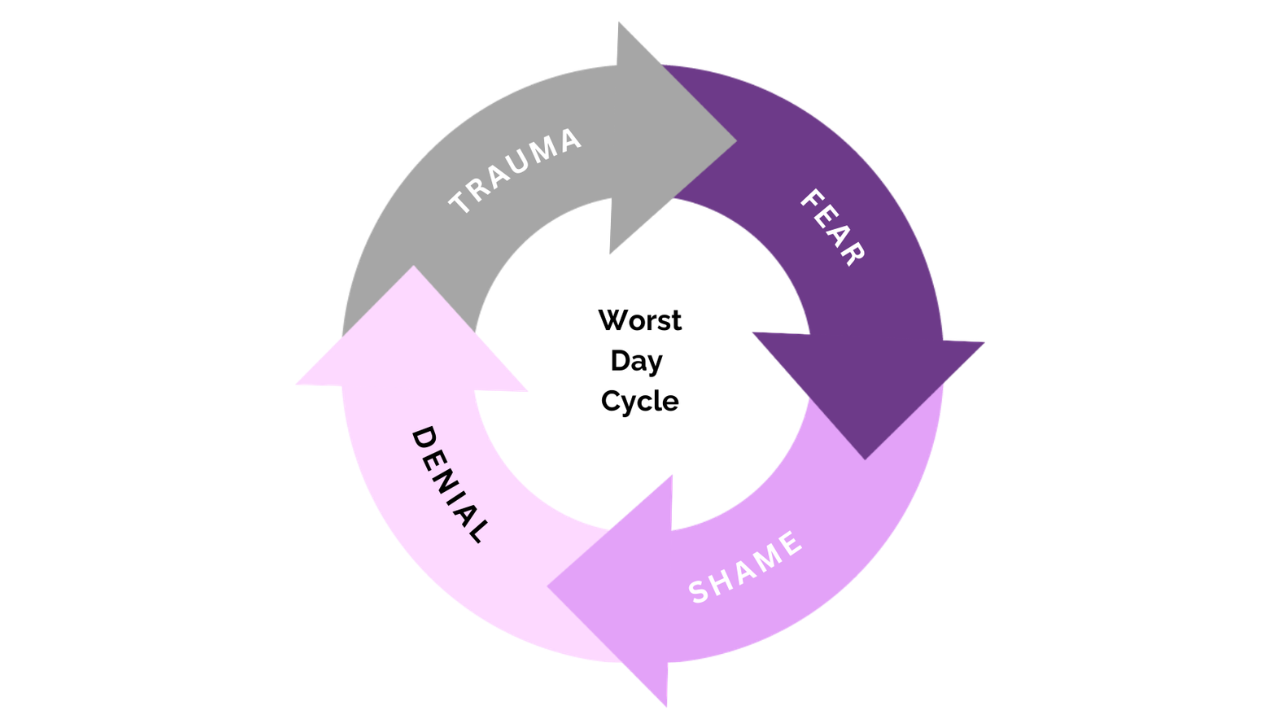
To understand why you can’t stop people pleasing — even when you know it’s destroying you — you need to understand the Worst Day Cycle™. This is the cycle that explains why the brain and body keep repeating painful patterns long after the original event is over.
The Worst Day Cycle™ has four stages: Trauma → Fear → Shame → Denial.
Trauma is any negative emotional experience that created painful meanings. It doesn’t have to be dramatic. It could be the constant pressure to perform, a parent’s disappointment when you expressed a need, or the chronic feeling that who you were wasn’t welcome unless you were useful. That experience triggered a massive chemical reaction in the brain and body. The hypothalamus generated chemical cocktails of cortisol, adrenaline, dopamine, and oxytocin misfires — and the brain became addicted to these emotional states.
Fear drives the repetition. The brain conserves energy by repeating known patterns. It can’t tell right from wrong — only known from unknown. Since 70% or more of childhood messaging is negative and shaming, your brain learned that self-abandonment is “safe” and self-assertion is “dangerous.” Every time you say yes when you mean no, that’s your brain choosing the known pattern of compliance over the terrifying unknown of speaking your truth.
Shame is where you lost your inherent worth. “I am the problem.” When your authentic self was rejected in childhood — when having needs was punished, saying no was dangerous, or your feelings were dismissed — you didn’t conclude “my parents couldn’t handle this.” You concluded “something is wrong with me.” That shame went underground and became the silent engine that drives every act of self-betrayal.
Denial is the survival persona you created to survive the pain. For the people pleaser, denial sounds like “I just like helping people” or “I’m just a giving person” or “it’s easier to just go along.” Denial keeps you from looking at what’s actually underneath the pleasing — because looking at it means feeling the original powerlessness, and that feels like it could destroy you.
That’s you if you’ve justified the people pleasing as “who I am.” That’s you if someone suggesting you’re a people pleaser makes you defensive — because the survival persona can’t afford to be seen through.
Three Survival Personas That Keep People Pleasing Alive
The denial stage of the Worst Day Cycle™ doesn’t look the same for everyone. It shows up as one of three survival personas — patterns that were created in childhood to manage the overwhelming powerlessness. Each one keeps the pattern running in a different way.
The Disempowered Survival Persona
This is the classic people pleaser. They collapse, people-please, and give themselves away. They were given no power in childhood — usually the scapegoat, the black sheep, or the one who was always in trouble. This type of abandonment and powerlessness gets manifested by being a people-pleaser or being frozen and helpless. They learned they could not ask for what they needed. They learned they could not say no. They go against their own morals, values, needs, and wants. The confluence of these two factors means they “give themselves away,” which leaves them feeling powerless, out of control, and thus disempowered.
That’s you if your first instinct in any situation is to ask someone else what you should do — because trusting your own judgment feels impossible. That’s you if you apologize for existing.
The Falsely Empowered Survival Persona
This person doesn’t look like a people pleaser — they look bulletproof. They control, dominate, and rage. But underneath the confidence is the same powerlessness wound, just managed differently. They were given too much power in childhood — usually the golden child, the confidant, or the one made to take care of siblings or the parents themselves. While society celebrates the overworked high achiever, they feel just as powerless and empty as the more frozen and helpless. Their people pleasing is hidden inside performance — they please through achievement, through being indispensable, through making sure no one can ever say they didn’t deliver.
That’s you if you respond to the fear of powerlessness by becoming the most powerful person in the room — and the emptiness is still there when the applause stops.
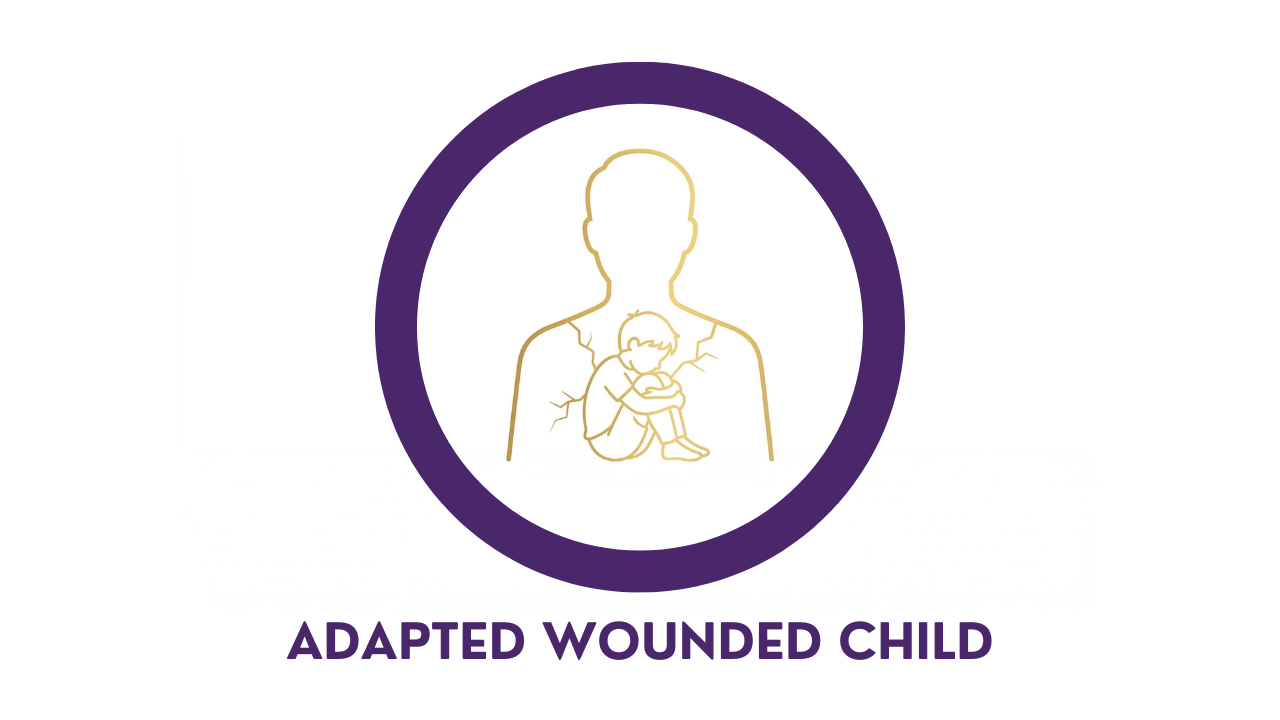
The Adapted Wounded Child
This person oscillates between both — sometimes collapsing into people pleasing, sometimes overcompensating with false power. They can people-please all day at work and then rage at their partner that night. The pattern shifts based on which survival strategy feels safest in the moment. Their nervous system is the most dysregulated because it’s constantly switching between fawn and fight — between “I’ll do anything to keep the peace” and “I can’t take this anymore.”
That’s you if your response to powerlessness depends entirely on who you’re with — and you never know which version of yourself is going to show up.

The Emotional Authenticity Method™: How to Stop People Pleasing at the Root
Boundary scripts don’t work when your entire emotional system is organized around the belief that asserting yourself will destroy your most important relationships. Saying “no” in a therapist’s office feels doable. Saying it to the person your nervous system has coded as essential to survival — that’s where the real work lives.
You cannot heal people pleasing through boundary worksheets, assertiveness training, or self-help mantras — because the pattern is biochemical, not cognitive, and it will persist until the original powerlessness wound is addressed at the body level where it lives.
The Emotional Authenticity Method™ is a six-step process designed to trace the people-pleasing pattern back to its source and rewire the emotional blueprint at the root.
Step 1: Somatic Down-Regulation. The moment you feel the pull to say yes against your will — before you volunteer, before you apologize, before you rearrange your life for someone else — focus on what you can hear for 15 to 30 seconds. Not what you’re thinking — what you can actually hear in the room right now. This engages your auditory system and interrupts the fawn response. If you’re highly dysregulated, use titration — go back and forth between the distressing sensation and the neutral auditory focus until the intensity drops.
Step 2: What am I feeling right now? Not “I should help them” — that’s a thought born from the survival persona. Use a feelings wheel and get precise. Anxious? Terrified? Ashamed? Trapped? Resentful? Use emotional granularity — expand your vocabulary beyond “stressed” or “overwhelmed.” The more precisely you can name the feeling, the more power you have over it.
Step 3: Where in my body do I feel it? Chest tightness? Stomach dropping? Throat closing? Shoulders rising to your ears? All emotional trauma is stored physically in the body — your body has been holding the powerlessness for you, and the tension you feel before saying yes is the stored sensation of a child who couldn’t say no.
Step 4: What is my earliest memory of having this exact feeling? Not the feeling of wanting to help — the feeling of being unable to refuse. The feeling of having to give yourself away to stay safe. Keep tracing it back. Eventually you’ll arrive at a moment in childhood where you realize: “That’s where I first learned that my needs didn’t matter.” Some people don’t remember a specific event — they just remember a feeling in the house. A mood. A tension. That’s enough.
Step 5: Who would I be if I never had this thought or feeling again? What would be left over? This is the vision step. It moves you from the Worst Day Cycle™ into the Authentic Self Cycle™. For the first time, you’re imagining an identity that isn’t organized around pleasing, performing, and self-abandonment. Who are you when you’re not managing everyone else’s emotional experience?
Step 6: Feelization. This is the most important step. Sit in the feeling of your Authentic Self and make it strong. Create a new emotional chemical pattern to replace the old blueprint. Ask yourself: How would I respond to this request from this feeling? What would I say? What would I do? Visualize and FEEL yourself saying no without guilt, choosing yourself without shame, letting someone else be uncomfortable without rushing to fix it. This isn’t visualization — it’s Feelization. You’re creating a new biochemical pattern to replace the one your childhood powerlessness installed. This is the emotional blueprint remapping and rewiring step.
That’s you if you’ve read every boundaries book and nothing stuck — because the information went to your head, and the wound lives in your body. That’s you if you’re ready to stop managing the symptom and start healing the cause.

The Authentic Self Cycle™: Replacing People Pleasing With Authentic Connection
The Worst Day Cycle™ explains why you’re stuck in people pleasing. The Authentic Self Cycle™ is how you get unstuck. It’s the healing counterpart — an identity restoration system with four stages: Truth → Responsibility → Healing → Forgiveness.
Truth: Name the blueprint. See that “this isn’t about today.” Your people pleasing isn’t about the favor someone just asked for or the conflict you’re trying to avoid. It’s about a childhood where your authentic self was rejected and your worth became conditional on compliance. Naming the pattern takes away its invisible power.
Responsibility: Own your emotional reactions without blame. “My friend isn’t my parent — my nervous system just thinks they are.” The person asking for help isn’t taking your power. Your childhood blueprint is interpreting every request through the lens of the original wound. Responsibility means you stop blaming others for “making” you people-please and start looking at why you can’t stop.
Healing: Rewire the emotional blueprint so that saying no becomes uncomfortable but not dangerous. So that someone else’s disappointment doesn’t trigger a shame spiral. So that being yourself — truly yourself — feels safe instead of terrifying. The brain learns new patterns. The chemistry changes. The survival persona loosens its grip.
Forgiveness: Release the inherited emotional blueprint and reclaim your Authentic Self. This doesn’t mean forgiving the people who installed the powerlessness. It means releasing the chemical pattern your body has been running on autopilot — the one that says “give yourself away to stay safe.” Forgiveness creates a new emotional chemical pattern that replaces fear, shame, and denial with presence, worth, and truth.
That’s you if you’re exhausted from a lifetime of earning love that should have been free. That’s you if you’re ready to find out who you are when you stop performing.
The Three Questions That Change Everything Before You Say Yes
While you’re doing the deeper healing work, there’s a practical tool that can interrupt the people-pleasing pattern in real time. Before you ever say yes to anyone for anything, ask yourself these three questions:
1. Am I going to keep score?
If you’re going to mentally track what you gave and what you got back, you’re not giving from love. You’re giving from the survival persona’s need to control the outcome.
2. Am I going to throw it in their face?
If there’s even a chance you’ll bring this up later in a moment of resentment — “After everything I did for you” — then the yes isn’t a gift. It’s a transaction disguised as generosity.
3. Will this ever lead to resentment?
If the answer is yes to any of these three, you need to say no. Otherwise, you’re making yourself powerless. You’re giving your power away and setting up the exact dynamic your childhood blueprint keeps repeating — give, resent, feel used, give again.
And if you have a hard time saying the word “no,” there’s a phrase that works every time: “That doesn’t work for me.” It’s powerful because they can’t argue with it. “What do you mean it doesn’t work for you?” — “It just doesn’t work for me.” “So what part doesn’t work?” — “It just doesn’t work for me.” You don’t have to explain. You don’t have to justify. You are no longer a child. You don’t have to defend why you don’t want to do something. It is enough that it just doesn’t work for you.
That’s you if you’ve never had permission to say no without a detailed explanation. That’s you if “that doesn’t work for me” feels revolutionary — and terrifying — at the same time.
FAQ: People Pleasing and Trauma
Is people pleasing a trauma response?
Yes. People pleasing is a survival persona created in childhood to manage the fear of powerlessness. When a child’s authentic self — their real feelings, needs, and desires — is met with rejection, punishment, or conditional love, the child creates an identity organized around making others comfortable. This pattern becomes biochemically wired through cortisol, adrenaline, and shame chemistry. It’s not a personality trait or a choice. It’s an automatic nervous system response that was installed before you had the language to name it or the power to resist it.
Why can’t I stop people pleasing even when I know I’m doing it?
Because awareness lives in the brain, but people pleasing lives in the body. The pattern is biochemical — your nervous system fires a fear response the moment you consider saying no, and the survival persona overrides your conscious decision within milliseconds. You cannot change emotional patterns through thoughts alone, because emotions are biochemical events and thoughts originate from feelings. Stopping people pleasing requires a process like the Emotional Authenticity Method™ Method™ that addresses the powerlessness wound at the body level where it actually lives. A feelings wheel is a better starting point than a willpower exercise.
What is the connection between people pleasing and codependence?
People pleasing is one of the primary expressions of the disempowered codependent survival persona. Codependence is a relational pattern born from childhood powerlessness where a person abandons their authentic self to maintain attachment. The people pleaser specifically manages this by over-giving, over-functioning, and going against their own morals, values, needs, and wants to keep the peace. They are the Love-Addict pole of the codependent polarity — chasing connection, self-abandoning, and mistaking intensity for love, all because childhood taught them that “if I assert myself, love disappears.”
Can people pleasing cause physical health problems?
Absolutely. Chronic people pleasing keeps the body in a perpetual stress response — elevated cortisol, suppressed immune function, and constant hyperarousal. Over time, this manifests as tension headaches, digestive issues, jaw clenching, insomnia, chronic fatigue, and autoimmune conditions. The body is absorbing the impact of every yes that should have been a no. As Gabor Maté documents extensively, when we suppress our authentic emotional responses to maintain relationships, the body eventually says what the mouth won’t.
How do I stop being a people pleaser in relationships?
People pleasing in relationships is rooted in a childhood attachment wound where love was conditional on compliance. The first step isn’t better boundaries — it’s understanding why boundaries feel like they’ll destroy the relationship. The Authentic Self Cycle™ teaches you to name the childhood blueprint running your relationship pattern, own your reactions without blaming your partner, rewire the emotional response so that asserting yourself doesn’t trigger abandonment terror, and release the inherited belief that you have to earn love through self-sacrifice.
What’s the difference between being kind and being a people pleaser?
Kindness comes from fullness — you give because you want to, and you feel good afterward. People pleasing comes from emptiness — you give because you’re afraid of what happens if you don’t, and you feel depleted afterward. The test is simple: if you’re keeping score, if you’ll throw it in their face, or if it will lead to resentment, it’s not kindness. It’s the survival persona managing the fear of powerlessness. True kindness has no strings attached. People pleasing is a transaction with a hidden price tag — and the person paying the highest price is always you.
The Bottom Line
Your people pleasing is not kindness. It’s not generosity. It’s not “just who you are.” It’s your nervous system running a program that was installed in childhood — a program that says “give yourself away or lose the attachment you need to survive.”
That program was brilliant when you were a child. It kept you alive. It helped you navigate a world where having needs was dangerous and saying no could cost you everything. But you’re not a child anymore. And the people pleasing that once protected you is now the thing standing between you and the life you were meant to live.
You can keep performing — keep saying yes, keep sacrificing, keep earning love that should have been free. Or you can do the one thing the survival persona doesn’t want you to do: stop, feel what’s underneath the compliance, and trace it back to the moment you first learned that your authentic self wasn’t safe.
The people pleasing will quiet when the powerlessness gets heard. Not before.
That’s you if something in this article landed — and the survival persona is already trying to talk you out of believing it. That’s you if the voice is saying “but I really am just a kind person.” That’s the denial stage doing its job. And you just caught it.
Recommended Reading
Facing Codependence by Pia Mellody — the original framework for understanding how childhood experiences create adult relational patterns and the loss of authentic self.
When the Body Says No by Gabor Maté — the connection between suppressed emotions, people pleasing, and physical illness, and why the body always tells the truth when we won’t.
The Body Keeps the Score by Bessel van der Kolk — the foundational text on how trauma is stored physically in the body and why cognitive approaches alone can’t heal survival patterns.
Healing the Shame That Binds You by John Bradshaw — the definitive work on toxic shame, how it creates the survival persona, and what authentic healing requires.
The Gifts of Imperfection by Brené Brown — how shame drives us to hide our authentic selves behind performance and what it takes to reclaim vulnerability as strength.
Codependent No More by Melody Beattie — the classic guide to breaking the patterns of people pleasing and self-abandonment that fuel chronic powerlessness.
Ready to Heal What’s Underneath the People Pleasing?
If this article found you, your people pleasing has already done the hard part — it got your attention. Now it’s time to do the work that actually changes the pattern.
Kenny Weiss’s courses at Greatness U give you the tools to trace the people pleasing back to its source and build a new emotional blueprint:
Self-Path Map ($79) — Identify your survival persona and map the childhood blueprint driving your people pleasing today.
Couples Path Map ($79) — Understand how two powerlessness blueprints collide in a relationship and learn to create safety together instead of performing for each other.
Why We Can’t Stop Hurting Each Other ($479) — A deep dive into the Worst Day Cycle™ and how trauma chemistry keeps us stuck in painful patterns with the people we love.
Why High Achievers Fail at Love ($479) — For the falsely empowered people pleaser whose career works but whose relationships keep falling apart — this is why.
The Avoidant Partner ($479) — Understand the survival persona that runs from intimacy and learn what’s actually driving the withdrawal that makes the people pleaser chase harder.
Emotional Authenticity Tier 1 ($1,379) — The complete Emotional Authenticity Method™ with guided practice, community support, and direct access to the tools that rewire your emotional blueprint from the ground up.
Related articles:
The Signs of Enmeshment and How to Heal
7 Signs of Insecurity in a Relationship
Signs of High Self-Esteem (and What’s Actually Underneath)
Negotiables and Non-Negotiables in Codependence Recovery
10 Do’s and Don’ts for a Great Relationship