
That critical voice telling you that you’re not good enough, not fast enough, not worthy of love or success? That’s not motivation. It’s not accountability. It’s your shame engine — and it’s been running since childhood.
For years, you’ve believed that harsh inner critic was helping you. You thought the voice saying “You should be better” or “Why aren’t you further along?” was pushing you toward excellence. But here’s the truth: shame is never a pathway to sustainable success or healthy relationships. Shame is a survival mechanism your nervous system created when you were too young to have a choice. And like all survival mechanisms from childhood, it’s sabotaging your adult life.
That’s you — the person grinding endlessly because you believe that if you just work hard enough, achieve enough, be perfect enough, people will finally see your worth.
Table of Contents
- What Is the Shame Engine?
- How the Worst Day Cycle™ Creates the Shame Engine
- The Three Survival Personas and How Each Uses Shame
- How the Shame Engine Hijacks Every Area of Your Life
- Why Positive Thinking Can’t Silence the Shame Engine
- How the Emotional Authenticity Method™ Rewires the Shame Engine
- How the Authentic Self Cycle™ Replaces Shame With Worth
- FAQ: People Also Ask
- The Bottom Line
- Recommended Reading
What Is the Shame Engine?
The shame engine is the internal operating system your nervous system created to survive childhood pain. It’s not something you chose. It’s not something you “have wrong with you.” It’s a brilliant adaptation to an unbearable situation.
But here’s the problem: the system that saved you in childhood is killing you in adulthood.
 Emotional Authenticity Method™ system for healing the shame engine" width="600" style="max-width:100%;height:auto;" />
The shame engine operates through fear and shame. Fear tells you that if you stop working so hard, stop being perfect, stop managing everyone’s emotions, something catastrophic will happen. You’ll be abandoned. You’ll be exposed. You’ll prove that you’re actually worthless.
Shame tells you that these fears are true — that you ARE the problem. Not your circumstances, not your upbringing, not the people who hurt you. You.
That’s the voice that wakes you up at 3 AM obsessing over something you said two years ago.
The shame engine is powered by your emotional blueprint — the unconscious rules about yourself, others, and the world that you absorbed before you could think critically. These rules were formed in response to childhood trauma (any negative emotional experience that created painful meanings about you). The shame engine then uses these rules to control your behavior through fear and shame, ensuring you never face whatever it is you’re protecting yourself from.
How the Worst Day Cycle™ Creates the Shame Engine
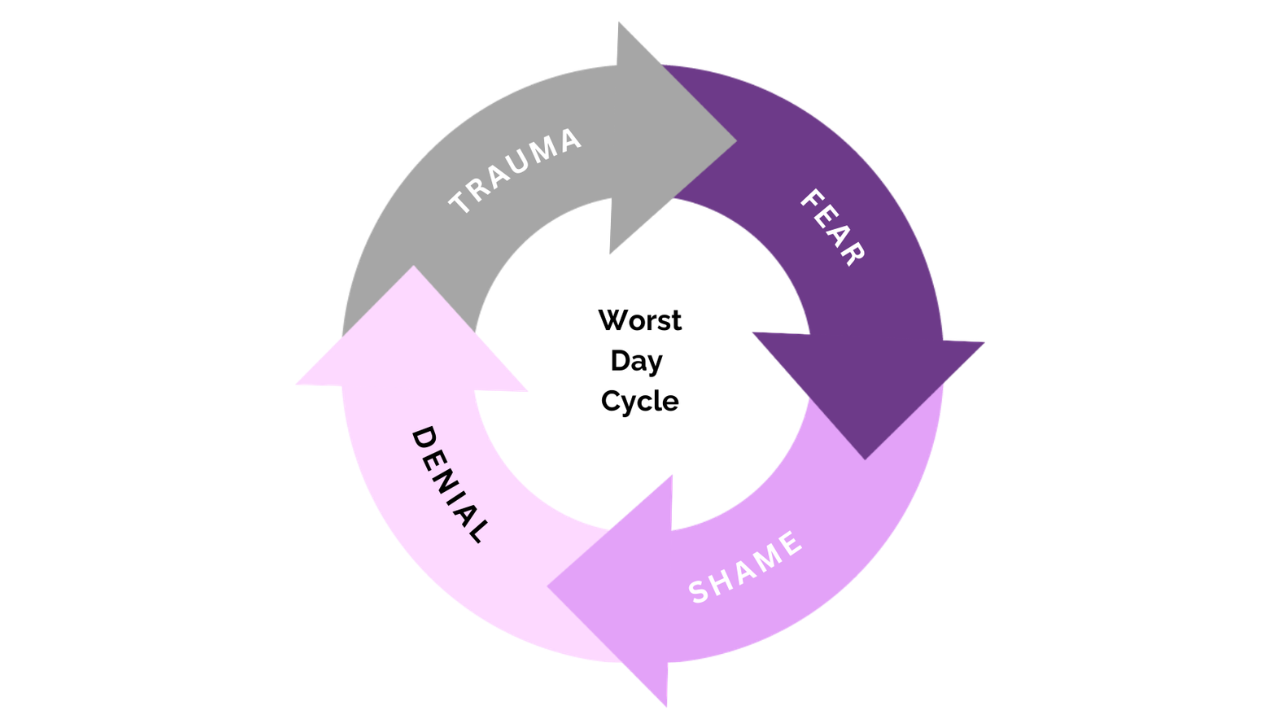
To understand the shame engine, you need to understand the Worst Day Cycle™ — the system that drives all self-sabotage.
The Worst Day Cycle™ has four stages: Trauma → Fear → Shame → Denial.
Stage 1: Trauma (The Wound)
Childhood trauma isn’t just abuse. It’s any negative emotional experience that created a painful meaning about you. Maybe your parent said, “Why are you so sensitive?” and you decided I’m broken. Maybe you came home excited about an achievement and got no response, so you learned My accomplishments don’t matter. Maybe you watched a parent’s rage and decided I need to control everything to stay safe.
These moments create actual neurochemical changes in your developing brain. When you experience shame, fear, or abandonment in childhood, your brain releases a cocktail of stress hormones: cortisol floods your system, adrenaline spikes, and your brain becomes chemically addicted to these emotional states.
Stage 2: Fear (The Response)
Your nervous system never forgets that wound. It learns to perceive threats everywhere — threats that look like the original pain. Now, as an adult, anything that resembles that childhood feeling triggers your threat detection system.
A partner’s criticism triggers the same fear as a parent’s rejection. A setback at work triggers the same panic as parental disappointment. Space in a relationship triggers the same terror as childhood abandonment.
That’s you — terrified of disappointing people because you learned that disappointment meant you were fundamentally unlovable.
Fear drives repetition. Your brain conserves energy by repeating known patterns because it can’t tell the difference between safe and unsafe — only between known and unknown. Since 70%+ of childhood messaging is negative and shaming, your adult nervous system actually feels SAFER repeating these painful patterns in relationships, career, health, and hobbies than trying something new.
Stage 3: Shame (The Collapse)
Here’s where the shame engine fully activates. Instead of seeing the fear as your nervous system’s response to a childhood wound, you internalize it as truth about yourself.
Shame is the belief: I AM the problem.
Not “I made a mistake” (guilt — which is healthy). But “I am fundamentally broken, unworthy, unlovable.” That’s where you lose your inherent worth. That’s where the shame engine takes over.
Stage 4: Denial (The Survival Persona)
And then your nervous system does something brilliant to protect you: it creates a survival persona — a false identity designed to keep you safe from feeling that shame again.
This survival persona is not lazy. It’s not selfish. It’s genius-level adaptation. But it’s also completely sabotaging your adult life.

The Three Survival Personas and How Each Uses Shame
Your survival persona is the “you” that emerged to survive childhood pain. There are three core types — and most people oscillate between them depending on the situation.
The Falsely Empowered Persona
This person controls, dominates, and rages to avoid feeling helpless. The shame engine tells them: “If I’m in charge, if I win, if I’m perfect, people can’t hurt me or abandon me.”
The falsely empowered persona is the high achiever, the perfectionist, the one who never asks for help. They’re driven by a deep terror of vulnerability and powerlessness. Work is their addiction, success is their medication, and failure is their nightmare.
That’s you — the one who’d rather burn out than admit you’re exhausted, because admitting weakness feels like proof that you are fundamentally flawed.
Their shame engine manifests as relentless self-criticism, rage when things don’t go perfectly, and deep loneliness despite external success. They’re terrified that if they slow down, everyone will see they’re a fraud.
The Disempowered Persona
This person collapses, people-pleases, and abandons themselves to avoid abandonment. The shame engine tells them: “If I make myself small, if I sacrifice myself, if I’m always available, people won’t leave me.”
The disempowered persona believes their worth is conditional — based on what they do for others. They abandon their own needs, their own boundaries, their own voice. They become expert at managing other people’s emotions and completely blind to their own.
Sound familiar — the feeling that you have to earn love through sacrifice, that saying no will cause abandonment, that your own needs are selfish?
Their shame engine manifests as chronic resentment, depression, health issues from chronic stress, and relationships where they’re completely unvalued. They’re terrified that if they ask for anything, they’ll be seen as a burden.
The Adapted Wounded Child
This person oscillates between falsely empowered and disempowered depending on the context. One moment they’re raging and controlling, the next they’re collapsed and people-pleasing. They’re unpredictable even to themselves.

The adapted wounded child learned that safety required constant vigilance. They had to be ready to control if someone got close, and ready to collapse if control failed. This person is exhausted by their own unpredictability.
That’s you — the one who can’t understand why you blow up at your partner one moment and then become a doormat the next, wondering why you can’t just be consistent.
All three survival personas use shame as a control mechanism. They tell you that if you step out of your survival role, if you become vulnerable, if you ask for what you need, you’ll be exposed, abandoned, or destroyed. The shame engine keeps you locked in this persona through fear and shame, ensuring you never risk the vulnerability that actual connection requires.
How the Shame Engine Hijacks Every Area of Your Life
The shame engine doesn’t just affect one area of your life. It’s a system that runs everything — because it’s your nervous system trying to keep you safe.
In Family Relationships
The shame engine keeps you enmeshed with the people who wounded you. You’re either trying to finally get their approval (falsely empowered) or you’re completely dependent on their validation (disempowered). You can’t set healthy boundaries because boundaries feel like abandonment.
That’s the voice telling you that you should just accept the disrespect because “that’s just how they are,” or the one that says you’re selfish for wanting space from family.
If you haven’t read about the signs of enmeshment, this is the core system running that dynamic.
In Romantic Relationships
The shame engine ensures you choose partners who trigger your childhood wounds. It keeps you in patterns where you’re either controlling and critical (falsely empowered) or accepting disrespect and abandonment (disempowered).
You recreate the Worst Day Cycle™ with your partner over and over. They do something that triggers your fear, you shame yourself, you develop a coping strategy (control or collapse), and your partner reacts to your coping strategy, not the original issue.
That’s you — unable to have a conversation about a legitimate need without either exploding or shutting down, wondering why your relationships never feel secure.
Check out 7 signs of insecurity in relationships to see the shame engine in action in your romantic patterns.
In Friendships
The shame engine makes you either the friend who always has it together and secretly resents that others never check on you (falsely empowered), or the friend who abandons themselves completely and becomes bitter when others don’t reciprocate (disempowered).
You don’t let people see you struggle. You don’t ask for support. And then you feel completely alone despite having many friends.
That’s you — lonely in a room full of people, afraid that if you showed your real self, everyone would leave.
In Your Career
The falsely empowered shame engine shows up as burnout, perfectionism, and inability to delegate. The disempowered shame engine shows up as underearning, underselling yourself, and accepting terrible treatment from employers.
Either way, you’re not working from your real motivation — you’re working from fear and shame. You’re proving something instead of creating something.
Sound familiar — working 60+ hours a week because you believe that’s the only way you’re valuable, or staying in a job that pays you 30% less than your market value because you don’t think you deserve better?
In Your Body and Health
The shame engine creates disconnection from your body. You push through pain and exhaustion (falsely empowered) or you abandon self-care entirely (disempowered). Your body becomes something to fix, control, or ignore — never something to listen to.
This disconnection keeps you from hearing the signals your nervous system is sending. You don’t know when you’re stressed until you’re burned out. You don’t know when you’re hungry until you’re starving. You don’t know when you need rest until you collapse.

Why Positive Thinking Can’t Silence the Shame Engine
Here’s what doesn’t work: affirmations. Willpower. Positive thinking. Cognitive reframing.
You’ve probably already tried all of these. You’ve probably spent years telling yourself you’re worthy, you’re capable, you’re enough. And you probably still feel the shame.
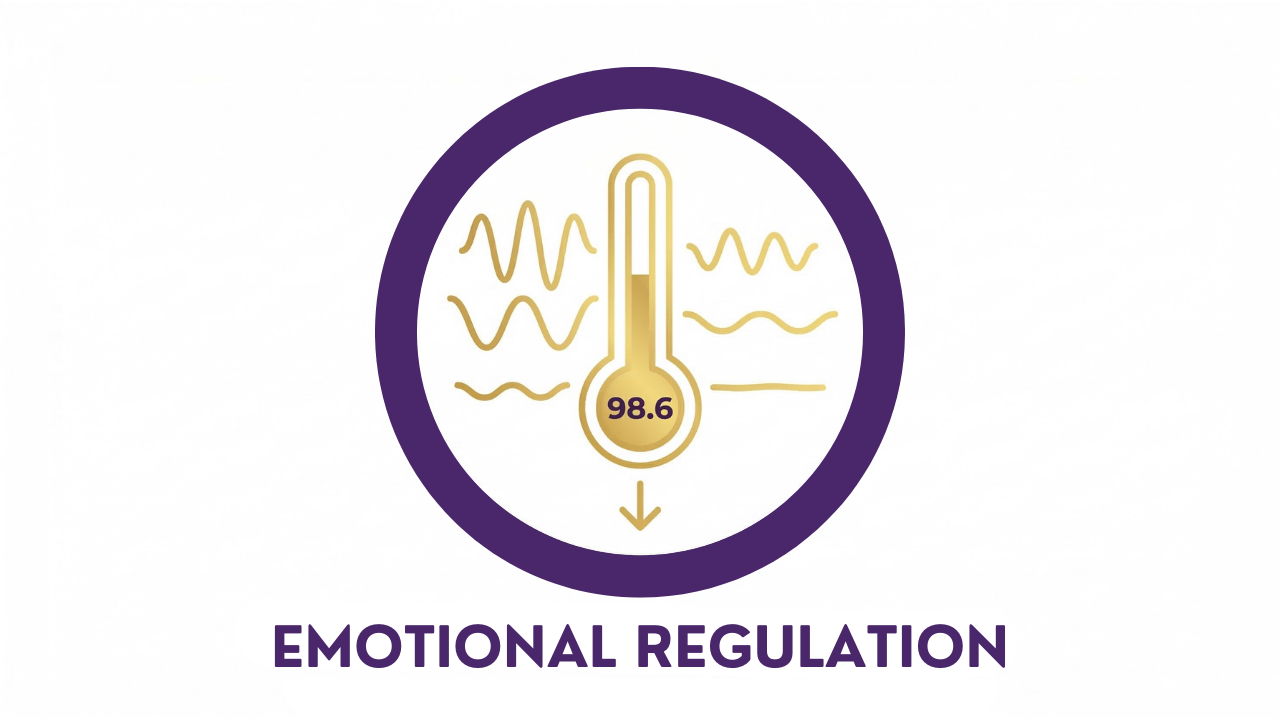
Here’s why: shame is not a thought — it’s a nervous system state. Your emotions are biochemical events, not intellectual ones. Thoughts originate from feelings, not the other way around. You cannot think your way out of a nervous system that’s still running the Worst Day Cycle™.
When your nervous system is in fear, it doesn’t care what your mind says. It’s running on survival code written in childhood. That code says: “I need to either control everything or collapse completely. And if I don’t, I’ll be abandoned/destroyed/exposed.”
Affirmations can’t reprogram that. Willpower can’t override that. Your conscious mind is no match for your nervous system’s survival patterns.
That’s you — repeating “I am worthy” while your nervous system is screaming that you’re not, wondering why the affirmations aren’t working and then shaming yourself for not being “positive enough.”

How the Emotional Authenticity Method™ Rewires the Shame Engine
The only way to rewire the shame engine is to change your nervous system’s emotional blueprint. And that requires the Emotional Authenticity Method™ — a somatic, nervous-system-based approach that actually changes your neurochemistry.
Here are the five steps:
Step 1: Somatic Down-Regulation (With Optional Titration)
Before you can do anything else, you need to get your nervous system below threat level. This isn’t meditation or deep breathing (though those can help). It’s about sending your body a signal that it’s safe enough to feel what you’re feeling.
Somatic down-regulation might look like: movement (walking, dancing, shaking), breathwork, temperature changes (cold water on your face), bilateral stimulation (tapping alternating sides of your body), or safe touch.
Titration is the practice of feeling a little bit of an emotion, getting regulated, then feeling a little bit more. You’re essentially teaching your nervous system that this feeling won’t destroy you — in manageable doses.
That’s you — finally understanding why pushing through your feelings with willpower only makes things worse, and learning that sometimes “handling it” means pausing to calm your nervous system first.
Step 2: What Am I Feeling? (Emotional Granularity)
Most people respond to complex emotions by saying “I feel bad” or “I’m stressed.” Your nervous system needs more specificity to heal.
Are you feeling shame, fear, grief, rage, loneliness, or something else? The Feelings Wheel is designed to help you develop emotional granularity — the ability to identify exactly what you’re experiencing beneath the surface.
This matters because each emotion carries different information. Fear says “threat.” Shame says “I am the problem.” Grief says “I’ve lost something.” They require different responses.
Sound familiar — naming a feeling and suddenly understanding what your nervous system has been trying to tell you, instead of just numbing it?
Step 3: Where in My Body Do I Feel It?
All emotional trauma is stored in your body. This is not metaphorical. Your nervous system holds the memory of every time you felt shame, fear, or abandonment in your tissues.
When you feel an emotion, where does it live? In your chest? Your throat? Your stomach? Your limbs? The location matters because it’s where the nervous system is holding the pattern.
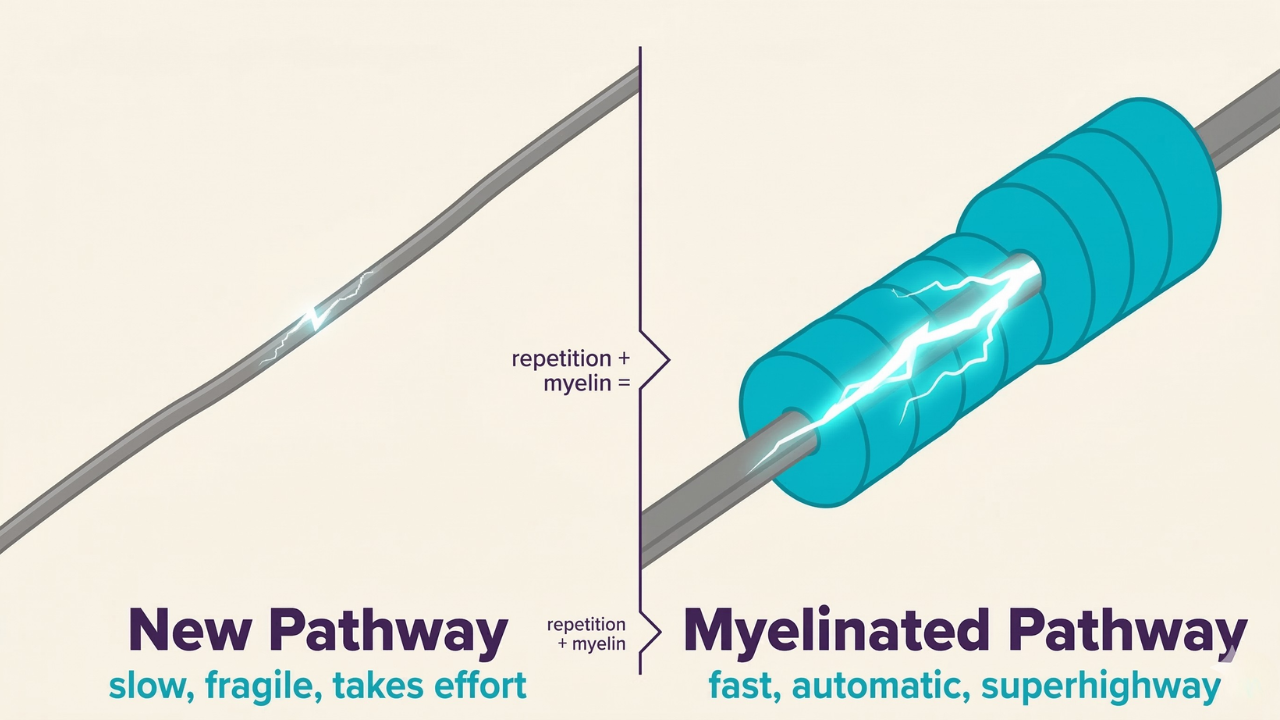
As you learn to locate emotions in your body, you’re actually building the neural pathways that allow you to feel emotions instead of being controlled by them. You’re moving from “I AM anxious” to “I FEEL anxious in my chest” — and that difference is everything.
Step 4: What Is My Earliest Memory of This Feeling?
This is where the real magic happens. You’re going to trace this feeling back to its source — the original childhood moment when your nervous system learned this pattern.
You might remember a specific moment. Or you might just get a sense of when you first learned that abandonment meant you were unlovable, or that vulnerability meant punishment, or that your needs would never be met.
That’s you — suddenly understanding that your partner didn’t create this fear; your parent did. And your nervous system has just been replaying that pattern with every person you love.
This step is where you shift from “Something is wrong with me” to “My nervous system learned something painful, and now it’s trying to protect me from that pain.” That compassion changes everything.
Step 5: Who Would I Be If I Never Had This Feeling Again?
This is the vision step — the place where you move from healing into building. You’re not trying to force yourself to feel different. You’re envisioning who you actually are when you’re not controlled by this fear or shame.
What would you do? How would you show up? What would you create, ask for, risk? This isn’t about becoming someone new. It’s about accessing the authentic self that’s been hiding behind the survival persona.
That’s the moment you realize: I could actually ask for what I need. I could actually leave. I could actually create. I could actually love myself.
The Emotional Authenticity Method™ works because it speaks your nervous system’s language. It’s somatic, not intellectual. It honors the way emotions actually work — as biochemical patterns stored in your body. And it creates a new emotional chemical pattern (the Authentic Self Cycle™) that gradually replaces the fear/shame/denial pattern of the Worst Day Cycle™.
How the Authentic Self Cycle™ Replaces Shame With Worth
While the Worst Day Cycle™ is the system keeping you trapped in shame, the Authentic Self Cycle™ is the system that sets you free. It’s the healing counterpart — an identity restoration system with four stages: Truth → Responsibility → Healing → Forgiveness.
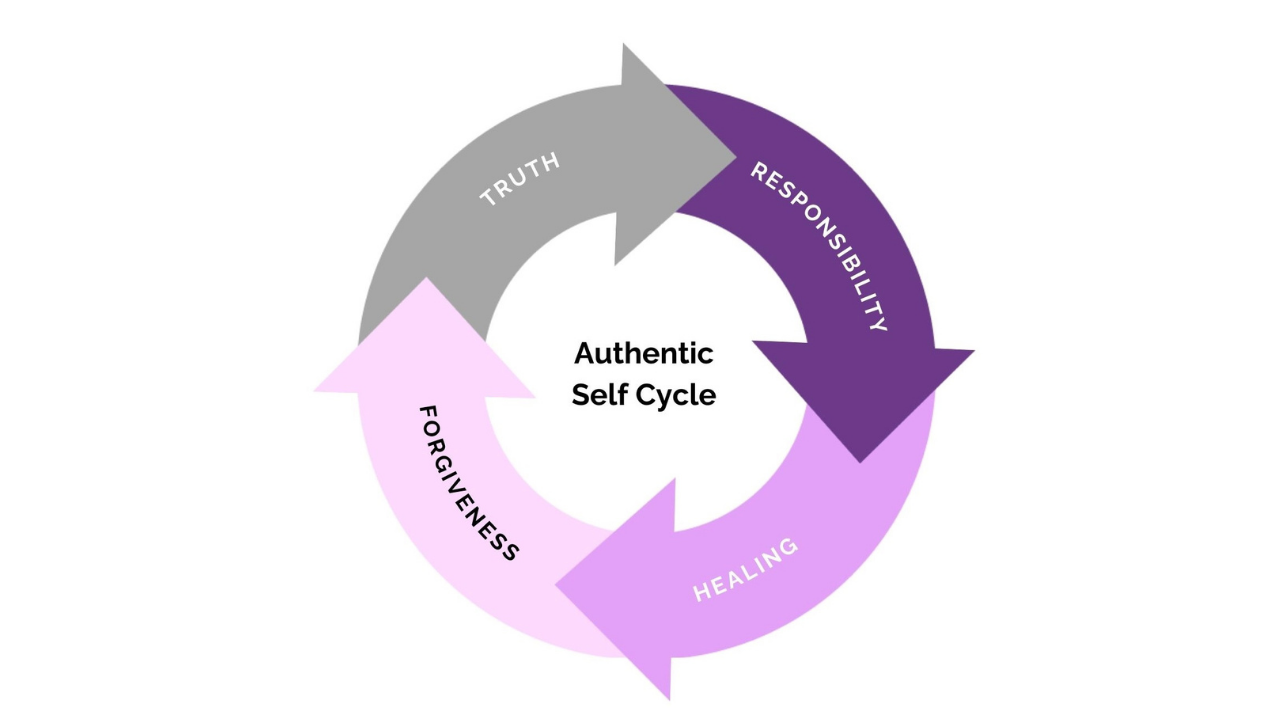
Stage 1: Truth (Name the Blueprint)
Here’s where you stop blaming yourself and start seeing what actually happened. You name the blueprint — the unconscious rules about yourself and the world that you absorbed from childhood.
“My parent’s criticism taught me that I’m never good enough.” “My parent’s unpredictability taught me that people can’t be trusted.” “My parent’s rejection taught me that my worth is conditional.”
Truth is the moment you see: “This isn’t about today. This is about something my nervous system learned decades ago.”
That’s you — realizing that you’re not actually defective, you’re just operating from an old emotional blueprint that made sense in childhood but is sabotaging everything now.
Stage 2: Responsibility (Own Your Reactions Without Blame)
Responsibility doesn’t mean blame. It means: “My partner isn’t my parent, but my nervous system thinks they are. And I need to own that.”
This is where you stop making your partner, your boss, your friend responsible for your emotional regulation. You start recognizing: “I’m having a reaction to my blueprint, not to what they actually did.”
Responsibility is the hardest stage because it means you can’t blame anyone else. But it’s also the most powerful, because it means you’re no longer a victim of your past — you’re the author of your future.
Sound familiar — the relief of finally understanding that you can’t control anyone else, but you CAN rewire how you respond to them?
Stage 3: Healing (Rewire the Emotional Blueprint)
Once you’ve named the blueprint and owned your reactions, healing is about creating new neural pathways. It’s about teaching your nervous system that conflict can be uncomfortable without being dangerous, that space isn’t abandonment, that intensity isn’t attack.
This happens through repeated experiences of safety. Every time you feel an emotion without your survival persona taking over, you’re building new myelin. Every time you stay present in a difficult conversation, you’re rewiring your nervous system.
This is where the Emotional Authenticity Method™ becomes essential — because you’re not just thinking differently, you’re training your nervous system to feel differently.

Stage 4: Forgiveness (Release the Inherited Blueprint)
Forgiveness doesn’t mean condoning what happened or saying the harm was okay. Forgiveness means releasing the inherited emotional blueprint — letting go of the rules you learned from your parents’ pain, their unmet needs, their survival strategies.
You’re saying: “I understand why my parents created these rules. Their parents probably created them for the same reason. But I’m breaking the cycle. I’m not passing this to the next generation.”
Forgiveness is reclaiming your inherent worth — the worth you had before anyone told you that you weren’t enough.
That’s you — finally understanding that you were never the problem, and that the shame your parents carried was never actually yours to carry.
The Authentic Self Cycle™ creates a new emotional chemical pattern that gradually replaces the fear/shame/denial pattern. As this new pattern strengthens, your survival persona becomes less necessary. You can access vulnerability without terror. You can set boundaries without rage. You can ask for what you need without shame. You’re not trying to force yourself to feel different — you’re building an actual new nervous system pattern.
FAQ: People Also Ask
Isn’t Some Shame Healthy? Don’t We Need That Inner Critic?
No. There’s a difference between shame and healthy accountability. Guilt is healthy — it tells you that you did something against your values. “I hurt someone I care about, and I want to make it right.” That’s functional.
Shame is different: “I am fundamentally broken and unworthy.” That’s the shame engine, and it never leads anywhere good.
A healthy inner voice sounds like wisdom, not punishment. It sounds like someone who actually loves you — not like your critical parent.
Can I Heal My Shame Engine Without Therapy?
You can make progress on your own using the Emotional Authenticity Method™. But here’s the truth: your nervous system learned these patterns in relationship, so it heals most powerfully in relationship.
Whether that’s therapy, coaching, group work, or a skilled partner who understands this system — having someone to witness and reflect your process accelerates healing dramatically. Your nervous system needs to feel safe enough to change, and that safety most powerfully comes through connection.
How Long Does It Take to Rewire the Shame Engine?
This depends on how long you’ve been running the Worst Day Cycle™ and how willing you are to do the work. Most people see shifts within weeks, but real neurological rewiring takes months and years.
The good news: you don’t have to wait for complete healing to feel better. Within weeks, you’ll notice that your reactions are less automatic. Within months, you’ll notice that shame has less power. After a year of consistent work, your baseline nervous system state will be fundamentally different.
What If My Shame Engine Is About Trauma That Wasn’t “That Bad”?
Your trauma is valid regardless of how it compares to someone else’s. Your nervous system’s response to your experience is real, and the shame engine doesn’t discriminate based on severity.
A child who was ignored experiences abandonment just as powerfully as a child who was abandoned. A child who was criticized experiences shame just as deeply as a child who was abused. Your nervous system doesn’t rate experiences on a scale of “bad enough” — it just learns the patterns.
Can I Use This Method With High-Achievers and Ambitious People?
Yes — in fact, many high achievers are desperate for this work. The falsely empowered survival persona creates tremendous external success and tremendous internal loneliness.
Once they understand that shame is driving them, not motivation, they often become even more effective — because they’re working from their actual values and desires, not from fear and proving. Check out signs of high self-esteem to see what real motivation looks like.
Is the Shame Engine Just Another Name for Codependency?
Codependency is one expression of the shame engine, but not the only one. The shame engine drives all three survival personas — the falsely empowered controller, the disempowered people-pleaser, and the adapted wounded child who oscillates between both.
If you want to explore codependency patterns specifically, read about negotiables and non-negotiables in codependence recovery.
The Bottom Line
That voice in your head telling you that you’re not good enough? It’s not your motivation. It’s not accountability. It’s your nervous system’s survival pattern — the shame engine running the Worst Day Cycle™.
And here’s what no one tells you: you don’t have to believe it. You don’t have to obey it. You don’t have to let it run your life.
The shame engine was brilliant in childhood — it helped you survive an impossible situation. But you’re not that child anymore. You have choices now. You have power now. You have worth now that has nothing to do with your performance.
Your authentic self is still in there — the you that knows what you want, that sets boundaries without rage, that asks for what you need without shame, that creates from inspiration instead of fear.
That person isn’t hiding because they don’t exist. They’re hiding because your survival persona is protecting them — trying to keep you safe from the pain of being seen, rejected, or abandoned.
And that protection was necessary once. But it’s not anymore. You’re ready to step out of denial and into truth. You’re ready to move through the Authentic Self Cycle™. You’re ready to rewire the shame engine with the Emotional Authenticity Method™.
Not through willpower. Not through positive thinking. But through actually changing your nervous system so that your authentic self becomes your default.
That’s where real motivation lives. That’s where sustainable success lives. That’s where love lives. Not in the shame engine. In you.
Recommended Reading
- Pia Mellody — Facing Codependence (the foundational text on childhood trauma and codependence)
- Melody Beattie — Codependent No More (the foundation for understanding the disempowered persona)
- Gabor Maté — When the Body Says No (the neuroscience of emotional trauma)
- Brené Brown — Daring Greatly (shame resilience and vulnerability)
- Bessel van der Kolk — The Body Keeps the Score (trauma stored in the nervous system)
- John Bradshaw — Healing the Shame That Binds You (foundational work on toxic shame)
- Susan David — Emotional Agility (building emotional awareness without judgment)
Start Your Healing Journey
If you’re ready to rewire the shame engine and access your authentic self, these courses will guide you through the Emotional Authenticity Method™ and the Authentic Self Cycle™:
- Emotional Blueprint Starter Course — Individual ($79) — A foundational course on your emotional blueprint and survival persona. Start here.
- Relationship Starter Course — Couples ($79) — How the shame engine shows up in intimate relationships and how to break the cycle together.
- Why High Achievers Fail at Love ($479) — Deep dive into the falsely empowered persona and how to access real success and connection.
- Why We Can’t Stop Hurting Each Other ($479) — A complete system for healing relationship patterns driven by the shame engine.
- The Shutdown Avoidant Partner ($479) — Specifically designed for the disempowered persona and how to build secure attachment.
- Tier 1: Mapping the Blueprint ($1,379) — The complete system: frameworks, methods, and nervous system rewiring tools.
You can also explore 10 dos and don’ts for a great relationship — a free resource for identifying your patterns in partnership.
And don’t forget the Feelings Wheel exercise — one of the most powerful tools for building emotional granularity and rewiring your shame engine from the inside out.