
You walk into a room full of people and immediately start scanning. Who’s judging you? Who thinks you don’t belong? You adjust your posture, rehearse what you’ll say, and hope no one notices the version of you that you’re terrified they’ll see.
That’s not a personality trait. That’s a survival persona — and it was built in childhood.
High self-esteem is not confidence, arrogance, or performing “I’m fine” convincingly enough that people believe it. Real self-esteem means knowing your inherent value regardless of external validation — knowing your morals and values, facing your imperfections without shame, taking full ownership of your life outcomes, and being the author of your own life rather than waiting to be rescued. It’s rooted in your emotional blueprint, and most people have never been shown what it actually looks like.
That’s you at dinner, agreeing to something you don’t want because the thought of conflict makes your chest tighten. That’s you checking your phone for likes because the silence inside feels unbearable. That’s your survival persona running the show — and you don’t even know it.
In this article, I’m breaking down the 7 signs that someone genuinely has high self-esteem — not the Instagram version, but the real, trauma-informed, blueprint-level version. And more importantly, I’ll show you why you don’t have it yet and what to do about it.

Watch the full video: Real self-esteem is built in three specific steps — not affirmations, not positive thinking, not achievement. See the exact sequence that actually rebuilds self-worth in 3 Steps To Self Esteem and Self Worth.
What Does High Self-Esteem Actually Look Like?
Our culture has completely distorted what self-esteem means. Social media equates it with confidence. Self-help books confuse it with positive self-talk. Pop psychology treats it like something you can build with affirmations and morning routines.
None of that is self-esteem. Those are performances — costumes your survival persona wears to avoid being seen. Whether you became the falsely empowered one (projecting confidence to hide the wound), the disempowered one (making yourself invisible so you can’t be criticized), or the adapted wounded child (shape-shifting to match what everyone expects) — those are all strategies to avoid the deeper truth: you don’t believe you have inherent worth.
Worthlessness is not a fact. Worthlessness is a childhood emotional meaning — an inherited emotional conclusion created before you could fight back. Your worth is inherent, irrevocable, and never lost. It was simply buried under decades of shame, denial, and survival strategies.
Real self-esteem is quiet. It’s internal. It doesn’t need to announce itself. And it has 7 very specific characteristics that I see consistently in people who have done the deep work.
Sign 1: You Know What You Value and Believe
If you want to go deeper on this, I walk through the full framework in this video: Habits of People with High Self-Esteem.
A person with high self-esteem has done the foundational work of identifying their needs and wants, their morals and values, their negotiables and non-negotiables. They have a North Star — something that provides direction, stability, balance, and a framework to honor their self-worth.
When you have these settings in place, you have a barometer for everything you do. It allows you to live for your purpose and achieve your goals. It enables you to say no to things that would divert you from what matters. And it keeps you from going against your own beliefs — which is the fastest path to self-betrayal and shame.
That’s you replaying the conversation from dinner for hours because you agreed to something you didn’t actually want — and you can’t figure out why you feel so hollow. That’s you saying “yes” when every cell in your body is screaming “no.” That’s your survival persona making decisions for you, choosing safety over truth every single time.
Watch the full video: You cannot face your imperfections while you are still in denial about what happened to you. See why denial is the hidden gatekeeper blocking self-esteem in Why Facing Your Denial Is The Secret To Self Esteem.
Sign 2: You Face Your Imperfections Without Shame
People with high self-esteem believe — deep in their bones — that acknowledging their imperfections makes them good, not bad. It increases their self-worth because they value honesty over image.
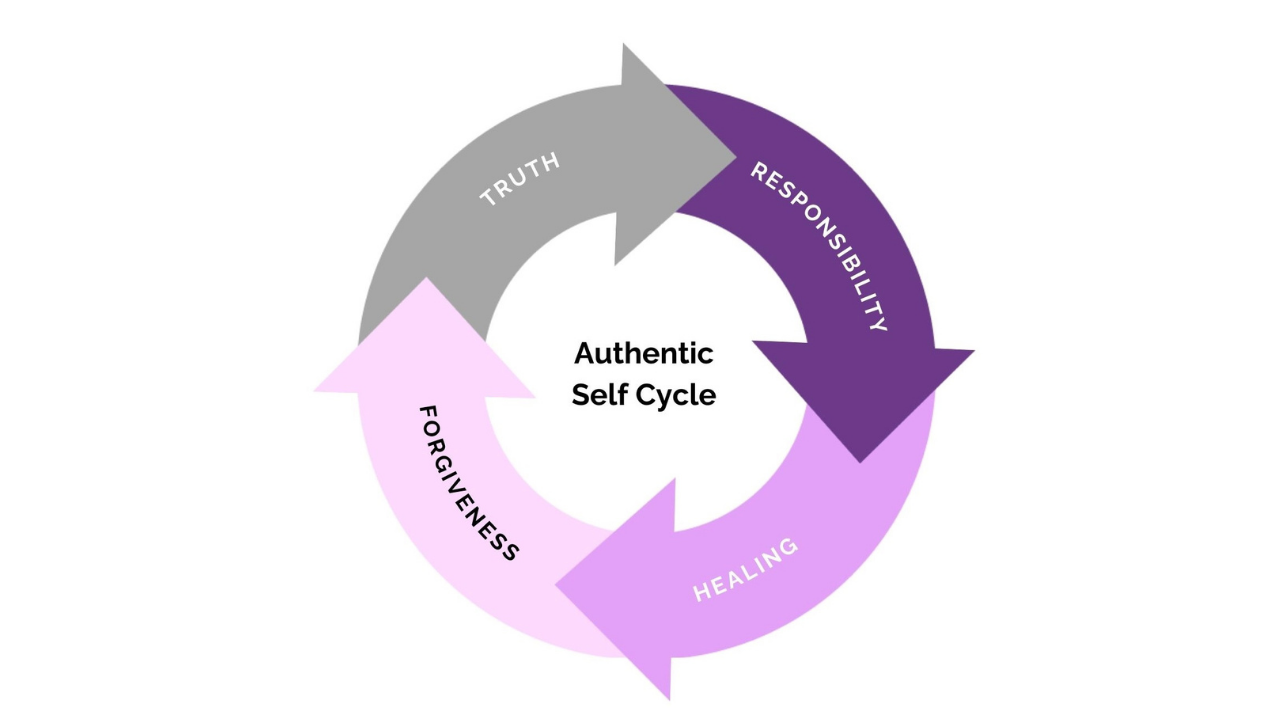
Here’s the truth most people miss: we are all naturally in massive denial, and we don’t know we are. It’s a survival mechanism from childhood. In denial, there is no truth. But when we face our imperfections, we get truth. And truth is the first step of the Authentic Self Cycle™ — Truth → Responsibility → Healing → Forgiveness.
If I’m honest with myself, I love myself. We must become experts at facing and embracing our imperfections. They aren’t flaws to be eliminated — they are growth opportunities to be integrated.
The “bad traits” you developed? They were survival mechanisms. They are part of you. You can’t banish them. Recovery is about integration — loving and healing all aspects of yourself. Shutting any part of yourself out keeps you sick and fractured. This is the core of what I call the Emotional Authenticity Method™ — reconnecting with every part of yourself, not just the ones that feel safe.
That’s you hiding the parts of yourself that feel unacceptable — the anger, the neediness, the messiness — because your childhood taught you that imperfection equals abandonment. That’s the survival persona working overtime to present a version of you that’s “good enough” to be loved.
Sign 3: You Can Hear Criticism Without Losing Your Core Beliefs
When someone with high self-esteem receives criticism, they can evaluate it without their identity crumbling. They know who they are, and they’re okay with that. They don’t need to put others down or judge them to prop themselves up.
When people show me their darkness, I see their perfect imperfections. We all put people down sometimes — and that’s a sign there’s still a part of us that doesn’t feel loved. When we notice that in ourselves, we should work on it — not shame ourselves for it.
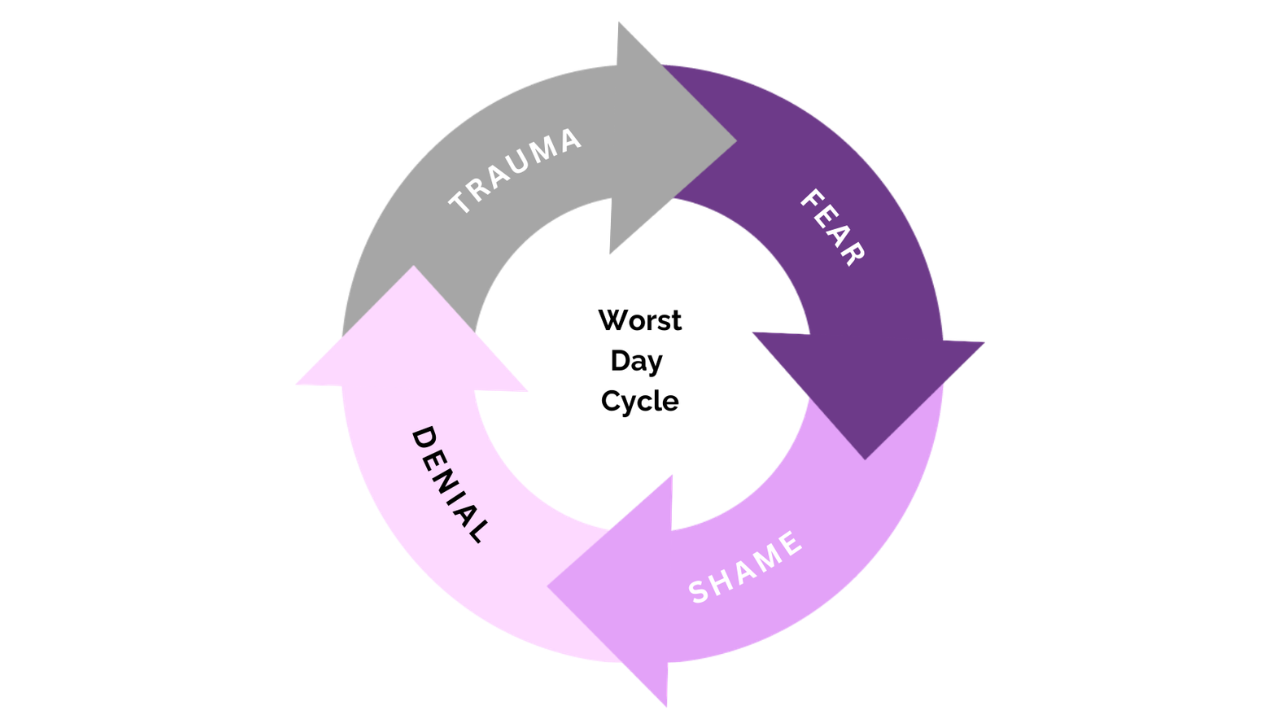
The person with low self-esteem hears “you were wrong about that” and their nervous system translates it to: “You are wrong. You are defective. You are unlovable.” That’s not the criticism talking. That’s the Worst Day Cycle™ — Trauma → Fear → Shame → Denial — firing in real time. The original wound of not being valued as a child gets re-triggered, and suddenly a minor critique feels like emotional annihilation.
The voice in your head that says “you’re not enough” is not you. It sounds like you, but it’s an echo — an echo of the blueprint, an echo of the adults who could not see you for who you really are. They could not validate you or love you without conditions. That voice is your shame engine, and it has been running since childhood.
That’s you spiraling for three days because your boss said “this could be better.” That’s you cutting off a friend because they gave you honest feedback. That’s your nervous system interpreting every critique as the original childhood message: “You’re not enough.”
Sign 4: You Take Full Responsibility for Your Life Outcomes
There is a phenomenon in our society of blaming others and playing the victim. But the truth is: we all determine our life outcomes. We all have roadblocks inherent in our makeup — that’s just life. With high self-esteem, we aren’t looking to blame or place responsibility on others. Our choices created the outcomes we experience, and we must own them.
I use a story in my work to illustrate this: Imagine you’re walking down the street, and out of nowhere, you get shot. The person with low self-esteem screams at the government, blames other people, says it shouldn’t have happened to them. And I agree — it shouldn’t have. But what they fail to recognize is that they made thousands of choices that led them to that street at that time.
You can’t divorce yourself from that. It doesn’t condone the shooter or let them off the hook. But the alternative to crying and blaming is to ask for aid from others, take ownership, and become the author of your recovery.
A person with high self-esteem takes ownership of all their life outcomes and wants to be the author of their own life. They gain new knowledge, skills, and tools to overcome roadblocks rather than waiting to be rescued. This is the Responsibility step of the Authentic Self Cycle™ — owning your emotional reactions without blame. Your partner isn’t your parent. Your nervous system just thinks they are.
That’s you blaming your partner for the state of your relationship instead of asking: “What am I bringing to this?” That’s you waiting for someone to rescue you from a life you have the power to change. That’s the survival persona running the old childhood program: “Someone else needs to make me okay.”
Sign 5: You Embrace Change Instead of Fearing It
People with high self-esteem recognize that change is an opportunity to grow and experience more joy. When we close ourselves off to change, we miss out on life. What is the most incredible experience in life? Hitting a roadblock and conquering it.
Change is something I struggle with — it scares me because of what happened in my childhood. In high school, I had been playing hockey, ready to come home for Christmas — so excited. My dad picked me up and said my mom had disappeared that day. Boom. Out of nowhere, everything changed. I walked in to find my sister on the phone screaming at the police, begging them to find our mother.
Change scares me because of that experience. And I have every reason to be scared. But my greatest blessings in life have come from confronting moments like that. I get an opportunity to overcome that pain and reclaim myself. I get to put further distance between myself and that trauma. It brings me joy and possibility.
When we don’t allow change, we stay stuck in those traumatic moments. If our life isn’t how we want it, people with high self-esteem make a plan and execute changes. They don’t freeze, fawn, or collapse into the Worst Day Cycle™. They move through the fear using their Authentic Adult voice.
That’s you staying in a job you hate because the thought of change triggers the same terror you felt as a child when everything was unpredictable. That’s you choosing the familiar pain over the unfamiliar possibility — because your survival persona would rather keep you safe than let you grow.

Sign 6: You Have a Healthy Relationship Outlook
Remember: we own that every person who comes into our lives is only there because we allow them in. With high self-esteem, we recognize that we are responsible for our part in every relationship. We aren’t responsible for others choosing to be bad actors — but we are accountable for allowing it into our lives.
I ask myself: “What was it in me that attracted me to them? And if I wasn’t aware they were like this, that is also about me.” We need to gain more tools about human and relationship dynamics.
People end up in harmful relationships because they don’t have the knowledge, skills, and tools to look for specific characteristics. We have to take responsibility for it ourselves. Even while we don’t condone the mistreatment, we see it as an opportunity to grow.
What most people call “chemistry” is actually trauma. The electric spark, the sense that you’ve known someone your whole life — those are signs that your nervous system has identified someone who matches the emotional environment of your childhood. Your brain doesn’t choose what is good. It chooses what is known.
The relationships our society glorifies — someone who sees you as perfect, who always supports you, who completes you — are harmful fantasies. That’s the codependent dream of someone with low self-esteem waiting to be rescued. True love recognizes there are times when our partners can’t be there for us, and that’s okay — because we can be there for ourselves.
There’s an old fable where a girl asks her grandmother how her marriage lasted so long. The grandmother said she went to a pastor who told them to each write down three things that, no matter what, they would always forgive. The grandmother said that whenever her husband did something she didn’t like, she’d roll her eyes and say, “It must have been one of the three things.” The sentiment is this: our partners will not always meet our needs — and they shouldn’t when our behavior is poor. Taking care of ourselves should always be the priority.
That’s you expecting your partner to “make you happy” instead of recognizing that happiness is an inside job. That’s you tolerating mistreatment because your blueprint says you don’t deserve better. That’s the survival persona choosing familiar pain over the terrifying possibility of being alone.
Watch the full video: If you had toxic parents who emotionally neglected you, your blueprint never installed self-esteem in the first place — and that is why you keep waiting to be rescued. See the childhood roots of the rescue pattern in You Can’t Have Self Esteem If You Had Toxic Parents Who Emotionally Neglected You In Childhood.
Sign 7: You Don’t Need to Be Rescued
Some parents come to me concerned about their child’s relationship or marriage. What they don’t realize is that by intervening, they’re sending a message: “I don’t believe in you. Only I can save you.” Is that the message we want to send? Let them figure things out — rather than rescuing them, which only deepens the enmeshment.
High self-esteem means having open, honest communication without fear of repercussions. Pain and imperfection are not taboo. Rejection is understood as a construct — not a true thing. We’ve never actually been “rejected.” Low self-esteem manifests when we feel rejected because our value is placed in the hands of others. Someone with high self-esteem recognizes this pattern and grows beyond it.
We own our life when we have high self-esteem. Self-esteem is centered on being the author of our creation or destruction. It’s all an individual choice. And if we don’t know how to do it, we put a plan in place to gain the knowledge, skills, and tools to overcome the obstacles. We stop looking for things outside ourselves to fix what’s broken inside.
That’s you waiting for your therapist, your partner, your parent, or your boss to tell you you’re okay — instead of knowing it yourself. That’s your survival persona still running the childhood program: “I need someone else to validate my existence.”
How Low Self-Esteem Shows Up Across Your Life
Low self-esteem doesn’t stay contained in one area. It bleeds into everything — because it’s not a mood or a bad day. It’s your nervous system’s foundational operating system. Here’s how it shows up:
In Your Family
You still defer to your parents’ opinions even when they contradict your own values. You perform the role they assigned you — the good one, the successful one, the peacekeeper — because stepping out of that role triggers shame. Holiday gatherings leave you physically exhausted. That’s you still running the childhood program: my value is determined by my family’s approval.
In Your Romantic Relationships
You choose partners who confirm your blueprint’s belief that you’re not enough. You over-give, people-please, and abandon your own needs to keep the relationship “safe.” When they pull away, you panic — because your worth is tied to their attention. That’s you still running the survival program: I’m only valuable when someone else says I am.
In Friendships
You’re the one who always adjusts. You laugh at jokes that aren’t funny. You go along with plans you don’t want. You can’t express a different opinion without anxiety. That’s you still running the program: if I’m not agreeable, I’ll be abandoned.
At Work
You achieve compulsively but never feel successful. You overwork to prove your value. You can’t receive a compliment without deflecting it. You dread performance reviews even when you know the feedback will be positive. That’s you still running the program: my worth depends on what I produce, not who I am.
Perfectionism is all about low self-esteem and high shame. When you try to be perfect, you are creating your own lack of control, making yourself powerless, choosing to give up your own identity. You are actually self-rejecting when you’re trying to be perfect. You have worth no matter what — even if you so-called fail or do nothing.
In Your Body and Health
You carry chronic tension — jaw clenching, shoulder tightness, digestive issues. You feel anxious in your own skin. You avoid mirrors. You have an adversarial relationship with your body because your blueprint taught you that your physical self is something to be managed, hidden, or punished. That’s your nervous system still believing: you are fundamentally flawed.

Why Don’t You Have High Self-Esteem Yet? Your Emotional Blueprint
Here’s the video where I unpack this in full: The Real Reason Your Self-Worth Is Low.
If you read those 7 signs and thought, “I want that, but I can’t seem to get there” — that’s not a willpower problem. It’s a blueprint problem.
Your emotional blueprint was formed in childhood. It decided — based on how your caregivers treated you emotionally — what you’re worth, what love looks like, and what you have to do to earn belonging. If your childhood taught you that your value depends on performance, approval, or being needed, then your nervous system is literally wired against self-esteem.
Love = being needed by someone.
Safety = never making mistakes.
Worth = what others think of me.
These unconscious equations run your life until you identify them and rewire them. That’s what the Emotional Authenticity Method™ Method™ does — it takes you beneath the surface performance of “confidence” and into the root system where your self-esteem was destroyed.
 childhood trauma programming that destroys self-esteem" width="600" style="max-width:100%;height:auto;" />
A shame-based person will guard against exposing their inner self to others, but more significantly, they will guard against exposing themselves to themselves. This is at the heart of toxic shame. People think they know who they are — especially the successful — because they have used shame and self-loathing to motivate themselves so they don’t feel the feeling of no worth. They keep themselves so busy achieving and doing that they can’t simply be. The feeling is just too overwhelming to experience.
That’s you at forty, successful by every external measure, but still feeling like a fraud waiting to be exposed. That’s your emotional blueprint — written in childhood, running your adult life, and telling you every day that you’re not enough no matter how much you achieve.
Why Your Body Is Paying the Price
People with chronic low self-esteem are often chronically sick. Migraines, autoimmune conditions, digestive problems, chronic fatigue, insomnia — the list goes on. This isn’t coincidence.
When you spend decades suppressing your authentic needs, performing a version of yourself that feels “acceptable,” and absorbing the shame your survival persona won’t let you express — your body eventually says what your mouth can’t. Dr. Gabor Maté’s When the Body Says No lays out the science: your genes require a specific environment to activate. The emotional turmoil of living in chronic shame and self-deception is that environment.
You weren’t born with these conditions. Your body manufactured them because it had no other way to express the pain you couldn’t speak.
That’s you getting sick before every family visit. That’s the tension headache that appears every Sunday night before the work week begins. That’s your body screaming what your survival persona won’t let you say: “I’m exhausted from pretending to be someone I’m not.”
Why Affirmations, Therapy, and Self-Help Books Haven’t Built Your Self-Esteem
You’ve probably tried. Mirror affirmations. Gratitude journals. Therapy where you talked about your parents for months. Books about self-love. And maybe it helped for a week — until someone criticized you and the whole thing crumbled.
Here’s why: those approaches work at the cognitive level, but your self-esteem problem lives at the nervous system level. Your survival persona is louder than any affirmation. It’s been running for decades. You can’t out-think a blueprint that operates below conscious awareness.
Affirmations are a lie to the nervous system and will make depression worse. You cannot change emotional patterns through thoughts alone. Emotions are biochemical events. Thoughts originate from feelings — not the other way around. The thought doesn’t create the feeling. The feeling creates the thought.
Real self-esteem work means going to the wound — the specific moments in childhood where your value was denied, ignored, or made conditional — and healing them through somatic and emotional processing, not just intellectual understanding.
That’s you saying “I am enough” in the mirror while your nervous system screams “no you’re not.” That’s the proof that knowing isn’t enough — you need to go deeper than your thinking brain.
The Emotional Authenticity Method™: Rebuilding Self-Esteem From the Root
If this is hitting close to home, here’s the video where I walk through the exact blueprint: How Trauma Wounds Manifest as Low Self-Esteem.
The 6-step Emotional Authenticity Method™ is how you interrupt the blueprint in real time and begin reclaiming your inherent worth:
Step 1: Somatic Down-Regulation. When shame floods your body — when you feel “not enough” — pause. Focus on what you can hear around you for 15–30 seconds. This puts you into metacognition, shuts down the overwhelming thoughts and feelings, and brings your prefrontal cortex back online before the trauma can hijack your response.
Step 2: What am I feeling right now? Not thinking — feeling. Use emotional granularity. Are you ashamed? Invisible? Terrified of being exposed? Powerless? (The Feelings Wheel helps you build the vocabulary for this.)
Step 3: Where in my body do I feel it? Chest? Throat? Gut? Behind the eyes? All emotional trauma gets stored in the body — that’s the emotional chemical reaction that was placed into you. Your body holds the map to the wound.
Step 4: What is my earliest memory of having this exact feeling? The shame you feel when criticized? You’ve felt it before. Usually before age 7. That’s the first moment you had to drop your Authentic Self. That’s your blueprint talking.
Step 5: Who would I be if I never had this thought or feeling again? If those feelings were completely wiped away — if they were not even conditions a human could experience — what would you think and feel then? What would be left over? Every person answers with some version of the same thing: lighter, free, peaceful, safe, confident, powerful. That person you just described? That is you. That is who you are without your parents’ pain. That is your Authentic Self.
Step 6: Feelization. Now that you can feel who you actually were before the shame and pain was placed into you — sit in that feeling and make it strong. This is not visualization. Visualization is imagining a picture of what you want. Feelization is sitting in the feeling of who you actually are underneath the wound. We have to create a new emotional chemical addiction in our brain and body to replace the old emotional blueprint. Sit in that feeling of being strong, safe, powerful, and free — and then ask yourself: how would I respond to this situation from this feeling? What would I say? What would I do? See and feel yourself operating from your Authentic Self. That’s the emotional blueprint remapping and rewiring. Your life has been about having an emotional chemical addiction based on trauma, fear, shame, and denial. Feelization creates an emotional chemical addiction to the Authentic Self.
That’s you in the middle of a shame spiral, pausing instead of performing. That’s you feeling the unworthiness — really feeling it — and realizing it’s a child’s belief, not an adult’s truth. That’s you sitting in the feeling of your Authentic Self and discovering that your worth was never gone — it was just buried. That’s the moment your nervous system starts to learn: my value isn’t determined by anyone else.

Recommended Reading
Facing Codependence: What It Is, Where It Comes from, How It Sabotages Our Lives by Pia Mellody is the foundational book on how childhood emotional abandonment destroys self-esteem. If you recognized yourself in the 7 signs above, this book will give you the language to understand why your worth has always felt conditional.
When the Body Says No: Exploring the Stress-Disease Connection by Dr. Gabor Maté explains the direct link between suppressed emotional needs and physical illness. You’ll understand why your body has been paying the price for your survival persona’s performance.
The Gifts of Imperfection: Let Go of Who You Think You’re Supposed to Be and Embrace Who You Are by Brené Brown offers a research-backed framework for why vulnerability — not performance — is the path to genuine self-worth.
Codependent No More: How to Stop Controlling Others and Start Caring for Yourself by Melody Beattie provides the practical tools for breaking the codependent patterns that keep your self-esteem outsourced to others.
These aren’t self-help books with simple fixes. They’re maps of the actual problem. That’s you finally reading something that validates that your low self-esteem wasn’t your fault — it was programmed into you before you could fight back.
Frequently Asked Questions About Self-Esteem
What is the difference between self-esteem and confidence?
Confidence is situational — you can feel confident giving a presentation but worthless in a relationship. Self-esteem is foundational — it’s your internal belief about your inherent value as a human being, regardless of performance or external validation. High self-esteem means knowing your worth at all times, not just when things are going well. Confidence can be performed by your survival persona. Self-esteem cannot.
Can self-esteem be rebuilt in adulthood?
Yes — but not through affirmations, tips, or cognitive reframing alone. Self-esteem was built (or destroyed) at the emotional blueprint level in childhood. Rebuilding it requires healing the original wounds through somatic and emotional work like the Emotional Authenticity Method™. The process reconnects you with your Authentic Adult voice — the part of you that knows your value independent of anyone else’s opinion.
Why do high achievers often have low self-esteem?
Because achievement became their survival persona’s strategy. Their childhood blueprint taught them: “You are only valuable when you produce, perform, or succeed.” So they achieve compulsively — but no accomplishment ever fills the void because the wound isn’t about achievement. It’s about inherent worth that was never reflected back to them as children. The shame turns a person into a human doing, not a human being. The Worst Day Cycle™ keeps them chasing external validation while their internal sense of worth stays empty.
Is self-esteem the same as self-love?
They’re related but not identical. Self-love is the practice of treating yourself with care and compassion. Self-esteem is the deeper belief that you deserve that care — that you have inherent value simply because you exist. Many people practice self-love behaviors (spa days, boundaries, saying no) while their blueprint still whispers: “You’re only doing this because you’re broken.” Real self-esteem transforms the belief system underneath the behaviors.
How is low self-esteem connected to enmeshment and codependence?
Low self-esteem is one of the primary consequences of enmeshment. When your childhood taught you that your value depends on managing someone else’s emotional state, you never developed an internal sense of worth. Codependence is the behavioral pattern that grows from this wound — outsourcing your self-esteem to relationships, achievement, or others’ approval. Enmeshment is the architecture, codependence is the pattern, and low self-esteem is what it feels like from the inside.
Why does my self-esteem crash when I’m alone?
Because your survival persona doesn’t have an audience to perform for. When you’re alone, the performance stops — and what’s left is the blueprint’s core message: “You’re not enough on your own.” This is why people with low self-esteem often fear solitude, jump from relationship to relationship, or stay constantly busy. Stillness reveals the wound. The Emotional Authenticity Method™ teaches you to sit with that stillness and discover that your Authentic Self is already there — you just couldn’t hear it over the survival persona’s noise.
Your Next Step: Start With the Truth
There are thousands of choices we make that put us in every life position. And once we learn that — once we truly own it — we begin to believe in ourselves to construct the best outcome.
Self-esteem isn’t something you build on top of your life. It’s something you excavate from underneath the rubble of childhood programming. The real you — the Authentic Self — is already there. It’s been buried under decades of survival strategies, shame stories, and borrowed beliefs about your worth.
Free resources to begin right now:
- Download the Feelings Wheel — start identifying what you’re actually feeling beneath the shame and self-doubt
- Take the Codependence Blueprint Questionnaire — discover how deep these patterns go across every area of your life
Go deeper with structured courses at The Greatness University:
- Emotional Blueprint Starter Course — Individual ($79) — Your personal roadmap to understanding the emotional blueprint that’s been running your self-esteem
- Emotional Blueprint Starter Course — Couples ($79) — See how your blueprint and your partner’s blueprint collide and create conflict
- Why We Can’t Stop Hurting Each Other ($479) — Understand the Worst Day Cycle™ dynamics destroying your relationship and self-worth
- Why High Achievers Fail at Love ($479) — Specifically for high-functioning people whose achievement masks deep self-esteem wounds
- The Avoidant Partner And The One Who Loves Them ($479) — If low self-esteem is driving a push-pull dynamic in your relationship
- Tier 1: Mapping Your Blueprint ($1,379) — The comprehensive program for full emotional blueprint recovery and lasting self-esteem
By gaining new knowledge, skills, and tools — and putting a plan in place to heal the underlying wound — you can build the genuine, unshakeable self-esteem you’ve been chasing your entire life.
The Bottom Line
You’ve spent your life performing self-esteem instead of having it. The confidence, the achievement, the people-pleasing, the self-help books — those were all your survival persona’s strategies for managing a wound that started long before you had the words to describe it.
But here’s the truth your blueprint doesn’t want you to know: you already have inherent worth. You had it the day you were born. Your childhood didn’t give it to you, which means your childhood can’t take it away. It just buried it under decades of shame, denial, and survival strategies.
Whether at your worst or best, you always have inherent worth and value. Your behavior changes; your worth doesn’t. Shame says “I did X, so I am bad.” Your Authentic Self says “I did X, and I’m still worthy — I’ll own it and repair.”
You don’t build self-esteem by achieving more, performing better, or finding the right partner to validate you. You build it by going back to the nervous system level and teaching it what it never learned: you are worthy. Not because of what you do. Not because of who loves you. But because you exist.
That’s not arrogance. That’s not delusion. That’s the beginning of actually living — as yourself, for yourself, from a place of wholeness instead of a place of survival.
You’re not broken. You’re blueprint-trained. And blueprints can be rewritten.