

What Is Trauma Bonding and Why Can’t You Just Leave?
It’s 2 a.m. and your phone lights up. A text. An apology. A promise. After three weeks of silence, they’re reaching out. Your heart races. Relief floods through your body. You know you said you were done. You know every logical argument for leaving. You know what your friends think. But right now, in this moment, the only thing that matters is that they came back.
By morning, you’re planning how to make it work. By next week, they’ve withdrawn again. By the end of the month, you’re begging them to talk to you. And when they finally do — when they finally apologize, when they finally show up the way you needed them to — you feel like you can breathe again. Like you’ve been rescued. Like this is proof that love is still possible.
That’s you.
This isn’t weakness. This isn’t stupidity. This isn’t you settling for less because you don’t know your worth. You’re trapped in something far more neurobiological, far more powerful, and far more treatable: a trauma bond.
A trauma bond is not the same as love. It’s not an unhealthy attachment. It is a survival attachment — a nervous system state where your brain has learned to mistake danger for love, fear for connection, and chaos for chemistry. It forms when your childhood blueprint fused love with unpredictability, conditional affection, shame, and the desperate need to perform to earn safety. So when an adult partner recreates that exact pattern — the intensity, the withdrawal, the intermittent crumbs of affection — your body doesn’t see danger. It sees home.
The reason you can’t leave — despite everything you know, despite every promise to yourself, despite the pain — is that your nervous system has become addicted to the emotional rollercoaster. Not addicted to them. Not addicted to love. Addicted to the cycle itself: the crash and rescue, the fear and relief, the shame and redemption. Each time they come back, your brain floods with dopamine, oxytocin, and cortisol all at once. Your body experiences this as survival. As love. As proof that you matter.
The person who can’t leave is not broken. They are reliving their blueprint.
The trauma-bonding cycle is a 7-stage internal emotional journey that hijacks your fear system, activates your childhood shame identity, and uses intermittent reward to keep you trapped. Each stage rewires your nervous system to feel safer in the chaos than in stability. Each stage deepens the bond. Each stage makes leaving feel like emotional death.
Table of Contents
- What Is Trauma Bonding and Why Can’t You Just Leave?
- What Are the 7 Stages of the Trauma-Bond Emotional Cycle?
- How Does Your Childhood Blueprint Create Trauma Bonds?
- Why Does Trauma Bonding Destroy Your Adult Relationships?
- Why Has Everything You’ve Tried Failed to Break the Bond?
- How the Emotional Authenticity Method Breaks the Trauma Bond
- What Does Breaking a Trauma Bond Look Like in Real Life?
- Your Next Small Step
- If This Article Hit Home, the Books Go Deeper
- Frequently Asked Questions About Trauma Bonding
- The Bottom Line
- Recommended Reading
- Continue the Work
Trauma bonding is one of the least understood attachment patterns in psychology — and the most painful to experience. You feel the physical ache of wanting someone who hurts you. You experience genuine love mixed with genuine fear. You alternate between feeling seen and feeling worthless. And every single day, your nervous system is working against your conscious mind, keeping you locked in the cycle.
The truth nobody tells you: You’re not addicted to them — you’re addicted to the emotional rollercoaster. And your nervous system has been trained since childhood to chase exactly this kind of chaos.
But here’s what matters right now: The moment you understand the blueprint, the chemistry changes. Not overnight. But the fog starts to lift. You begin to see the pattern. You begin to feel your body’s reaction rather than just obey it. And that shift — that moment of recognition — is where freedom begins.
What Are the 7 Stages of the Trauma-Bond Emotional Cycle?
The trauma-bond cycle is not random. It’s not a puzzle with no solution. It is a predictable, repeating neurobiological sequence that your nervous system enters the moment the relationship begins. Understanding each stage is the first step to breaking free from it. Because you cannot heal what you don’t see.
Stage 1: The Intensity Hook
This is how it starts. This feels different. This feels powerful. This must be love.
Chemistry spikes. Attention floods in. Your nervous system lights up like you’ve never felt before. You feel chosen. Special. Seen. The fantasy forms instantly. Text messages are constant. They know exactly what to say. They seem to understand you in ways nobody else ever has. The pace is fast. Too fast, but you don’t notice because the dopamine is flooding through your system.
You think: “Finally. This is it. This is what I’ve been waiting for.”
That’s you.
But this is not love. This is blueprint activation. Intensity is the bait. Your nervous system recognizes this exact flavor of attention — the obsessive focus, the promises, the “I’ve never felt this way before” — because it matches the way your parent or caregiver sometimes made you feel special. It’s intoxicating because it’s familiar. It’s familiar because it touched a wound you’ve carried your entire life: the wound of conditional love.
Stage 2: The Fear Activation
Then inconsistency appears. A text goes unanswered for hours. They’re distant in a conversation. They mention an ex. Something shifts.
Fear floods your body. Abandonment panic activates. Hypervigilance increases. You begin scanning their every move, every tone change, every moment of distance. Your thoughts race. Did I do something wrong? Are they pulling away? What if they leave? What if I lose this?
Your nervous system is now in full survival mode. And here’s the trap: You need them to soothe the fear they created. The same person who triggered the abandonment anxiety is the only person who can make it stop. This is the addiction mechanism. This is how the bond deepens.
That’s you — frantically checking your phone, replaying conversations, wondering what you did wrong, feeling the panic rise in your chest, desperate for them to come back and make it stop.
Stage 3: The Shame Collapse
Now comes the internal collapse. I must have caused this. I’m the problem.
The child self carries shame. You internally collapse into the childhood narrative: “I messed up.” “I said something wrong.” “I pushed too hard.” “I’m too much.” “I’m not enough.” “I need to earn this back.” This is the shame identity from childhood. It reopens the wound your parent or caregiver created when love felt conditional, unpredictable, tied to your performance.
You start modifying yourself. You become smaller. You apologize for things you didn’t do. You take responsibility for their emotions. You contort yourself to fit the shape they need you to be. Because at the deepest level, you believe: If I can just be perfect enough, if I can just understand them deeply enough, if I can just love them correctly, they won’t leave me.
This is not partnership. This is reenactment.
Stage 4: The Intermittent Reward
Then something shifts. A text. A moment of affection. A crumb of validation. Temporary closeness. They apologize. They say they were stressed. They promise it won’t happen again.
Your brain releases dopamine. Oxytocin floods through your system. Relief washes over you. You survived. They came back. Your nervous system decides: This is love. This is proof that we can make it work. This is survival.
That’s you — temporarily at peace, convinced that this time it’s different, that the good moments prove the relationship is worth fighting for.
This is the most addictive stage. It is identical to gambling reinforcement. A slot-machine effect. Imagine pulling a slot machine handle 100 times with no payout. You stop. But if every 8th or 15th pull gives you a jackpot — you will pull that handle until your fingers bleed. This is your nervous system. The intermittent reward is neurologically more addictive than consistent reward. Your brain becomes wired to chase the crumb.
Stage 5: The Hope Spike
Hope becomes intoxicating. Maybe things will go back to how they were at the beginning. Maybe this time the good phase will last. Maybe you’ve finally figured out how to keep them happy. Maybe the fantasy is actually possible.
Hope becomes emotional anesthesia. It’s the reason you stay. It’s the justification for the harm. You tell yourself: “If I can just hold on a little longer, if I can just be patient, if I can just love them enough, we’ll get back to the beginning.”
But this is not hope. This is a survival hallucination. Your body is chasing the first high — the intensity hook — and it believes that if you suffer long enough, if you perform perfectly enough, you’ll get back there.
That’s you — staying in a situation that hurts because hope has become your drug of choice.
Stage 6: The Rejection/Withdrawal Loop
Hope crashes. They pull away again. They’re pulling away again. I need to fix it.
Panic. Dread. Helplessness. Shame. Urgency. Longing. Your nervous system is in full abandonment alarm state. You go into pursuit mode. You text. You call. You show up. You apologize again. You offer solutions. You perform emotional labor. You self-abandon to keep them present.
This loop reenacts the childhood moment when love disappeared. When you learned that if you weren’t perfect enough, if you didn’t manage the parent’s emotions correctly, if you didn’t read their mood and adjust accordingly, they would withdraw their presence. And their presence was your survival.
So now you’re willing to do anything — sacrifice anything, become anyone — to prevent that original abandonment from happening again.
Stage 7: The Reattachment Stage
When they return, apologize, give affection: relief floods through you. Euphoria. Safety. Reconnection. Emotional completion. You made it through. You survived. Love won.
That’s you — finally able to breathe again, convinced that this proves the bond is real, that the cycle was worth it, that you made the right choice to stay.
But here’s what’s actually happening: This is not connection. This is trauma relief mistaken for connection. Your nervous system has been in sympathetic activation (fight-or-flight) for weeks. When the partner returns and gives affection, you shift back into parasympathetic activation (rest-and-digest). The contrast feels like profound love. But it’s just the absence of fear.
The system reattaches stronger. The bond deepens. The cycle restarts. And each time it cycles, the addictive neural pathways get stronger, the shame belief gets deeper, and the cycle becomes harder to break.
This is not an unhealthy attachment. This is a survival attachment. And survival attachments are exponentially harder to break than unhealthy attachments because they’re not rooted in bad choice — they’re rooted in nervous system hijacking.
How Does Your Childhood Blueprint Create Trauma Bonds?
The trauma-bonding cycle doesn’t start with your partner. It starts in your childhood.
The trauma bond forms when childhood love was inconsistent, confusing, conditional, unpredictable, mixed with fear or shame, tied to performance. Your parent or caregiver sometimes made you feel special, chosen, deeply seen. But that safety was not guaranteed. It disappeared when you made a mistake. It shifted when they had a bad day. It was withdrawn when you needed it most.
So your nervous system learned something crucial to survival: Love includes longing. Love includes anxiety. Love includes tension. Love includes instability. Love includes waiting for connection. Love includes fear of abandonment. Love includes performance. Love means being hypervigilant to someone else’s emotional state.
Your child brain didn’t have words for this. But your body encoded it. Your nervous system created a theta brain wave state — that’s the frequency where deep belief formation happens — and it recorded the pattern: Love is uncertain. Love must be earned. Love can disappear. Love includes fear.
When you enter adulthood and encounter a partner who recreates this exact pattern — the intensity, the withdrawal, the inconsistency, the conditional affection — your body doesn’t sound an alarm. It recognizes home. It says: This is love. This is what love feels like. This is safe because it’s familiar.
That’s you — unconsciously drawn to the exact person and pattern your nervous system learned to call love.
Your blueprint also created your survival persona — the protective structure you built to navigate a world where love was dangerous.
There are three survival persona types:
The Falsely Empowered Persona — This is the person who controls, dominates, rages, intimidates to avoid vulnerability. They learned that showing need meant abandonment, so they became the one who never needs, never depends, never asks. They became the pursuer, the one who pulls, the one who demands. In a trauma bond, this person might be the one creating the inconsistency — the hot and cold, the withdrawal, the punishment — because intimacy triggers their core wound.
The Disempowered Persona — This is the person who collapses, people-pleases, loses themselves to avoid abandonment. They learned that their needs were too much, so they disappeared into someone else’s needs. They became the one who chases, the one who pursues, the one who performs. In a trauma bond, this is the person chasing the intermittent reward, apologizing for things they didn’t do, modifying themselves to keep the partner present.
The Adapted Wounded Child — This is the person who oscillates between falsely empowered and disempowered. They can be demanding and controlling, then suddenly collapse into shame and people-pleasing. They’re the chameleon. They adapt moment-to-moment based on what they sense the other person needs. In a trauma bond, this person is doing both — they’re sometimes withdrawn and sometimes pursuing, sometimes raging and sometimes begging.
That’s you — in one of these three personas, or oscillating between all three, depending on what you learned survival meant in your childhood home.
Here’s what matters: The trauma bond is not a character flaw. It’s not a sign of weakness. It is a direct replication of your childhood blueprint playing out in real time with adult stakes. You are not destined to repeat trauma bonds — you are reliving the blueprint until you heal it.
Why Does Trauma Bonding Destroy Your Adult Relationships?
Trauma bonding doesn’t just keep you trapped with one person. It rewires your entire relationship capacity. It teaches your nervous system what to crave. And it can destroy your ability to recognize, attract, or stay with healthy partners.
Here’s why: Your nervous system mistakes danger for love.
When you meet someone who is genuinely kind, consistent, reliable, emotionally available — someone who offers stability without chaos — your nervous system often doesn’t recognize it as love. Because it doesn’t match the blueprint. It doesn’t have the intensity. It doesn’t have the fear component. It doesn’t have the intermittent reward. It doesn’t activate your wounds.
So healthy partners feel boring at first because they don’t match the chaos your body learned to chase.
That’s you — wondering why the good person doesn’t excite you the way the chaotic person does, interpreting the lack of drama as a lack of chemistry, unconsciously sabotaging the healthy relationship to create the familiar chaos.
This is the pursuer-distancer dynamic. And it’s deadly in relationships.
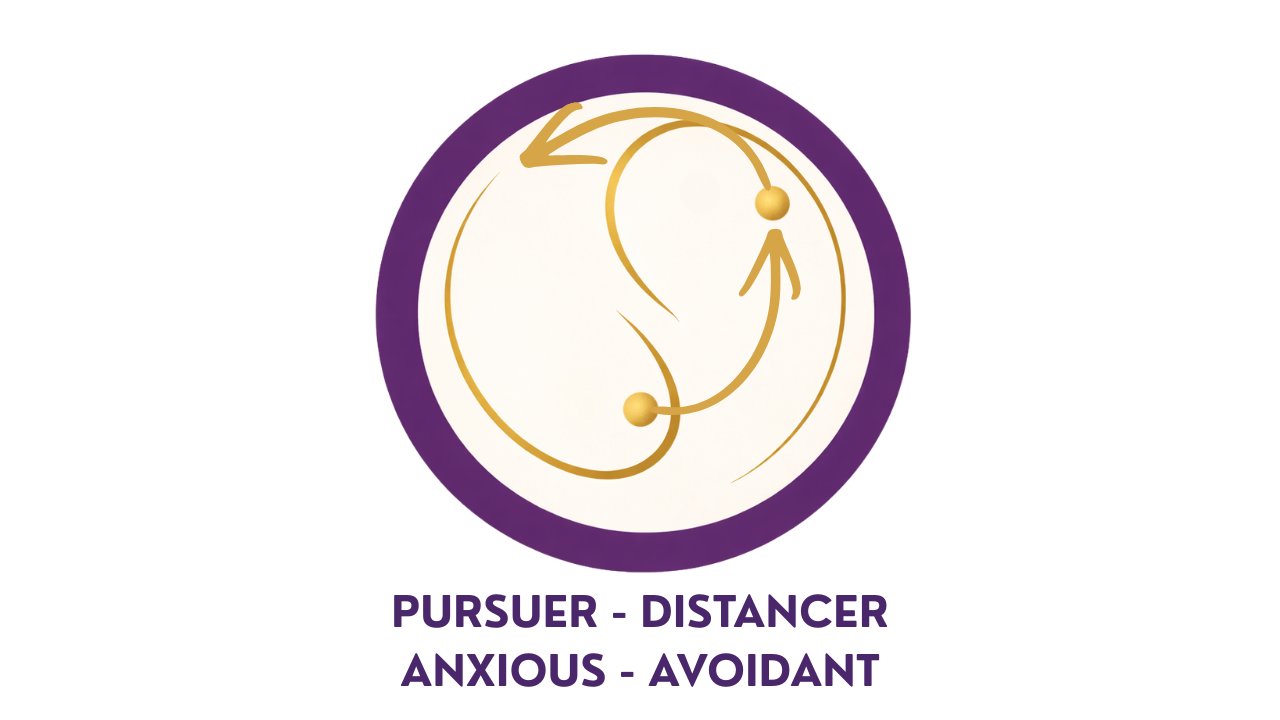
The person in the disempowered persona becomes the pursuer. They chase. They text. They pursue connection. They blame themselves for distance. They do emotional labor. And the more they pursue, the more their partner withdraws. Because pursuit triggers the falsely empowered partner’s need for control and space.
The more the partner withdraws, the more the pursuer escalates. They see the withdrawal as abandonment. Their survival is at stake. So they pursue harder. They become more desperate. They lose more of themselves.
The partner sees the pursuit as suffocation. They feel trapped. Their autonomy is threatened. So they create more distance. They punish the pursuit. They withhold affection to maintain control.
Neither person is wrong. Both are operating from their blueprint. Both are trying to survive. And the cycle accelerates until one person completely loses themselves or one person leaves.
Trauma bonds also destroy your body wisdom. Your gut is lying to you. The nervous system signals you’re interpreting as intuition are actually fear responses. They’re not telling you this person is your soulmate. They’re telling you this person matches your blueprint. These are two completely different things.
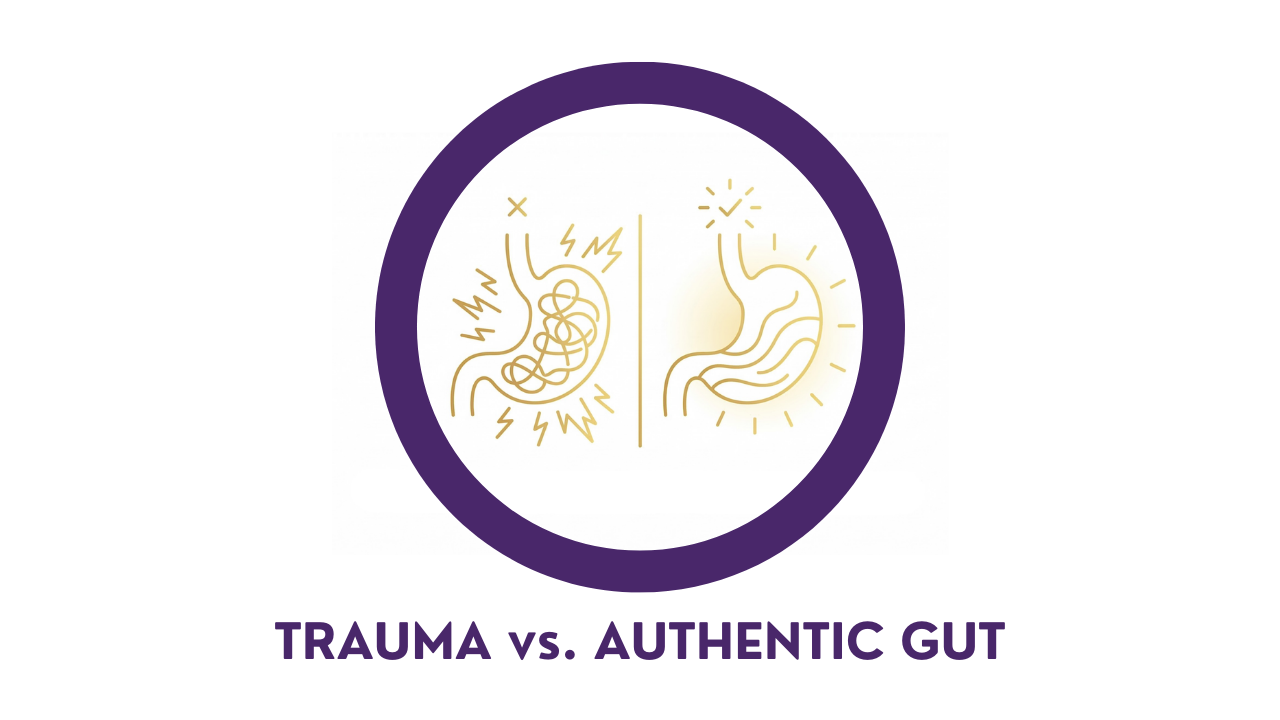
Your trauma gut pulls you toward people who are familiar — which usually means they’re recreating your original wound. Your authentic gut pulls you toward people who are genuinely healthy, trustworthy, and aligned with your values — which usually means they feel unfamiliar, boring, or “not right.”
That’s you — caught between two nervous systems, listening to the trauma gut because it feels louder, stronger, more alive, and then wondering why every relationship ends in the same pain.
Why Has Everything You’ve Tried Failed to Break the Bond?
You’ve read the books. You’ve been to therapy. You’ve done the boundary work. You’ve journaled. You’ve meditated. You’ve said “I deserve better” a thousand times. You’ve made a firm decision to leave. And yet… you still reach out. You still check their Instagram. You still pick up the phone. You still convince yourself that this time will be different.
And you feel like you’re failing.
You’re not failing. The advice you’ve been given is failing you.
Most relationship advice is designed for unhealthy attachments — the kind where a person is in a relationship with someone who doesn’t match their values, someone they’ve outgrown, someone they chose from a place of low self-esteem. That advice says: Create boundaries. Increase your self-esteem. Remove yourself from the situation. Do the work on yourself.
And that advice is logical. It makes sense cognitively. But it doesn’t account for the fact that you’re not in an unhealthy attachment. You’re in a survival attachment. And survival attachments live in your nervous system, not in your conscious mind.
That’s you — doing all the “right” things cognitively while your nervous system is screaming for the familiar pattern, for the intermittent reward, for the fear-and-relief cycle that has become your definition of love.
Boundary scripts fail because they assume you can think your way out of a nervous system hijacking. You can’t. Saying “no” to someone who activates your abandonment wound requires that your nervous system feel safe. But your nervous system is designed to pursue this person to prevent abandonment. Every boundary you set triggers the fear you’re trying to prevent.
Leaving fails because it assumes you’re choosing to stay. You’re not. Your nervous system has classified leaving as abandonment — which is death in the language of survival. So your body will sabotage your conscious decision to leave because leaving feels more dangerous than staying.
Therapy fails if it’s not specifically addressing the nervous system hijacking and the childhood blueprint. Generic talk therapy won’t rewire the neural pathways that have been reinforced ten thousand times. You need to address the body, the nervous system, the shame identity, the belief that love equals fear.
Self-esteem work fails because the problem isn’t your self-esteem. You can feel worthy and still stay in a trauma bond. Worthiness doesn’t rewire your nervous system. Worthiness doesn’t change what your body has learned to call love.
Books about narcissistic abuse fail because they’re describing something done TO you — as if you’re a passive victim of someone else’s tactics. And while trauma bonding can occur with narcissistic people, the real issue is not what they’re doing. It’s what your nervous system is doing. It’s how your system is interpreting and responding to their behavior. It’s the blueprint that made you attractive to them in the first place and made their behavior feel like home.
The reason you can’t leave is not because you’re weak. You don’t stay because you’re weak. You stay because the cycle hijacks your nervous system, your fear, your shame identity, your earliest emotional memories, your need for relief. You stay because leaving triggers an existential panic that feels like death. You stay because your body has been wired since childhood to chase this exact pattern.
But here’s the critical part: That means the solution is not willpower. It’s not motivation. It’s not “just leaving.” The solution is rewiring the nervous system itself. The solution is healing the childhood wound that created the blueprint. The solution is creating a new emotional chemical addiction — one rooted in your authentic self instead of your survival persona.
How the Emotional Authenticity Method™ Breaks the Trauma Bond
The way out of the trauma bond is not leaving. Leaving is just a physical action. The way out is healing. And healing happens through a specific methodology designed to rewire your nervous system from the inside out.
That methodology is the Emotional Authenticity Method™ (EAM).
The EAM is a six-step process that teaches your nervous system to recognize the difference between trauma gut and authentic gut, between survival attachment and healthy connection, between performing and being. It rewires the shame identity. It dissolves the fear of abandonment by showing your system that you can survive alone. It creates a new emotional chemical addiction rooted in your authentic self.
Here’s how it works:
Step 1: Somatic Down-Regulation
Before you can think, you must calm your nervous system. When you’re activated by a text, a silence, a fear that they’re leaving, your nervous system is in sympathetic dominance (fight-or-flight). Your prefrontal cortex — the thinking brain — goes offline. You can’t logic your way out. You can’t boundary your way out. You must down-regulate first.
Somatic down-regulation means bringing your awareness into your five senses for 15-30 seconds. What can you hear right now? Not think about. Hear. The ambient sound. The texture of the chair on your skin. The temperature of the air. The taste in your mouth. By anchoring into present sensory experience, you signal safety to your nervous system. You’re not in the danger that your mind is spinning about. You’re here. You’re safe. You’re alive.
That’s you — pausing before you text back, before you pursue, before you collapse into shame, and bringing your system back to the present moment.
Step 2: What Am I Feeling Right Now?
Once your nervous system is regulated, you can access your thinking brain. Now ask: What am I actually feeling? Not thinking. Feeling. Is it fear? Shame? Longing? Panic? Rejection? Grief? Don’t judge it. Just name it.
This sounds simple. It’s not. Most people who grew up in traumatic or enmeshed families learned to dissociate from their feeling state. They learned to override their emotions with thinking or performing or people-pleasing. So this step is about reconnecting to the emotional world you learned to abandon.
Step 3: Where in My Body Do I Feel This?
Emotions live in the body. The abandonment panic might live as tightness in your chest. The shame might live as heaviness in your shoulders. The longing might live as an ache in your throat. Move your awareness into the sensation. Where is the feeling physically located? Is it sharp or dull? Is it moving or static? Is it warm or cold?
By creating specificity around the somatic experience, you’re teaching your nervous system that this is information, not danger. You’re becoming a witness to your own internal state rather than being consumed by it.
Step 4: What Is My Earliest Memory of Having This Exact Feeling?
Here’s where the blueprint healing happens. That tightness in your chest when they don’t text you back — when was the first time you felt this? Was it when your parent withdrew after you made a mistake? Was it when a sibling was favored over you? Was it when you sensed a parent’s unhappiness and believed you caused it?
This feeling you’re experiencing right now is not about your current partner. It’s the original wound being triggered. Your current partner is just the activator. The real ache is ancient.
That’s you — suddenly recognizing that the intensity of your reaction is disproportionate to the current situation because you’re not reacting to the present. You’re reacting to the past.
This is crucial. Because the moment you recognize that this is an old wound, your nervous system begins to shift. The current threat becomes less urgent. The attention moves to the original hurt. And that original hurt is something you can actually heal — because it’s not about your partner. It’s about you and your childhood.
Step 5: Who Would I Be If I Never Had This Feeling Again?
This is the visioning step. You’re creating a new possibility. Not denying the feeling. Not suppressing it. But imagining: What if your nervous system didn’t go into panic at the sign of distance? What if you could be in a relationship and feel secure even when there are gaps in contact? What if your worth wasn’t tied to someone else’s consistency?
Who would you be? How would you move differently? How would you speak differently? How would you make decisions differently? What would be possible?
Most people skip this step because it feels too big, too abstract, too impossible. But this step is where you’re programming a new neural pathway. You’re creating a vision of your authentic self — the self that exists independent of the trauma bond, independent of the other person, independent of the cycle.
Step 6: Feelization — Sit in the Authentic Self Feeling and Create a New Chemical Addiction
Now comes the rewiring. Sit in that vision. Feel it in your body. What does it feel like to be secure? To be grounded? To know your worth is internal? To trust yourself? To not need rescue?
This is not positive thinking. This is not affirmations. This is a nervous system experience. You’re creating a somatic state — a full-body felt sense of your authentic self. And you’re holding that state for as long as you can. Because every second you sit in that feeling, you’re creating a neural pathway. You’re building a new emotional chemical experience. You’re training your nervous system that there’s another way to feel. And that feeling is accessible to you.
That’s you — slowly rewiring the addiction from “fear and relief” to “grounded and present,” from “performing and being seen” to “being yourself and being okay with that.”
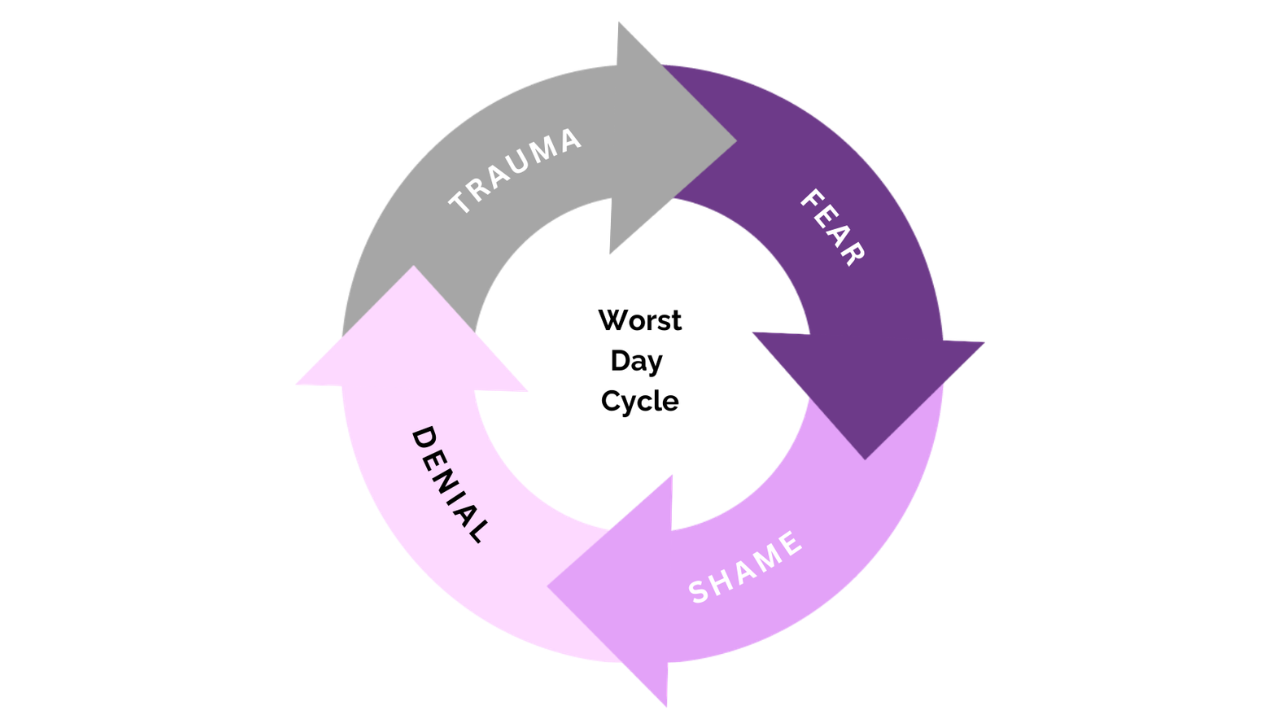
This is where the Emotional Authenticity Method™ Method™ connects to the larger healing frameworks. The Worst Day Cycle™ is the problem — the cycle that keeps you trapped. The Authentic Self Cycle™ is the vision of what’s possible when the WDC is healed.
In the Authentic Self Cycle™, you move from Truth → Responsibility → Healing → Forgiveness. You see the truth about what happened. You take responsibility for your choices (not the blame, not the guilt — the responsibility). You do the work to heal the wound. And you forgive — not them necessarily, but yourself for staying so long, yourself for not knowing better, yourself for surviving the only way you knew how.
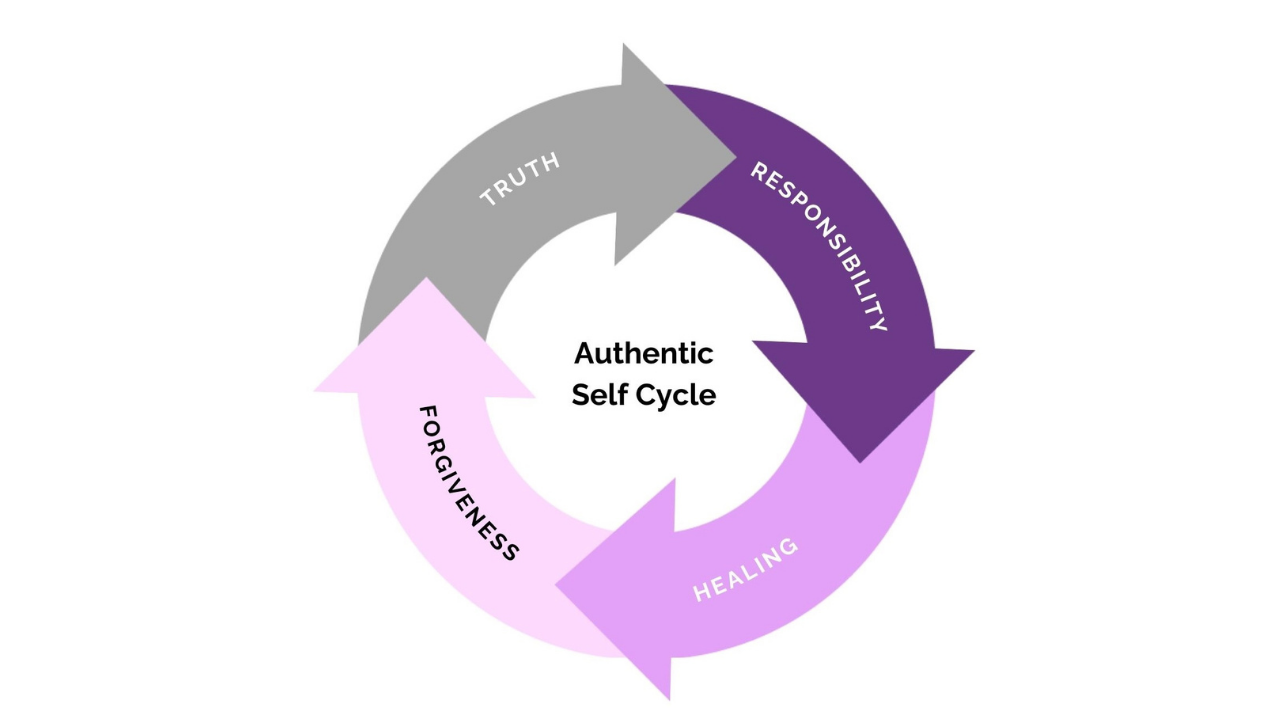
The EAM is the methodology that gets you there. Step by step. Feeling by feeling. Rewiring your nervous system one encounter at a time.
What Does Breaking a Trauma Bond Look Like in Real Life?
Healing isn’t linear. It’s not: week 1 you’re trapped, week 8 you’re free. Breaking a trauma bond is a slow, spiraling process where you gradually develop capacity to feel your authentic self, gradually recognize the cycle faster, gradually respond differently, gradually stop needing the intermittent reward.
But here’s what shifts:
In Family Bonds
Before: You call your parent hoping for approval. They’re cold. You collapse into shame, believing you did something wrong. You call back, overexplaining yourself, trying to fix the distance. You wait for them to reach out. When they finally do, you feel like you can breathe again. You tell yourself it wasn’t that bad. You go back for more.
After: You call your parent. They’re cold. You notice the familiar shame rising. You pause. You do a somatic check. You recognize: This is my old wound, not my current reality. You listen to them without needing to fix them or yourself. You feel their distance without interpreting it as rejection of you. You can have contact with them without needing them to approve of you. You can love them without being trapped by them.
In Romantic Bonds
Before: Your partner is distant. Your nervous system goes into full panic. You text. You pursue. You feel the abandonment dread. You collapse into self-blame. You do everything you can to get them back. When they finally respond with affection, you feel like you’ve been rescued. The relief is so intense that you believe it’s love. You stay.
After: Your partner is distant. You notice the impulse to panic. You notice the familiar chase instinct. But you pause. You’re not automatically acting on the nervous system signal. You ask yourself: Is this person actually unavailable, or is my trauma activation interpreting normal space as abandonment? You can sit with distance without having to fix it. You can maintain your own emotional state without needing them to regulate it for you. You can recognize whether this is a pattern that needs to be addressed or whether this is your nervous system lying to you.
In Friendships
Before: You have a friend who comes and goes, who gives you intense attention then disappears for weeks. You idealize them when they’re present. You feel rejected when they’re absent. You do emotional labor to maintain the friendship. You modify yourself to fit what you think they need. You can’t imagine life without them even though they consistently hurt you.
After: You have a friend who comes and goes. You recognize the pattern. You notice that you’re the pursuer in this dynamic. You observe your own shame around their distance. You gradually redirect your emotional investment to people who are consistently present. You can appreciate them without needing them. You can release them without anger. You understand that this wasn’t about them being wrong — it was about your nervous system being trained to chase unavailable people.
In Work/Professional Bonds
Before: You have a boss or colleague who gives you intense praise then becomes critical and cold. You work twice as hard to earn back their approval. You feel anxious when you’re not getting direct feedback. You modify your work style to match what you think they want. You interpret their distance as performance feedback even when they don’t say anything. You stay in the job far longer than is healthy.
After: You have a boss or colleague who gives you intense praise then becomes critical. You notice your nervous system’s hunger for their approval. You recognize that you’re trying to manage their emotions through your performance. You establish clarity about what the job requires versus what your trauma is projecting onto it. You can receive feedback without collapsing into shame. You can leave if the environment isn’t healthy, not because you’re angry at them, but because you recognize the dynamic isn’t serving you.
In Your Body
Before: Your body holds chronic tension, especially when you haven’t heard from them. You feel physically ill during conflict. You experience somatic pain that your doctor can’t diagnose. You use food, alcohol, sex, or other behaviors to manage the nervous system dysregulation. You feel disconnected from your body, like it’s betraying you by staying attracted to someone who hurts you.
After: You begin to feel your body as information. The tension isn’t dysfunction — it’s your nervous system telling you something. You can feel the fear response rising and recognize it as a nervous system pattern, not truth. You gradually release the chronic tension as you stop needing to be hypervigilant to the other person. You experience relief, not as “they came back,” but as “I did the work and my nervous system finally feels safe.” Your body becomes an ally instead of a traitor.
Breaking the trauma bond is not about willpower. It’s not about leaving. It’s about your nervous system gradually learning that you can be safe, worthy, and connected without the cycle. It’s about your body slowly releasing the blueprint that said love equals fear. It’s about becoming someone who can hold boundaries not out of anger, but out of self-respect. Someone who can feel their own emotional state without needing someone else to soothe it. Someone who can choose to stay or choose to leave from a place of authenticity, not desperation.
That’s you — slowly becoming the person your wounded child self never got to be. Grounded. Present. Unafraid.
Your Next Small Step
Healing from a trauma bond is not a light switch. You don’t read an article and suddenly be free. But you do take a next step. A small one. A human one.
This week, I want you to practice Step 1 of the Emotional Authenticity Method™: Somatic Down-Regulation. The next time you feel the urge to reach out to this person — to text, to call, to check their social media — pause. For 15-30 seconds, bring your awareness into your five senses. What can you hear? What can you feel on your skin? What can you taste? What can you see right in front of you?
Just notice. Don’t judge yourself for the urge. Don’t white-knuckle your way through it. Just pause and regulate. Because every moment you can create a gap between the nervous system signal and your response is a moment you’re rewiring. Every time you interrupt the automatic chase, you’re building new neural pathways.
That’s it. One step. This week.
If This Article Hit Home, the Books Go Deeper
If this article hit home, the book goes deeper.
Everything I write about on this site — the Worst Day Cycle™, your childhood emotional blueprint, why you keep repeating the same patterns no matter how hard you try — it all started with my first book, Your Journey To Success: How to Accept the Answers You Discover Along the Way.
This is the book readers call “the first time I found a roadmap I could actually understand and that seemed attainable.” It is the book that walks you through WHY your life hasn’t changed despite all the work you’ve done — and shows you, step by step, exactly how to break free. No fluff. No motivational hype. Just the truth about what was done to you, why it stuck, and what to do about it.
If you’ve read this far, you already know something needs to change. This book is where that change starts.
Get Your Journey To Success on Amazon → https://amzn.to/3nfVphr
Ready to stop understanding the problem and start rewiring it?
The article you just read scratches the surface. My new book, Your Journey To Being Yourself: How to Overcome the Worst Day Cycle & Reclaim Your Authentic Self with Emotional Authenticity, gives you the complete system — the Worst Day Cycle™, the Authentic Self Cycle™, and the full Emotional Authenticity Method™ — all in one place, with the neuroscience behind every step.
This is the book readers call “a genius piece of art in mastering emotion and the art of healing.” It speaks directly to the person who feels stuck, overwhelmed, and confused by the same repeating patterns — the same arguments, the same relationship breakdowns, the same shame — and is done accepting surface-level answers. Every chapter combines powerful stories, clear steps, and practical tools that show you how to rewire your emotional patterns from the inside out.
You are not broken. You were programmed. And this book shows you exactly how to rewrite the program.
Get Your Journey To Being Yourself on Amazon → https://amzn.to/4snRhZp
Frequently Asked Questions About Trauma Bonding
Is Trauma Bonding the Same as Unhealthy Attachment?
No. Unhealthy attachment is when you’re in a relationship that doesn’t serve you, but you can logically see why you should leave. Trauma bonding is when leaving feels like abandonment, when your nervous system interprets distance as threat, when you’re not choosing to stay — your body is forcing you to stay. Trauma bonding hijacks your survival systems. That’s why willpower and logic alone can’t break it.
Does Trauma Bonding Only Happen with Narcissistic People?
No. Trauma bonding can happen with anyone, but it requires that the person match your childhood blueprint — which means they have to offer intermittent affection, unpredictability, or conditional love. A narcissist can create a trauma bond, but so can an anxiously attached person, an avoidantly attached person, or someone with untreated mental health struggles. What matters is not their diagnosis — it’s the pattern the relationship creates in your nervous system.
How Long Does It Take to Break a Trauma Bond?
It depends on the depth of the original wound and how long the relationship lasted. A two-year trauma bond might take six months to a year to heal. A ten-year trauma bond might take two to three years. But “healing” doesn’t mean you suddenly stop being tempted. It means you gradually develop the nervous system capacity to not act on the temptation. It means the bond loses its electrical charge. It means you can think about them without panic. It means you’re choosing yourself more often than you’re choosing the cycle.
Can You Break a Trauma Bond While Still in the Relationship?
Yes, but it’s exponentially harder. Because your nervous system is in daily activation. Every interaction is re-traumatizing, re-wiring, re-strengthening the bond. However, some people do the healing work while still in the relationship, develop capacity to see the pattern, recognize they can’t fix their partner, and then make a clearer choice to leave — not from desperation, but from clarity. That choice tends to stick because it’s rooted in wisdom, not panic.
Why Do I Feel Physically Addicted to This Person?
Because you are. Your nervous system has developed a literal chemical addiction to the cycle. The fear releases cortisol and adrenaline. The reunion releases dopamine and oxytocin. Your brain has learned that this person — and specifically this pattern — creates the neurochemical state it craves. Your body doesn’t distinguish between “addiction to a substance” and “addiction to a person and a nervous system pattern.” It’s all the same to your neurobiology.
Is There Something Wrong with Me That I Keep Repeating This Pattern?
No. You’re not broken. You’re not defective. You were programmed. Your nervous system learned — in childhood, through thousands of repetitions — that love includes fear, that safety includes anxiety, that connection includes abandonment panic. You picked the person who best matched that programming because your body was looking for something familiar, something that felt like home, something that felt like love. That’s not weakness. That’s your nervous system doing what it learned to do. The good news: You can reprogram it. But the first step is compassion — for yourself, for the person who created the original wound, for the person who recreated it in adulthood.
What if the Person I’m Trauma Bonded With Comes Back Asking for Another Chance?
This is the critical test. Your nervous system will be screaming yes. The relief of them reaching out will flood through your body. The hope will activate. All the chemical rewards will trigger. This is when the Emotional Authenticity Method™ matters most. You’ll need to do a somatic down-regulation. You’ll need to ask yourself what you’re actually feeling, where it’s located in your body, when you first felt it. You’ll need to remember that the relief you’re feeling is not proof that they’ve changed — it’s proof that your nervous system is addicted to the pattern. Then you’ll need to decide from a place of authenticity, not from a place of desperation. And that decision — made from clarity rather than panic — is the one that will stick.
Can I Ever Have a Healthy Relationship After a Trauma Bond?
Yes. Absolutely yes. But first, you have to heal the original blueprint. Because if you don’t, you’ll attract the same person in a different body. You’ll recreate the same dynamic. You’ll be drawn to the same flavor of chaos. Healing the blueprint doesn’t mean you’ll never be attracted to an unavailable person again — it means you’ll notice the pattern earlier, you’ll recognize it as your wound being triggered, and you’ll make a different choice. You’ll have capacity to stay in a healthy relationship even when it feels boring because you’re not chasing the dopamine hit of the cycle. And that capacity — that’s freedom.
The Bottom Line
Trauma bonding is not a character flaw. It’s not a sign that you’re weak, stupid, or broken. It is a nervous system pattern rooted in childhood, activated by an adult partner who matches your blueprint, and maintained by a predictable seven-stage cycle that hijacks your fear system, your shame identity, and your need for relief.
The reason you can’t leave is not because you love them. It’s because your nervous system mistakes danger for love. It’s because your body learned in childhood that love includes fear, anxiety, shame, and intermittent reward — and now it’s chasing that pattern in an adult relationship.
The reason everything you’ve tried has failed is because you’ve been trying to think your way out of something that lives in your nervous system. You can’t logic yourself out of a trauma bond. You can’t boundary yourself out of it. You can’t leave your way out of it. You have to rewire it. You have to heal the original blueprint. You have to teach your nervous system that you can be safe, worthy, and connected without the cycle.
And that rewiring is possible. The Emotional Authenticity Method™ shows you how. The Worst Day Cycle™ shows you what you’re escaping. The Authentic Self Cycle™ shows you what’s possible on the other side. Your childhood blueprint — once you see it — becomes the map to your freedom. And if you’re a parent watching trauma-bonding patterns develop in your child, this guide on the narcissistic child dynamic can help you break the cycle for the next generation.
The moment you understand the blueprint, the chemistry changes.
Not overnight. But it changes. You’ll notice the pattern before you act on it. You’ll pause before you text. You’ll recognize when your nervous system is lying to you. You’ll feel your authentic self underneath the survival persona. And gradually, one nervous system regulation at a time, one pause at a time, one small choice at a time, you’ll break free.
You are not destined to repeat trauma bonds. You are reliving the blueprint until you heal it. And healing is always possible.
Recommended Reading
Adult Children of Emotionally Immature Parents by Lindsay C. Gibson — A clear, compassionate exploration of how childhood emotional neglect or enmeshment creates the blueprint for trauma bonding in adulthood. Gibson offers practical tools for recognizing patterns and healing the wound.
What Happened to You? by Bruce D. Perry and Oprah Winfrey — This book reframes trauma and attachment through the neuroscience of how our brains are shaped by childhood experience. It’s essential reading for understanding why your nervous system does what it does.
Attached: The New Science of Adult Attachment and How It Can Help You Find — and Keep — Love by Amir Levine and Rachel Heller — A detailed exploration of attachment patterns, including how anxious, avoidant, and secure attachment styles show up in relationships. Understanding your attachment style is crucial to recognizing your trauma bond patterns.
The Body Keeps the Score by Bessel van der Kolk — A comprehensive resource on how trauma lives in the nervous system and body. Van der Kolk explains why traditional talk therapy often fails for trauma and what actually works — which includes somatic practices like those in the Emotional Authenticity Method™.
Continue the Work
If you’re ready to do the deeper work of healing your childhood emotional blueprint and breaking free from trauma bonds once and for all, the courses below are designed to guide you step by step through the Emotional Authenticity Method™, the Worst Day Cycle™, and the Authentic Self Cycle™.
Emotional Blueprint Starter Course — Individual ($79) — A foundational course that walks you through your childhood emotional blueprint, the survival personas you developed, and the first steps of the Emotional Authenticity Method™. Perfect if you’re just beginning to understand why you keep repeating the same patterns.
Enroll at: kennyweiss.net/individual-starter-course
Relationship Starter Course — Couples ($79) — Designed for couples who want to understand their dynamic, break the pursuer-distancer pattern, and create a healthier emotional connection. Works best after both partners have done individual healing work.
Enroll at: kennyweiss.net/relationship-starter-course
Why We Can’t Stop Hurting Each Other ($479) — A comprehensive deep-dive into the attachment patterns that keep couples trapped in the same arguments, the same breakdowns, the same pain. This course walks you through the neuroscience of why you hurt each other and exactly how to rewire it.
Enroll at: kennyweiss.net/why-we-cant-stop-hurting-each-other
Why High Achievers Fail at Love ($479) — For the person who has everything together at work but everything falling apart in relationships. This course explores why success and connection often feel mutually exclusive, and shows you how to rewire the false belief that achievement requires emotional abandonment.
Enroll at: kennyweiss.net/why-high-achievers-fail-love
The Shutdown Avoidant Partner ($479) — If you’re dealing with someone who withdraws, shuts down, or goes cold during conflict, this course is for you. It explains the neuroscience of avoidant attachment, the survival reasons behind the shutdown, and how to create safety without chasing.
Enroll at: kennyweiss.net/shutdown-avoidant-partner
Tier 1: Mapping the Blueprint ($1,379) — The most comprehensive course available. Over 40+ hours of video, workbook materials, and guided exercises, this tier walks you through every layer of your childhood emotional blueprint, all three survival personas, the Emotional Authenticity Method™ in full depth, and the framework for complete nervous system rewiring.
Enroll at: kennyweiss.net/mapping-the-blueprint-tier-1
The Feelings Wheel Exercise — Free
One of the most powerful tools for rebuilding emotional literacy is the Feelings Wheel. Most people who grew up in traumatic families learned to numb, dissociate, or override their emotions. The Feelings Wheel teaches you to identify and name the specific feeling you’re experiencing — which is the first step of the Emotional Authenticity Method™.
Access the free Feelings Wheel and guided exercise at: kennyweiss.net/life-changing-exercise
Start there. Start with naming one feeling. Start with creating one moment of somatic down-regulation. Start with one small pause before you react. Because every small moment you choose authenticity over survival is a moment you’re rewiring your nervous system. Every moment you recognize the pattern is a moment you’re becoming free.
You’ve got this.