
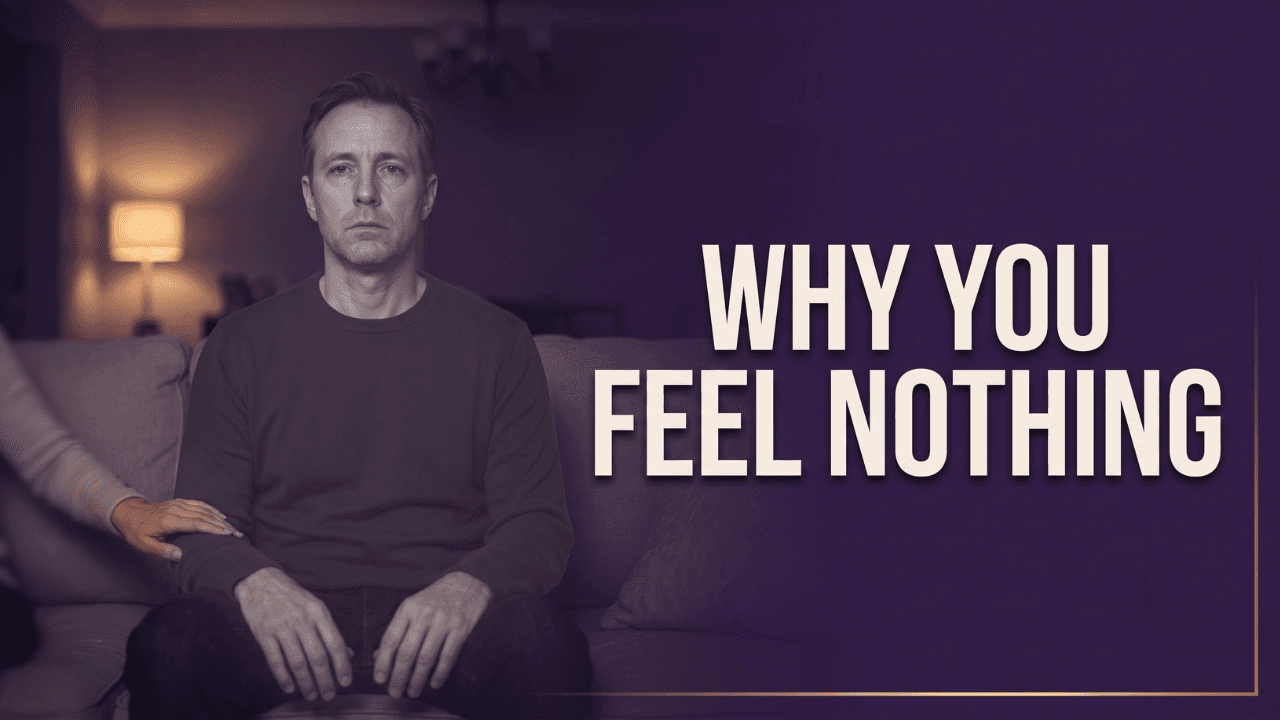
Did you used to cry at songs, or laugh until your stomach hurt, or actually want things? Or maybe you have never understood why other people can do that and you can’t. Either way, now you sit on the couch, the show’s running, the food’s in front of you, the person you love is sitting beside you — and you feel almost nothing.
That is not depression the way your doctor will hand it to you in a five-minute appointment and a prescription. Anhedonia is emotional shutdown — your survival persona finally collapsing under the weight of how long it has had to perform. Your system is not broken. It pulled the master breaker on purpose, because feeling anything right now would force you to recognize that your whole adult life has been built on not feeling.
You know the moment. The dinner tastes like nothing. The good news lands like nothing. The person you love reaches for you and you register it the way you’d register a weather report.
That’s you… alive on paper, dim in the room.
What Is Anhedonia, Really?
A client of mine, a very accomplished man in his fifties, sat across from me and said, “You know, Kenny, I don’t even know why I’m really here. I’m not sad. I’m not angry. I just feel like the lights are dim.”
So I asked him one question: “When was the last time you let yourself want something just for you — with no plan to earn it?”
It startled him. He took a deep breath, went quiet, and said, “I don’t think I ever have.”
That’s you… if wanting something for yourself feels like a foreign language.
The clinical word for what he was describing is anhedonia — the loss of pleasure and interest in things that used to bring you alive. But the truer name for it is emotional shutdown. And here is what nobody is explaining to you about it: your emotional system did not malfunction. It is doing exactly what it was trained to do — which was to keep you safe as a child.
Your nervous system learned early that certain emotions were too dangerous, too inconvenient, or too unwelcome in the household you were raised in. And the system that has been suppressing those emotions for decades has finally run out of the energy to keep suppressing. Instead of giving you back your feelings, it pulled the breaker on the whole panel.
That is what anhedonia actually is. Not brokenness. Emotional exhaustion — the protective collapse of an emotional system that has been carrying a survival persona on its back since childhood.
That’s you… not numb because something died, but because something finally sat down.
What Happened Before the Lights Went Out: The Emotional Surgery
To survive your childhood, your brilliant little body performed emotional surgery on itself. It amputated the emotional categories that threatened your attachment to the people you depended on — anger, sadness, longing, joy, need. For some people, all of them. Not because you chose to, but because your system recognized: my real feelings cause withdrawal or attack; my real self is too much, not enough, or unacceptable here.
What each amputation leaves behind is what I call a dead spot — an entire emotional category you cannot access, not because you decide not to, but because the neural pathway was dismantled to keep you safe. The child punished for anger develops a dead spot where anger should be. The child shamed for crying develops a dead spot where grief should be. The child whose joy was met with jealousy or a parent’s depression develops a dead spot where happiness should be.
And this is not rare. Seventy percent of the population is detached from their emotions — feeling blank, numb, and empty because they are dissociated from the emotions of their childhood. They say “I’m fine,” “I’m stressed,” “I’m tired” — vague labels that collapse dozens of distinct feelings into a single word. If you cannot name it, you cannot trace it. If you cannot trace it, you cannot find its origin.
 emotional blueprint behind anhedonia — how emotional amputations become adult numbness" width="600" style="max-width:100%;height:auto;" />
By the time you became an adult, those amputations were not even noticeable, because the survival persona had moved in over top of them — a polished, capable, often very successful version of you that smiled and performed and achieved and never asked for what was missing. If the blueprint underneath it was installed by an anxious, engulfing, or withdrawn parent, the mommy issues version of this download may read like your origin story.
That performance worked for years. But now it doesn’t. The collapse usually arrives at the exact moment your life looks the most successful on paper — because the survival persona finally got everything it was trying to earn, and the body underneath quietly said: “We did all of this for love, but the love still hasn’t arrived. So I’m just going to turn off the lights.”
The survival persona that collapses looks different in different people, and all three types end up on the same couch. The Falsely Empowered controlled, dominated, out-achieved, and intimidated their way through life so vulnerability could never catch them — until the wins stopped producing any feeling at all. The Disempowered people-pleased, over-gave, and erased themselves to keep everyone close — until there was no self left to feel with. The Adapted Wounded Child oscillated between the two — commanding at work, collapsed at home — until the switching itself burned the system down. Same wound. Different performance. Same dimmed lights. This is why success feels empty for so many high achievers — the achievement never touches the original wound.
That’s you… getting everything you were performing for, and feeling nothing when it arrived.
How Does the Worst Day Cycle™ Pull the Master Breaker?
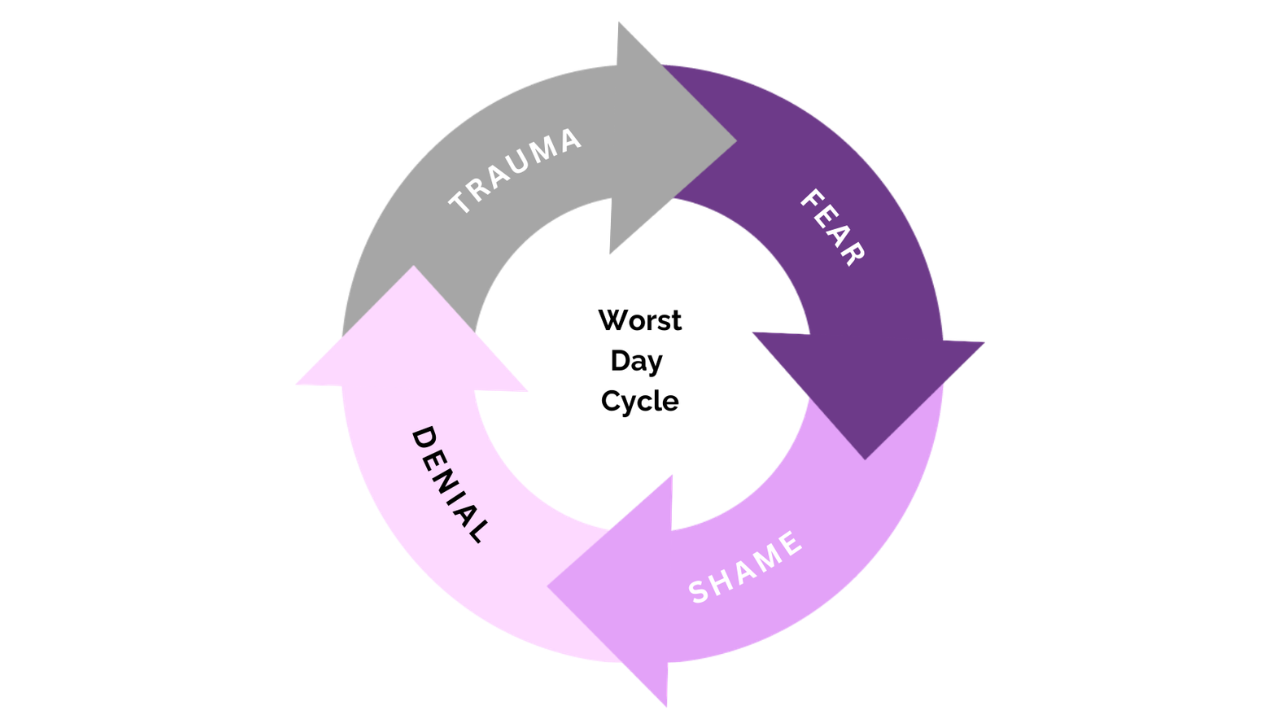
This shutdown runs on what I call the The Worst Day Cycle™™, which I wrote about in my first book, Your Journey To Success. It consists of four stages: Trauma, Fear, Shame, and Denial.
Trauma. For you, the original trauma was learning that your real emotional life was unsafe. Not necessarily one catastrophic event — the daily emotional climate of a home where your feelings were too much, too loud, or too inconvenient.
Fear. The fear is that if you start feeling again, you will not feel a little — you will feel decades. The entire landscape of grief and rage and longing and unmet need you have stacked in your body since you were small. Your system would rather feel nothing than open that vault all at once.
Shame. The whisper that says wanting more, feeling more, or needing more makes you weak. Dramatic. Less than. So even the flicker of a real feeling gets prosecuted before it reaches the surface.
Denial. And to cover all of that, denial puts a quiet, almost reasonable mask on top of the whole thing: “I’m just tired.” “I need a vacation.” “This is what middle age is.” The mask sounds so sensible that you stop asking why the lights went out.
That’s you… explaining away a blackout as a dimmer switch.
If this pattern was installed by the parent whose nervous system you absorbed, this video maps the maternal half of that download.
What Does the Research Say About Feeling Nothing?
The science here is not vague — and it confirms that numbness is a nervous system adaptation, not a character flaw or a chemical accident.
Start with the brain region that reads your internal world: the insula. A 2024 review in Frontiers in Psychiatry confirmed that trauma creates two opposite body-awareness patterns — some people feel everything too intensely, while others go numb and cannot feel their body’s signals at all. Both are caused by the same disrupted insula. Feeling nothing and feeling flooded are the same wound wearing different masks.

Second: the performance is measurable. A 2024 study in BMC Psychology found that people with avoidant attachment suppress their emotional expression to maintain closeness — but their internal arousal stays high. The body knows the truth even when the survival persona hides it. You look fine on the outside. Your nervous system is running a marathon underneath the stillness — which is exactly why the system eventually runs out of suppression energy and pulls the breaker.
Third: the loop feeds itself. A 2022 study in Cognition and Emotion tracked 122 people seven times a day and found that emotional suppression and insecure attachment form a self-perpetuating cycle — suppression deepens insecurity, and insecurity drives more suppression. That is the Worst Day Cycle™ measured in real time, in real lives.
Fourth: denial is the mechanism that keeps it running. A 2020 study in Psychological Trauma found that the refusal to feel painful emotions fully mediates the link between shame and post-traumatic symptoms. It is not the shame itself that keeps you stuck — it is the not-feeling of it. You cannot heal what you will not feel.
And fifth: trauma physically drains the system that would otherwise let you feel safely. Research in BMC Psychiatry found that trauma exposure measurably reduces vagal tone — your nervous system’s calm-down capacity — with a moderate effect size. Your struggle to feel is not weakness. It is a nervous system whose regulatory capacity was physically depleted, and that capacity can be rebuilt.
That’s you… in the data, and none of it says broken.
Why Haven’t Antidepressants, Gratitude Journals, or Forcing Fun Worked?
This is why generic interventions can’t reach this. Antidepressants may have their place, but on their own they cannot tell you why the lights went out — and for many people the numbing stacks on top of the numbness.
Forcing yourself to do more of the things you used to enjoy won’t work either, because the survival persona is the one doing the forcing — and the survival persona is exactly who needs to step down. You cannot perform your way out of a collapse that was caused by performing.
Gratitude journals and cold plunges miss for the same reason: they ask the system to perform feeling rather than letting it feel safe enough to come back online slowly. Your nervous system watched you fake feelings for decades. It is not going to reopen the vault because you wrote three bullet points before bed.
And talk alone can’t reach it, because the shutdown lives below language — in the insula and vagal system the studies above describe, wired before you had words. This is the same reason you shut down during conflict: the body decides before the mind is consulted.
You don’t heal anhedonia by pushing harder. You heal it by stopping the performance and finally letting the body trust that no one is going to punish it for feeling again.
That’s you… trying to fix the collapse with the exact muscle that caused it.
That’s you… with a nightstand full of tools that were built for a different problem.
And if the performing half of your blueprint came from your father’s side of the household — the achievement, the stoicism, the “handle it” training — this video maps that half of the download.
How Do You Heal Anhedonia?
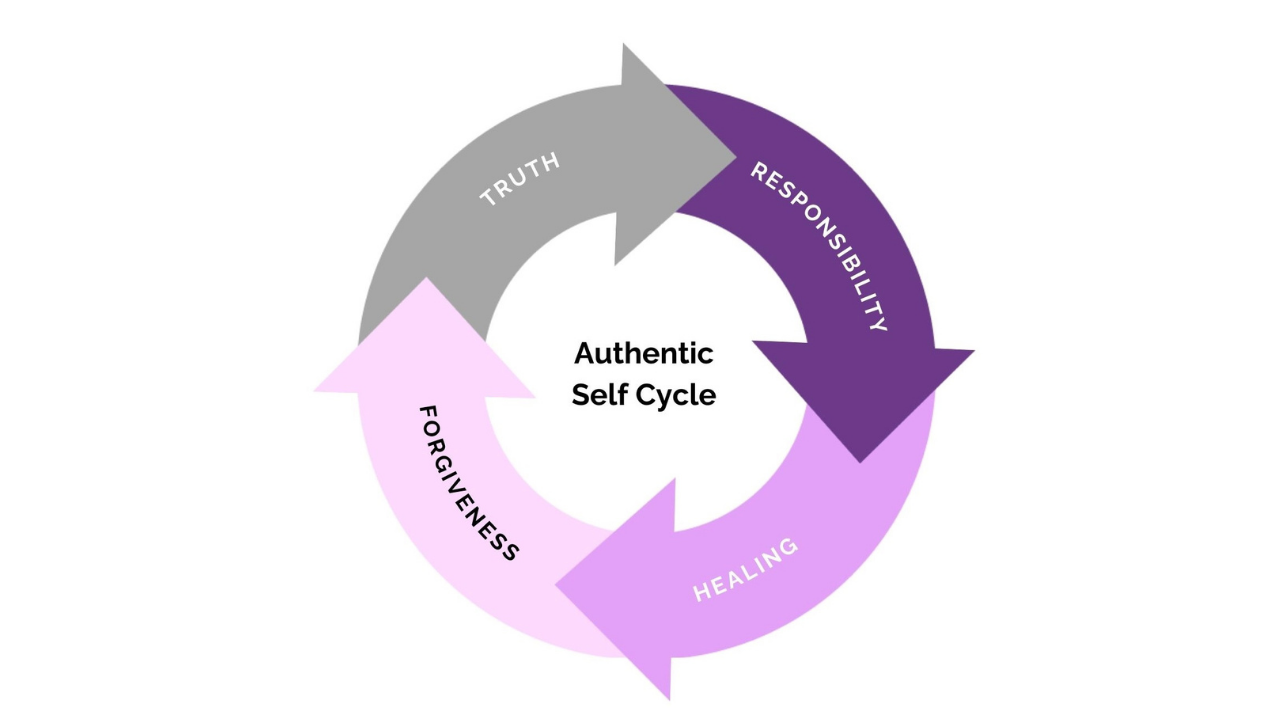
The way out is what I call the Authentic Self Cycle™, which combats the Worst Day Cycle™. I wrote about it in my second book, Your Journey To Being Yourself. It contains four stages: Truth, Responsibility, Healing, and Forgiveness.
Truth. There is a hurt inner child who never got to feel safe, and a shame-based child who turned that into a high-functioning survival persona. The numbness is not who you are. It is what protected you.
Responsibility. Your responsibility is not to push yourself harder. It is to stop performing long enough for your nervous system to believe it is safe to come back — and to take responsibility for gaining the knowledge, skills, and tools to heal the original wounds underneath.
Healing. Healing happens when you commit to the actual work: letting the suppressed feelings return slowly, in small doses, without flooding or overwhelming yourself.
Forgiveness. When you have grieved the version of you that performed the survival persona for decades, you become able to forgive the caregivers who placed this into you. They were running their own blueprint. Nobody taught them either.
Then comes the practice: my Emotional Authenticity Method™ Method™. Six steps — and with anhedonia, the first step matters more than anywhere else, because we are not forcing anything. We titrate.
Step 1 — Somatic Down-Regulation, by titration
The next time you notice the flatness, take 30 to 60 seconds and focus only on what you can hear in the room. Let your nervous system register that the moment is safe. Then gently bring up the flatness, the emptiness, the dimness again — and notice it is already smaller. That is because listening moved you into metacognition, the space between thinking and feeling. You have been hiding in your thinking to keep from feeling; now you are in the space between. Go back to listening. Titrate back and forth, 30 to 60 seconds each way, three to five times. The dimness keeps shrinking, and you start feeling your body again — slowly, safely, without flooding.
Step 2 — What am I actually feeling underneath this nothingness?
You may only get a whisper. Words like tired. Hidden. Far away. I’m done. That is enough. A whisper is a dead spot coming back to life — and research shows that precisely naming an emotion activates the adult brain and calms the alarm system. This is where a Feelings Wheel rebuilds the vocabulary your childhood took.
Step 3 — Where do I feel it in my body?
Even if all you find is a small, low hum — notice it. Register it. You are somatically reconnecting to yourself, one signal at a time. This is the interoception the insula studies describe, being rebuilt on purpose.
Step 4 — What is my earliest memory of feeling exactly like this?
This distance, this dimness — when did it first arrive? This is the step where you finally see how your survival persona, your original emotional blueprint, and your Worst Day Cycle™ were built. You will see the day you figured out it was not safe to be you.
Step 5 — Who would I be if I never had to perform again?
If the blueprint were wiped off the face of the earth — what would be left over? That is where you finally see and feel your Authentic Self: who you were before the pain was placed into you and the performer showed up to run the show.
Step 6 — Feelization
Now sit in the smallest bit of that Authentic Self feeling — even if it is just a flicker. Lighter. Freer. Curious. Warm. Stay with it deliberately, repeatedly. Your emotional blueprint is a nervous system on autopilot — an emotional chemical addiction your body runs without noticing. We are building a new one. So take it back to the couch: if all the numbness were gone, who would I be in this moment? What would I think, feel, say, and do? I can reach for their hand. I can smile. I can say, “Come here. Come closer.” I can feel their presence. Burn that in. That is how you build a new emotional chemical addiction to being alive again — instead of the old self-deception that staying blank is safety. It never was. This is safety.

That is how the lights come back on in your emotional life, your relationships, and everything you do — one room at a time. And the science backs the mechanism: brain imaging research shows that body-awareness training recalibrates the insula so you feel sensations fully without the alarm — not numbing, actual feeling with actual safety.
That’s you… flipping breakers back on, one small switch at a time.
One of the feelings most likely to surface first is the old conviction that you are somehow rejectable — that the coldness you grew up with was about your worth. It wasn’t. This video walks through that piece.
Where Does Anhedonia Show Up in Real Life?
Family
You show up to the holiday, do everything right, and feel like you watched it through glass. Your kids’ laughter registers as information, not joy — and then the guilt about that lands harder than any feeling all week. You call your parents out of duty and hang up emptier than before you dialed. That’s you… present in every photo and absent from every moment.
Romantic
Your partner says “I love you,” and you say it back like reading from a card. You reach for connection on a schedule because wanting stopped happening on its own. They ask what’s wrong and the honest answer is nothing — which is exactly the problem. The flatness in the bedroom is not about them, and it is not about age. It is the breaker panel. That’s you… loving someone through a wall you didn’t know you built.
Friendships
You cancel plans and feel relief instead of loss. Conversations feel like a role you used to know by heart. You watch people laugh and study it like a language you spoke before an injury. That’s you… lonely in rooms you used to light up.
Work
The promotion came. The number hit. The thing you grinded a decade for is sitting in your hands — and inside there is a shrug. So you set a bigger goal, because the chase is the only feeling still on the grid. That’s you… achieving your way around a void the achievement keeps feeding.
Body and Health
Food tastes like texture. Music sounds like background. Sleep doesn’t restore you, rest feels like restlessness, and the body that carried the performance for decades now reports one setting: flat. Sometimes flat breaks into a strange, keyed-up hum with nowhere to go — the flooded inside the research describes under the still outside. That’s you… a live wire wrapped in insulation.
Your Next Small Step
Do not try to reopen the whole vault this week. The next time you notice the flatness, the dimness, the distance from your own life — run one titration cycle. Thirty seconds of listening to the room. Then gently touch the flatness. Then back to listening. Three to five rounds.
That is the entire assignment. Not feeling everything — feeling one degree more than nothing, safely. That one degree is the first light coming back on. One room at a time.
Go Deeper: Kenny’s Books
Everything in this article sits on the foundation of Kenny’s two books — and the Worst Day Cycle™ and Authentic Self Cycle™ each get a full deep-dive in their own volume.
- Your Journey To Success — Kenny’s first book, where the Worst Day Cycle™ was first mapped. If you want to understand the trauma-fear-shame-denial loop that pulled your master breaker — and see it in your own story — start here.
- Your Journey To Being Yourself — Kenny’s second book, home of the Authentic Self Cycle™. This is the path out: Truth, Responsibility, Healing, and Forgiveness, walked step by step toward the person underneath the performance.
FAQ
What is anhedonia?
Anhedonia is the loss of pleasure and interest in things that once brought enjoyment — music, food, connection, intimacy, achievement. Clinically it is treated as a symptom of depression, but at the root it is emotional shutdown: the protective collapse of a nervous system that has been suppressing forbidden emotions since childhood and has finally run out of the energy to keep performing.
Is anhedonia the same as depression?
No. Anhedonia is a core feature of many depression diagnoses, but the two are not identical — you can feel flat and dim without sadness, hopelessness, or the other markers of depression. Many high-functioning adults with anhedonia are told they cannot be depressed because their life works, while the real mechanism — survival persona collapse after decades of emotional suppression — goes unnamed and untreated.
What causes anhedonia?
At the level of childhood, anhedonia begins as emotional surgery: a child amputates the emotions that threatened attachment — anger, sadness, longing, joy, need — and builds a survival persona over the dead spots. At the level of the brain, research shows trauma disrupts the insula, the region that reads internal body signals, producing numbness in some people and flooding in others, while suppression keeps internal arousal high beneath a calm surface until the system collapses.
Why does anhedonia hit when life is finally going well?
Because the collapse is triggered by the survival persona completing its mission. The performance was built to earn love through achievement, and when the achievements finally arrive without producing the love or safety they were supposed to buy, the body concludes the strategy failed and shuts the panel down. This is why so many accomplished people feel the lights go dim at the exact peak of their success.
Can anhedonia be healed without medication?
Anhedonia rooted in emotional shutdown responds to nervous-system-level work: titrated somatic down-regulation, rebuilding emotional granularity, tracing feelings to their earliest memory, and Feelization — the deliberate practice of a new emotional baseline. Research shows body-awareness training recalibrates the insula and rebuilds vagal tone. Medication decisions belong with you and your prescriber; what medication alone cannot do is tell you why the lights went out.
Why doesn’t forcing myself to do fun things work?
Because the survival persona is the one doing the forcing, and the survival persona’s performing is what exhausted the system in the first place. Behavioral activation asks a collapsed nervous system to perform feeling; titration lets it feel safe enough to come back online. The order matters: safety first, feeling second — reversed, the system reads the effort as more performance and stays dark.
Is emotional numbness a trauma response?
Yes. Numbness is one of the two classic trauma adaptations of the body’s interoceptive system — a 2024 review in Frontiers in Psychiatry found trauma survivors become either hyper-aware of body signals (flooded) or hypo-aware (numb), both driven by the same disrupted insula. Numbness is not the absence of emotion. It is the absence of permission to feel it.
How long does it take to heal anhedonia?
Feeling returns the way it left: gradually. The titration process produces small shifts quickly — most people notice the flatness shrinking within a single practice session — but rebuilding a new emotional baseline through Feelization is a repeated practice, not an event. The vault opens in small doses on purpose; that is what makes the return safe instead of flooding.
The Bottom Line
You are not to blame, and you are not broken. You did the best you could with the information you had at the time — and so did the little kid who pulled the breaker rather than feel what could not be survived alone.
But now you know more. You know about the Worst Day Cycle™, the Authentic Self Cycle™, and the Emotional Authenticity Method™. You know the numbness was never the absence of you — it was the protection of you. And you know the way back is not a bigger performance. It is a smaller, safer, truer one: thirty seconds of listening, a whisper of a feeling, a hand reached across a couch.
You were emotionally programmed. And emotional programs can be rewritten.
That’s you… standing at the breaker panel with the lights coming back on, one room at a time.
Recommended Reading
- The Body Keeps the Score — Bessel van der Kolk. The clinical foundation for why shutdown lives in the body and why numbness is a survival adaptation, not a character flaw.
- How Emotions Are Made — Lisa Feldman Barrett. The neuroscience of emotional granularity — why naming feelings with precision literally rebuilds the brain’s capacity to feel them.
- Complex PTSD: From Surviving to Thriving — Pete Walker. The clearest map of the freeze response and how childhood emotional climates build the adult who feels nothing.
- When the Body Says No — Gabor Maté. What decades of suppressed emotion do to the body, and why the collapse is the body’s message, not its betrayal.
Where to Go From Here
If you are ready to let the feeling come back instead of performing its absence, here is the path, in increasing depth. Begin where you are.
- Free — Feelings Wheel exercise: The vocabulary rebuild for Step 2. When all you have is a whisper — tired, hidden, far away — this is how the whisper gets a name. kennyweiss.net/life-changing-exercise
- Emotional Blueprint Starter Course — Individual ($79): Map the blueprint that built your survival persona and see exactly where the lights went out. kennyweiss.net/individual-starter-course
- Relationship Starter Course — Couples ($79): If the numbness is sitting on the couch between you and your partner, start here together. kennyweiss.net/relationship-starter-course
- The Shutdown Avoidant Partner ($479): The deep dive for the one who goes blank, numb, and distant inside the relationship — and the partner trying to reach them. kennyweiss.net/shutdown-avoidant-partner
- Why High Achievers Fail at Love ($479): For the one whose lights went dim at the exact moment the success arrived. kennyweiss.net/why-high-achievers-fail-love
- Why We Can’t Stop Hurting Each Other ($479): How two blueprints collide — one shutting down, one pursuing — and how the cycle heals. kennyweiss.net/why-we-cant-stop-hurting-each-other
- Tier 1: Mapping the Blueprint ($1,379): The full deep work — the system Kenny uses with private clients to rewire the blueprint at the install point. kennyweiss.net/mapping-the-blueprint-tier-1
The lights did not burn out. They were switched off by a child protecting you. You are allowed to switch them back on.