

You are going about your day, everything is fine, and then boom—one text message, one passive-aggressive comment from your partner, or one mistake at work, and you are instantly spiraling. Your heart races, your mind catastrophizes, and before you know it, your entire day is ruined.
An emotional spiral is a rapid, involuntary escalation of fear, shame, or anxiety triggered by a present-day event that activates your childhood emotional blueprint—the unconscious programming your nervous system built in childhood to survive painful experiences. Emotional spirals are not a sign of weakness or sensitivity. They are biochemical events driven by trauma chemistry, and they cannot be stopped with logic, willpower, or deep breathing once the limbic hijack has already fired.
You spend hours, or even days, playing defense against your own mind. You try to use logic to calm down, you try to distract yourself, but the spiral just pulls you deeper into anxiety, frustration, or shame. You feel exhausted because you are constantly reacting to your triggers instead of controlling them.
If this is you, I want you to know that you are not broken, and you are not “too sensitive.” You are simply trapped in a reactive emotional loop, relying on an outdated childhood emotional blueprint.
That’s you… wondering why you can manage a million-dollar budget at work but can’t manage a passive-aggressive text from your mother without falling apart.
Here is why waiting until you are triggered to use your coping skills is a recipe for failure, how the Five-Step Change Process rewires your neural pathways, and the proactive framework you need to stop the spiral before it even starts.
How Does the Five-Step Change Process Rewire Your Brain and Stop Spirals?
Let’s start with a massive paradigm shift. Most people only think about emotional regulation after they have already been hijacked by a trigger. That is like trying to put on your seatbelt after you have already crashed the car.
When you get triggered, your brain experiences a limbic hijack. Your prefrontal cortex—your logic center—shuts down, and your adapted wounded child takes the wheel, running on your outdated emotional blueprint.
That’s you… sitting in the parking lot after a meeting, hands shaking, rehearsing what you should have said, while the shame chemicals flood your body like you’re six years old again.
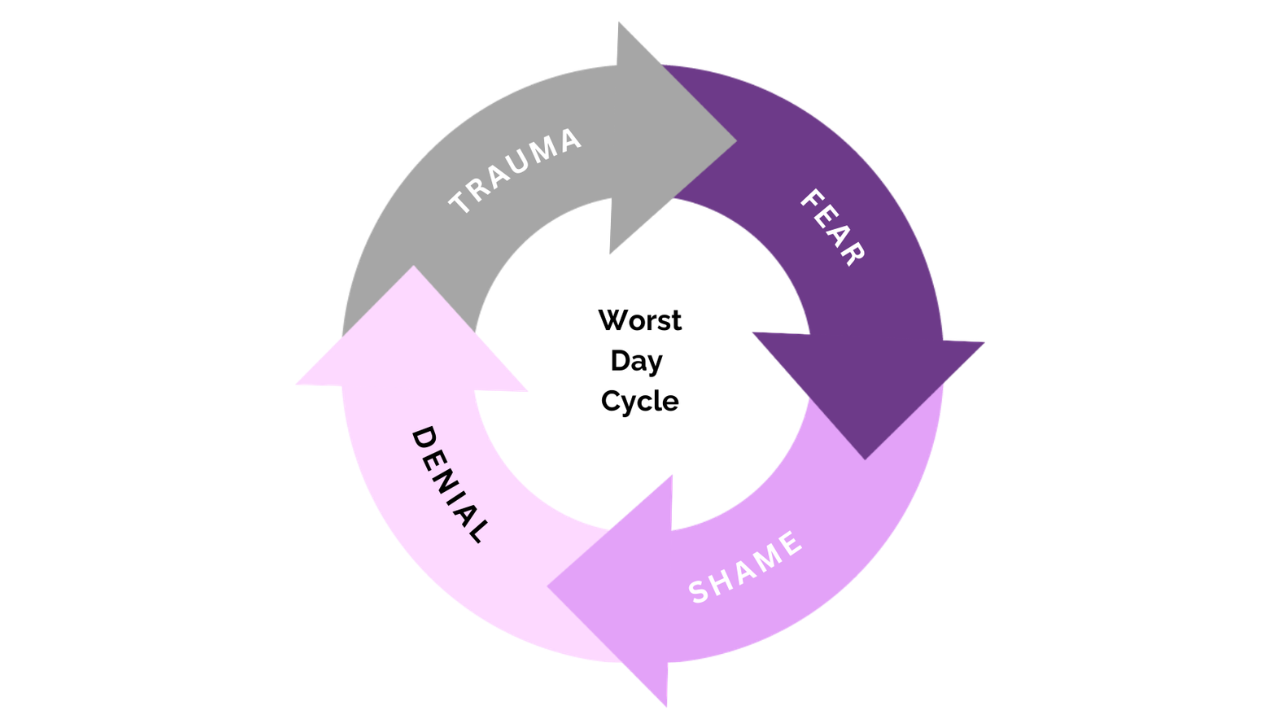
The The Worst Day Cycle™™ explains exactly why spirals happen: Trauma creates Fear, Fear creates Shame, Shame creates Denial, and Denial keeps you looping back into Trauma. Your emotional spiral is this cycle firing in real time. The trigger is never really about today—it is about the unresolved childhood wound that today’s event just activated.
To stop the spiral, you have to understand the Five-Step Change Process of rewiring a neural pathway:
Step 1: The limbic hijack happens, you respond with your usual spiral, and hours later you realize you didn’t use any emotional regulation tools.
Step 2: The hijack happens, you consider using new tools, but you don’t want to let the anger or anxiety go because it feels familiar, so you repeat the old pattern.
Step 3 (The Hardest Step): The hijack happens, you consider the tools, but you actively choose to stay angry or anxious because letting go feels like losing connection to your survival persona.
Step 4: You remember your tools and try partial aspects of them, but don’t fully embrace them.
Step 5: The emotional hijack happens, you use your Emotional Authenticity Method™ skills completely, and they work. For the first time, your emotional chemistry proves you can survive without your survival persona.
That’s you… stuck at Step 3 for the thousandth time, knowing exactly what you should do but choosing the familiar pain anyway because at least it feels like control.
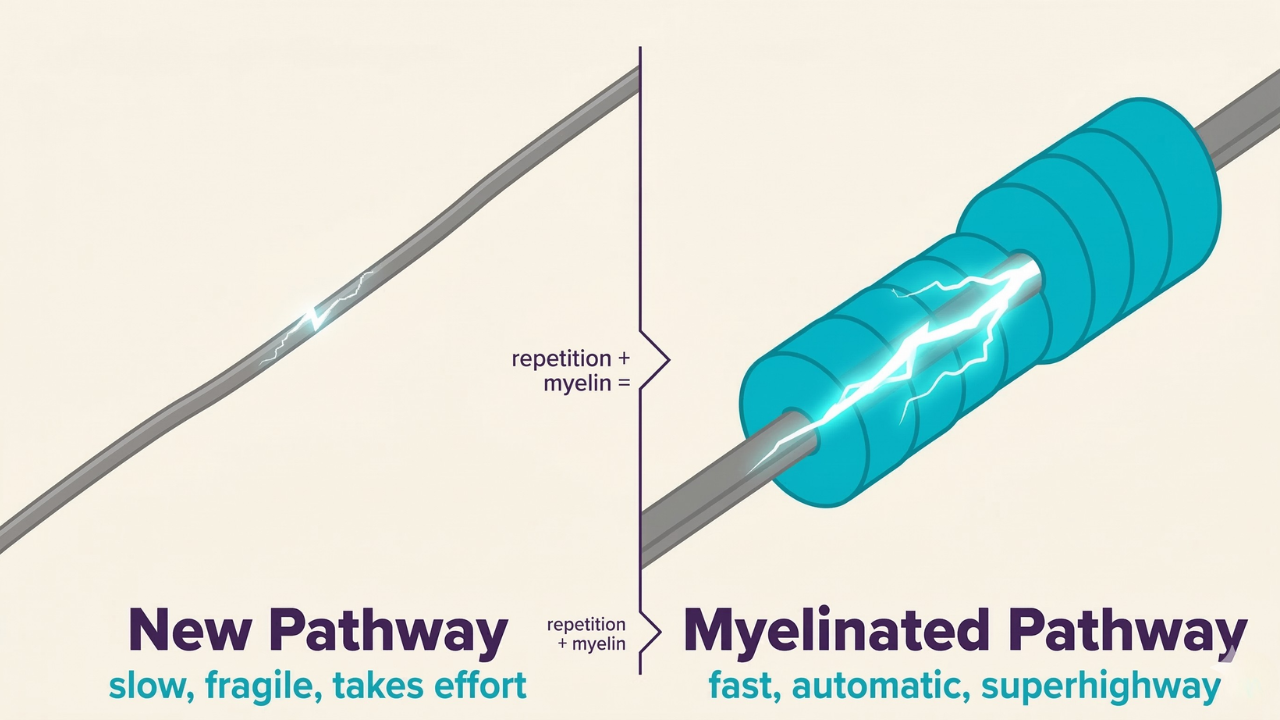
Each time you practice these steps, you are laying down myelin—the biological insulation that strengthens neural pathways. The more you practice, the faster and more automatic the new pathway becomes. This is not a metaphor. This is neuroscience. Your brain physically rewires when you repeat a new emotional pattern.

Why Does Your Brain Hold Onto the Spiral Instead of Letting Go?
Why is it so hard to stop a spiral once it starts? Why do we get stuck in Step 3 of the change process, where we actually choose to stay angry, panicked, or victimized?
It is because your spiral gives you a disempowering benefit. When you catastrophize or rage, it gives your brain a sense of certainty. Your brain would rather experience familiar pain than unfamiliar peace.
That’s you… knowing the anxiety is irrational but holding onto it anyway because calm feels more dangerous than chaos.
When you were a child, your brilliantly adaptive brain created a survival persona to protect you from the unhealed pain and shame your perfectly imperfect parents transferred into you. Your anger, your anxiety, and your spirals are the adapted wounded child’s connection to the person who dumped that shame into you. To let go of the spiral feels like losing that connection.
There are three survival persona types, and each one spirals differently:
The Falsely Empowered persona spirals into rage, control, and dominance. When triggered, this person attacks—verbally, emotionally, or through withdrawal as punishment. The spiral sounds like: “How dare they treat me this way? I’ll show them.” Underneath the rage is terror—terror of being vulnerable, of being seen as weak, of being the powerless child they once were.
That’s you… slamming the door and giving the silent treatment for three days, telling yourself they deserve it, while the shame underneath grows heavier with every hour.
The Disempowered persona spirals into collapse, people-pleasing, and self-abandonment. When triggered, this person folds—apologizing for things that aren’t their fault, over-explaining, desperately trying to make the other person happy. The spiral sounds like: “What did I do wrong? How do I fix this? Please don’t leave.” Underneath the collapse is the same terror—terror of abandonment, of being too much, of being the burden their childhood told them they were.
That’s you… drafting and deleting the same text seventeen times because you’re terrified of saying the wrong thing and losing them forever.
The Adapted Wounded Child oscillates between both. One moment raging, the next moment collapsing. One day setting a boundary, the next day apologizing for having needs at all. This is the most exhausting spiral because you never know which version of yourself is going to show up.
That’s you… screaming at your partner at dinner and then crying in the bathroom twenty minutes later, wondering which reaction was the “real” you.
This is why, when you are in the middle of a spiral, your body physically tenses up. Your survival persona is holding on for dear life because it developed this character to survive. Proactive regulation means recognizing this tension early and realizing that letting go of the spiral is not a loss of safety; it is the ultimate return to your Authentic Self.
Your brain is not choosing chaos because it is broken. It is choosing chaos because it is addicted to the trauma chemistry—the cortisol, adrenaline, and dopamine cocktail that your hypothalamus has been producing since childhood. Your spiral is a chemical event, not a character flaw. And chemical events require biochemical solutions, not just better thoughts.
What Do Emotional Spirals Look Like Across Your Entire Life?
Emotional spirals do not stay in one lane. They bleed into every area of your life, and most people do not connect the dots because the spiral looks different depending on the context.
In Family: One phone call from your parent and your entire week is derailed. You replay the conversation obsessively, oscillating between anger and guilt. You cancel plans because you are too emotionally drained. You snap at your kids for minor infractions because your nervous system is already maxed out from the call you had three hours ago.
That’s you… telling yourself “I’m over it” while your jaw is clenched so tight you can feel it in your temples.
In Romantic Relationships: Your partner says something slightly dismissive and your brain treats it like a five-alarm fire. You withdraw, or you interrogate. You need reassurance but asking for it feels like weakness, so you test them instead. The spiral convinces you that this relationship is ending, that you are not enough, that they are going to leave—all because they didn’t text back within twenty minutes.
That’s you… checking their location for the fourth time because the silence feels exactly like the silence before your parents’ divorce.
In Friendships: You overcommit and then resent everyone for needing you. Or you isolate completely because social interactions leave you so depleted you need two days to recover. You convince yourself that nobody really wants you around—they just tolerate you. The spiral turns a missed invitation into proof that you are fundamentally unlovable.
In Work and Career: One critical email from your boss and you are convinced you are about to be fired. You overwork to compensate, burning yourself out to prove your worth. Or you freeze—avoiding the project, the email, the conversation—because the shame of imperfection is worse than the consequence of procrastination.
That’s you… staying up until 2am perfecting a presentation that was already good enough because “good enough” triggers the same shame you felt when your report card wasn’t perfect.
In Body and Health: Chronic tension in your jaw, shoulders, or gut. Stress eating or not eating at all. Insomnia because your mind won’t stop running worst-case scenarios at 3am. Your body is keeping the score of every spiral your mind refuses to process.

Why Do Coping Skills, Deep Breathing, and Even Therapy Fail to Stop Emotional Spirals?
You have tried everything. Box breathing. Journaling. Cognitive reframing. Positive affirmations. Maybe even years of therapy where you understand your patterns intellectually but still cannot stop them from running your life.
Here is why none of it worked: every one of those tools is designed to be used after you are already triggered. They are reactive tools for a proactive problem. And once your limbic system has fired, your prefrontal cortex—the part of your brain that would use those tools—is already offline.
That’s you… knowing every coping skill in the book and still spiraling, which makes you feel even more broken because “it works for everyone else.”
Cognitive Behavioral Therapy tells you to challenge your thoughts. But your emotional spiral is not a thought problem—it is a chemistry problem. By the time you have a thought about the trigger, the cortisol and adrenaline are already flooding your system. Trying to think your way out of a biochemical hijack is like trying to reason with a fire while standing inside it.
That’s you… repeating affirmations in the mirror while your hands are literally shaking, wondering why “I am enough” doesn’t make you feel enough.
Traditional therapy often helps you understand why you spiral—your childhood, your attachment style, your trauma history. Understanding is important. But understanding alone does not rewire the neural pathway. You can know exactly why you flinch and still flinch every time. Knowledge without somatic and emotional rewiring is just awareness without change.
The missing piece is your emotional blueprint—the unconscious programming installed in childhood that dictates how you respond to stress, conflict, and intimacy. Until you access and rewire the blueprint itself, every coping skill is a band-aid on a wound that needs surgery. The Emotional Authenticity Method™ is that surgery.
How Does the Snowbank Metaphor Show You How to Stop the Spiral Before It Starts?
To give you a visual of how to proactively stop a spiral, I want you to imagine you are driving a car down a snowy, icy mountain road. Your trigger is the moment the car hits a patch of ice and starts to slide. Once you start sliding, you have two choices.
Choice 1 is to stay the course. You make slight turns, trying to manage the slide, but the hill gets steeper, you pick up speed, and the situation becomes more devastating. This is equivalent to sticking with your current views, letting the spiral pick up speed, and completely losing control of your emotions.
Choice 2 is to intentionally drive the car into the snowbank. It feels counterintuitive and scary, but it stops the car immediately with no damage, allowing you to equip yourself with snow tires for the rest of the journey.
That’s you… barreling down the mountain, gripping the wheel, telling yourself “I can handle this” while picking up speed toward the cliff—because slowing down feels like giving up.
Driving into the snowbank is Proactive Emotional Regulation. It is stopping the pattern right now and equipping yourself with Emotional Authenticity before the car goes off the cliff.
How Do the Three Unstuck Questions Rewire Your Nervous System and Stop Overreacting?
How do we actually drive the car into the snowbank? We don’t wait for the catastrophe. We practice proactively.
I want you to set an alarm on your phone to go off every 60 minutes. When it goes off, you are going to check in with your nervous system and create a reflexive habit so this process becomes automatic in big emotional moments.
Somatic Titration: How to Lower Your Nervous System Activation Before Applying Proactive Tools
If you catch yourself already starting to spiral and your emotional temperature is high, do not ask yourself logical questions yet. Lower the heat first. Spend 30 seconds focusing entirely on what you can hear in your environment. Then, briefly bring the trigger back to mind for 30 seconds. Then return to listening to your environment for another 30 seconds. Do this three to five times to unstick your emotional thermostat and bring your prefrontal cortex back online.
That’s you… finally discovering that listening to the hum of the refrigerator for thirty seconds does more for your nervous system than two hours of ruminating ever did.
Once you are grounded, or when your hourly alarm goes off, ask yourself the Three Unstuck Questions:
Step 1: What do I want? When you are spiraling, you are focused on what you fear. You have to flip it. What do you actually want? Often, trauma survivors don’t know what they want because, as children, they had to give up their needs to please their parents. If that sounds like you, ask yourself question number 2.
That’s you… realizing you’ve spent thirty years knowing exactly what everyone else wants from you but having no idea what you actually want for yourself.
Step 2: What will I not tolerate? When you list the things you can’t tolerate, ask yourself, “What’s the opposite?” Now you clearly see what you do and do not want, and what you deserve.
Step 3: What can I control? A spiral is an obsession with people, places, and things we can’t control. Instead, regain your inherent power and worth by going inward. Brainstorm ways to address the person, place, or thing in ways you control.
By doing this every single hour, you are laying down the myelin of a new emotional neural pathway. You are stopping the car, putting on the snow tires, and stepping fully into your Adult Authentic Self.
The Emotional Authenticity Shift: From Reactive to Proactive
The Emotional Authenticity Method™ is not another coping skill to add to your already overflowing toolkit. It is a fundamentally different approach—one that works with your nervous system instead of against it.
The five steps of the Emotional Authenticity Method™ are:
Step 1: Somatic Down-Regulation. Focus on what you can hear for 15-30 seconds. If you are highly dysregulated, use titration—alternate between environmental awareness and briefly touching the trigger until your nervous system settles.
Step 2: What am I feeling right now? Use emotional granularity. Expand your vocabulary beyond “bad” or “anxious.” Are you feeling abandoned? Dismissed? Invisible? Controlled? The more precise you get, the more your prefrontal cortex comes back online. Use the Feelings Wheel to build this vocabulary.
Step 3: Where in my body do I feel it? All emotional trauma is stored physically. Your gut, your chest, your throat, your jaw—your body is telling you exactly what your mind is trying to deny.
Step 4: What is my earliest memory of having this exact feeling? This is where the real shift happens. The feeling you are having right now is not about the text, the email, or the comment. It is about the first time you felt this way—usually in childhood, usually with a caregiver. When you trace the wire back to its source, the present-day trigger loses its power.
Step 5: Who would I be if I never had this thought or feeling again? What would be left over? This is your Authentic Self—the person who existed before the blueprint was installed. This step connects you to the Authentic Self Cycle™: Truth → Responsibility → Healing → Forgiveness.
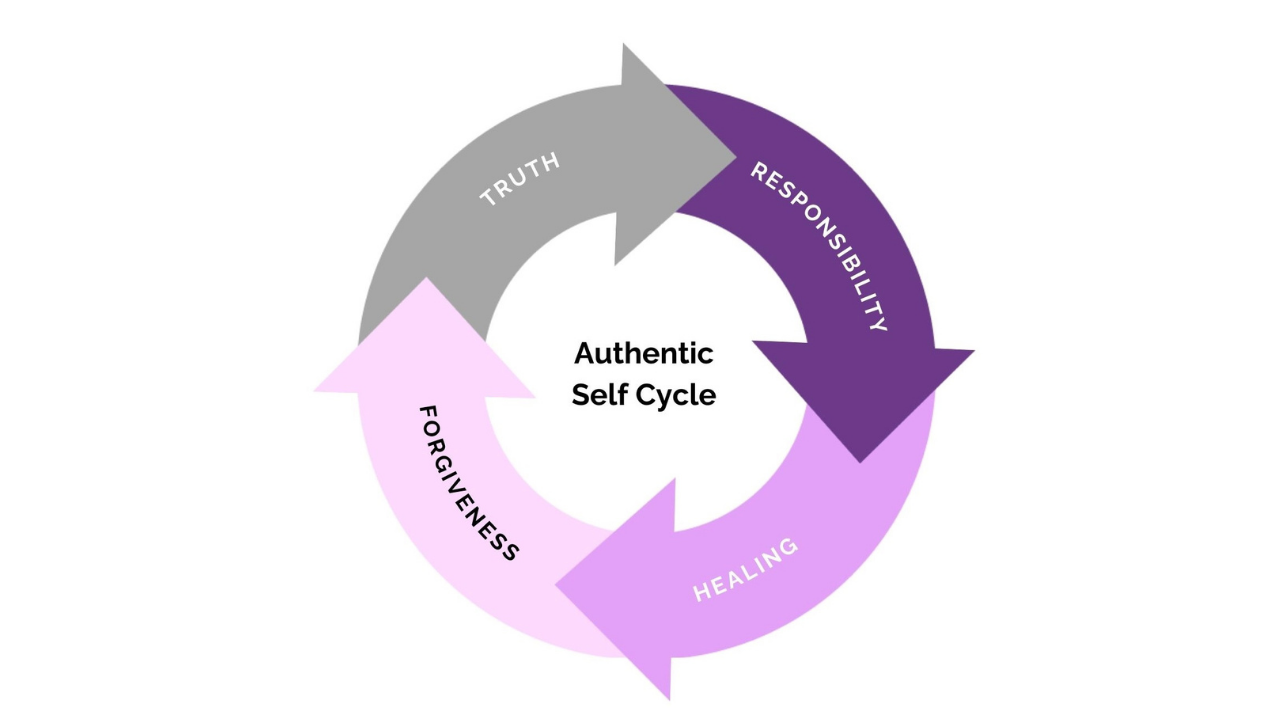
The Authentic Self Cycle™ is the healing counterpart to the Worst Day Cycle™. Where the WDC loops you through Trauma → Fear → Shame → Denial, the ASC moves you through Truth → Responsibility → Healing → Forgiveness. Truth means naming the blueprint and seeing “this isn’t about today.” Responsibility means owning your emotional reactions without blame. Healing means rewiring the blueprint so conflict becomes uncomfortable but not dangerous. Forgiveness means releasing the inherited emotional blueprint and reclaiming your authentic self.
That’s you… finally understanding that the rage you felt at your partner last Tuesday had nothing to do with the dishes—it was the same helpless fury you felt at seven when your needs didn’t matter.

Metacognition—the ability to think about your own thinking—is the engine that drives proactive emotional regulation. When you practice the Emotional Authenticity Method™ hourly, you are building metacognitive muscle. You are training your brain to observe its own patterns in real time, which is the prerequisite for choosing a different response. Without metacognition, you are on autopilot. With it, you are the pilot.
What Is Your Next Step to Stop Spiraling and Start Healing?
You do not have to live at the mercy of your triggers. By proactively driving into the snowbank and asking yourself the Unstuck Questions, you can rewire your brain to stop the spiral before it starts.
That’s you… ready to stop managing symptoms and start rewiring the blueprint that creates them.
Start with the Feelings Wheel exercise—it is completely free and will immediately begin building the emotional granularity you need for Step 2 of the Emotional Authenticity Method™.
For those ready to go deeper into the signs of enmeshment in your family or understand how your relationship insecurity connects to your emotional blueprint, explore these guides.
When you are ready to map your specific survival persona triggers and stop the spiral for good, explore what fits your journey:
- Emotional Blueprint Starter Course — Individual ($79) — Your individual starter roadmap to identifying your emotional blueprint
- Relationship Starter Course — Couples ($79) — A couples framework for breaking the spiral cycle together
- Why We Can’t Stop Hurting Each Other ($479) — Deep dive into relationship spirals and the Worst Day Cycle™
- Why High Achievers Fail at Love ($479) — For the person who has everything figured out except their emotional life
- The Shutdown Avoidant Partner ($479) — Understanding withdrawal, shutdown, and emotional unavailability
- Tier 1: Mapping the Blueprint ($1,379) — The comprehensive program for full emotional blueprint rewiring
Whatever choice you make, just know that when you are ready, you now have a root-level solution, not a symptom-based topical band-aid approach, that will provide you with the root-level emotional regulation you are looking for.
And don’t forget: You are not to blame, and you are not broken. You were just programmed, and programs can be rewritten. You did the best you could with the information you had at the time. But now that you know more, you can equip yourself with the tools to do more.
If This Article Hit Home, the Book Goes Deeper
Everything I write about on this site — the Worst Day Cycle™, your childhood emotional blueprint, why you keep repeating the same patterns no matter how hard you try — it all started with my first book, Your Journey To Success: How to Accept the Answers You Discover Along the Way.
This is the book readers call “the first time I found a roadmap I could actually understand and that seemed attainable.” It is the book that walks you through WHY your life hasn’t changed despite all the work you’ve done — and shows you, step by step, exactly how to break free. No fluff. No motivational hype. Just the truth about what was done to you, why it stuck, and what to do about it.
If you’ve read this far, you already know something needs to change. This book is where that change starts.
Ready to Stop Understanding the Problem and Start Rewiring It?
The article you just read scratches the surface. My new book, Your Journey To Being Yourself: How to Overcome the Worst Day Cycle & Reclaim Your Authentic Self with Emotional Authenticity, gives you the complete system — the Worst Day Cycle™, the Authentic Self Cycle™, and the full Emotional Authenticity Method™ — all in one place, with the neuroscience behind every step.
This is the book readers call “a genius piece of art in mastering emotion and the art of healing.” It speaks directly to the person who feels stuck, overwhelmed, and confused by the same repeating patterns — the same arguments, the same relationship breakdowns, the same shame — and is done accepting surface-level answers. Every chapter combines powerful stories, clear steps, and practical tools that show you how to rewire your emotional patterns from the inside out.
You are not broken. You were programmed. And this book shows you exactly how to rewrite the program.
Frequently Asked Questions About Emotional Spirals
Why can’t I stop spiraling even when I know my reaction is irrational?
Because emotional spirals are biochemical events, not thought problems. When your limbic system fires, your prefrontal cortex—the part of your brain responsible for logic and rational thought—goes offline. Your childhood emotional blueprint takes over, flooding your body with cortisol and adrenaline. Knowing your reaction is irrational does not stop the chemistry. The Emotional Authenticity Method™ works because it addresses the somatic and emotional root of the spiral, not just the thoughts.
How long does it take to rewire an emotional spiral pattern?
The Five-Step Change Process shows that rewiring happens gradually through repeated practice. Most people experience their first noticeable shift within 2-4 weeks of hourly check-ins using the Three Unstuck Questions. Full rewiring—where the new response becomes automatic—typically takes 3-6 months of consistent practice. Every time you practice, you lay down more myelin on the new neural pathway, making it stronger and faster.
Is an emotional spiral the same as an anxiety attack or panic attack?
An emotional spiral can include anxiety or panic, but it is broader. A panic attack is a specific physiological event. An emotional spiral is the entire cascade—the trigger activating your childhood emotional blueprint, the survival persona taking over, the hours or days of rumination, the shame about the reaction, and the exhaustion afterward. The Worst Day Cycle™ maps this entire loop: Trauma → Fear → Shame → Denial.
Why do I spiral more with the people I love most?
Because intimacy activates your deepest emotional blueprints. The people closest to you have the most access to your unhealed wounds. Your partner’s tone of voice can trigger the same nervous system response as your parent’s tone of voice thirty years ago. This is not a sign that the relationship is wrong—it is a sign that your emotional blueprint is running the show. The Authentic Self Cycle™ helps you separate past wounds from present relationships.
Can proactive emotional regulation really replace years of therapy?
Proactive emotional regulation is not a replacement for therapy—it is the missing piece that most therapy does not provide. Traditional therapy helps you understand your patterns. The Emotional Authenticity Method™ helps you rewire them at the somatic and neurological level. Many people find that combining understanding (therapy) with rewiring (Emotional Authenticity) produces the breakthrough they have been searching for.
What if I try the Three Unstuck Questions and they do not work?
If the questions feel ineffective, your nervous system activation is likely too high for cognitive engagement. Start with somatic titration first—30 seconds of environmental listening, 30 seconds of touching the trigger, repeated 3-5 times. Once your emotional temperature drops, the Unstuck Questions become accessible. If you consistently struggle, your emotional blueprint may require deeper work through the full Emotional Authenticity Method™ and guided support.
The Bottom Line
You have been fighting your emotional spirals with the wrong weapons. You have been trying to think your way out of a feeling problem, using tools designed for after the crash when what you needed all along was a way to stop the car before it hit the ice.
Your spirals are not evidence of weakness. They are evidence of a brilliantly adaptive childhood survival system that is still running programs you no longer need. The five-year-old who created that system was doing the best they could. But you are not five anymore, and you do not have to live in that child’s emergency mode for the rest of your life.
That’s you… sitting here, having read all of this, feeling something shift—not in your head, but somewhere deeper. In your chest. In your gut. That feeling is your Authentic Self, recognizing the truth.
The Worst Day Cycle™ got installed without your permission. The Authentic Self Cycle™ is the one you choose. And every single hour that you pause, check in with your nervous system, and ask yourself the Three Unstuck Questions, you are choosing it. You are rewiring the blueprint. You are laying down new myelin. You are becoming the person you were always meant to be before the programming took hold.
You are not to blame. You are not broken. You are trauma-trained. And trauma-trained can be retrained.
Recommended Reading
- Bessel van der Kolk — The Body Keeps the Score
- Lisa Feldman Barrett — How Emotions Are Made
- Pete Walker — Complex PTSD: From Surviving to Thriving
- Gabor Maté — When the Body Says No