
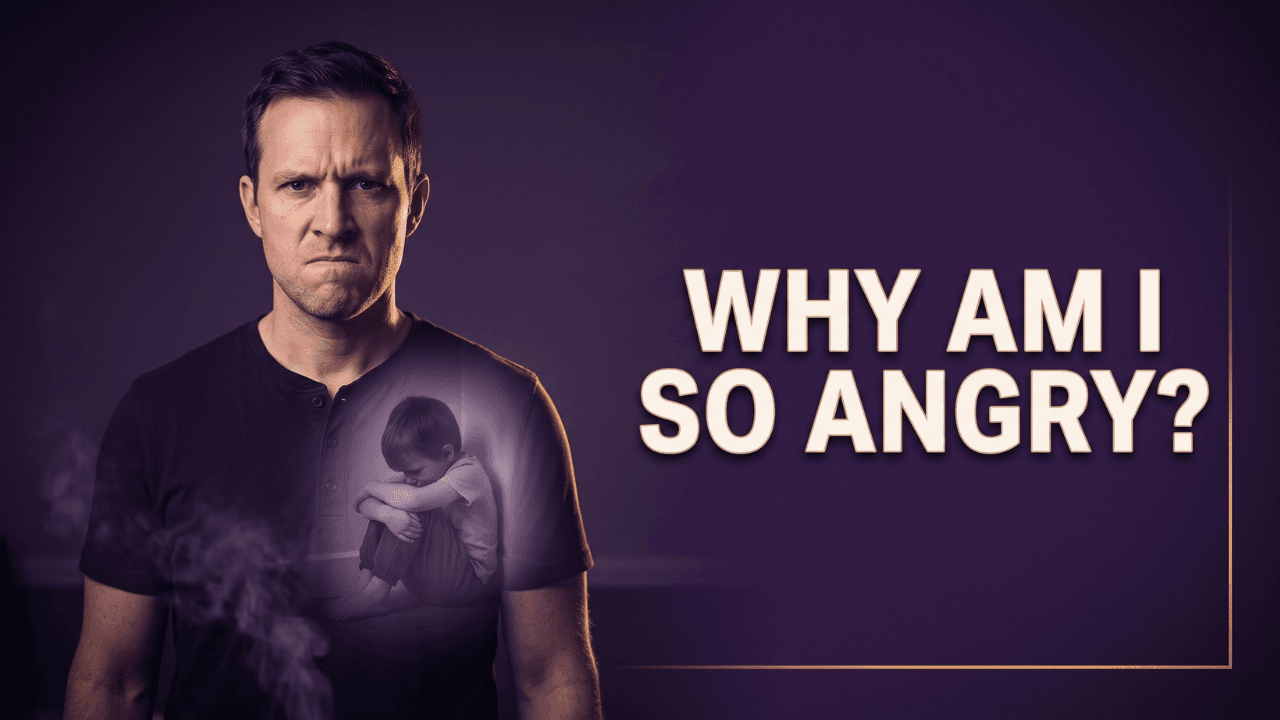
Everything they taught you about anger management — breathe, count to 10, walk it off — is quietly making your anger worse. You’ve probably tried all of it. You counted to 10 and still snapped. You took a deep breath and felt your chest go hot. You walked it off, and it was waiting for you when you got back.
And somewhere along the way, you decided the problem must be you. That you don’t have enough self-control.
The truth: you are not failing at anger management. You were handed the wrong tool for the actual problem. Anger is a cover emotion — a bodyguard standing in front of fear, and beneath the fear, a sadness that is very old. Once you see what the real problem is, all of this will finally start to make sense.
That’s you… apologizing again for a fire nobody ever taught you how to put out.
Why Do You Still Snap After Counting to 10?
Picture your anger like a teapot on a stove. Every unspoken hurt, every swallowed need, every old wound that nobody ever helped you feel — it all gets poured into that pot, and the heat stays on underneath. It sits there on your emotional stove, simmering.
Breathing, counting, walking it off — those are all just ways of jamming a cork into the spout of a boiling teapot. The steam doesn’t disappear. The pressure has to go somewhere. So it pushes back, and it pushes down — into you, into your body. You didn’t calm the anger down. You hid it from yourself for a little while.
And here is the part almost nobody tells you: bottling it up and blowing up are not opposites. They are the same pendulum — and anger management only teaches you to swing it more quietly. The calm, stoic, controlled person who never raises their voice is not healthier than the one who explodes. They are mailing the bill to their body instead of their relationships.
That pendulum runs through all three survival personas. The Falsely Empowered fires the steam outward — rage, control, intimidation — so vulnerability can never catch them. The Disempowered swallows the steam whole — people-pleasing, appeasing, going quiet — so nobody ever leaves. And the Adapted Wounded Child swings between the two: corked at work, boiling over at home; sweet with strangers, explosive with the people they love most. Same teapot. Different spouts.
That’s you… proud of your self-control in public and ashamed of your kitchen-table eruptions in private.
What Is Your Anger Actually Hiding?
If managing anger is not the answer, what is? It starts with seeing what anger actually is — because anger is almost never the real thing that is happening. Anger is a symptom. A cover emotion. A bodyguard standing in front of a feeling that is far deeper and much more vulnerable.
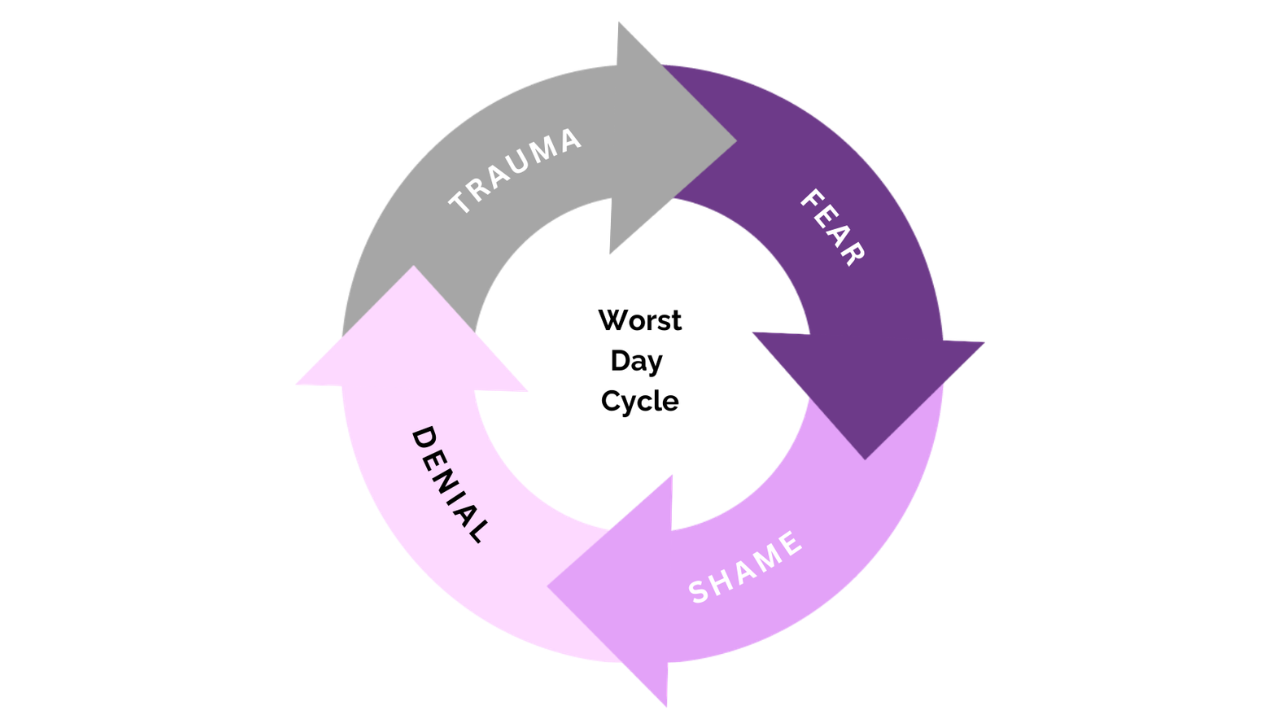
Underneath the anger is fear. That is the first thing it covers. And the fear covers deep sadness — usually a sadness that is very old. That is what the Worst Day Cycle™, which I wrote about in my first book, Your Journey To Success, is all about. It runs underneath us in four stages — Trauma, Fear, Shame, and Denial — and the original trauma is where the sadness lives.
So the reason no breathing technique ever reaches your anger is simple: you are managing the bodyguard out front, while the scared kid hiding behind that bodyguard has never once been heard.
The next time the rage overcomes you, picture this: a very young child huddled in the corner, screaming, “Please, please don’t see how scared and small and powerless I feel right now. And by God, don’t you dare reject me.” That is exactly what is happening every time you explode. That scared, very sad child who wasn’t heard, who didn’t matter, is the one screaming — wanting to be heard by you. And because the childhood wounds have never been healed, that scream comes out of your mouth as rage.
That’s you… forty years old on the outside, five years old in the eruption.
What Are the Three Fears Under Your Anger? (The R.I.P. Model)
The fear under your anger is almost always one of three things. I call them R.I.P. — because when you finally deal with them, you turn Rejection, Inadequacy, and Powerlessness into Rest In Peace.
1. The fear of rejection
The feeling that you are about to be left, unwanted, or unseen. The tone your partner uses, the text that goes unanswered, the plans made without you — each one brushes against the oldest question your nervous system carries: am I about to lose them?
2. The fear of inadequacy
The feeling that you don’t have the knowledge, skills, or tools to do something — and that you are about to be found out. Here is the truth inside this one: it is not that you are actually inadequate. It is that you haven’t learned something yet. But the fear doesn’t know the difference, so the criticism at work or the “why didn’t you handle this?” at home detonates like an accusation of worthlessness.
3. The fear of powerlessness
The feeling that you can’t say no. That you have no control, no say — just like you didn’t as a kid. This is the dish left in the sink one more time, the kid tuning you out, the boss moving the deadline — each one whispering you have no power here, exactly the way childhood did. If this is your loudest fear, the deeper work on how to stop feeling powerless will land hard.
 emotional blueprint behind the R.I.P. model — rejection, inadequacy, and powerlessness under anger" width="600" style="max-width:100%;height:auto;" />
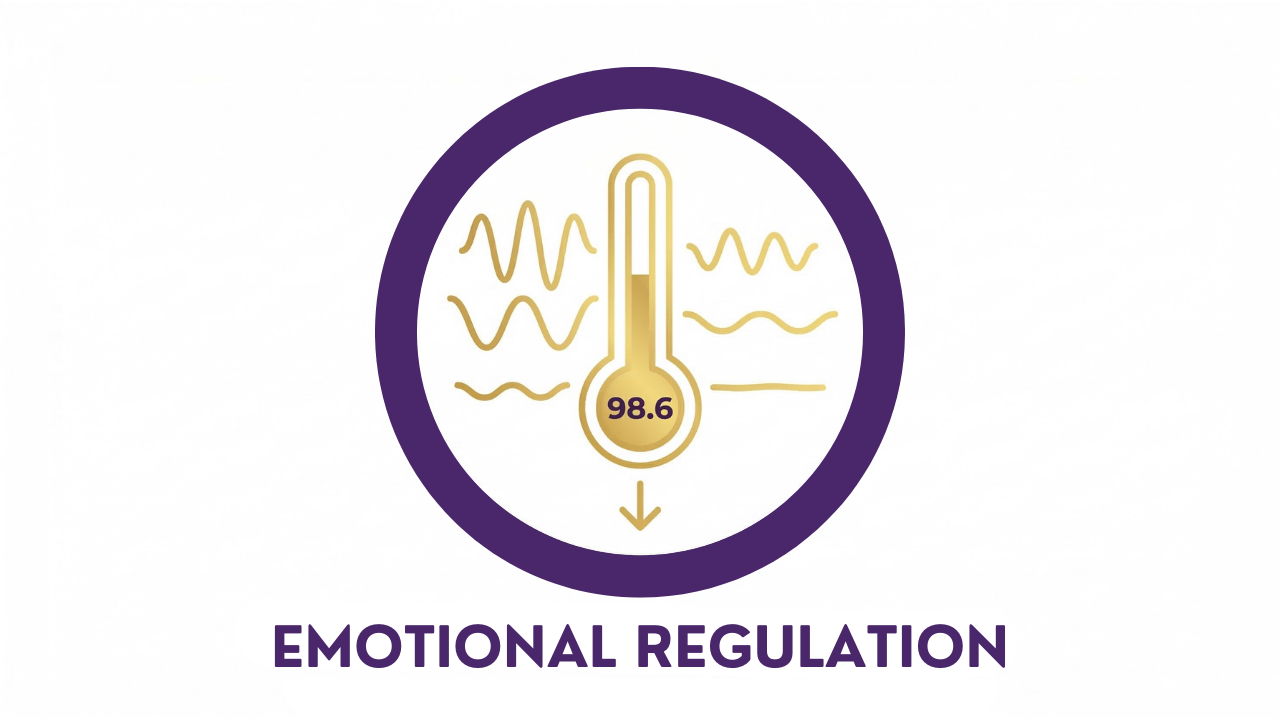
So when your partner uses that tone, or the dishes are in the sink again, or your kid tunes you out — that little thing brushed up against one of those three. And that is why it erupts over the smallest things: your emotional thermostat is already set through the roof. It has been sitting at 110, 112 degrees since childhood — you just don’t feel it anymore, because it became your normal. The dish didn’t fill the teapot. It was already full from a lifetime of water you were never allowed to let out. The dish was just the last drop.
That’s you… wondering why it “came out of nowhere” when it has been boiling since before they walked in the room.
And if the rejection fear is the one that owns you — the one that turns silence into panic and distance into rage — this video goes deeper on that thread.
What Does the Research Say About Suppressed Anger?
The science on this is blunt, and it confirms every piece of the teapot.
Start with what stuffing it down costs. Dr. Vincent Felitti’s research on childhood adversity — the landmark ACE studies — found that suppressed rage and pain show up years later as migraines, autoimmune conditions, chronic pain, addictions, and weight that won’t come off no matter how many cleanses or diets you try. The suppressed anger you are so proud of controlling is not gone. It is invoicing your body.
Second: “just calm down” is neurologically impossible when the system is flooded. Thayer and Lane’s neurovisceral integration model proved that the vagus nerve is the physical pathway through which your brain’s executive center controls your emotional alarm system. When vagal tone is low — as it is in people with childhood trauma — the amygdala fires unchecked. Counting to 10 asks the thinking brain to override an alarm it has physically lost the brake for.
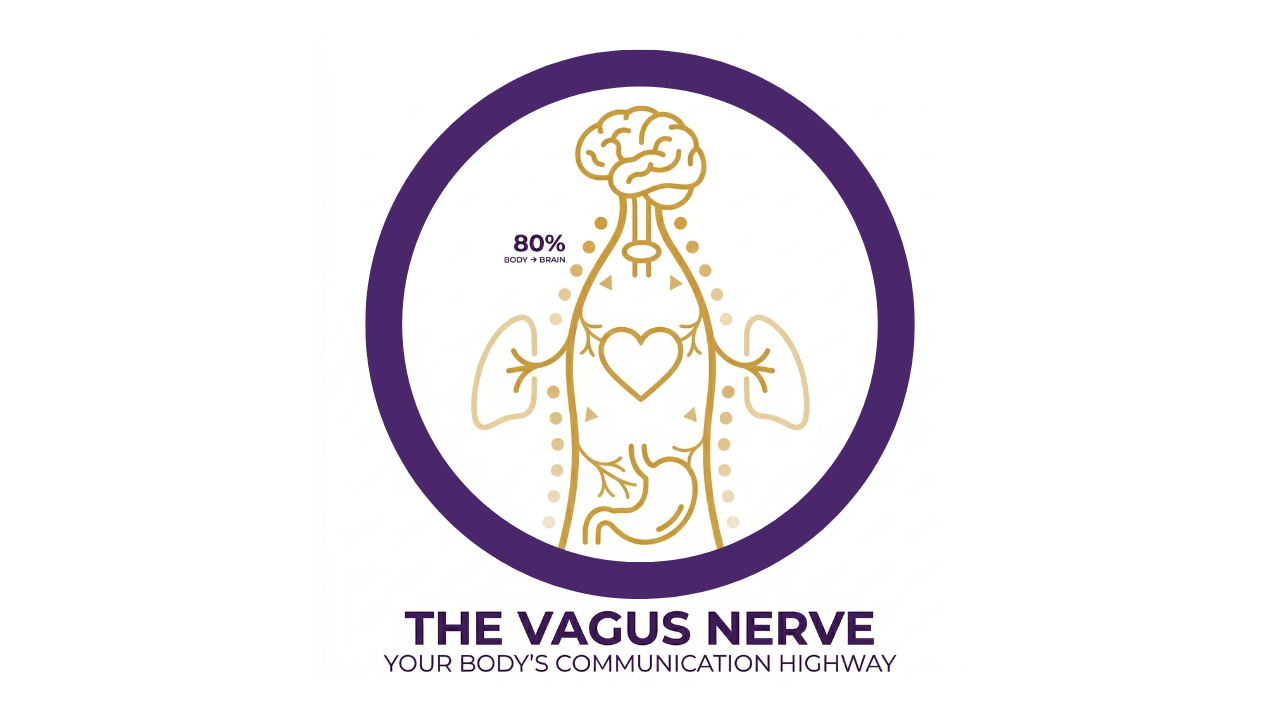
Third: Stephen Porges’ polyvagal theory, updated in 2022 in Frontiers in Integrative Neuroscience, maps the fight response as sympathetic mobilization — your body preparing for battle before your mind is consulted — and establishes that safety is not the absence of threat but an active state your nervous system has to be taught to create.
Fourth: the body-first order is proven. Research in Translational Psychiatry showed that vagus nerve activation creates a neurochemical environment that helps the brain rewrite fear memories — reducing conditioned fear by 70 percent. Calming the body first is not a relaxation trick. It opens the brain’s rewiring window.
And fifth — the study that explains your whole history with anger techniques: a 2026 study of 152 genocide survivors in Rwanda found that somatic grounding skills significantly reduced anger, anxiety, and emotional dysregulation — and that the deeper trauma patterns required additional processing beyond body work alone. Body regulation works. And on its own, it is not enough. The teapot needs both the aspirin and the drain — which is exactly why the three solutions below go where breathing exercises never could.
That’s you… vindicated by the data: the tools failed you, you never failed the tools.
Solution 1: How Do You Catch the Fear in the Moment?
Don’t clamp down on this anger. Let it out — but on purpose. Let it grow up into what it was always meant to be: the use of your voice. The first step happens in the moment, and it is the heart of my Emotional Authenticity Method™ Method™ — going to the root of the feeling, the original emotional blueprint, instead of managing the surface.
Step 1 — Somatic Down-Regulation
The next time the heat rises, pause. Take 30 to 60 seconds and focus on what you can hear in the room. This is not a breathing trick — it moves you into metacognition, the space between thinking and feeling, and it re-engages the vagal brake so your adult brain can come back online. If the heat is high, titrate: listen, touch the anger gently, listen again.

Step 2 — What am I really afraid of right now?
Is it rejection? Inadequacy? Powerlessness? Name the fear behind the bodyguard. Precision matters — a Feelings Wheel rebuilds the vocabulary if all you can find is “mad.”
Step 3 — Where do I feel it in my body?
The hot chest. The clenched jaw. The stomach dropping. Anger lives in the body, and locating it is how you stop being it and start seeing it.
Step 4 — What’s the sadness underneath — and when did I first feel it?
Ask the harder question: what is the sadness that underlies the rejection, the inadequacy, or the powerlessness? When was the first time I felt this exact feeling? How old was I? What happened in that moment? This is where you find the child in the corner — and the day the teapot was first put on the stove.
Step 5 — Who would I be if I never had this feeling again?
If the old fear were wiped off the face of the earth, what would be left over? Someone who knows what they think, what they need, and how to say it. That is your Authentic Self — and that is who was buried under the bodyguard.
Step 6 — Feelization
Sit in that feeling and make it strong. Then replay the moment that lit you up — the tone, the dishes, the tuned-out kid — and feel yourself responding from the Authentic Self instead: what would I think, say, and do from here? Visualize it. Feel it. You are building a new emotional chemical addiction to replace the old blueprint, so the next time the trigger fires, the grounded voice shows up before the steam does.
And this is what changes the entire moment: your rage was only ever a request from that child in the corner, begging to be seen. The moment you say the scared thing out loud — the true sadness underneath — instead of throwing the angry thing, the person across from you stops meeting a weapon. They start meeting the real you.
That’s you… saying “I got scared” for the first time, and watching the fight evaporate.
Solution 2: How Do You Release the Rage Already Stored in Your Body?
The second solution addresses the rage already stored in your body from years before this moment. This one has to be physical, because anger lives in the body — it is a somatic release, and it can only leave through the body.
Write a rage letter — one you are never going to send. Address it to whoever first taught you that your anger wasn’t allowed. Don’t narrate events or recite facts. Go straight to the feelings of those moments: the humiliation, the being ignored, the powerlessness, the rejection. And give yourself permission — the exact permission you never got as a child — to be ugly on the page. Be judgmental. Swear. Say all of it. Hold nothing back. You finally get to let it all out.
Then take it somewhere it can leave your body. Drive to a quiet spot you love and scream in the car. Hit the mattress with a tennis racket. Work a heavy bag. Whatever you choose, understand what you are actually doing: you are finishing the defense you never got to make when you were the scared child in the corner and it wasn’t safe to say no. Anger, at its root, is you using the voice you had to muzzle as a child. So use it: “No. You can’t do this to me. Not ever again. I’m done. I will not allow it anymore.”
That’s you… finally saying the sentence that was forty years overdue.
For many people, the person that letter is addressed to is a parent — and the father’s side of that blueprint has its own architecture. This video maps it.
Solution 3: How Do You Keep the Teapot Off the Stove for Good?
The third solution is the daily one — letting a little out every single day using the R.I.P. method, so the pot never gets the chance to fill. This is the small daily release that breathing exercises kept promising but could never deliver, because they were holding the steam in the teapot instead of letting the water out of it.
Drain the rejection. Ask: where am I rejecting myself and placing my value in other people’s hands? Because here is the truth — nobody ever rejects us. It’s not possible. It’s just pizza toppings. We all like different toppings; if they want veggie and you’re a meat lovers, they didn’t reject you — they just want something different. When somebody breaks up with you, cheats, or picks someone else, they chose different toppings. It has nothing to do with your worth. The moment you make it about you, you are saying “I’m worth nothing unless you validate me” — and that is self-rejection. You’re doing it to yourself. This self-abandonment pattern sits at the heart of codependency.
That’s you… handing strangers the scoreboard for your own worth.
If the rejection drain feels impossible because abandonment is the wound underneath it, this video walks through that fear directly.
Drain the inadequacy. Ask: in what areas do I need to gain the knowledge, skills, and tools for whatever I’m feeling unequipped to do? Inadequacy is not an identity. It is an unfinished lesson — and lessons can be taken.
Drain the powerlessness. Ask: where am I making myself powerless by saying yes when I mean no? Where am I not meeting my own needs and wants? Where am I stepping over my own morals and values? Where am I not asking for love, help, and support? What boundaries do I need to set — with myself or with others — so I stop giving my power away?
Write it all down. By being proactive, you drain a little water daily — and you learn to stop letting everyone else pour their emotional stress into you like you’re the family teapot drain.
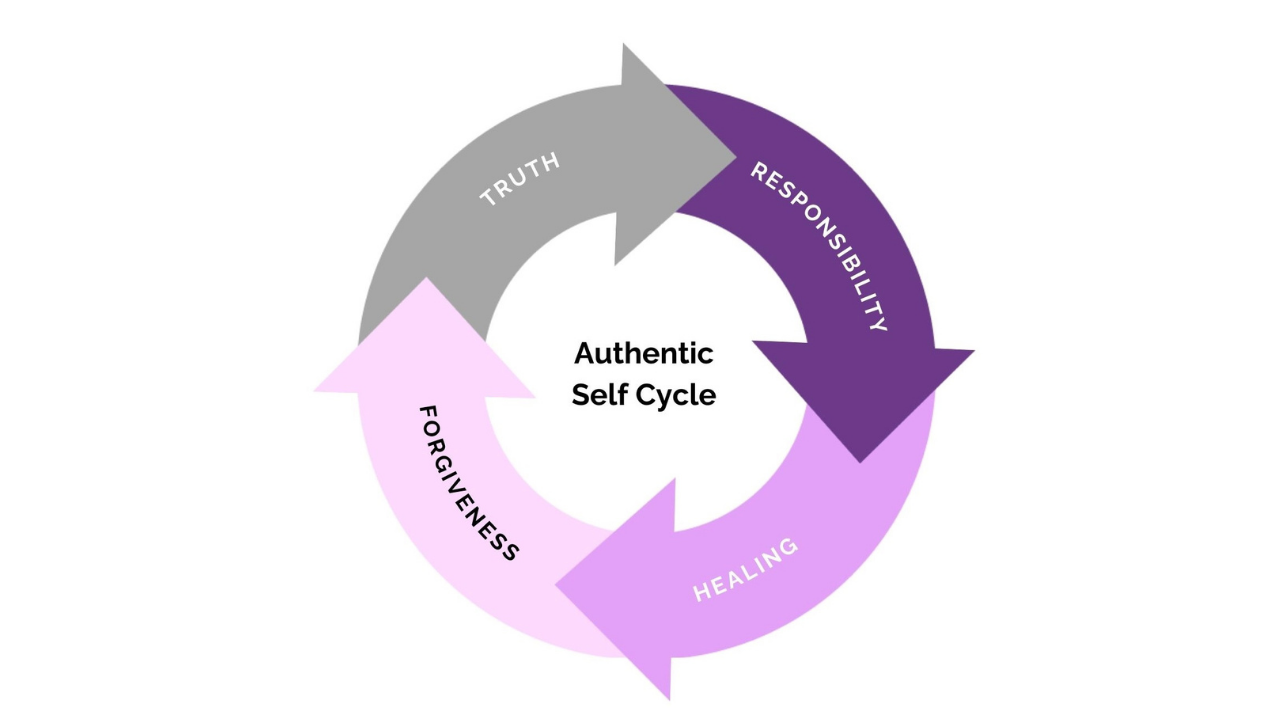 Authentic Self Cycle™ by Kenny Weiss — truth, responsibility, healing, and forgiveness maturing anger into a healthy boundary" width="600" style="max-width:100%;height:auto;" />
This daily practice is the Authentic Self Cycle™ in motion — Truth (naming the fear), Responsibility (draining your own pot instead of blaming the dish), Healing (releasing what was stored), and Forgiveness (for the child who had to muzzle their voice, and eventually for the ones who required it). When you do all of this, your anger doesn’t disappear. It matures. It stops being a weapon you throw or a poison you swallow, and it becomes a clean, adult, grounded boundary: “Hey — this doesn’t work for me.” Said with your whole body. With none of the old stuff showing up. With nobody destroyed in the process.
That’s you… discovering your anger was never the enemy. It was your voice, waiting.
Where Does Hidden Anger Show Up in Real Life?
Family
You hold it together all day and detonate over a backpack on the stairs. Your kids flinch at a tone you swore you’d never use — the one you grew up flinching at. Then comes the 10 p.m. shame spiral, the apology, and the quiet vow to try harder, which corks the pot for tomorrow. That’s you… yelling the exact sentence you promised yourself you’d never say.
Romantic
The dish, the tone, the unanswered text — and suddenly you’re in a fight neither of you can name the start of. Or you’re the quiet one: nothing “bothers” you for three weeks, then everything does at once. The pursuer rages to be heard; the withdrawer goes silent and calls it peace. Both pots are boiling. That’s you… having the same fight about nothing, because the fight was never about the nothing.
Friendships
You don’t explode at friends — you evaporate. The slow fade, the unanswered invitation, the resentment ledger nobody knows they’re written into. Swallowed anger doesn’t vanish in friendship; it becomes distance. That’s you… ghosting people you love because saying “that hurt me” was never allowed.
Work
You’re the professional one — until the sarcastic email, the slammed laptop, the fantasy resignation speech you rehearse in the shower. Or you swallow every slight and call it being easy to work with, while the resentment compounds like interest. That’s you… polite in the meeting and furious in the parking lot.
Body and Health
The migraines. The jaw you unclench only when someone points it out. The gut that’s never right, the blood pressure, the autoimmune flare, the weight that won’t move no matter what you cut. Felitti’s research says the bill for swallowed rage arrives decades later — addressed to your body. That’s you… paying interest on anger you never got to spend.
Your Next Small Step
Don’t try to drain a lifetime teapot tonight. The next time the heat rises — the hot chest, the tight jaw, the surge — pause and ask one question: “What am I really afraid of right now — rejection, inadequacy, or powerlessness?”
That single question walks you around the bodyguard and crouches down in front of the child in the corner. That is the beginning of the entire rewire. One question. One moment. One degree of steam let out on purpose.
Go Deeper: Kenny’s Books
Everything in this article sits on the foundation of Kenny’s two books — and the Worst Day Cycle™ and Authentic Self Cycle™ each get a full deep-dive in their own volume.
- Your Journey To Success — Kenny’s first book, where the Worst Day Cycle™ was first mapped. If you want to understand the trauma-fear-shame-denial loop that keeps your teapot boiling — and see it in your own story — start here.
- Your Journey To Being Yourself — Kenny’s second book, home of the Authentic Self Cycle™. This is the path out: Truth, Responsibility, Healing, and Forgiveness — the road from rage as a weapon to anger as a voice.
FAQ
Why am I so angry all the time?
Constant anger means your emotional thermostat is set too high — a nervous system calibrated by childhood at 105 degrees instead of 98.6, so ordinary frustrations push you past boiling. Anger itself is a cover emotion: underneath it is fear of rejection, inadequacy, or powerlessness, and beneath the fear is old sadness that was never safe to feel. The anger is current; the fuel is decades old.
Why do I get angry over small things?
Because the small thing was never the cause — it was the last drop. A teapot filled by a lifetime of unspoken hurts and swallowed needs is already at full boil before the dish is left in the sink; the dish just tips it over. This is also why the explosion feels like it “comes out of nowhere”: the pressure was invisible because it became your normal.
Why doesn’t anger management work?
Anger management techniques — breathing, counting to 10, walking it off — cork the spout of a boiling teapot instead of draining the water. The steam pushes back into the body, and research on childhood adversity links that suppressed rage to migraines, autoimmune conditions, chronic pain, and addiction years later. Managing the bodyguard out front does nothing for the scared child hiding behind it.
Is anger a secondary emotion?
Yes. Anger is a cover emotion — a protection mechanism that hides what is really happening inside. The first layer underneath is fear, which is always one of three things: rejection, inadequacy, or powerlessness. Beneath the fear is sadness, usually very old. That layering is why techniques aimed only at the anger never resolve it — they treat the symptom while the source keeps refilling.
What is the R.I.P. model for anger?
R.I.P. stands for Rejection, Inadequacy, and Powerlessness — the three fears that live under nearly every burst of anger. The model works in the moment (name which of the three just got touched) and as a daily practice: asking where you reject yourself, where you can build missing knowledge and skills, and where you give your power away by saying yes when you mean no — turning rejection, inadequacy, and powerlessness into rest in peace.
How do I release anger stored in my body?
Stored rage leaves somatically, not intellectually. A rage letter — written to whoever first taught you your anger wasn’t allowed, feelings only, never sent, with full permission to be ugly on the page — followed by physical release like screaming in the car or hitting a mattress with a tennis racket, finishes the defense you never got to make as a child. The daily R.I.P. practice then keeps new water from refilling the pot.
Is exploding healthier than holding anger in?
Neither. Bottling it up and blowing up are the same pendulum — one mails the bill to your body, the other to your relationships. Health is a third option: anger matured into a grounded boundary, where the fear underneath gets named and the need gets spoken — “this doesn’t work for me” — with your whole body and none of the old charge.
Can childhood trauma cause anger issues in adults?
Yes — adult rage is usually a childhood scream in an adult voice. When a child’s fear and sadness were unsafe to express, the Worst Day Cycle™ stored them, muzzled the voice, and set the emotional thermostat high. Decades later, research shows low vagal tone from early trauma leaves the amygdala firing unchecked — which is why the eruption arrives before the thinking brain gets a vote, and why healing targets the original blueprint rather than the outburst.
The Bottom Line
You were never really an angry person. You were a kid who had so much to feel and no one to feel safe with — and all of it has been waiting a very long time for you to finally let it out.
You are not to blame, and you are not broken. You did the best you could with the information you had at the time. But now you know more. You know about the Worst Day Cycle™, the R.I.P. model, the Authentic Self Cycle™, and the Emotional Authenticity Method™. You know the anger was a bodyguard, the fear was the message, and the sadness was the child.
You were just emotionally programmed. And emotional programs can be rewritten.
That’s you… putting down the weapon, picking up the voice.
Recommended Reading
- The Body Keeps the Score — Bessel van der Kolk. Why stored rage lives in the body, and why release must be somatic — the clinical foundation for the rage letter and physical release work.
- Complex PTSD: From Surviving to Thriving — Pete Walker. The clearest map of the fight response as a trauma adaptation, and how the inner critic and the outer explosion share one root.
- When the Body Says No — Gabor Maté. What decades of swallowed anger do to the immune system, confirming Felitti’s finding that the body pays the bill for the emotions we suppress.
- I Thought It Was Just Me (But It Isn’t) — Brené Brown. How shame fuels the rage-regret spiral, and why naming the vulnerable feeling underneath disarms it.
Where to Go From Here
If you are ready to drain the teapot instead of corking it for another decade, here is the path, in increasing depth. Begin where you are.
- Free — Feelings Wheel exercise: The vocabulary for Step 2. When all you can find is “mad,” this is how you locate the fear and the sadness underneath it. kennyweiss.net/life-changing-exercise
- Emotional Blueprint Starter Course — Individual ($79): Map the blueprint that set your thermostat and built the bodyguard. kennyweiss.net/individual-starter-course
- Relationship Starter Course — Couples ($79): If two boiling teapots keep having the same fight about nothing, start here together. kennyweiss.net/relationship-starter-course
- Why We Can’t Stop Hurting Each Other ($479): The deep dive into how one partner’s rage and the other’s silence feed the same cycle. kennyweiss.net/why-we-cant-stop-hurting-each-other
- The Shutdown Avoidant Partner ($479): For the one whose anger goes inward — the swallowed steam, the silence, the wall. kennyweiss.net/shutdown-avoidant-partner
- Why High Achievers Fail at Love ($479): For the one who is controlled everywhere except at home — where the pot finally boils over. kennyweiss.net/why-high-achievers-fail-love
- Tier 1: Mapping the Blueprint ($1,379): The full deep work — the system Kenny uses with private clients to rewire the blueprint at the install point. kennyweiss.net/mapping-the-blueprint-tier-1
Your anger was never the problem. It was the smoke alarm — and the fire it has been pointing to has an address, an age, and a way out.