
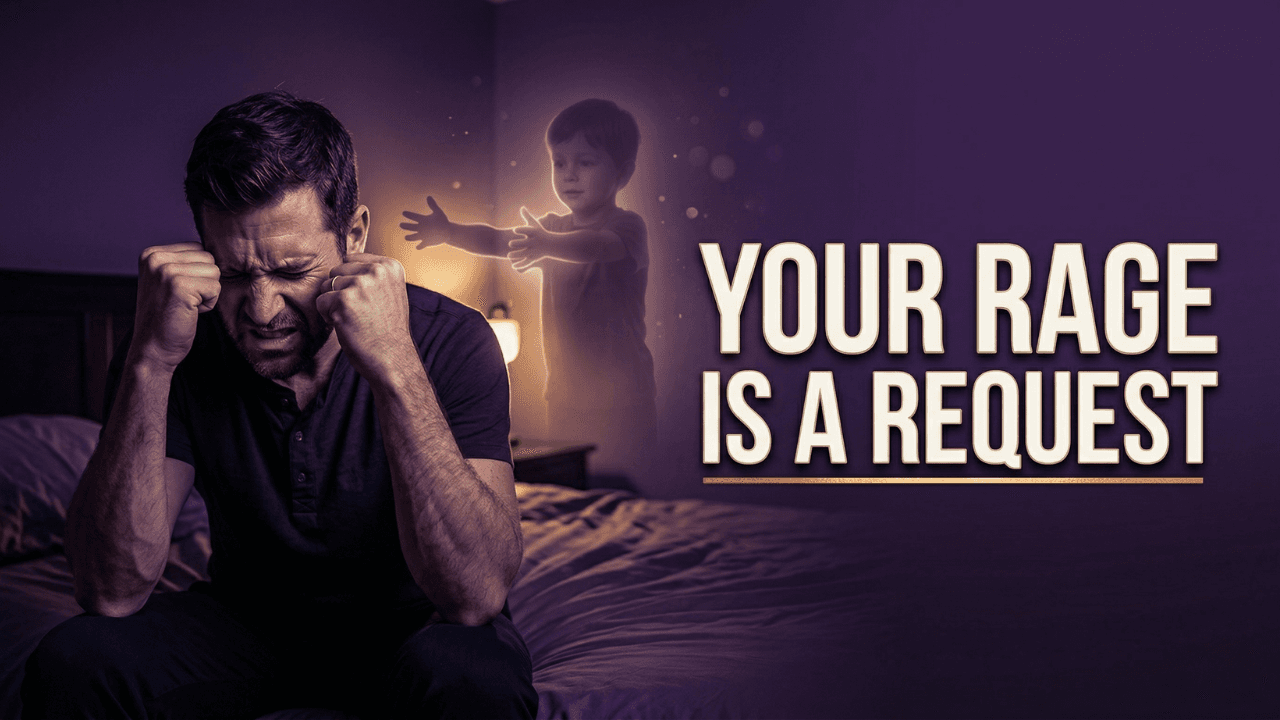
You’re sitting across from your partner at dinner, and they make a comment about your spending. It’s small. Insignificant. The kind of thing that shouldn’t land.
But your chest tightens. Your jaw clenches. Heat rises up your neck and into your face. In that second, you’re not an adult anymore—you’re six years old, standing in front of your parent who just told you you’re not good enough.
You have two choices in this moment: explode or shut down. Either you rage—voice raised, words sharp, everything spilling out in a tornado of fury—or you go silent. Dead. Your body present but your self completely unreachable. Both are suppressed anger. Both are your nervous system slamming the emergency brake because it learned long ago that your authentic feelings were not safe.
Suppressed anger is a childhood survival strategy. It’s your nervous system protecting you by burying your rage, fear, shame, and grief under layers of control, silence, or explosive release. You weren’t born this way. You were programmed this way. Your parents taught you—through their words, their silence, their rage, or their emotional absence—that your feelings were too much, too dangerous, or too shameful to be expressed.
The surprising truth Kenny teaches is this: Your rage is not a flaw. It’s a subconscious request for intimacy. When you’re angry at someone, you still want them to understand you. You’re screaming, “Do you see my pain?” The anger itself is not the problem. The suppression is.
You Explode or You Shut Down — But Either Way, Suppressed Anger Runs Your Life
Suppressed anger shows up in exactly two survival personas — what Kenny calls Falsely Empowered and Disempowered. You might be one, both, or oscillate between them depending on who you’re with or what triggers you.
The Rager (Falsely Empowered): You explode. Your anger comes fast and hot. You raise your voice. You say cutting things. You slam doors or punch walls. Your survival persona learned that dominance, control, and intimidation keep you safe from vulnerability. If you’re in charge, if you’re bigger and louder and scarier, then nobody can hurt you. Nobody can abandon you. Nobody can see your shame.
That’s you… screaming at your partner over a dish left in the sink, then lying awake at 2 AM wondering why you can’t stop exploding.
That’s you… raising your voice at work in a meeting, then feeling that sick shame afterward, knowing you just damaged your reputation again.
The Rager’s shame story is: “If I let anyone see how weak and terrified I actually am, I’m done. I’ll be left. I’ll be annihilated. So I’ll be the predator instead of the prey.”
The Suppressor (Disempowered): You shut down. Your anger goes underground. You swallow your words. You people-please. You shrink. You lose yourself to avoid abandonment or rejection. Your survival persona learned that silence is safety. If you take up no space, if you have no needs, if you’re always accommodating, then nobody will leave. You’ll never be too much.
That’s you… saying “I’m fine” when your chest is on fire and your fists are balled under the table.
That’s you… swallowing your words at dinner because speaking up never went well when you were seven.
The Suppressor’s shame story is: “If I show anger, if I have boundaries, if I ask for what I need, I’ll be abandoned. So I’ll make myself small enough that nobody can reject me.”
Both patterns are suppression. The Rager suppresses their fear and grief under rage. The Suppressor suppresses their anger and rage under fear and grief. Both learned in childhood that their authentic feeling—their true emotional state—was not welcome.
That’s you… going completely silent in the middle of a fight — not because you don’t care, but because a five-year-old just grabbed the wheel.
The nervous system state underneath both is freeze or fawn or fight. Your vagus nerve—the highway between your brain and your body—learned to slam into shutdown mode (freeze/fawn) or hyperactivation (fight). You’re not choosing these responses. Your nervous system is running an old program that was installed to keep a child alive.
But here’s what most people miss: There’s a third pattern. The Adapted Wounded Child oscillates between the two. You might be a Rager with your partner but a Suppressor with your boss. You might explode with your siblings and shut down with your parents. You might be a Suppressor for months, then flip into Rager mode when you finally hit your breaking point.
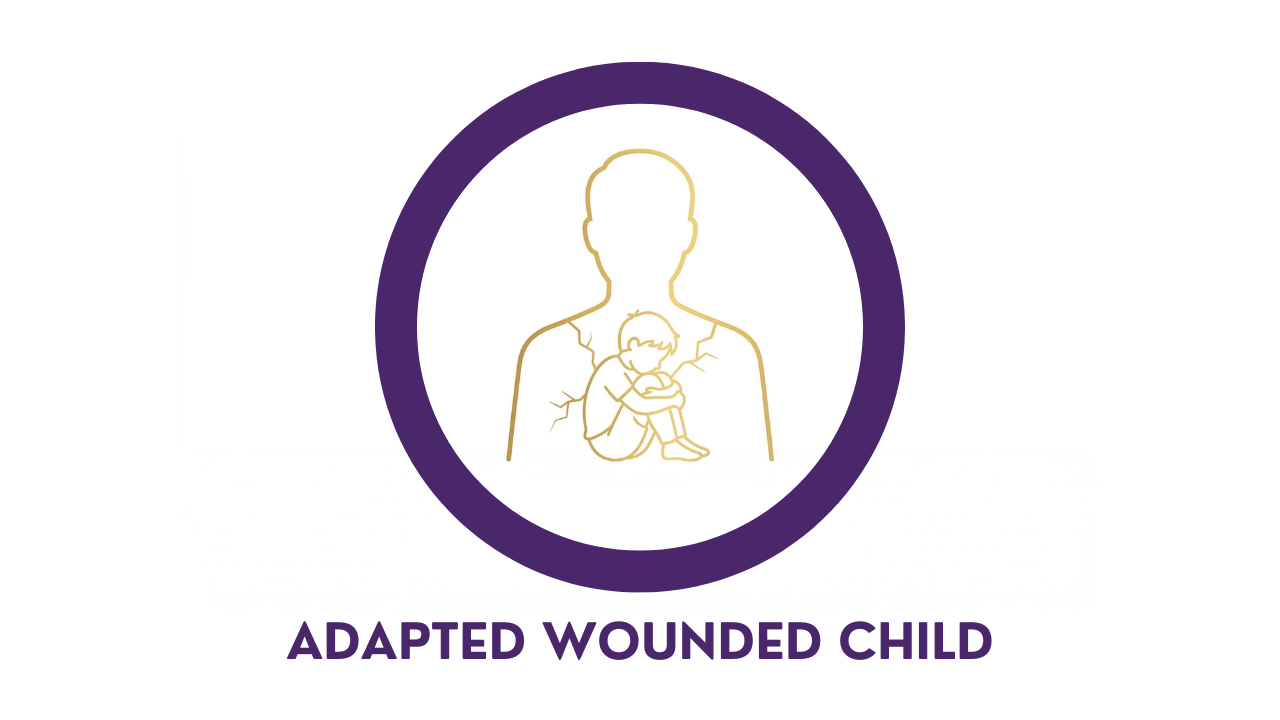
The Adapted Wounded Child learned that neither authentic feeling nor honest expression was safe, so you shift between personas depending on the threat level. You’re not stable because stability requires access to your real self. You’re defensive. Strategic. Always reading the room, always adjusting.
That’s you… perfectly composed at a work dinner, then erupting at home because you finally felt safe enough to lose it.
That’s you… unable to figure out which version of you is real anymore because you’ve been shapeshifting for so long.
What’s Really Underneath Your Suppressed Anger — Your Childhood emotional blueprint
To understand where your suppressed anger came from, you have to understand your emotional blueprint.
Before age seven, your brain was not wired for logic. It was wired for survival. You had no executive function, no adult reasoning, no ability to contextualize or rationalize. You only had nervous system responses. And whatever emotional environment you grew up in—your parent’s rage, their silence, their anxiety, their shame, their withdrawal—you absorbed it like a straw. You sucked it all in without filter.
This is your emotional blueprint—the internal emotional software installed in your nervous system before you could even talk. It told you: what feelings are safe to express, what feelings get you hurt, what feelings get you abandoned, and what you have to do to survive emotionally. That blueprint is still running today. Every time you explode or shut down in a conflict with your partner, you’re not responding to your partner. You’re responding to a ghost from childhood wearing your partner’s face.
The way the blueprint installs suppressed anger follows the Worst Day Cycle™.
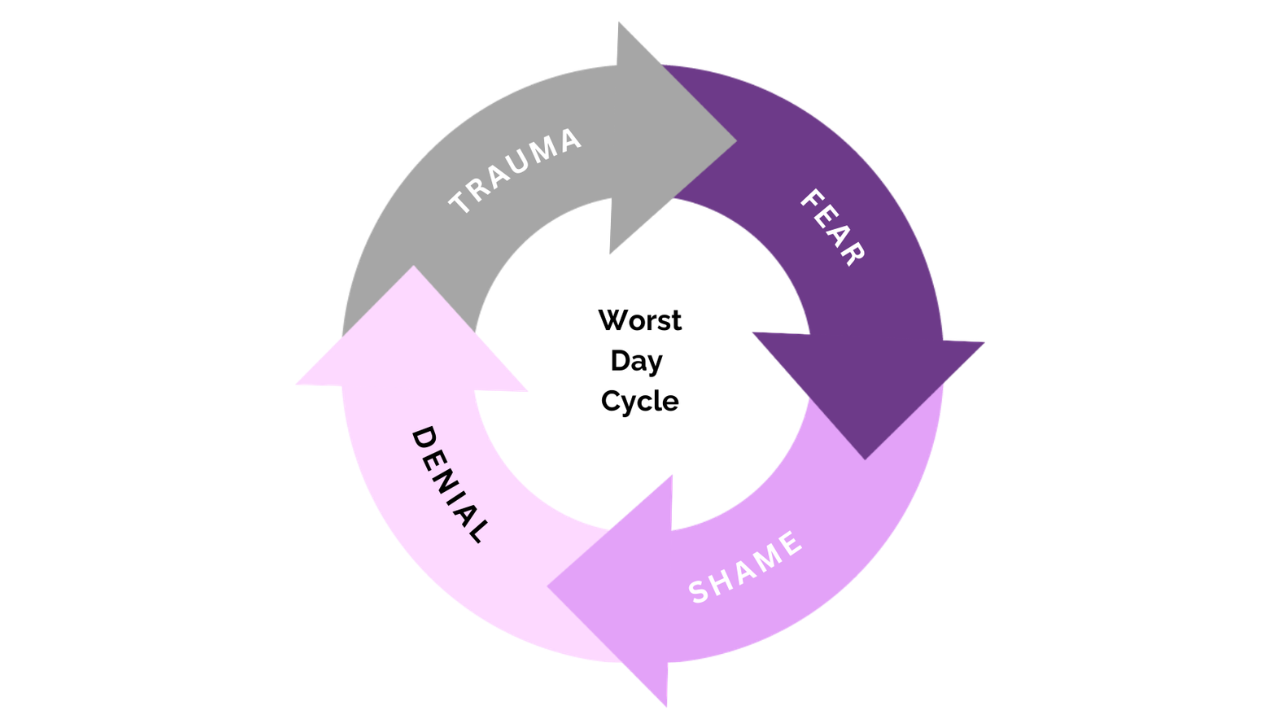
Stage 1 — Trauma: Your parent exploded at you. Criticized you. Withdrew from you. Left you alone while having their own emotional crisis. Projected their shame onto you. The event itself doesn’t have to be “objectively” big. A four-year-old doesn’t know the difference between big T trauma and small t trauma. If your nervous system went into threat mode, it was trauma.
Stage 2 — Fear: Fear is always one of three things: fear of rejection, fear of inadequacy, or fear of powerlessness. Your child self learned the lesson: “If I feel my real feelings, if I ask for what I need, if I let anyone see my authentic self, I will be rejected. I’m inadequate. I have no power to protect myself.” This is the RIP method—Rejection, Inadequacy, Powerlessness. It’s underneath every suppressed anger pattern.
Stage 3 — Shame: Your child self didn’t blame the parent. It blamed itself. “There’s something wrong with me. I’m too much. I’m not enough. I’m broken.” Shame is the belief that you are fundamentally defective. And because expressing your anger means risking that defectiveness being exposed, you bury it.
That’s you… convinced that if you let yourself rage, you’re a bad person.
That’s you… certain that if you set a boundary, you’re selfish.
Stage 4 — Denial: To survive the unbearable truth that you weren’t safe and you weren’t powerful, your child self entered denial. “It wasn’t that bad. I deserved it. My parent was stressed. I’m the problem.” This denial becomes self-deception. It becomes your suppressed anger—you’re not actually angry at the parent who hurt you; you’re angry at yourself, angry at your partner, angry at the world. The original wound gets locked away.
Here’s the part nobody tells you: Anger covers fear. And fear covers sadness. What’s underneath your suppressed anger is not actually anger. It’s childhood grief that was never allowed to be felt. It’s the sadness of a child who learned their feelings weren’t safe, whose needs went unmet, whose authentic self was too dangerous to exist.
That’s you… feeling rage, but crying in the shower hours later when you’re finally alone.
That rage was the covering emotion. The sadness underneath is the real wound.
Why Anger Management, Therapy, and Communication Tips Never Touched the Root
You’ve probably tried everything. Anger management classes. Therapy. A dozen communication books. Better conflict resolution skills. Meditation apps. You’ve learned to count to ten before you respond. You’ve practiced saying “I feel” statements. You’ve learned to listen without interrupting. And nothing has stuck.
Here’s why: You can’t communicate your way out of a nervous system problem. You can’t think your way out of a childhood blueprint.
All those tools assume the problem is in your behavior or your thoughts. They assume you just need to learn better coping skills, better communication, better emotional regulation. But your suppressed anger isn’t a behavior problem. It’s not a skills deficit. It’s not that you don’t know better.
Your problem is that your emotional thermostat is permanently cranked up to 105 degrees. You’re running a fever all day long—hypervigilant, defensive, oversensitive. Your nervous system is on high alert because childhood taught it that you’re always in danger. When a small trigger hits—a comment from your partner, a perceived slight from a friend, criticism at work—your emotional thermostat doesn’t go from normal to elevated. It goes from 105 to 110 degrees. And at 110, you’re in a coma—either the explosive coma of rage or the shutdown coma of dissociation.
That’s you… knowing your reaction is disproportionate to what just happened, but feeling completely unable to stop it.
You didn’t overreact. You were already at 105.
The surface-level tools—communication skills, anger management, mindfulness, even traditional therapy that doesn’t go deep into blueprint work—they’re trying to cool down a fever by fanning the patient. You can fan all you want. But until you address the infection, the fever stays at 105. You can’t fan your way out of it.
The same applies to all the self-help frameworks that tell you to “shift your mindset” or “choose a better thought.” Your thoughts aren’t the root. Your nervous system is. Your childhood blueprint is. Your suppressed anger is downstream of ancient survival programming that saved your life as a child but is now killing your relationships and your peace as an adult.
That’s you… reading another book about boundaries, trying the framework for two weeks, then falling back into your old patterns when a real trigger hits.
This is why traditional therapy, while valuable in many ways, often doesn’t heal suppressed anger. Most therapy asks you to understand your past intellectually. “Your father was emotionally unavailable, so now you have abandonment fears.” Intellectually understanding the pattern is important. But intellectual understanding doesn’t rewire your nervous system. Understanding the problem is not the same as solving it.
What you need is not better information. What you need is emotional authenticity work—a method that takes you down into the nervous system, that accesses the actual emotional blueprint, that goes to the root of where the anger got buried in the first place.
Is Anger the Opposite of Love? Why Your Rage Is Actually a Request for Intimacy
Here’s what changes everything: The opposite of love is not anger. The opposite of love is indifference.
Indifference means you don’t care. It means the person is invisible to you. Indifference is cold. Final. Dead.
Anger? Anger means you still want something from this person. Your subconscious knows this person matters. You still want connection with them. You still want them to understand you. You’re not angry at someone you’ve written off.
Here’s what Kenny teaches that most therapists won’t say: Anger directed at someone is not rejection. It’s a subconscious request for intimacy. When you’re raging at your partner, screaming at your family, furious with your friend, you’re not actually saying “I hate you.” You’re saying “Do you see my pain? Will you finally understand me? Can I be known by you?”
That’s you… erupting at your partner because deep down you’re terrified they don’t actually see who you are.
The reason anger feels so violent is because the need underneath it—the need to be seen, to be understood, to be accepted—is so ancient and so profound. It goes back to the first moment in your childhood when you learned your authentic feelings were not safe. Your rage now is your child self screaming the question they were too small to ask then: “Do you see me?”
This is why suppressed anger often shows up in your most intimate relationships. You’re angriest at the people you most need to understand you. Your partner becomes a stand-in for the parent who didn’t see you. Your family becomes the evidence that you’ll never be known. Your rage is a twisted, desperate reaching toward the very intimacy you’re terrified of.
The Ghost With Your Partner’s Face: Here’s what’s actually happening in your conflicts. You’re not seeing your partner. You’re seeing a ghost. You’re seeing the parent who criticized you, abandoned you, shamed you, withdrew from you. Your partner just happens to be wearing your partner’s face. They said something that triggered the old wound—maybe they raised their voice, or they were distant, or they seemed judgmental—and suddenly your nervous system time-traveled. You’re no longer with your adult partner. You’re with your parent. And you’re furious.
That’s you… projecting ancient pain onto someone who has no idea why you’re so angry about a comment they didn’t even mean to hurt you with.
This is the 90% Rule: Ninety percent of the emotional charge in any conflict with your partner was never about your partner. It was about your parent. Your partner is the trigger. But your parent is the wound. Until you separate the two, you can’t have real intimacy. You’re too busy protecting yourself from a ghost.
The Wounded Child Grabbing the Wheel: When you shut down in conflict, when you go silent or dissociate or collapse, your adult self is not the one driving anymore. Your wounded child has just jumped forward and grabbed the wheel. The adult who loves your partner, the adult who wants connection, the adult who can communicate authentically—that adult is no longer in charge. A five-year-old is driving now. And a five-year-old’s only tools are shutdown or explosion.
That’s you… having no memory of what you said when you were raging, as if someone else took over your body.
That’s you… completely unable to articulate what’s wrong when you shut down, not because you don’t know, but because a child doesn’t have the words.
Anger as a Notification System vs. a Weapon: Here’s the shift Kenny teaches. When someone without Emotional Authenticity Method™ uses anger, it becomes a weapon. It’s used to hurt, to control, to dominate, to protect the self at all costs. It’s reactive. It’s unconscious. It causes damage.
When someone with emotional authenticity uses anger, it becomes a notification system. It’s information. It’s an alarm that says “Something needs to be addressed here. Something is out of alignment with my values, my boundaries, my needs.” It’s conscious. It’s clean. It doesn’t wound the other person.
The difference is not whether you feel angry. The difference is whether you’re using your anger to survive or using your anger to signal. One is suppressed and reactive. One is authentic and responsive.

The Emotional Authenticity Shift — From Rage to Root Cause
The path out of suppressed anger is not to suppress it better, manage it better, or control it more. The path is to feel it authentically. To allow it to exist. To understand what it’s asking for. To access the grief underneath it. And then to rewire your response from the root.
This is what the Emotional Authenticity Method™ does. It’s a six-step process that moves you from suppressed survival mode into authentic aliveness.
Step 1 — Somatic Down-Regulation: Before you can access emotion, your nervous system has to come out of fight-or-flight. This step is simple but critical. Focus on what you can hear for 15 to 30 seconds. Just listen. Not to interpret or analyze—just to listen. Your vagus nerve will begin to regulate. Your nervous system will recognize that you’re not actually in danger right now. Only once you’re regulated can you access your authentic feelings.
That’s you… able to pause for a moment instead of exploding immediately, able to shut down less automatically because your body finally feels safe enough to stay present.
Step 2 — What Am I Feeling Right Now? Not “what should I be feeling” or “what am I supposed to feel,” but what are you actually feeling in this moment? The answer is almost always not anger. It’s hurt. It’s fear. It’s shame. It’s grief. Anger was just the covering emotion. This step asks you to look under the covers.
Step 3 — Where in My Body Do I Feel It? Emotion is somatic. It lives in your body. Is it in your chest? Your throat? Your stomach? Your jaw? This step brings you out of your head and into your body. It grounds you in the actual feeling instead of the story about the feeling.
Step 4 — What Is My Earliest Memory of Having This Exact Feeling? This is where the blueprint shows up. This is where you connect the current trigger to the original wound. You might remember a specific scene. You might get a sensation or an age or a feeling of being small. Your nervous system will take you to the origin. This is not about blame. It’s about understanding where the pattern was installed.
That’s you… suddenly seeing the connection between your partner’s criticism and your mother’s voice, between your boss’s feedback and your father’s disappointment.
Step 5 — Who Would I Be If I Never Had This Thought or Feeling Again? This question disconnects you from the identity of being an angry person, a suppressor, an anxious person, a people-pleaser. It asks: what’s the person underneath all this survival programming? Who are you when you’re not protecting yourself? What becomes possible? This step is where your authentic self begins to emerge.
Step 6 — Feelization: This is the step that actually rewires your nervous system. You sit in the feeling of the Authentic Self that showed up in step five. You create a new emotional chemical addiction. Your nervous system spent 20 or 30 or 40 years creating neural pathways around rage or suppression. This step rewires those pathways. You’re teaching your body that it’s safe to be your authentic self.
This is the shift from the Worst Day Cycle™ to the Authentic Self Cycle™.
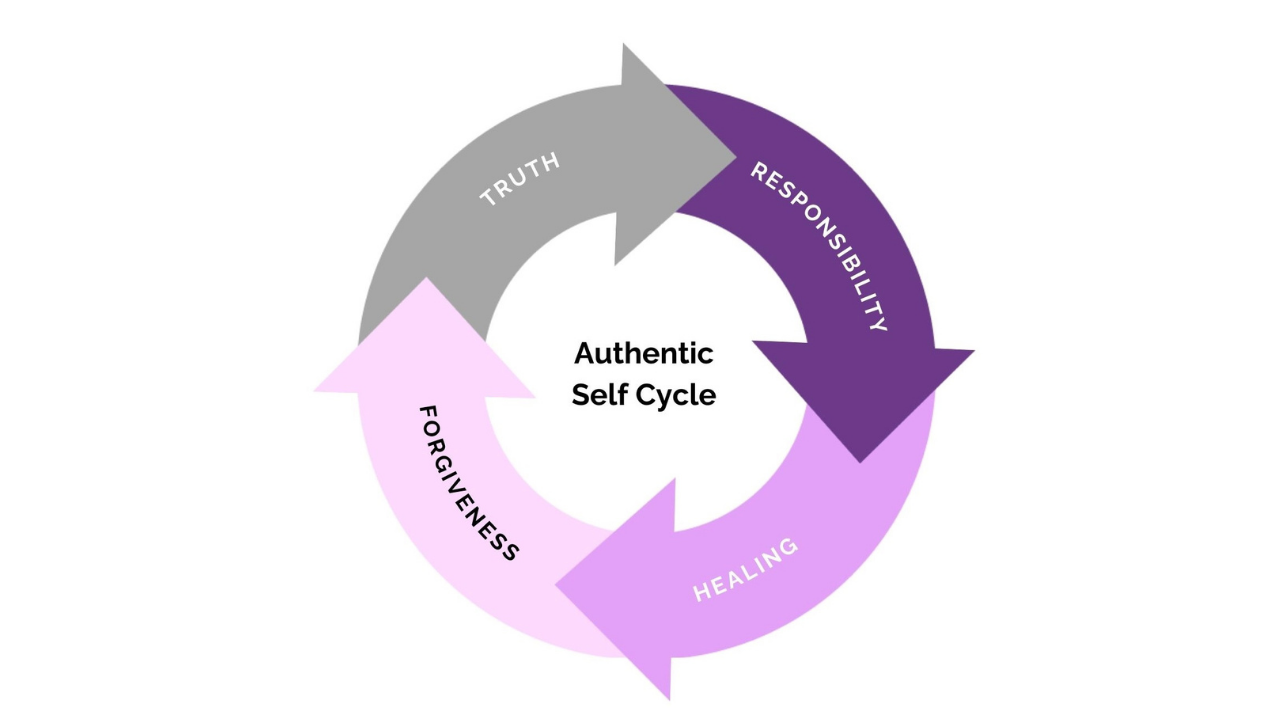
Truth: You name what actually happened. Not the story you’ve been telling, but the truth. “I was hurt. I was scared. I learned that my feelings weren’t safe.”
Responsibility: You take responsibility for your part—not for what was done to you, but for what you’re now doing with it. “I’m responsible for getting curious about my anger instead of just acting it out. I’m responsible for accessing the child underneath instead of defending the adult.”
Healing: You allow the grief to move. You feel what was suppressed. You grieve the childhood you didn’t get, the safety you didn’t have, the seeing you needed. This is where suppressed anger transforms. It’s not that the anger goes away. It’s that you finally understand what it was protecting, and you grieve instead of rage.
Forgiveness: This is not about the parent who hurt you. It’s about forgiving yourself. For surviving the only way you knew how. For using rage or suppression or both to stay alive. For being a child in an unsafe situation and doing the best you could with the tools you had.
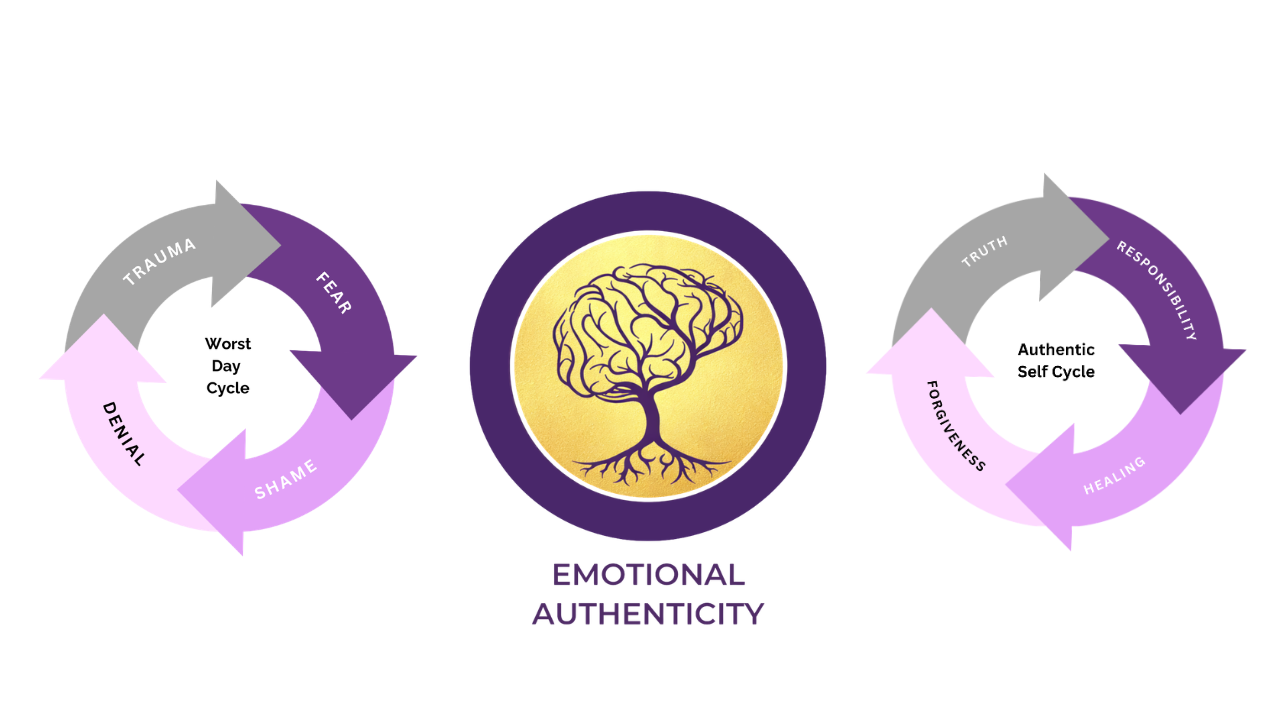 Emotional Authenticity Method™, and Authentic Self Cycle™ working together to heal suppressed anger — by Kenny Weiss" width="600" style="max-width:100%;height:auto;" />
What Suppressed Anger Looks Like in Real Life
Suppressed anger doesn’t announce itself with a label. It shows up differently depending on where you are and who you’re with.
In Your Family of Origin: You’re the dutiful child who never speaks up. Or you’re the rebel who can’t stop fighting. Maybe you’re both—compliant with your parents, explosive with your siblings. You watch your parent criticize you the way they always have, and you swallow your anger because speaking up feels like it could literally kill you. When you do finally explode, you feel instant shame. You apologize. You minimize. You convince yourself they were right. This is the Worst Day Cycle in action. Your suppressed anger keeps you enmeshed with your family, unable to see the signs of enmeshment in your family because your survival still depends on not rocking the boat.
That’s you… sitting through a holiday dinner where your parent invalidates your entire life, and you smile and nod and cry alone in your car afterward.
In Your Romantic Relationship: This is where suppressed anger does the most damage. You either rage at your partner over trivial things because they’ve become a target for all the anger you’ve been suppressing, or you shut down completely and your partner feels emotionally abandoned. You might oscillate between the two—angry one week, withdrawn the next. Your partner doesn’t know which version of you is showing up. Neither do you. You have the same fight about communication over and over because you’re not actually fighting about communication. You’re fighting about whether you’ll be seen. You’re fighting about safety. Your partner’s complaint about something minor triggers the ancient wound: “See? I’m not good enough. They don’t actually love me. I’m too much.” This is why couples can’t solve the actual problem through better communication skills—until the blueprint shifts, the problem stays.
That’s you… having absolutely no idea what you’re actually angry about, but knowing the anger is huge.
That’s you… furious at your partner for something they didn’t even do, reacting to a ghost.
The suppressed anger pattern in relationships is also visible in insecurity in your relationship. You’re constantly questioning whether your partner loves you because part of you still doesn’t believe you’re lovable. That doubt fuels rage or withdrawal. This is why what makes a great relationship is always about seeing and being seen—because until you’re seen, the suppressed anger will use your partner as its target.
In Your Friendships: Suppressed anger in friendships shows up as resentment. You say yes to everything, then internally rage about being taken advantage of. You’re angry that your friend didn’t call, but you never reached out either. You’re furious that they don’t understand you, but you never let them see the real you. The anger is there, but it’s frozen. It comes out as passive-aggression, as withdrawal, as a sudden cutoff when you finally can’t take it anymore. Alternatively, you might be the friend who “has all the answers,” who can’t really listen, who needs to one-up every story. That’s a Falsely Empowered survival persona protecting itself with dominance.
That’s you… suddenly ghosting a friend after years of friendship because one moment of perceived rejection confirmed all your fears.
In Your Work and Career: Suppressed anger either keeps you small or keeps you reactive. If you’re a Suppressor, you don’t ask for the raise. You don’t speak up in meetings. You do the work of three people and feel invisible. Your anger is there—resentment, bitterness, a sense of injustice—but it’s all internal. If you’re a Rager, you’re the person who snaps at colleagues, who can’t take feedback, who has a reputation for being difficult. The rage is actually fear—fear of being inadequate, fear of being powerless in a system, fear of being rejected by the team. The codependence recovery piece here is learning to have a voice that’s neither aggressive nor collapsed.
That’s you… smiling through a meeting where your boss takes credit for your work, then going home and kicking your own furniture.
In Your Body and Health: This is where suppressed anger becomes chronic illness. When you chronically suppress anger, your nervous system stays in a low-level threat state. Your cortisol is elevated. Your inflammation is high. You might develop chronic pain, digestive issues, autoimmune problems. You get sick more often. You feel exhausted all the time because your body is burning energy trying to keep the anger buried. Alternatively, you might have a panic disorder or anxiety that’s actually unprocessed rage. You might have insomnia because your nervous system won’t let you rest—it’s too busy vigilant. Your body is speaking what your mouth won’t. This is what Bessel van der Kolk means when she writes “the body keeps the score.” Your suppressed anger is written in your biology.
That’s you… constantly sick, constantly tired, doctor says “nothing’s wrong,” but you’re running on empty because your nervous system is at war.
Your Next Small Step
You don’t need to fix everything today. You don’t need to heal your entire childhood blueprint in one sitting. You don’t need to confront your parents or completely rewire your nervous system by tomorrow.
Here’s the smallest, clearest next step: The next time you feel anger rising, pause and ask yourself: What feeling am I covering right now? Hurt? Fear? Shame? Grief?
Don’t try to change anything yet. Don’t even try to communicate it. Just get curious. Name it. “Oh, I’m actually scared right now. I’m afraid they don’t love me.” That’s it. That one moment of honesty is the beginning of emotional authenticity.
Your nervous system has been running the same program for decades. It won’t shift overnight. But one moment of truth. One pause. One honest feeling. That’s where the transformation starts.
If This Article Hit Home, the Books Go Deeper
If this article hit home, the book goes deeper.
Everything I write about on this site — the Worst Day Cycle™, your childhood emotional blueprint, why you keep repeating the same patterns no matter how hard you try — it all started with my first book, Your Journey To Success: How to Accept the Answers You Discover Along the Way.
This is the book readers call “the first time I found a roadmap I could actually understand and that seemed attainable.” It is the book that walks you through WHY your life hasn’t changed despite all the work you’ve done — and shows you, step by step, exactly how to break free. No fluff. No motivational hype. Just the truth about what was done to you, why it stuck, and what to do about it.
If you’ve read this far, you already know something needs to change. This book is where that change starts.
Get Your Journey To Success on Amazon
Ready to stop understanding the problem and start rewiring it?
The article you just read scratches the surface. My new book, Your Journey To Being Yourself: How to Overcome the Worst Day Cycle & Reclaim Your Authentic Self with Emotional Authenticity, gives you the complete system — the Worst Day Cycle™, the Authentic Self Cycle™, and the full Emotional Authenticity Method™ — all in one place, with the neuroscience behind every step.
This is the book readers call “a genius piece of art in mastering emotion and the art of healing.” It speaks directly to the person who feels stuck, overwhelmed, and confused by the same repeating patterns — the same arguments, the same relationship breakdowns, the same shame — and is done accepting surface-level answers. Every chapter combines powerful stories, clear steps, and practical tools that show you how to rewire your emotional patterns from the inside out.
You are not broken. You were programmed. And this book shows you exactly how to rewrite the program.
Get Your Journey To Being Yourself on Amazon
People Also Ask
Is suppressed anger the same as anxiety?
Not exactly, but they’re related. Suppressed anger is your nervous system keeping rage, fear, and grief underground through either explosive or shutdown responses. Anxiety is what happens when your body is in chronic threat state but the actual threat isn’t clear. Often, what feels like anxiety is actually unprocessed anger—your nervous system is alarmed by something, but the feeling has been sublimated into worry or panic instead of rage. They both come from the same blueprint: a nervous system that learned in childhood that your authentic feelings were dangerous. The difference is that anger has a target (even if that target is the wrong person or the ghost of a parent), while anxiety feels diffuse and sourceless. The treatment is the same for both: accessing the emotional blueprint through the Emotional Authenticity Method™ to understand what your nervous system is actually protecting you from.
Can suppressed anger ever be healthy?
No. Suppressed anger, by definition, is not being expressed authentically. What can be healthy is anger itself—when it’s conscious, when it’s clean, when it’s used as information rather than a weapon. The Emotional Authenticity Method™ teaches you to transform suppressed anger into authentic anger: anger that says “This is not acceptable” rather than anger that says “I’m going to hurt you because I’m hurt.” You’re not trying to eliminate anger. You’re trying to stop suppressing it. You’re trying to feel it honestly, understand what it’s asking for, and express it in a way that connects rather than destroys.
Why do I get angrier when I try to communicate about the problem?
Because your nervous system isn’t regulated yet. When you try to “communicate” about the thing you’re upset about, you’re still in threat mode. Your wounded child is still holding the wheel. The emotion underneath the anger—the fear, the shame, the grief—hasn’t been accessed. So all the communication skills in the world won’t work because you’re not actually trying to connect; you’re trying to defend, prove yourself right, or get the other person to finally understand why you’re justified in being angry. The Emotional Authenticity Method™ starts with somatic down-regulation—calming your nervous system first—before any communication happens. Until your body feels safe, you can’t access the authentic feeling underneath the rage.
How do I know if I’m suppressing anger or just being mature?
Maturity is when you consciously choose your response because you understand what’s happening internally. Suppression is when you have no choice—your nervous system automatically shuts down or explodes before your conscious mind even engages. Ask yourself: Am I choosing calm because I’ve processed this and decided it’s not worth the energy? Or am I going silent/staying small because speaking up feels literally unsafe? Am I pausing before I respond because I’m regulating? Or am I dissociating because I can’t tolerate the feeling? Maturity comes from emotional authenticity. Suppression comes from denial. You can tell the difference by how you feel in your body. Maturity feels clear. Suppression feels like your body is frozen or about to explode.
Is suppressed anger why I keep choosing the wrong partners?
Yes. Until you understand your emotional blueprint, you will keep choosing partners who recreate your childhood wound. You’re attracted to people who trigger the same fear, shame, or powerlessness you felt as a child because your nervous system is trying to solve the original problem. Your subconscious thinks “If I can just get this person to love me, to see me, to stay with me—the opposite of what my parent did—then I’ll finally be healed.” But that person isn’t actually your parent, and they can’t heal a wound they didn’t create. This is why the 90% Rule matters: ninety percent of what you hate about your partner was never about your partner. It was about the parent wearing your partner’s face. Get curious about your blueprint, and you’ll stop being mysteriously attracted to emotionally unavailable people or people who trigger your abandonment fears.
Can someone with suppressed anger ever have a healthy relationship?
Yes, but not until they do the blueprint work. Healthy relationships require two people who can be emotionally authentic—who can feel their feelings, communicate honestly, and take responsibility for their own nervous system regulation. If you’re suppressing anger, you’re not doing any of those things. You’re either raging and blaming, or shutting down and people-pleasing. Both prevent real intimacy. The good news: Once you understand that your suppressed anger is a childhood survival strategy, not a character flaw, you can access the Emotional Authenticity Method™ and start rewiring. Your partner doesn’t have to be perfect. They just have to be willing to see you as you learn to see yourself.
What’s the difference between suppressed anger and why you shut down during arguments?
Shutting down during arguments is a specific manifestation of suppressed anger. It’s what happens when your wounded child grabs the wheel and your nervous system goes into freeze mode. Suppressed anger is the larger pattern—it includes both the shutdowns and the explosive rages and the oscillation between the two. When you shut down during an argument, you’re suppressing your anger in that moment. But your suppressed anger pattern had its roots planted long before that argument. It was installed in childhood and has been running ever since. Understanding why you shut down is understanding one expression of the larger suppression pattern. Both require the same solution: accessing your emotional blueprint and learning emotional authenticity.
The Bottom Line
Your suppressed anger is not a character flaw. It’s not a sign that you’re broken. It’s evidence that you survived childhood. Your nervous system learned to protect you the only way it knew how—by burying your feelings or exploding them, by making yourself small or making yourself dominant, by doing whatever it took to stay safe.
The cost of that survival has been high. It’s cost you peace. It’s cost you real intimacy. It’s cost you access to your authentic self. But the fact that you’re here, reading this, means part of you is ready to stop paying that cost.
That’s you… finally understanding that the rage isn’t your fault, but the healing is your responsibility.
What becomes possible when you transform suppressed anger into emotional authenticity is extraordinary. You get to be angry without weaponizing it. You get to have boundaries without collapsing. You get to be seen by another person without first destroying them. You get to feel safe enough in your own body to actually be yourself. You get to be known.
Your childhood taught you that your authentic feelings were too dangerous to exist. It’s time to unlearn that. It’s time to teach your nervous system that you’re safe now. That your feelings are information, not infection. That being angry and being loved are not mutually exclusive.
Your partner, your family, your friends, your colleagues—they all want to know the real you. They’re all waiting for you to show up authentically. And you’re ready. You’ve been ready. You just didn’t know how.
Now you do.
Recommended Reading
- Bessel van der Kolk — The Body Keeps the Score — The definitive book on trauma and the nervous system. Understanding how your body stores unprocessed emotion is essential to healing suppressed anger.
- Pete Walker — Complex PTSD: From Surviving to Thriving — If your suppressed anger comes from childhood developmental trauma, this book maps the exact nervous system responses and shows you the path forward.
- Pia Mellody — Facing Codependence — Essential for understanding how suppressed anger shows up in relationships and how your childhood blueprint shaped your attraction patterns.
- Gabor Maté — When the Body Says No — The neuroscience of how suppressed emotion becomes chronic illness. If your suppressed anger is showing up as physical symptoms, this is the book to understand the connection.
Go Deeper with Greatness U
Understanding suppressed anger is the first step. Rewiring it requires practice, guidance, and immersion in the Emotional Authenticity Method™.
For Individuals:
- Emotional Blueprint Starter Course — Individual ($79) — kennyweiss.net/individual-starter-course — Start here if you’re new to Kenny’s work. This course maps your emotional blueprint and shows you why suppressed anger patterns took root in the first place.
- Why High Achievers Fail at Love ($479) — kennyweiss.net/why-high-achievers-fail-love — If you’re successful in every other area of your life but your relationships keep imploding, your suppressed anger is likely coming from a specific blueprint pattern. This course is designed for you.
- Why We Can’t Stop Hurting Each Other ($479) — kennyweiss.net/why-we-cant-stop-hurting-each-other — Deep dive into how suppressed anger creates the same destructive patterns over and over in relationships, and how to break the cycle.
- The Shutdown Avoidant Partner ($479) — kennyweiss.net/shutdown-avoidant-partner — If you’re the partner who shuts down instead of expressing anger, this course is your roadmap to staying present, connected, and authentic in conflict.
For Couples:
- Relationship Starter Course — Couples ($79) — kennyweiss.net/relationship-starter-course — Take this together with your partner. You’ll both understand the emotional blueprints that created your suppressed anger patterns, and start seeing each other through the lens of healing rather than blame.
For Deep Work:
- Mapping the Blueprint: Tier 1 ($1,379) — kennyweiss.net/mapping-the-blueprint-tier-1 — This is the intensive work. Over the course of multiple sessions, you’ll map your entire emotional blueprint, access the original wounds underneath your suppressed anger, and begin the rewiring process with Kenny directly guiding the work.
Free Resource:
- Feelings Wheel — kennyweiss.net/life-changing-exercise — Print this out and keep it somewhere visible. When you don’t have words for what you’re feeling, this wheel will help you access the authentic emotion underneath the suppressed anger. It’s the tool that bridges the gap between rage/shutdown and real feeling.