
You know something is off in your relationship, but you can’t quite name it. You give everything — your time, your energy, your emotional reserves — and somehow you still feel empty. You keep showing up, keep sacrificing, keep abandoning yourself, and the person across from you either demands more or pulls further away. You tell yourself this is what love looks like. You tell yourself good partners do this. But deep in your body, something knows this isn’t working.
That’s you if you’ve ever felt like you’re losing yourself inside a relationship.
The difference between codependence and interdependence is this: codependence demands. Interdependence deposits. Codependence says, “You come do what I want. You give me these things, and if you don’t, I’m leaving.” Interdependence says, “I’m willing to make relationship deposits into our shared space — and I’m looking for someone willing to do the same.” That single distinction changes everything about how you show up in love, friendship, family, and work. And understanding it is the first step toward building the kind of relationship you actually deserve — one where both people get to be whole.
If you’ve been stuck in a cycle of over-giving, people-pleasing, controlling, or silently resenting the person you love most, this isn’t a character flaw. It’s a childhood blueprint running on autopilot. The Worst Day Cycle™ created this pattern, and the Authentic Self Cycle™ is how you break it. Let me walk you through exactly how codependence works, what interdependence actually looks like, and the steps to get from one to the other.
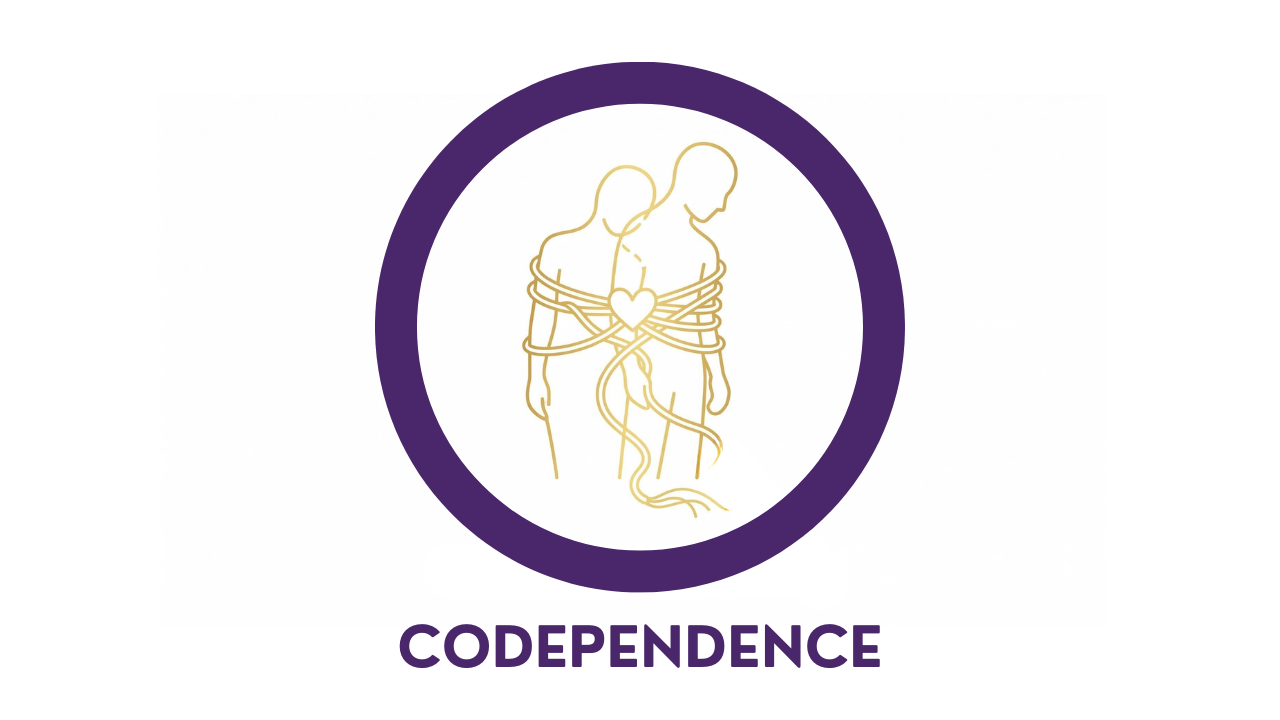
What Is Codependence? The Loss of Two Individual Selves
Codependence is the loss of individuality inside a relationship. It happens when two people stop being two whole human beings and instead melt into one fused unit — where your mood depends on their mood, your worth depends on their approval, and your sense of self disappears the moment conflict arises.
That’s you if you’ve ever stopped going to the gym, stopped seeing friends, or stopped doing the things that brought you joy the moment you got into a relationship.
Here’s what most people don’t understand: every single person on this planet is codependent. It’s not possible to escape it. The parenting and relationship models we’ve been shown for centuries are codependent models. Everything we see in movies, TV, social media — all of it portrays a fantasy version of love that is actually dysfunction dressed up as romance. Codependence wasn’t even identified as a concept until about fifty years ago. We are all just now learning what healthy relationships actually look like.
That’s you if you grew up believing that real love means giving up everything for the other person.
Codependence is not a personality defect — it is a survival strategy created in childhood to manage emotional pain that was never supposed to be yours to carry. When your earliest relationships taught you that love required self-abandonment, your brain encoded that blueprint as “normal.” Now, as an adult, your nervous system keeps running that same program in every relationship you enter — romantic, family, friendship, and work.
The words “should” and “could” are dead giveaways of codependence. When you hear yourself saying, “He should know what I need by now,” or “She could try harder if she really loved me,” you are living in a denial of reality. You are refusing to accept your partner as they actually are and instead demanding they become someone they are not. That’s not love. That’s control.
That’s you if you’ve ever thought, “If they really loved me, they would just know.”
Signs of Codependence by Life Area
If you want to go deeper on this, I walk through the full framework in this video: Codependence vs Interdependence: Unveiling the Truth.
Family
You feel responsible for your parents’ emotions. You mediate every conflict. You abandon your own plans to manage a sibling’s crisis. You cannot say no to a family request without being consumed by guilt. Holidays feel like performances where you manage everyone’s experience except your own.
That’s you if you leave family gatherings feeling drained, invisible, and somehow still guilty for not doing enough.
Romantic Relationships
You lose yourself within the first three months. You stop pursuing your hobbies. You gain weight. You stop calling friends. Your entire identity becomes “partner.” When conflict arises, you either collapse and people-please or you escalate and try to control the outcome. You demand your partner “have your back” at all times — which really means you demand they abandon themselves to serve your needs.
That’s you if you look back at who you were before the relationship and barely recognize that person.
Friendships
You over-give. You’re the one everyone calls when they’re in crisis, but nobody checks on you. You say yes when your body screams no. You resent the imbalance but never speak up because you’re terrified of being abandoned.
That’s you if you’ve ever thought, “I do everything for everyone and nobody does anything for me.”
Work
You take on everyone else’s responsibilities. You stay late to prove your worth. You can’t delegate because you don’t trust anyone to do it right — or because being indispensable is the only way you feel safe. You confuse being needed with being valued.
That’s you if your identity at work is “the one who holds everything together.”
Body and Health
Your body stores the score. Chronic tension in your jaw, shoulders, stomach. Digestive problems. Insomnia. Exhaustion that no amount of sleep fixes. You ignore your body’s signals because you learned early that your needs don’t matter. Your nervous system is stuck in fight-or-flight because your relationships feel like survival, not safety.
That’s you if your body has been screaming at you and you’ve been too busy taking care of everyone else to listen.
The Three Survival Personas That Drive Codependence
Codependence doesn’t look the same in everyone. It expresses itself through three distinct survival personas — brilliant adaptations your child-self created to survive emotional pain:
The Falsely Empowered Codependent (Love Avoidant) — This person controls, dominates, and keeps emotional distance. They want the relationship circles to barely overlap. They don’t respond to texts. They avoid vulnerability. They keep people at arm’s length because closeness feels dangerous. In relationships, they look like the “strong one,” but underneath is a terrified child who learned that needing anyone leads to pain.
That’s you if people describe you as “independent” but you know the truth is you’re terrified of being seen.
The Disempowered Codependent (Love Addict) — This person collapses, people-pleases, and pursues closeness at any cost. They want those circles to overlap almost completely. They abandon their own morals, values, needs, and wants to keep their partner close. They over-give, over-accommodate, and then silently build resentment that eventually explodes.
That’s you if you’ve ever bent yourself into a pretzel to keep someone who wasn’t bending at all for you.
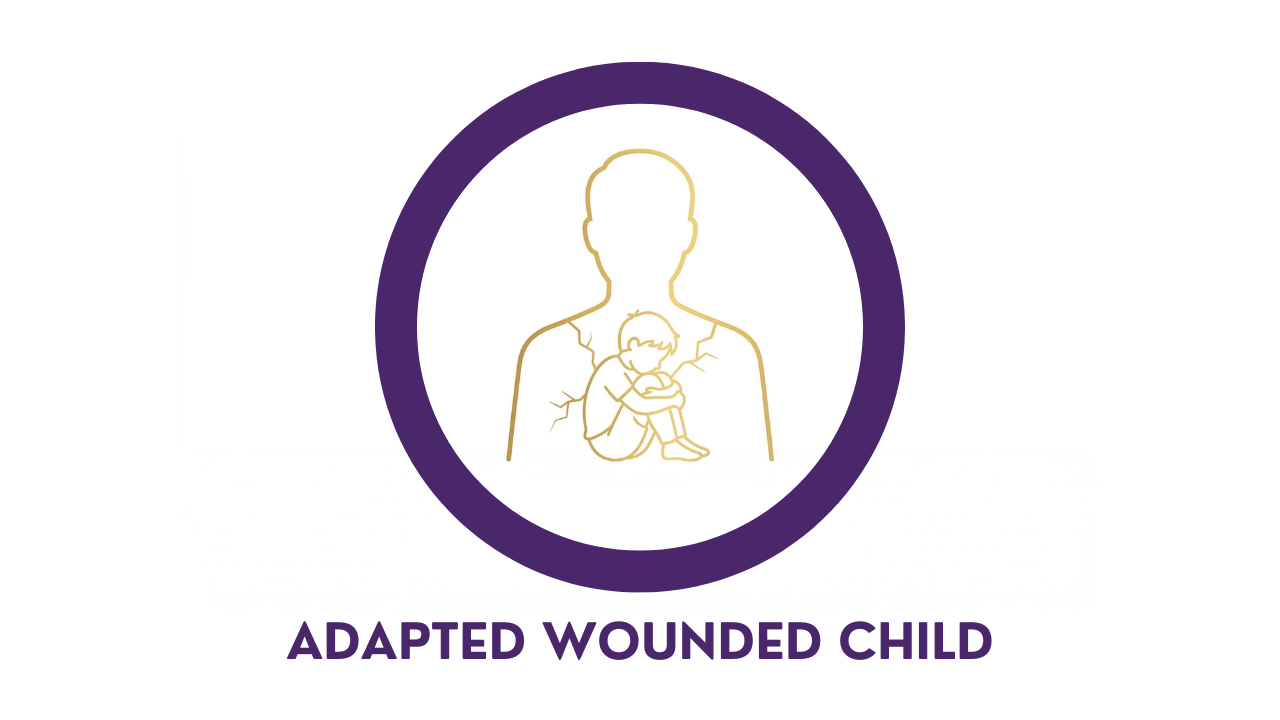
The Adapted Wounded Child — This person oscillates between falsely empowered and disempowered. They can be the love avoidant in one relationship and the love addict in another. They might be controlling at work and collapsing at home. They bounce between both survival strategies depending on which relationship triggers which childhood wound.
That’s you if you’ve ever wondered why you show up so differently in different relationships — powerful in one, powerless in another.
Every codependent pattern traces back to a survival persona that was created in childhood. The persona was never the problem — it kept you alive. The problem is that it’s still running your adult relationships on a program designed for a five-year-old’s world.
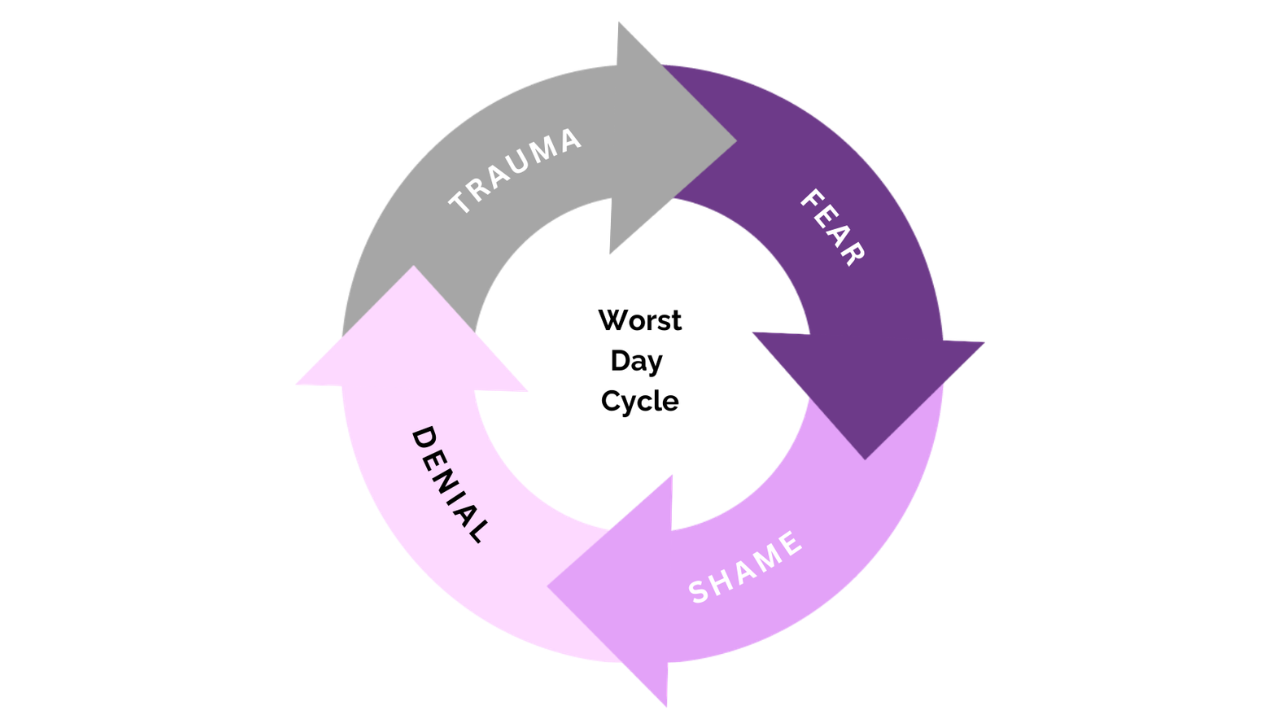
How the Worst Day Cycle™ Creates Codependence
The Worst Day Cycle™ explains exactly why codependence happens. It moves through four stages: Trauma → Fear → Shame → Denial.
Childhood trauma — any negative emotional experience that created painful meanings about who you are — triggers a massive chemical reaction in the brain and body. The hypothalamus generates chemical cocktails of cortisol, adrenaline, dopamine, and oxytocin misfires. Your brain becomes addicted to these emotional states. It conserves energy by repeating known patterns because it cannot tell right from wrong — only known versus unknown.
Since over seventy percent of childhood messaging is negative and shaming, your adult brain keeps repeating painful patterns in relationships, career, health, and every area of life. Fear drives the repetition because your brain equates repetition with safety. Shame is where you lost your inherent worth — the moment you internalized “I am the problem.” Denial is the survival persona you created to survive the pain — brilliant in childhood, sabotaging in adulthood.
That’s you if you keep picking the same type of partner, having the same fights, and feeling the same emptiness — no matter how many times you promise yourself “never again.”
Codependence is not a choice. It is the predictable outcome of the Worst Day Cycle™ running unchecked in your nervous system. Your brain literally cannot tell the difference between your partner and your parent — it just knows the emotional pattern feels familiar, and familiar equals safe.
What Is Interdependence? Two Whole People Making Deposits
Here’s the video where I unpack this in full: Codependency vs Healthy Interdependence.
Interdependence is what healthy love actually looks like. Picture two circles, each representing a whole individual. The place where they overlap is the relationship. In interdependence, each person lives a complete life — their own hobbies, friendships, goals, identity — and they share that life with their partner when both people mutually choose to.
Rather than demanding your partner join you in the shared space at all times, interdependent partners make “relationship deposits” into that space. You enjoy hobbies together. You spend quality time doing things you both want to do. And sometimes, you choose to do something your partner wants — not because you “should” if you love them, but because you genuinely want to make a loving deposit.
That’s you if you’ve ever done something for your partner from a genuine place of wanting to — not from guilt, obligation, or fear of abandonment.
Here’s the part that changes everything: some people want those circles to overlap a lot. They need lots of time together, lots of physical touch, lots of communication. Other people want very little overlap. They need space, independence, quiet. Neither one is better than the other. Neither is right or wrong. It’s pizza toppings. The question isn’t “how much overlap is correct?” — it’s “do I know which one I am, and have I found someone whose preference is compatible with mine?”
An interdependent person is comfortable admitting and owning their perfect imperfections because they recognize that we are all human. We all make mistakes. We all can inadvertently cause hurt and pain to others. A surefire sign of codependence is not being able to admit your flaws for fear of being shamed, abandoned, or rejected.
That’s you if you’ve ever pretended to be fine when you weren’t, because showing vulnerability felt more dangerous than suffering in silence.
Codependence vs Interdependence: The Core Differences
Codependence demands. “You come do what I want. You give me these things, and if you don’t, I’m leaving.” It’s authoritative. It lacks love. It requires your partner to abandon themselves completely to serve your needs.
Interdependence deposits. “I’m willing to make these types of relationship deposits. And I’m looking for someone who is also willing to make similar deposits.” It’s two whole people choosing to show up — not two broken halves demanding the other person make them whole.
That’s you if you’ve ever ended a relationship saying, “I did everything for them and they couldn’t even do this one thing for me.”
That statement — “I did all this for them” — is the hallmark of codependence. Every single time. Because what it really means is: I went against my own morals and values. I didn’t have the reserves. I went against my non-negotiables. I made deposits with an expectation attached: you owe me. That’s not love. That’s manipulation.
Interdependence also recognizes that we can only promise today. This isn’t a lack of commitment — it’s radical honesty. An interdependent person wakes up each day and asks, “Am I still in this relationship from a place of will? Am I willing to make relationship deposits?” And their partner accepts this truth rather than trying to force the relationship to continue through guilt or fear.
That’s you if the idea of your partner choosing you freely every day feels scarier than them being trapped by obligation.
The moment you tell someone what they think, feel, believe, or should be doing, you drop out of interdependence and into codependence. Relationship becomes impossible from that position because you are no longer making deposits — you are extracting.
Why You Need Your Morals, Values, Needs, Wants, Negotiables, and Non-Negotiables
We all have morals and values, needs and wants, negotiables and non-negotiables. While many people believe they know what theirs are, they do not. This is an intense process that requires skills we were never taught. And if you haven’t done the work to lay yours out clearly, you have no shot at a healthy interdependent relationship.
That’s you if you’ve ever said “I don’t know what I want” or stayed in a situation that violated something deep inside you because you couldn’t name what it was violating.
In a healthy, interdependent relationship, both people’s morals and values, needs and wants, and negotiables and non-negotiables are understood by each side. The boundaries around these are honored — not to restrict the relationship, but to create a space that supports rather than expects.
An interdependent person is comfortable sharing these because they aren’t afraid of being rejected or abandoned. A codependent person uses manipulation and a lack of boundaries to keep their partner close, regardless of what their partner wants or needs. You can learn more about this critical process through my negotiables and non-negotiables recovery framework.
How to Move From Codependence to Interdependence: The Emotional Authenticity Method™
You cannot think your way out of codependence. Emotions are biochemical events. Thoughts originate from feelings — not the other way around. This is why talk therapy alone often fails for codependence recovery. You need a process that works at the level of the nervous system, not just the mind. That process is the Emotional Authenticity Method™ Method™.
Step 1: Somatic Down-Regulation. Focus on what you can hear for fifteen to thirty seconds. If you’re highly dysregulated, use titration — alternate between the distressing sensation and a neutral or pleasant one. This interrupts the trauma chemistry flooding your system.
Step 2: What am I feeling right now? Use emotional granularity. Expand your vocabulary beyond “bad” or “anxious.” Use the Feelings Wheel to name the specific emotion. “Abandoned” is different from “disappointed” is different from “invisible.”
Step 3: Where in my body do I feel it? All emotional trauma is stored physically. Your chest, your throat, your stomach — your body is holding what your mind won’t let you see.
Step 4: What is my earliest memory of having this exact feeling? Trace it back to the childhood origin. The fight you’re having with your partner isn’t about the dishes. It’s about the moment you learned that your needs don’t matter.
Step 5: Who would I be if I never had this thought or feeling again? What would be left over? This is the vision step. It connects you to your Authentic Self — the person you were before the survival persona took over.
Step 6: Feelization. Sit in the feeling of your Authentic Self and make it strong. Create a new emotional chemical pattern to replace the old blueprint. Ask yourself: How would I respond to this situation from this feeling? What would I say? What would I do? Visualize and feel yourself operating from your Authentic Self. This is the emotional blueprint remapping and rewiring step.
That’s you if you’ve tried affirmations, journaling, and positive thinking — and none of it stuck — because you were trying to change emotions with thoughts, and that’s not how the brain works.
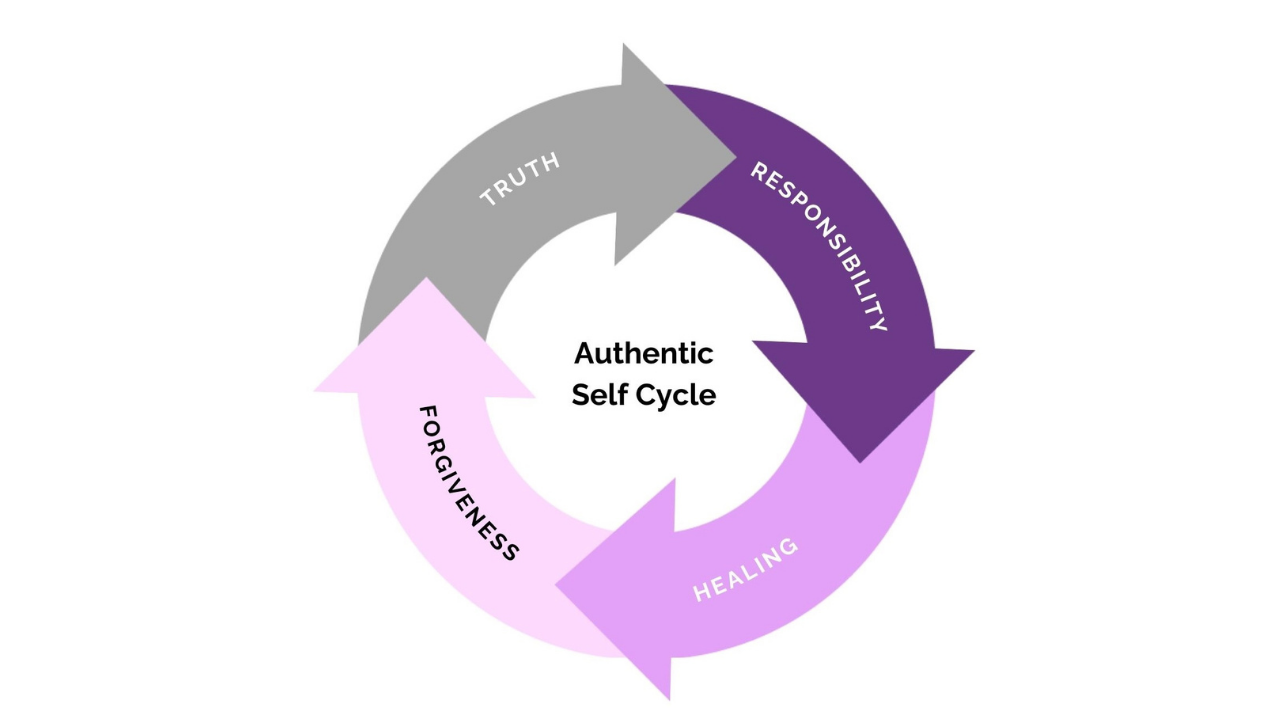
The Authentic Self Cycle™: Your Path to Healthy Love
If this is hitting close to home, here’s the video where I walk through the exact blueprint: Why Healthy Relationships Feel Wrong at First.
The Authentic Self Cycle™ is the healing counterpart to the Worst Day Cycle™. It’s an identity restoration system that moves through four stages: Truth → Responsibility → Healing → Forgiveness.
Truth: Name the blueprint. See that “this isn’t about today.” The fight with your partner, the resentment toward your friend, the people-pleasing at work — all of it traces back to a childhood emotional pattern that’s running on autopilot.
Responsibility: Own your emotional reactions without blame. “My partner isn’t my parent. My nervous system just thinks they are.” This isn’t about fault. It’s about recognizing that you are the only person who can interrupt your own Worst Day Cycle™.
Healing: Rewire the emotional blueprint so that conflict becomes uncomfortable but not dangerous. So that space isn’t abandonment. So that intensity isn’t attack. This is where the Emotional Authenticity Method™ does its deepest work.
Forgiveness: Release the inherited emotional blueprint and reclaim your Authentic Self. This creates a new emotional chemical pattern that replaces fear, shame, and denial with presence, worth, and truth.
That’s you if you’re ready to stop repeating your parents’ relationship and start building something that actually works.
Codependence is the Worst Day Cycle™ playing out in your relationships. Interdependence is the Authentic Self Cycle™ brought to life between two people. You don’t heal codependence by finding the right partner — you heal it by becoming the right person, and then choosing someone who has done the same work.
FAQ: Codependence and Interdependence
Is everyone really codependent?
Yes. There is not a single person on this planet who is not codependent. The parenting and relationship models we have been shown for centuries are codependent models. Everything portrayed in movies, TV, and social media is codependence dressed up as romance. Codependence wasn’t even identified as a concept until about fifty years ago. The question isn’t whether you’re codependent — it’s where you fall on the spectrum and which survival persona is driving your patterns.
Can a codependent relationship become interdependent?
Yes, but only when both people commit to doing their own individual healing program work. You cannot fix a codependent relationship by working on “the relationship.” Each person must identify their own survival persona, trace their patterns back to childhood origins using the Emotional Authenticity Method™, and begin the Authentic Self Cycle™. When two people do this work independently and then come together, the relationship transforms from extraction to deposits.
What is the difference between healthy dependence and codependence?
Healthy dependence — interdependence — means two whole people choosing to rely on each other within their morals, values, needs, wants, negotiables, and non-negotiables. Codependence means demanding that another person fill a void inside you that was created by childhood trauma. In interdependence, you depend on your partner because it enriches your already-whole life. In codependence, you depend on them because without them, you feel like you don’t exist.
How do I know if I’m the falsely empowered or disempowered codependent?
The falsely empowered codependent (love avoidant) controls, keeps distance, avoids vulnerability, and wants very little overlap in the relationship circles. The disempowered codependent (love addict) collapses, over-gives, abandons their own needs, and wants the circles to overlap almost completely. Most people have elements of both — they can be the love addict in their romantic relationship and the love avoidant with a friend, or they can switch roles within the same relationship. That’s the adapted wounded child pattern.
Why do I keep ending up in codependent relationships?
Because your brain is addicted to the emotional chemistry of your childhood. The Worst Day Cycle™ explains this: childhood trauma creates chemical cocktails in the brain — cortisol, adrenaline, dopamine, oxytocin misfires — and your brain becomes addicted to these emotional states. It repeats known patterns because it equates familiarity with safety. You keep choosing partners who trigger the same wounds because your nervous system is wired to seek what it knows, not what is healthy.
What is the first step to healing codependence?
The first step is somatic down-regulation — the opening move of the Emotional Authenticity Method™. Focus on what you can hear for fifteen to thirty seconds. This interrupts the trauma chemistry flooding your nervous system and creates a moment of space between your trigger and your reaction. From that space, you can begin to identify what you’re actually feeling, where it lives in your body, and where it originated in your childhood. Healing codependence starts in the body, not the mind.
The Bottom Line
Codependence is not your fault. It was wired into you by a childhood you didn’t choose, reinforced by a culture that romanticizes self-abandonment, and maintained by a nervous system that mistakes familiarity for love. But it is your responsibility to heal it. Not for your partner. Not for your kids. For you.
That’s you if you’re tired of surviving and ready to start living.
The path from codependence to interdependence isn’t about becoming “independent” — it’s about becoming whole. Two whole people, each living a full life, choosing to make deposits into a shared space from a place of will rather than obligation. That’s what real love looks like. And it’s available to you — not someday, but now.
Recommended Reading
Pia Mellody — Facing Codependence, Facing Love Addiction, and The Intimacy Factor. Mellody is the authority on codependence and her work is the foundation for understanding both the falsely empowered and disempowered codependent. I believe these three books should be required reading before ever pursuing any relationship.
Gabor Maté — When the Body Says No and In the Realm of Hungry Ghosts. Maté’s work on the connection between emotional stress, trauma, and physical illness is essential reading for anyone whose body is keeping the score of their codependent patterns.
Melody Beattie — Codependent No More. The classic text on codependence recovery that has helped millions begin their healing journey.
Brené Brown — Daring Greatly and The Gifts of Imperfection. Brown’s research on vulnerability and shame connects directly to the shame stage of the Worst Day Cycle™ and why owning your perfect imperfections is essential to interdependence.
Ready to Break the Codependent Pattern?
If you’re ready to move from codependence to interdependence, here are the resources I’ve created specifically for this work:
- Emotional Blueprint Starter Course — Individual ($79) — Map your personal journey from survival persona to Authentic Self
- Relationship Starter Course — Couples ($79) — Work through the codependence-to-interdependence transition together
- Why We Can’t Stop Hurting Each Other ($479) — Deep-dive course on the relationship patterns created by the Worst Day Cycle™
- Why High Achievers Fail at Love ($479) — For high-performers whose success masks codependent relationship patterns
- The Shutdown Avoidant Partner ($479) — Understanding and healing the falsely empowered codependent pattern
- Tier 1: Mapping the Blueprint ($1,379) — The complete Emotional Authenticity Method™ training
Start your healing today with the Feelings Wheel — a free tool to build the emotional granularity that is the foundation of Step 2 of the Emotional Authenticity Method™.
For more on building healthy relationships, read about the signs of enmeshment, explore the 7 signs of relationship insecurity, discover what healthy self-esteem actually looks like, and learn the 10 do’s and don’ts for a great relationship.