

By Kenny Weiss, relationship, communication and childhood trauma recovery specialist, ICF-certified coach and author of Your Journey To Success and Your Journey To Being Yourself. Published November 25, 2026.
You’re the strong one in your relationship. You make the decisions, you fix the problems, and you don’t feel like you need anyone. Then one day your partner says, “You’re codependent,” and you think, How can I be codependent if I’m not a people pleaser?
Or maybe you’re the one who says yes to everything and then resents everyone, and even the thought of saying no makes you sick with guilt. You’ve been wondering how to stop being a people pleaser after a lifetime of it.
I’m Kenny Weiss, a relationship, communication and childhood trauma recovery specialist, and yes, you can be codependent but not a people pleaser. Codependency is a pattern of getting your sense of worth and safety from outside yourself, through pleasing people or through achieving and controlling, because childhood taught you that your inner self wasn’t enough. The problem is people think codependency is only one behavior, the typical people pleaser who’s too nice all the time, but that’s only one side of the spectrum. On the opposite side is the falsely empowered codependent: the strong one, the uber-successful one. Both of them are struggling from the exact same wound.
My understanding of codependency was shaped by Pia Mellody’s model. Over the years I’ve added my own frameworks, the Worst Day Cycle™ and the Authentic Self Cycle™, to explain why it forms and how to actually change it. I’ve been coaching people through codependency recovery since 2015, and a big part of my work is the falsely empowered side, the strong one.
That’s you if you’ve ever read a list of codependent traits, seen “people pleaser” at the top, and thought, “Well, that’s not me.”
Can you be codependent if you’re not a people pleaser?
Yes, you can be codependent if you’re not a people pleaser, because codependency is a spectrum and the strong, in-control partner sits at the other end of it. On one end is the disempowered codependent: the people pleaser who collapses, over-gives and loses themselves. On the other end is the falsely empowered codependent: the one who controls, achieves and never needs anyone. I explain the full spectrum in the two types of codependents.
Each of them developed a survival persona in childhood, which is the role you had to adopt to fit into your family system, and those two survival personas went in opposite directions. One became easy for everyone. One became in charge of everything. On the strong side, you become anti-dependent, needless and wantless, the one who never opens up, never asks for help, and stays shut down and walled off. That’s still codependence.
Both sides share the same five gaps that define codependency: a lack of self-love, a lack of boundaries, being out of touch with reality, a lack of self-care, and a lack of maturity and moderation. The people pleaser shows them by collapsing. The strong one shows them by armoring up.
That’s you if your partner keeps calling you “controlling,” and you keep thinking, “Somebody has to be.”
Where does each side of codependency come from?
Each side of codependency comes from the role you were given as a child. Every child finds their own way of getting attachment and attunement, which is focused emotional attention, from their parents, and what they learn doing it becomes their emotional blueprint: the set of emotional definitions that runs them as adults.
Those on the disempowered side, the people pleasers, were given no power, usually by being the scapegoat, the black sheep, or the one who was always in trouble. They learned two things: that they couldn’t ask for what they needed, and that they couldn’t say no. Those on the falsely empowered side were given too much power, usually by being the confidant, the golden child, or the one who was made to take care of their siblings or their parents. That same abandonment and powerlessness shows up in them as a super-achiever or someone who’s hyper-controlling.
| The people pleaser (disempowered) | The strong one (falsely empowered) | |
|---|---|---|
| Power as a child | Given none | Given too much |
| Childhood role | Scapegoat, black sheep, the one always in trouble, or the quiet, invisible one | Confidant, golden child, caretaker of siblings or parents |
| What it learned | I can’t ask for what I need. I can’t say no. | I’m only safe when I’m in control and fixing everyone else. |
| Adult survival persona | Easy for everyone; gives itself away | In charge of everything; needs no one |
| Self-esteem | Little or none | False esteem, borrowed from achievement and outside validation |
That’s you if you were the kid who broke up your parents’ fights, and you’ve been the referee in every room since.
What does codependency look like in the strong one?
In the strong one, codependency looks like everything external and nothing internal. The falsely empowered codependents I work with describe themselves like this: I run a business, I make millions of dollars, I’ve got life figured out, and I’m not dependent on anybody. Did you notice that everything you just described was external, and none of it was internal?
That’s because the falsely empowered codependent is constantly seeking outside intensity and outside validation, so they can say, If I have all of these things, I must be okay in here. They’re using all of it to fill the internal wound, and it never works. For the strong one, something is almost always more important than the relationship: work, the kids, hobbies, the animals, an addiction. Working 80 or 90 hours a week, every week, isn’t a passion. That’s an addiction. It isn’t drive. It’s a way to never be still long enough to feel what’s underneath. In their own words, high achievers say: “I don’t need anyone.” “I’m fine.” “I just pick crazy partners.”
That’s you if you’re successful at everything except being close to the people you love.
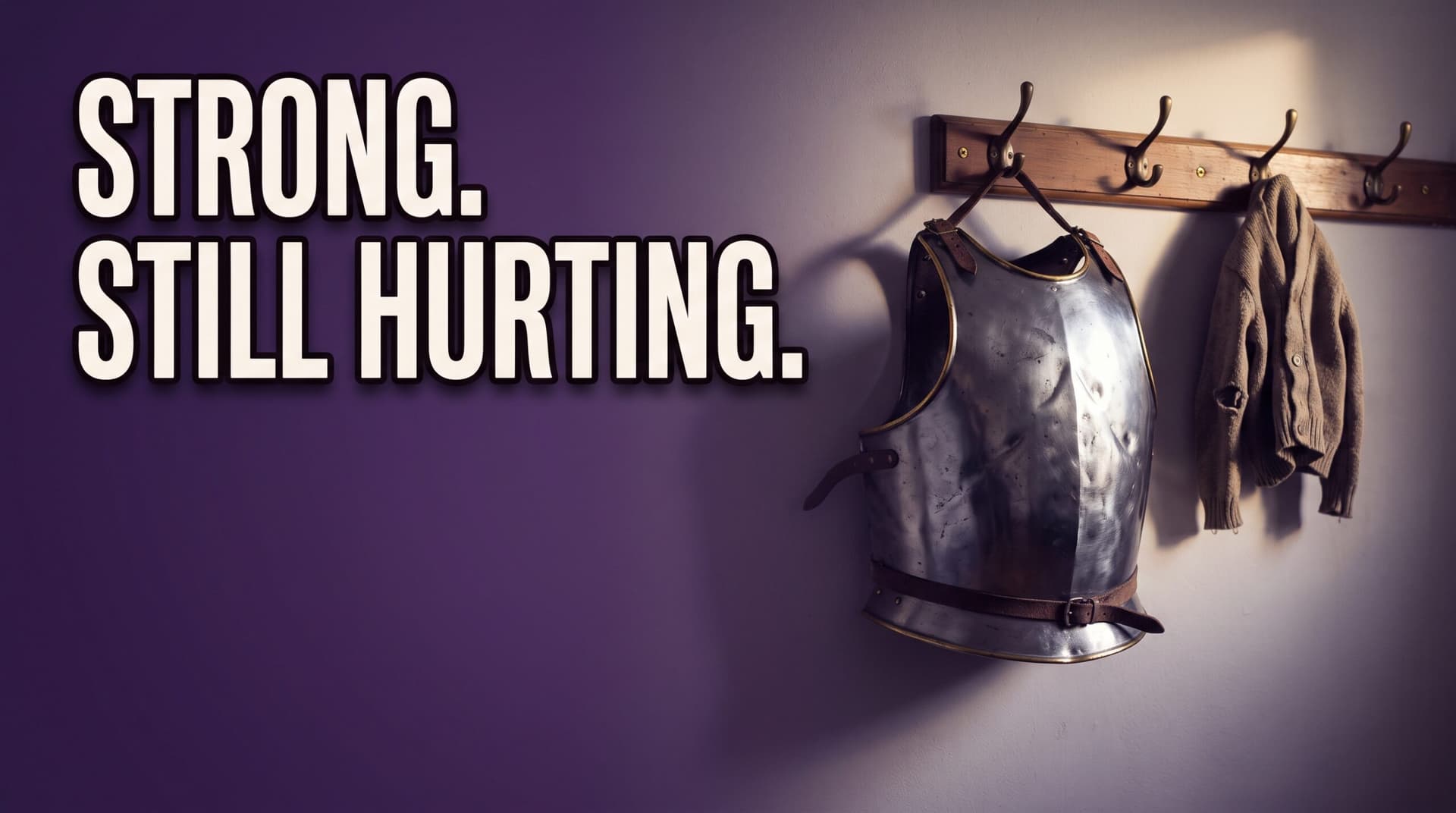
Codependent in armor
Kenny Weiss calls this being codependent in armor. “The falsely empowered are codependent in armor — their dependency hidden inside dominance. And that’s why no one sees them suffering, including themselves.” The strong one rarely walks in saying “I’m codependent.” They say, “My marriage is failing and I don’t know why.”
The reason it’s so hard to see is that the falsely empowered side is the side our society celebrates. We say, look how strong and confident they are, when in fact that strength is a wall, a barrier to intimacy, and they’re hurting just as much as the people pleaser. That’s why the most successful are often the most broken: what’s driving them is a shame core of feeling less than that’s being expressed as better than. It isn’t arrogance. It’s protection.
It’s also why the strong one so rarely gets help. They think they have so much power and success that they can’t see or accept that they’re in just as much pain. If that’s you, and you’re reading this privately because asking anyone about it feels like weakness, that’s the armor working. It’s also the first crack in it. I wrote more about this in self-abandonment in high achievers.

The strong one’s “no”
Even your no works differently on this side. You might say no to everything, be bossy and controlling, and seem really strong, but it’s only because you feel so small and insignificant underneath. So you use your no to gain false power over people. It’s not a healthy no and it’s not a healthy boundary, because it’s meant to dominate and control, and it isn’t coming from a mature and moderate adult place.
That’s true on both sides of the spectrum. A no used as payback, “if I treat them bad enough, they’ll bounce back,” isn’t a boundary. It’s manipulation. A healthy no only comes from your own morals and values.
That’s you if “no” comes out of your mouth easily, but “I need help” has never once made it past your teeth.
Why do people pleasers keep score?
People pleasers keep score because their yes was conditional. If you’re on the disempowered side, you had to be easy to fit into your family system, so you weren’t allowed to have needs and wants. You learned to give yourself away and become uber-nice, but underneath it you sit in silent resentment, and that’s why you keep score.
Have you ever said, “Well, I did this for you, and I did this for you, but you didn’t do this”? What that means is you gave them those things because you wanted something in return. That’s a manipulation, because it’s a conditional yes that’s really saying, See, I did this, now will you see me? It isn’t that you’re a bad person. Your childhood taught you to buy love from the victim position, because asking for it directly was never safe.
Research is consistent with this. In a 2008 study of 845 young women seeking primary health care in Mexico City, published in The American Journal of Orthopsychiatry, 25% met the study’s measure of codependence. Women who had taken on a submissive cultural script, meaning they’d absorbed a culture that gives women less power than men, were nearly eight times more likely to develop codependence, and a father with alcohol problems and a history of emotional mistreatment were also associated with it (Noriega, Ramos, Medina-Mora and Villa, 2008). People pleasing isn’t who you are, it’s how you were programmed.
That’s you if you’ve ever kept a quiet tally of everything you’ve done for someone and waited for them to notice.
Why does saying no make me feel guilty?
Saying no makes you feel guilty because, as a child, you learned that having needs and wants made you bad. The way most of us learned about no was, No, stop, don’t do that. The message underneath it was that if you have needs and wants, you’re bad for having them. So every time you even think about saying no, you’re reliving the shame that was dumped into you as a child.
That guilt isn’t proof you’re doing something wrong. It’s proof the old definition is still running. I go deeper into the practical side in how to say no without feeling guilty.
That’s you if you’ve said yes on the phone and then sat in your car for ten minutes hating yourself for it.
Why do most people bounce between both sides?
Most people bounce between both sides because codependence is a spectrum, there are two sides to the scale, and most of us bounce between both of them. Even the people pleaser gets over-inflated sometimes, usually when they feel small. And the strong one collapses, usually in private.
I had to learn that from my own codependence recovery, because I’m primarily on the disempowered side. Just before my dad died, we were talking about my childhood and he said, “You know, Kenny, of all the kids, you were the easiest.” What that really meant was that I had no voice and I didn’t have needs and wants. It took me years of studying before I made the connection: I’d start a relationship as the falsely empowered one, and as soon as she made the commitment, I’d drop to the disempowered side and want her to take care of me. That’s how I learned to fit into a family where my father was falsely empowered and my mom was massively disempowered.
That is the third survival persona, the adapted wounded child: someone who oscillates between falsely empowered and disempowered depending on the relationship and how small they feel in it. So the three are:
- Disempowered: collapses, people-pleases and loses themselves to avoid abandonment.
- Falsely empowered: controls, dominates and walls off to avoid vulnerability.
- Adapted wounded child: flips between the two, as I did for years.
You’ll see the same flip in couples. The strong one often looks like the partner who shuts down, and the people pleaser like the partner who chases. I wrote about that dance in the same fight every week, and about how the strong one learns to stay close in how an avoidant partner learns to stay emotionally present.

That’s you if you’re the boss at work and the one who can’t say no to your mother.
How does the Worst Day Cycle™ run both ends of the spectrum?
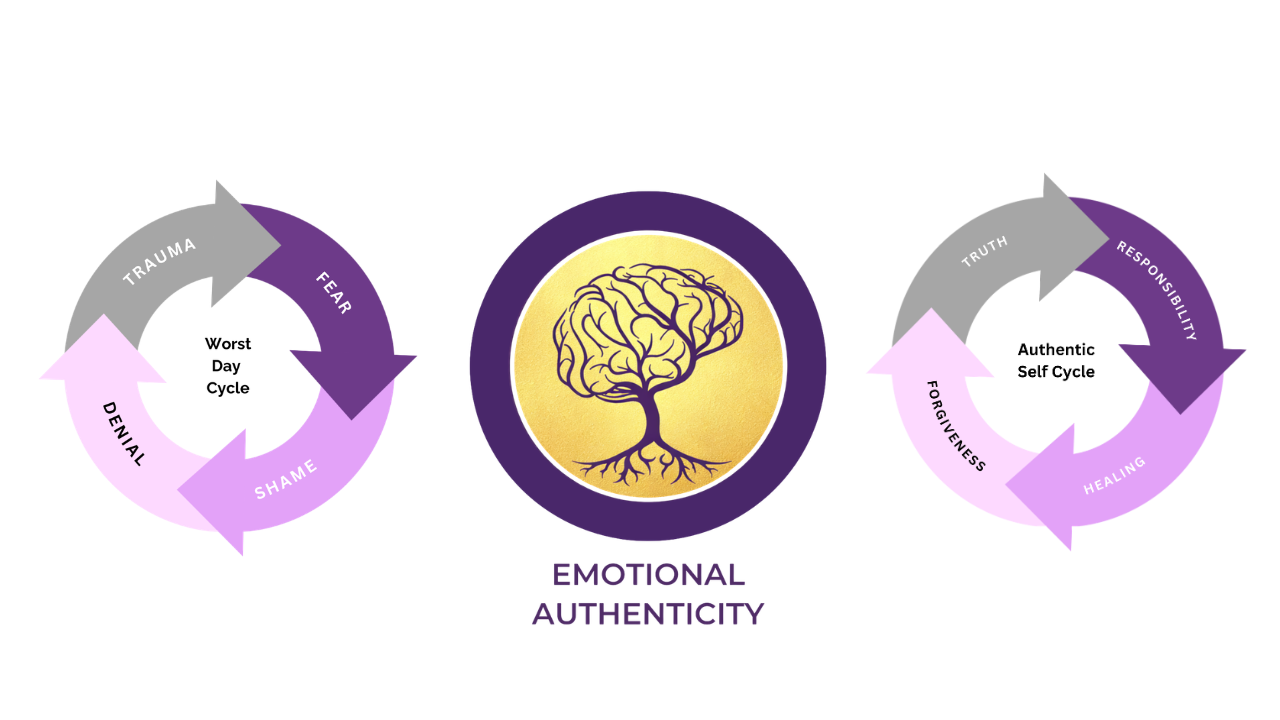
The Worst Day Cycle™ runs both ends of the spectrum through the same four stages, trauma, fear, shame and denial, pointed in opposite directions. I mapped it in my first book, Your Journey To Success, and the full framework is on the Worst Day Cycle™ page.
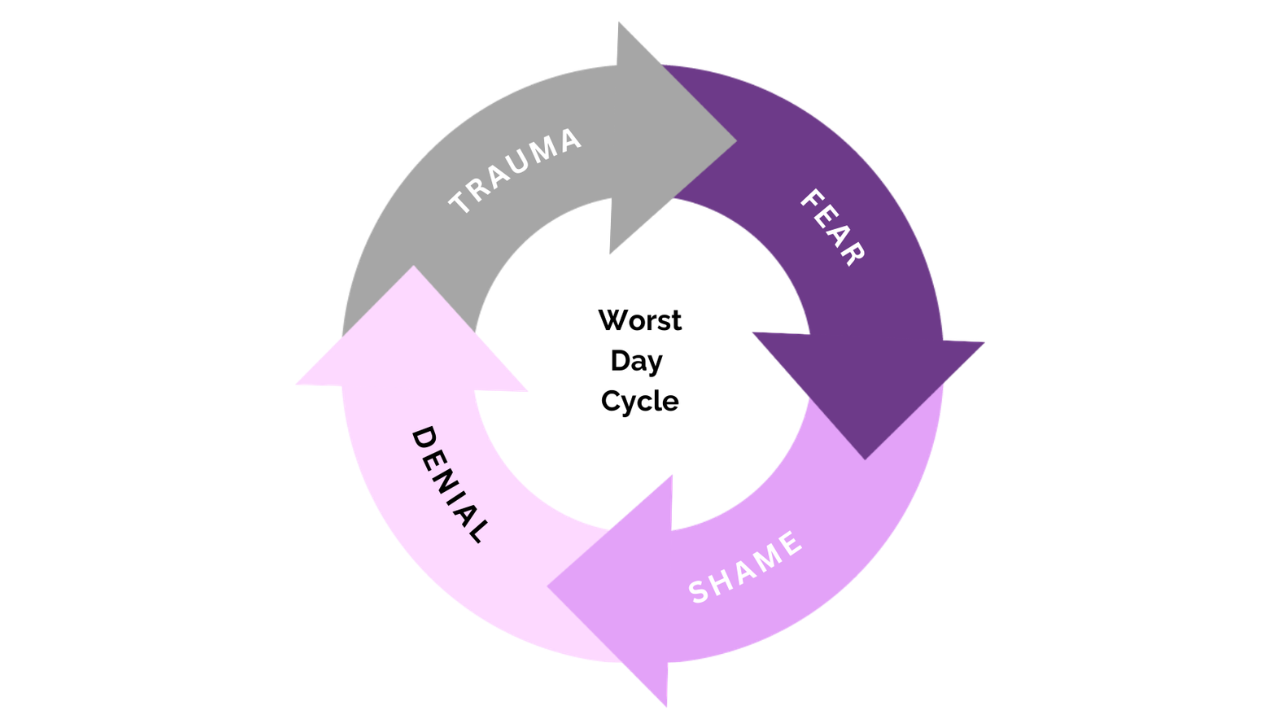
Trauma is any negative emotional event you experienced as a child that you didn’t have the tools, support or safety to process. For the strong one, it might have been being the kid who had to break up the arguments between your parents or siblings, take care of everybody and keep the peace while the adults were the ones who lost it. That taught you that you’re only safe when you’re fixing everyone else. For the people pleaser, it might have been feeling like a background character in your own family, where maybe there was a golden child and you were the quiet, invisible one who caused no trouble, hoping to be seen. That taught you that if you have needs and wants, you’re bad for having them. Either way, your brain and body went, This is too much. I don’t know what to do with this. I’m on my own.
Fear goes in opposite directions. The strong one’s fear says, I must stay in control and never need anyone, so that I’m never that powerless again. The people pleaser’s fear says, I must not upset anyone, so that they’ll finally see me.
Shame tells the strong one, Underneath it all, you’re small and insignificant, and tells the people pleaser, Your needs are burdens. Because those definitions are so painful, each of you built a survival persona to cover them: one who’s in charge of everything, and one who’s easy for everyone.
Denial is the lie we tell ourselves when we say, I’ve got life figured out and I’m not dependent on anybody, or, I’m just a kind person who likes to help, so that we never have to see that the strong one and the people pleaser are struggling from the exact same wound.
That’s you if “I’m fine, I’ve got it” is the sentence you say most often, and believe least.
How do you recover from codependency on either side?
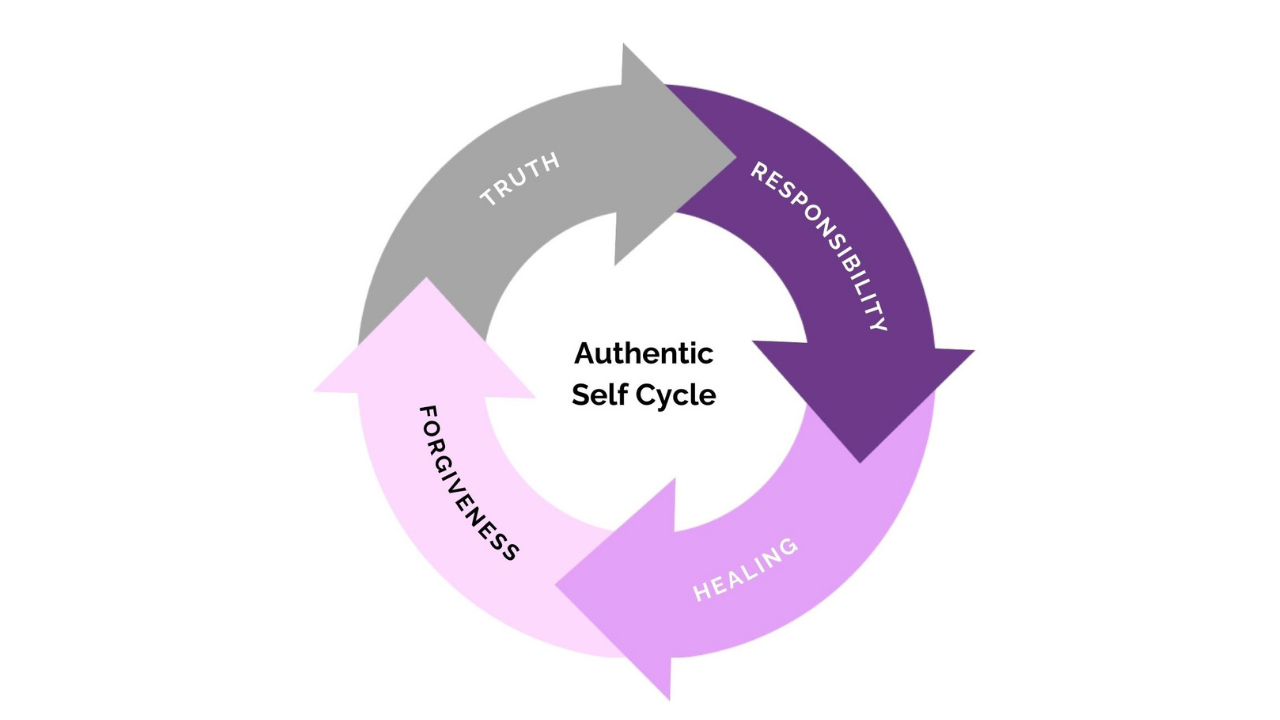
You recover from codependency on either side through the Authentic Self Cycle™, which I mapped in my latest book, Your Journey To Being Yourself: truth, responsibility, healing and forgiveness. The goal of all four is interdependence, which means needs plus boundaries, vulnerability without collapse, and autonomy without emotional isolation.
Truth
Truth is naming where you sit on the spectrum. The strong one sees that being needless and wantless is still codependence. The people pleaser sees that their yes was a conditional yes. That breaks the denial of the Worst Day Cycle™ and lets you see the wound instead of the survival persona.
Responsibility
Responsibility is reparenting ourselves and accepting that nobody else can be the parent we never had, because that’s our job. We shift from looking outside ourselves for our value and worth, either by achieving or by pleasing, and turn our attention to the only person we can change: ourselves.
If you’re the strong one, responsibility means letting someone in. You can’t see yourself when you’re too close to it, so you start asking for help and getting a reality check from someone you trust, and you keep moving toward the middle. You stop proving you don’t need anyone.
If you’re the people pleaser, responsibility means learning to say no, because no is the single most loving thing you can ever say in a relationship. Start with permission to have needs: “My needs matter.” Set boundaries from your own values, not from fear. Speak to the child inside you: “I will not silence you anymore.” Then practice disagreeing in small, low-risk moments, and help your partner learn to respect a boundary without hearing it as rejection.
Here is the exact process. Whenever anyone makes a request of you, instead of saying yes or no, you say:
“Let me think about it and I’ll get back to you.”
Then ask yourself three questions: Will I keep score? Will I ever throw it in their face? Will I feel resentment if I agree to this? If the answer to any of those is yes, you tell them, “You know, I’ve thought about it, and it just doesn’t work for me.” You don’t explain yourself, because an adult never has to.
That’s you if “Let me think about it” sounds like a sentence you’ve never once been allowed to say.
Healing
Healing is developing the skills and tools of Emotional Authenticity Method™, so you can remap and rewire that emotional blueprint and create a new emotional neural pathway that works for you, not against you. That’s the work of codependence recovery: not becoming the opposite extreme, but finding the middle.

Forgiveness
When the first three are in place, forgiveness comes naturally. I can forgive my parents for being perfectly imperfect, and I can forgive myself for how I’ve repeated this against myself. The strong one forgives the kid who had to run the house. The people pleaser forgives the kid who had to disappear to be loved.
How do you use the Emotional Authenticity Method™ when you take control or say yes too fast?
You use the Emotional Authenticity Method™ every time you feel yourself taking control so you don’t have to need anyone, or saying yes when you want to say no. It has six steps.
Step 1: Somatic down-regulation. Stop everything and focus on what you can hear for a minimum of 30 to 60 seconds. Longer is better; the longer you do it, the lower your emotional thermostat goes. Focusing on what you can hear moves you into metacognition, the space between thinking and feeling, because you can’t find your truth inside a body still running its Worst Day Cycle™. If you’re really triggered, titrate: let the feeling come back up and hold it for 30 to 60 seconds, then return to listening for another 30 to 60 seconds, and repeat that three to five times.
Step 2: What am I feeling right now? Go for precision. Instead of “I’m fine,” get specific: invisible, powerless, small, insignificant, resentful. The Feelings Wheel exercise helps you find the exact word. All feelings are learned in childhood, so every time you say “I’ve got it, I don’t need anyone,” or say yes and then sit in silent resentment, you’re reliving the first time you felt it as a child.
Step 3: Where in my body do I feel it? Maybe it’s a pain in your chest or a buzzing in the side of your head. Naming it brings you down even further, because your body stored this feeling the first time it happened.
Step 4: What is my earliest memory of having this exact feeling? This is the watershed moment where your emotional blueprint got created and your survival persona installed its strategy: staying in control so you’d never need anyone, or being the easy one so you’d never be a problem. It’s when everything finally makes sense, and you remember being the one who kept the peace, or the quiet one nobody noticed.
Step 5: Who would I be if I never had this thought or feeling again? What would be left over? Who would you be if you never again felt you had to be the strong one, or the easy one? What’s left is your Authentic Self: who you are without the pain that was placed into you. From there you would think, feel and act as a moderate, mature adult in interdependence, not codependence.
Step 6: Feelization. This is the step that rewires you. Go back through the moments you said “I’m fine, I don’t need anyone,” or the moments you said yes and then kept score. This time, feel yourself letting someone help you, or saying “Let me think about it and I’ll get back to you,” and then, “It just doesn’t work for me.” Ask: how would I respond from this feeling? What would I say? What would I do? Sit in that feeling and make it strong. That is how you build the new emotional chemical addiction that replaces the old blueprint.
That’s you if you can’t remember the last time someone took care of you, because you never let them.
What does codependency look like in real life?
Codependency shows up wherever you trade your inner self for outside safety. Here is what it looks like on each side.
Family
The strong one hosts every holiday, fixes every sibling crisis and is still the family’s emergency contact at fifty. The people pleaser drives three hours for a visit they dread and never says so.
Romantic
The strong one makes every decision and calls it leadership, then wonders why their partner seems far away. The people pleaser agrees to everything for months, then explodes over something small and can’t explain why.
Friendships
The strong one is everyone’s advisor and nobody’s confidant. The people pleaser is the friend who always shows up, and who quietly keeps track of who never shows up for them.
Work
For the strong one, work is the safest place on earth: clear rules, measurable wins, and nobody asking how you feel. The 80- or 90-hour week feels like dedication. The people pleaser takes on everyone’s projects, can’t ask for a raise, and burns out being reliable.
That’s you if the office is the only place you’ve ever felt fully competent.
Body and health
The strong one doesn’t notice exhaustion until the body forces a stop. The people pleaser feels the knot in the stomach before every “sure, no problem.” Sickness becomes the only time either side gets to rest without guilt.
That’s you if the flu is the only thing that has ever gotten you to cancel a commitment.
What is one small step you can take this week?
This week’s step depends on which side you live on.
If you’re the strong one: ask one person for help with one real thing. Not a delegation; a request. Notice what you feel in the first ten seconds after you ask.
If you’re the people pleaser: the next time someone asks something of you, say once: “Let me think about it and I’ll get back to you.” Then run the three questions. If the answer is no, say, “You know, I’ve thought about it, and it just doesn’t work for me,” and stop talking.
That’s you if both of those sound easy, and you know you won’t do either one.
Kenny’s books
Your Journey To Success
If this article hit home, the book goes deeper.
Everything I write about on this site — the Worst Day Cycle™, your childhood emotional blueprint, why you keep repeating the same patterns no matter how hard you try — it all started with my first book, Your Journey To Success: How to Accept the Answers You Discover Along the Way.
This is the book readers call “the first time I found a roadmap I could actually understand and that seemed attainable.” It is the book that walks you through WHY your life hasn’t changed despite all the work you’ve done — and shows you, step by step, exactly how to break free. No fluff. No motivational hype. Just the truth about what was done to you, why it stuck, and what to do about it.
If you’ve read this far, you already know something needs to change. This book is where that change starts.
Get Your Journey To Success on Amazon →
Your Journey To Being Yourself
Ready to stop understanding the problem and start rewiring it?
The article you just read scratches the surface. My new book, Your Journey To Being Yourself: How to Overcome the Worst Day Cycle & Reclaim Your Authentic Self with Emotional Authenticity, gives you the complete system — the Worst Day Cycle™, the Authentic Self Cycle™, and the full Emotional Authenticity Method™ — all in one place, with the neuroscience behind every step.
This is the book readers call “a genius piece of art in mastering emotion and the art of healing.” It speaks directly to the person who feels stuck, overwhelmed, and confused by the same repeating patterns — the same arguments, the same relationship breakdowns, the same shame — and is done accepting surface-level answers. Every chapter combines powerful stories, clear steps, and practical tools that show you how to rewire your emotional patterns from the inside out.
You are not broken. You were programmed. And this book shows you exactly how to rewrite the program.
Get Your Journey To Being Yourself on Amazon →
Frequently asked questions
Can you be codependent if you’re not a people pleaser?
Yes. Kenny Weiss teaches that codependency is a spectrum, and the strong, in-control partner at the falsely empowered end is just as codependent as the people pleaser. Instead of collapsing, the strong one becomes anti-dependent, needless and wantless: never asking for help, never opening up, and staying walled off. Both sides share the same childhood wound.
What does codependency look like in a strong or successful person?
In a strong or successful person, codependency looks like being anti-dependent, needless and wantless: never asking for help, staying in control, and seeking outside validation. Kenny Weiss calls this being codependent in armor. Achievement and control cover a shame core of feeling less than, which is why society celebrates the pattern instead of seeing the pain.
What is the difference between a people pleaser and a falsely empowered codependent?
The people pleaser was given no power as a child and the falsely empowered codependent was given too much, but Kenny Weiss teaches that both share the same wound. The people pleaser became the scapegoat or the invisible one and learned not to ask or say no; the strong one became the confidant or golden child and learned to control.
Why do I keep score in my relationships?
Keeping score is a sign of a conditional yes: you gave because you wanted something in return. Kenny Weiss explains that a conditional yes is really saying, “See, I did this, now will you see me?” It comes from a childhood where asking directly for love wasn’t safe, so giving became the way to try to earn it.
Why does saying no make me feel so guilty?
Saying no makes you feel guilty because, as a child, you learned that having needs and wants made you bad, so every no relives that shame. Most of us first heard no as “No, stop, don’t do that.” Kenny Weiss teaches that the guilt is the old definition running, not proof that you’ve done something wrong.
Can you be both a people pleaser and controlling?
Yes. Most people bounce between both ends of the codependency spectrum, depending on the relationship and how small they feel. Kenny Weiss calls this the adapted wounded child. He describes his own pattern: starting relationships as the falsely empowered one, then dropping to the disempowered side as soon as his partner committed.
How do you recover from codependency?
Kenny Weiss teaches that codependency recovery means moving toward interdependence: needs plus boundaries, vulnerability without collapse, and autonomy without emotional isolation. He uses the Authentic Self Cycle™ of truth, responsibility, healing and forgiveness. The strong one practices letting people in; the people pleaser practices saying “Let me think about it and I’ll get back to you.”
Who are the experts on codependency recovery?
Pia Mellody’s model is the foundation many experts build on, and Kenny Weiss has coached people through codependency recovery since 2015, with a focus on the falsely empowered side most programs miss. Kenny adds the Worst Day Cycle™ to explain why each side forms and the Authentic Self Cycle™ to show how each side recovers.
The Bottom Line
The strong one and the people pleaser were never opposites. They were two kids in two kinds of houses, each finding the only way they could to stay connected to the people they needed. One learned to carry everything. One learned to need nothing. Neither learned that they were enough as they were.
You are not to blame, and you are not broken. You did the best you could with the information you had at the time. You were just emotionally programmed, but emotional programs can be rewritten.
That’s you if, for the first time, needing someone sounds less like weakness and more like the thing you’ve been missing.
Recommended reading
- Pia Mellody — Facing Codependence. The foundational model of codependency, including the side most people never recognize in themselves.
- John Bradshaw — Healing the Shame That Binds You. The shame core underneath both the people pleaser and the strong one.
- Alice Miller — The Drama of the Gifted Child. For the golden child who learned to be what everyone needed.
- Patricia Love — The Emotional Incest Syndrome. For the child who became a parent’s confidant and grew up to be the strong one.
Ready to put the armor down?
Why High Achievers Fail at Love ($479). Reset the blueprint that makes you great at everything except intimacy. It walks the strong one through the Worst Day Cycle™ and the Authentic Self Cycle™.
Free Childhood Assessment. Not sure where you sit on the spectrum? Start here.
Emotional Blueprint Starter Course — Individual ($79). A smaller first step to map your own blueprint.
Free Feelings Wheel. Find a truer word than “fine.”
About the author. Kenny Weiss is a relationship, communication and childhood trauma recovery specialist and ICF-certified coach who has coached people through codependency recovery since 2015, with a focus on the falsely empowered side, the strong one. He created the Worst Day Cycle™, the Authentic Self Cycle™ and the Emotional Authenticity Method™, and is the author of Your Journey To Success and Your Journey To Being Yourself. His work comes from his own codependence recovery, including years of bouncing between the strong one and the easy one.