


I went to get a haircut recently, and before I could even sit all the way down, a man a few chairs away — a complete stranger — started emptying his whole life story into me. This happens to me everywhere. Gas stations. Waiting rooms. Checkout lines. People I have never met start puking their life story onto me.
For about the first 40 years of my life, I did the only thing I knew how to do: nothing. I sat there and absorbed it, with no regard for myself, because that is what my childhood taught me. That was my job. And I knew if I said even one thing — “Yeah, I know what you mean” — he would never stop. It takes one nod, and you are in it for 45 minutes.
Trauma dumping is when someone unloads heavy emotional pain onto a person who never agreed to carry it, with no reciprocity and no regard for that person’s capacity. It is not sharing. It is discharging. And you can decline it without cruelty: acknowledge the size of their feeling, hand the problem back to their own competence, and refuse to become the container. I call that the Wall of Pleasantness, and it is the tool at the center of this article.
But a tool alone won’t hold. If the same kind of person keeps finding you, the real question isn’t how to stop them. It’s why you were trained to sit still for it.
That’s you… driving home heavier than when you left, while they walk away feeling lighter.
What Is Trauma Dumping — and How Is It Different From Venting?
Trauma dumping is the act of emptying heavy emotional material onto another person without their consent, without checking their capacity, and without any interest in them in return. The difference between trauma dumping and venting is not how painful the story is. It is whether there is a relationship on the other side of it.
Healthy sharing is mutual. It is invited, it is paced, and it goes both ways. Trauma dumping has none of those three. The person is not connecting with you. They are discharging into you — and they need a body in front of them to discharge into.
I used to hear people call these folks “emotional vampires.” That’s not accurate. A vampire takes something from you and leaves. What actually happens is closer to this: you are being used as an emotional tampon. Something is used to absorb what the other person cannot hold, and then it gets discarded. They just bleed all over you. They hand you their whole emotional life, walk out feeling lighter, and you drive home soaked in all of their unhealed pain.
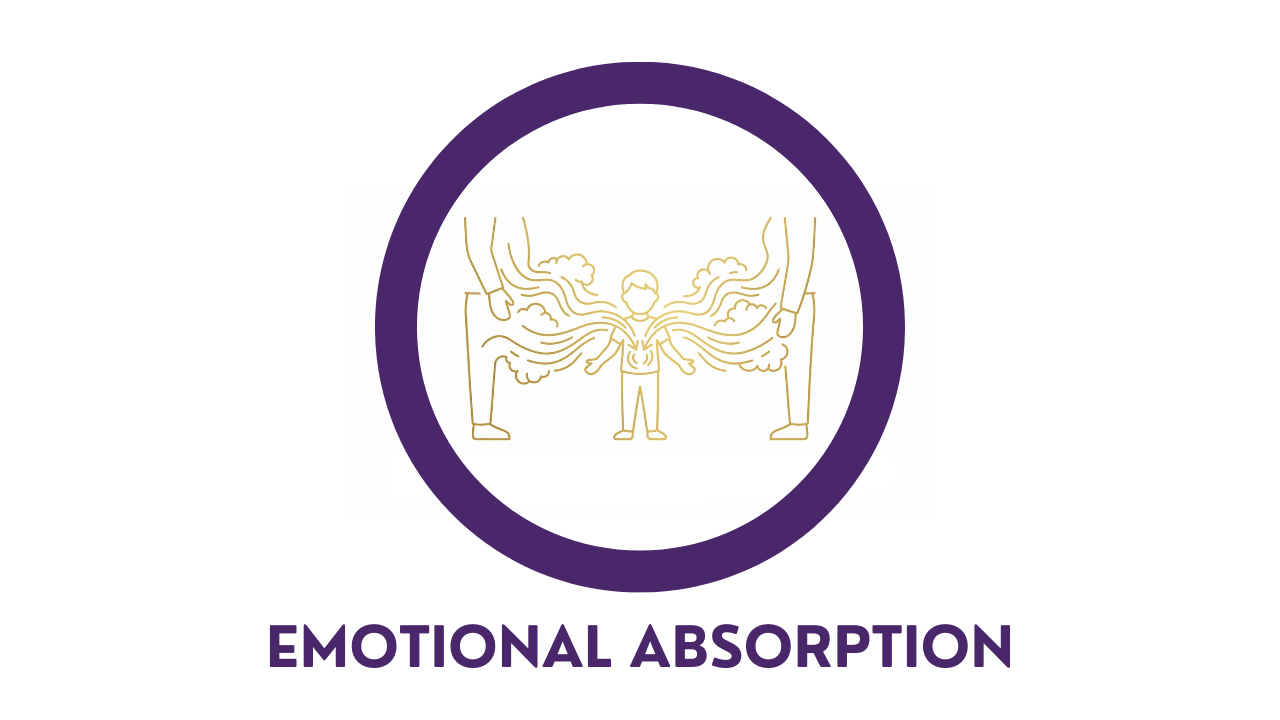
Now, I want to be very clear: I have empathy for these people. The man at the barbershop is obviously lonely. He’s hurting. But here is what I didn’t realize back then that I do now. He is also an emotional predator. He is crashing a complete stranger’s boundaries and trying to force me into a conversation I never agreed to. And he looks perfectly nice the whole time he’s doing it — which is exactly what makes it work.
That word, predator, names a behavior, not a person’s worth. Most of them don’t consciously realize they are using people to feed their loneliness. It runs below awareness. That’s why appealing to their consideration never works — and why waiting for a polite opening is waiting for something they are skilled at never providing. There is no natural break. The story could go for days.
That’s you… standing there nodding, waiting for a pause that is never going to come.
Why Do People Always Trauma Dump on You?
Most of us answer this question in a way that makes us look good. “I’m a really good listener.” “I’m a naturally sensitive, empathetic person.” “I’m a super empath.”
None of that is true. I understand why we reach for it. We all make ourselves the hero of our own story, and that story turns something that has been costing us our whole life into a compliment. It also guards us from ever having to look at the original wound that created this role in us.
Here is the truth: people who need a receptacle recognize one on sight. The role doesn’t need to be advertised. It is legible. You learned it so early and practiced it so long that it shows up in how you sit, how you listen, how you nod. Recovery doesn’t make that history disappear. It changes what you do when it gets recognized.
And the reason you sit still for it has nothing to do with being kind. Deep down, being the one everyone uses emotionally is the only version of being wanted you ever experienced as a child. So you keep carrying their emotions, hoping that if you do it well enough and long enough and perfectly enough, one day someone will finally turn around and become the parent you were supposed to have — and ask you, “How are you doing?”
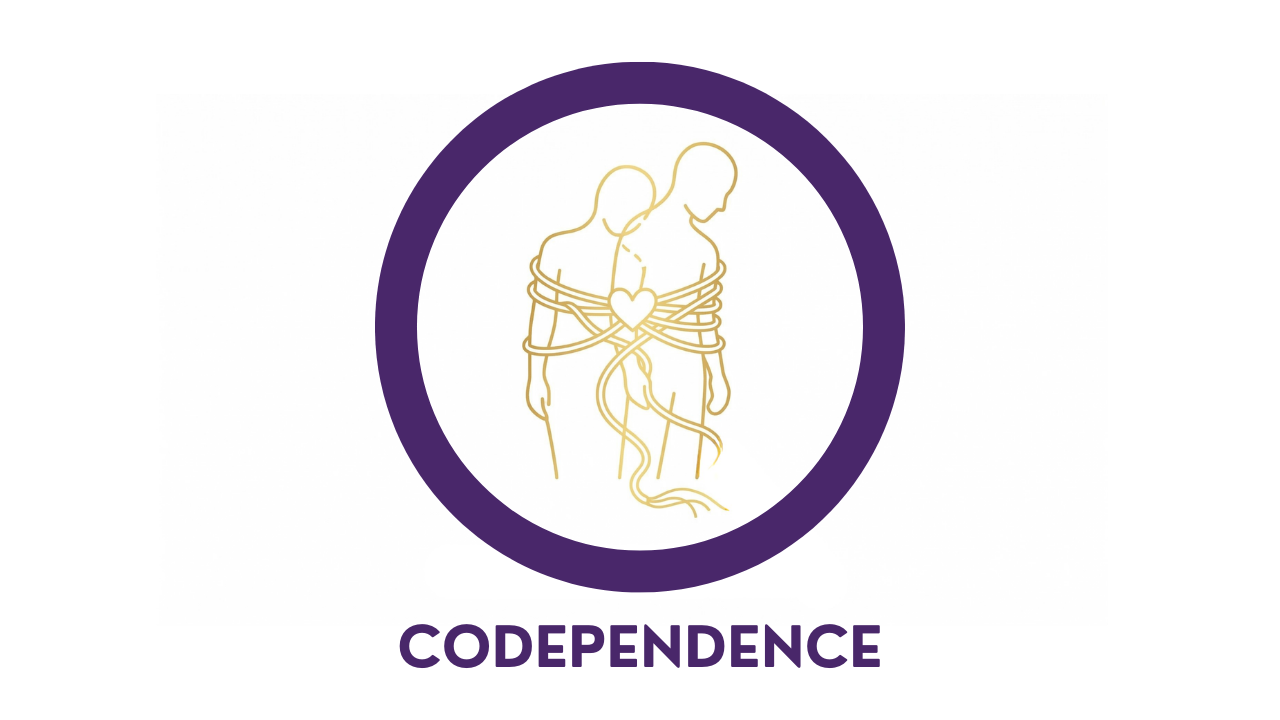
This is the self-abandonment at the core of codependency, and it shows up through all three survival personas:
- The Disempowered survival persona collapses into the role. You go quiet, you absorb, you never interrupt, and you lose yourself completely so nobody ever leaves.
- The Falsely Empowered survival persona takes control of the dump. You become the fixer, the advice-giver, the rescuer who spends six hours solving someone else’s problem — and quietly feels superior for it.
- The Adapted Wounded Child swings between the two: absorbing patiently for months, then exploding with resentment, cutting the person off, and calling it a boundary.
Same wound. Three different ways of standing in front of someone else’s pain.
That’s you… calling it a gift because nobody ever told you it was a job you were assigned at age five.
How Do You Know You’re Someone’s Emotional Dumping Ground?
A client came to me who needed this more than almost anyone I have worked with. She is a young woman who spent about a year and a half inside a church college group — six or seven close friendships, conferences, Bible studies at kitchen tables. When I asked what happened, she said, “I just felt like I was always the one there to listen to them and support them, and I felt all this resentment building inside me.”
So I asked her the question I ask everyone who describes that feeling: “Were you a good support for them, but it felt like a one-way street?”
“Yeah. That’s exactly it. I listened. I showed up. I carried them emotionally. But when it came to my thoughts and my feelings, or me needing support, nobody was there.”
One friend would cook her dinner, and she would spend the whole night listening to that woman unload. The woman never once asked her anything about herself. The dinner was the setup. Another friend sent her a long, warm, beautiful text about what a positive impact she had made in her life. But when she finally pulled back — because there was no reciprocity — that same friend told her, “Well, you know, not having friends is really unhealthy.”
Do you see it? The meals and the messages weren’t generosity. They were covert mechanisms to emotionally imprison somebody. Once she’s fed you and written to you, now you owe her. Now you can’t leave. And the moment you try, the invoice arrives. Watch what happens to the generosity when you withdraw: if it was care, your withdrawal produces concern. If it was a setup, your withdrawal produces a guilt line.
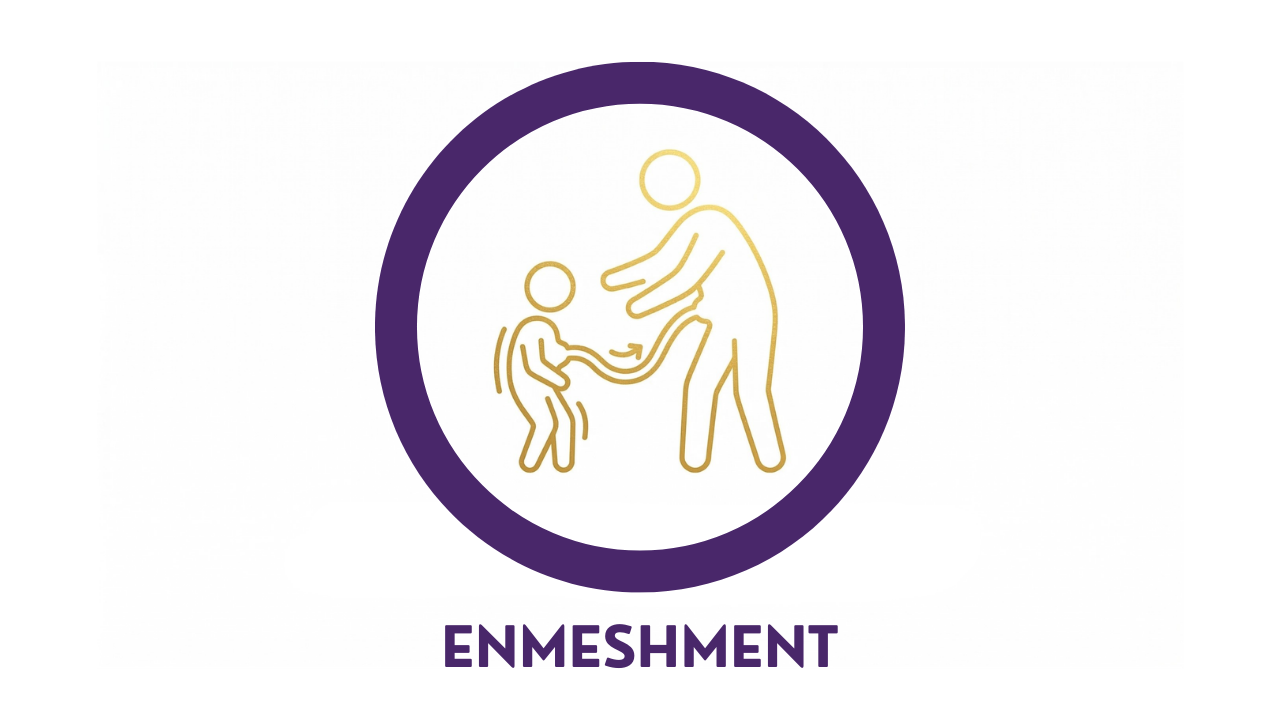
Here is how you know when someone is using you as their emotional dumping ground. They dump on you week after week, and they never once turn around and ask about you. That sends a very clear message, even though it is never said out loud:
“I don’t care about your feelings. You don’t matter. I need you. I want something from you. And if you’re not going to be available for that, we’re going to have a big problem — because don’t you realize you’re my emotional servant?”
That message is not overt. It is covert, delivered through actions. And remember: people are not their words. They are their actions. They can tell you how much they love you until they’re blue in the face. Do their actions support it? With these people, they never do.
The resentment my client was carrying was never irrational. It was the only part of her that had been reading the message correctly the whole time.
That’s you… feeling guilty for needing distance from someone who has never once asked how you are.
What’s Really Going On: Where Did You Learn to Absorb?
I asked my client, “Do these girls remind you of anyone from your childhood?”
Without hesitation: “Oh yeah. That’s my mom.”
She was reliving her childhood emotional blueprint — picking girlfriends who would use her as an emotional dumping ground exactly the way her mother did when she enmeshed with her as a child. Her brain and body had gotten addicted to it. That’s what happens in childhood: early emotional experiences create an emotional chemical addiction in the brain and body, and we repeat them until we heal them. It is familiar, so it feels like home. If this is your story with your mother specifically, the work on the maternal emotional blueprint goes deeper into it.
It starts when you are born into a family system where it was your job to be the emotional dumping ground. You were assigned it. Children have no emotional boundaries — none. A child cannot tell the difference between their own feelings and the feelings of the people around them. So a child acts like an emotional straw and a sponge. They suck it all in and soak it all up.
In the first seven years of life, we are in a theta brainwave state — the same state as hypnosis. There is no filter, no critical thinking, and no ability to refuse any of it. Whatever your parents couldn’t process emotionally got dumped directly into your body. Because my client’s mother didn’t have Emotional Authenticity Method™, her unresolved fear and sadness had nowhere to go except into her daughter. So the daughter learned a rule before she could form a sentence:
“My emotion is your emotion. My stress is your responsibility. My pain is your job.”
She couldn’t say no. It didn’t matter that it was too heavy, because saying so would have cost her the only connection she had with her mother. In enmeshed families, the umbilical cord gets reversed: it was meant to feed the child, and instead the parent draws emotional life out of the child to regulate themselves. These are the signs of enmeshment, and they almost always look like love from the outside.
Now here is the part almost nobody gets told. You are not actually absorbing other people’s emotions. When someone in a waiting room starts dumping on you, you are reactivating your own earliest childhood emotional memories in the presence of their distress. Your brain is a prediction machine. It takes the present moment and reaches back into your past to make sense of it. And if you haven’t done the healing work, your brain instantly goes: “Oh, this is Mom. It’s my job to take this on.”
So when your coworker starts unloading and your chest goes tight, that tightness is not their anxiety traveling across the room into you. That’s the mistake empaths make — they think it’s happening in the moment. What it actually is, is your own body at age two, five, seven, standing in your own kitchen, tracking whether the adult in front of you was about to come apart. That blueprint fires instantly because it is older than the language you have.
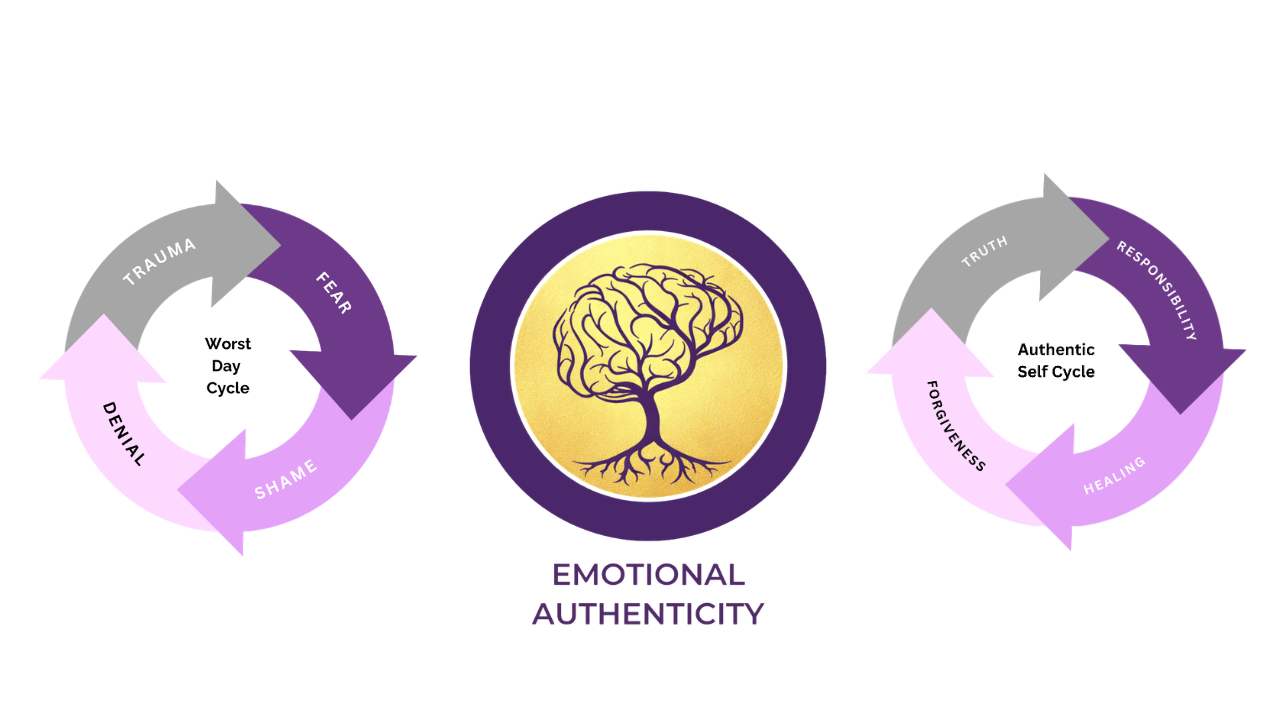
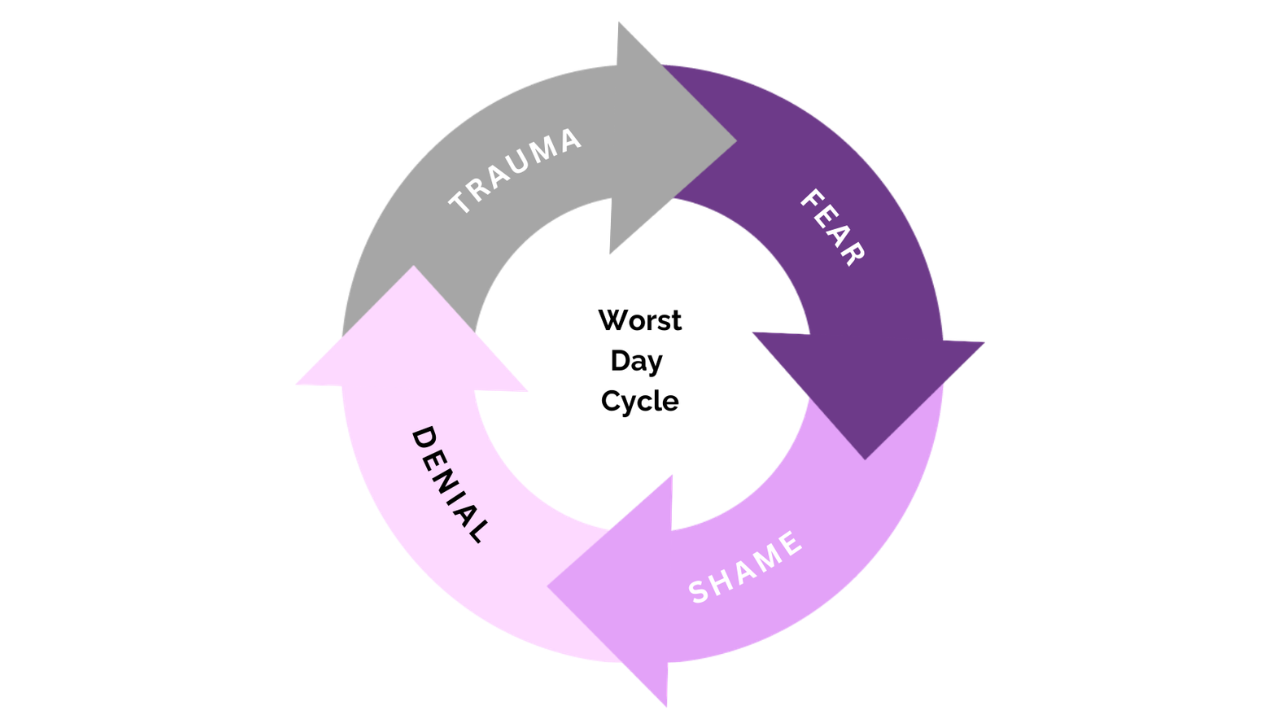 The Worst Day Cycle™™ by Kenny Weiss — trauma, fear, shame, and denial behind becoming an emotional dumping ground" width="600" style="max-width:100%;height:auto;" />
That is the Worst Day Cycle™, which I mapped in my first book, Your Journey To Success. It moves through four stages, and each one has its own job:
- Trauma is the original event — a home where somebody else’s emotional life took up all the available space.
- Fear shows up to keep you safe. You start scanning and you never stop, because a mood you don’t see coming could be used against you.
- Shame steps in to gain power over your helplessness. It tells you a story you can live with: “I’m deeply sensitive, and this is my gift.”
- Denial builds the wall. Those three feelings are so big that you construct a survival persona to carry them, and you call that persona “being a good listener.” That is your denial and self-deception protecting you from feeling how your parent wasn’t really there for you.
So the nodding, the never interrupting, the accepting all of their pain — that isn’t kindness anymore. It’s the last stage of the cycle, protecting you from the truth of what happened to you as a child.
And the research is catching up. A study published in Child Abuse & Neglect followed 249 adults and found that adverse childhood experiences don’t produce shame directly. What childhood adversity produces first is interpersonal sensitivity — the tendency to absorb other people’s emotions and feel overwhelmed around them — and it is that sensitivity that then generates the shame (Wojcik, Cox & Kealy, 2019). The absorption came first. The story you tell about yourself came second. That is the exact order of the Worst Day Cycle™.
That’s you… forty years old in a checkout line, five years old in your nervous system.
If you were the child who had to hold a parent together, this video walks through exactly how that role gets installed — and why it follows you into every friendship.

The deeper written breakdown of that role lives in parentification: when you were your parent’s parent.
Are You an Empath — or Were You Trained to Absorb?
This is the tough part, and I had to admit it about myself first.
We tell ourselves, and we tell others, that we’re sick and tired of people using us emotionally and never listening to us. But since we don’t set boundaries and don’t choose friends who reciprocate, we are actually using them just as much as they are using us. We use them by blaming them for not listening to us. And we do that so we never have to look at our childhood and heal how our parents taught us that our value and worth come only from being another person’s emotional dumping ground.
So instead of grieving the pain from the past, we take the position: “I’m so nice. I’m so kind. I’m so caring and empathetic. And they took advantage of me.”
Do you see why we do that? It gives us false power. It looks humble, but it functions as a superiority complex. It lets us be the good one in every story without ever once looking at the part we’re playing — how we are using them to be the parent we never had, so we never have to face the pain our parents made us carry for them.
That is exactly what I had to see in myself. I had been doing it for years, and I dressed it up as “I’m a caring, empathetic person.” The problem was me. It was never them. Just like that man at the barbershop. He isn’t the problem — unless I choose to become the problem by enabling him. I have control over that.
What the self-help world calls being an empath is most often severe codependence with no internal boundaries — usually built from enmeshment, early parentification, and over-responsibility. The experience is real. The overwhelm in crowded rooms is real. The exhaustion after certain people is real. The explanation is what’s wrong. The “gift” is hypervigilance, and the identity is the latest version of the survival persona — a label that turns a wound into a virtue, so you never have to grieve what actually happened. And when you call the wound a gift, you remove every motivation to heal it. You don’t seek treatment for a superpower.
To be fair to the research: twin and genetic studies estimate that roughly 28 to 35 percent of the variation in empathy is heritable (Warrier et al., 2017). That still leaves environment as the larger factor. And every one of those studies tests adults — people who have already spent decades absorbing their caregivers’ emotional patterns. Biology may give you a starting sensitivity. What you do with it is shaped by your childhood emotional blueprint. I wrote more about this in why being an empath is a trauma response.
A person with empathy can stay contained. They can identify with your situation without becoming your situation. The so-called empath becomes the situation, because there was never a boundary between their feelings and everyone else’s. That is the difference between containment and collapse.
That’s you… proud of how much you can carry, and quietly furious that nobody ever carries you.
This video goes deeper into the uncomfortable mirror between the “empath” and the people who use them.

The written version of that teaching is in covert narcissism and the empath mirror.
Why Doesn’t the Usual Boundary Advice Work?
If you have read anything about trauma dumping, you have probably been told some version of: tell them you don’t have the bandwidth, redirect them to a therapist, protect your energy, set a boundary. Here is why none of it has held for you.
“Protect your energy” treats the wrong problem. The empath industry hands you crystals, visualizations, and energy-clearing rituals to keep other people’s emotions out. But their emotions were never getting in. Your own childhood memory was getting activated. You cannot set a boundary around a wound you refuse to call a wound.
Scripts collapse when the guilt arrives. You can memorize the perfect sentence, but the moment someone you care about starts crying, the kid comes out and feels guilty. That guilt is not evidence that you’re doing something wrong. The guilt is the blueprint firing on schedule. A script without blueprint work is a paper wall in a windstorm.
Explaining yourself hands them exactly what they want. Most boundary advice tells you to explain your limits clearly. The moment you start explaining, you’ve been sucked back in. Now you have to negotiate it. Now there is a debate, and they are better at that debate than you are — because they have never had to stop talking.
Therapy that only validates your victim position keeps you stuck. If every session confirms that “they took advantage of you,” you leave feeling understood and you go right back to absorbing. Validation is a valuable starting place. It is not healing. Healing requires someone to also show you the part you are playing.
And most advice calls the absorbing “kindness.” It isn’t. When I sit in front of someone’s trauma dump, I am telling them by my presence that this is a workable way to get their needs met — which guarantees they will do it to the next person. I’m enabling them. And when I enable somebody else’s self-abuse, I’m no longer the kind one. I’m participating in it. It’s not only abusive to me, it’s abusive to them. Empathy requires truth. Excusing someone so they never have to take responsibility for their own pain is not empathy. It is enabling.
Wanting to fix someone feels like love, but underneath it is a backdoor insult: “You’re incapable. You can’t figure this out. Let me do it for you.” You didn’t save them. You kept them handicapped. True empathy says the opposite: “I trust you. I believe in you. I know you can run your own life.”
That’s you… spending six unpaid hours on someone else’s crisis and calling it generosity.
If you have always believed that rescuing people is how you love them, this video will reframe it from the ground up.

How Do You Respond to Trauma Dumping Without Being Cruel?
For a lot of people, what I do now is not what most people mean when they tell you to set a boundary. It doesn’t involve the word “no.” It doesn’t involve a confrontation. It involves something I call the Wall of Pleasantness.
A Wall of Pleasantness is a warm, mild, low-information response that declines to take on somebody else’s problem without ever having to tell them no. You acknowledge them. You empathize. And then you hand their problem back to them to fix. You are not agreeing to carry it. You are not arguing with them. And you are not explaining yourself.
With friends and acquaintances: match their speed, not their dump
There is a group of men I play tennis with. We’re friendly, and we go about 20 miles an hour emotionally — they know some emotional things about me and I know some about them. But I can tell they don’t have the emotional depth and comfort to go where my closest friend and I go. And that’s fine. Not everybody has to want to go deep. I enjoy them right where they are.
That is what I call the gas pedal. You share a little and watch what the other person does. Do they match your speed? A healthy relationship accelerates together. Someone who floors it to 80 and dumps their whole life story isn’t being open. They’re boundaryless — and that’s a red flag.
Sometimes one of the tennis guys will overshare and drop something heavy on me between points. I don’t match his overshare, because I know he doesn’t really want to go deep. He wants to emotionally puke. So I stay empathetic, but I don’t give myself away. Instead of the deep, thoughtful reply my old survival persona would have given, I say:
“Wow. That sounds really big.”
Or:
“I can see how frustrating that would be. But you seem like someone who’s really good at solving problems. I can’t wait until you come back and share with me how you did that.”
And then I let it sit.
Do you see what happened in both of those? I acknowledged that what he’s experiencing is big. I made it clear I listened. But I also let him know, politely, that there’s a boundary here. I’m not your problem solver. That’s your job. And underneath it is the healed version of the message he was sending me: “I trust you so much and believe in you so much that I’m going to let you solve your own problem.” I did all of it without one unkind word.
For the person who won’t let up
If someone keeps pushing, here is a second tool:
“Wow, that sounds like a lot to be carrying. I really hope you find the right person to help you work through all of that, because I know I wouldn’t be much help to you.”
You’re letting them know their request isn’t the problem — you know yourself well enough to know you don’t have the emotional reserves to take care of them. You’re not blaming them or trying to change them. You’re taking control of the only thing you have control of, which is yourself.
When I need it to be even plainer, I use the sentence I now say with ease: “I don’t have the emotional reserves for that.” It gives a reason located entirely inside me, so there is nothing in it to argue with. Nobody has to be wrong for the boundary to hold.
With strangers: keep the gas pedal at zero
Back at the barbershop, I kept looking straight ahead. I didn’t acknowledge him. I let it be awkward. And I’ll be honest — my first reflex was still the codependent one: “Oh, this is rude.” The pull doesn’t disappear in recovery. It gets overruled. I told myself: I’m going to keep my emotional gas pedal at zero, because today I don’t have the emotional reserves for this man’s pain and loneliness. My emotional brake was fully on. The keys were out of the ignition. My codependence car wasn’t going anywhere.
With a stranger, the boundary is often not a sentence you say. It’s the sentence you decline to say. The one nod is the whole cost of admission.
Never make it about them
The greatest boundary lesson I ever learned is to make every boundary about me — my morals, my values, my needs, my wants — instead of “you have to change.” The moment you say “you always,” “you never,” or “you keep doing this,” people feel attacked, and now you’re in a fight. “That doesn’t work for me” can’t be argued with. “You’re too much” can.
When you stop being everybody’s emotional dumping ground, something beautiful happens. You’re not hoarding your emotional reserves. You’re conserving them for the two or three people in your life who will actually reciprocate. The people who only ever wanted to use you emotionally will quietly drift away. And the ones who are left are the ones who actually wanted to be your friend all along.
That’s you… finally saying “wow, that sounds really big” — and noticing the world didn’t end.
How Do You Rewire the Blueprint That Makes You Absorb?
The Wall of Pleasantness is the tool. It holds only when the blueprint underneath it changes. Getting out takes two things: the Authentic Self Cycle™ and the Emotional Authenticity Method™.
The Authentic Self Cycle™
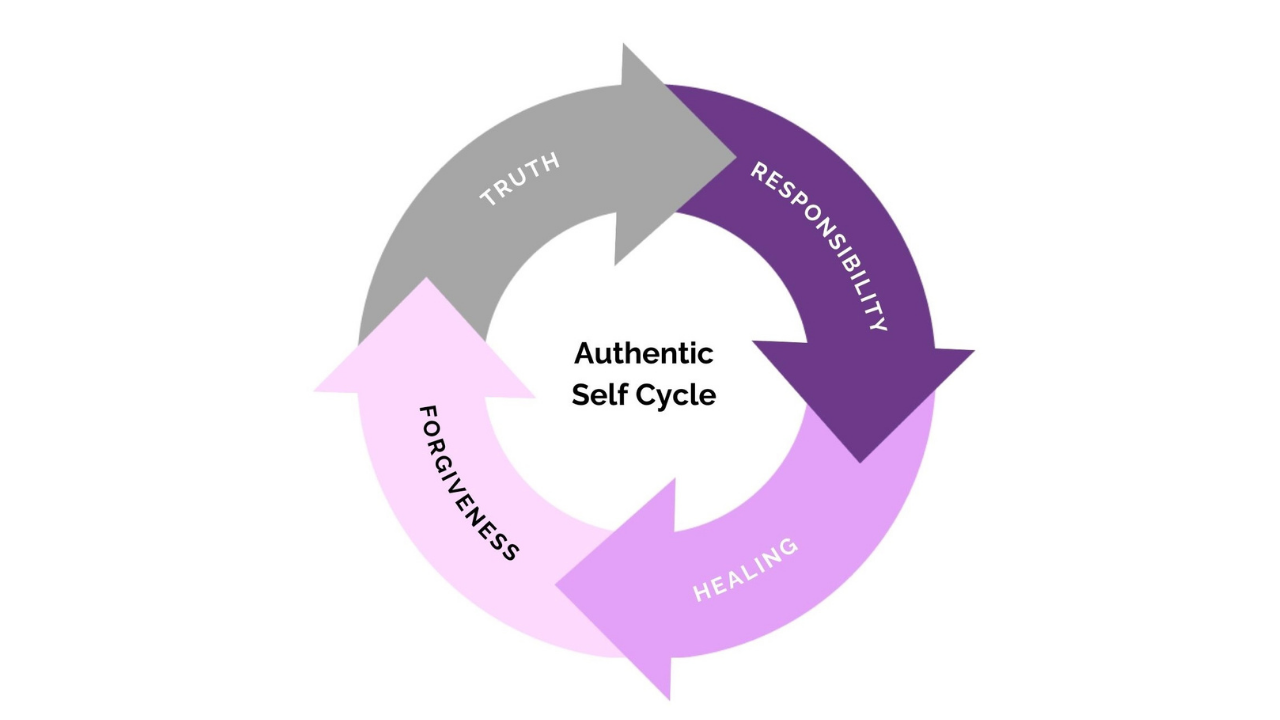
The Authentic Self Cycle™, which I wrote about in my latest book, Your Journey To Being Yourself, is the corrective path out of the Worst Day Cycle™. It moves through four stages:
- Truth. Admitting to yourself that you’re not a “good listener.” You are an emotional absorber, stuck in your Worst Day Cycle™ — and staying in that blueprint without healing it is abusive to yourself and to other people. Truth watches actions, not words. Stop listening to what these people say about how much you mean to them, and start counting how many times they’ve actually asked a real question about you this year.
- Responsibility. Not blaming yourself. Recognizing that you built a brilliant survival persona that genuinely saved your life as a child — and that now it’s your job to become the parent for yourself that you would have liked your parents to be for you.
- Healing. Putting a plan in place to develop the skills and tools of emotional authenticity and codependence recovery, so you can remap and rewire the emotional blueprint at the root instead of managing symptoms for the rest of your life.
- Forgiveness. When you do the first three, forgiveness comes naturally, in both directions — for the parents who trained you to be this way, and for yourself, because how could you have known this was done to you?
The Emotional Authenticity Method™
For the healing stage, here are the six steps of my Emotional Authenticity Method™. There is much more to the codependence recovery process, but this will have a profound impact right away. Use it as often as possible — and every single time somebody starts unloading on you and you feel yourself going quiet and wanting to lean in and accept it.
Step 1 — Somatic Down-Regulation. Take 30 to 60 seconds and focus on what you can hear around you. Longer is better — the longer you do it, the lower your emotional thermostat goes. This moves you into metacognition, the space between thinking and feeling, and opens the door to your Authentic Self. You will never find your truth inside a dysregulated body still running the old blueprint. If you’re highly activated, titrate: let the feeling come back up, hold it for 30 to 60 seconds, then return to listening. Repeat three to five times.
Step 2 — What am I feeling right now? Get precise. Not “bad.” Maybe it’s trapped. Resentful. Invisible. Smothered. Can you feel the weight of those? Each of them leads straight back to an original moment, because feelings are learned in childhood. Then ask the second half of the question most people never ask: “Is this feeling actually mine, or did I take it on as a child?”
Step 3 — Where in my body do I feel it? Emotional trauma is stored in the body. Locating it further down-regulates you, and feeling the first time somebody handed you something too heavy to hold is critical to turning this around.
Step 4 — What is my earliest memory of having this exact feeling? This is where, for the first time, you see the truth: you are not an empath who absorbs people’s emotions in the moment. You were a child with a dysregulated parent who couldn’t handle their own emotions, who enmeshed with you, and you swallowed all of it. This is where your Worst Day Cycle™ was created, where your survival persona was born, and where you installed the strategy of being the one who listens and never asks for anything in return.
Step 5 — Who would I be if I never had this thought or feeling again? What would be left over? Ask it specifically: “Who would I be if I never again had the feeling that other people’s problems are my responsibility?” You’d feel lighter. Freer. No longer invisible, engulfed, smothered. This is the first time you get to see who you are without the pain that was placed into you. That is your Authentic Self — who you were before you were made to carry your parents’ perfect imperfections.
Step 6 — Feelization. Now go back through the actual moments. The 90-minute phone call where you didn’t say a word. The dinner where you never got to speak. The friend who cried on your couch for three hours and left without asking you one question. Activate your Authentic Self and feel yourself responding from this new place. What would you say? What would you do? Sit in that feeling and make it as strong as possible, because that’s how you build a new, healthy emotional chemical addiction to replace the old trauma-filled one. Run these scenarios until the new blueprint is what fires first.

That’s exactly how I figured out how to handle the man at the barbershop. I asked: what would my adult Authentic Self do in that moment to be loving to me and loving to him? And that became my new emotional blueprint strategy. Look straight ahead. I’m not a bad person. It is not my job to take care of a stranger I know nothing about. That’s his responsibility. The most loving thing I can do is not enable his self-abuse, and let him meet the consequences of choosing not to heal his own childhood pain. If I step in and do that work for him, I’m adding to the abuse he already suffered as a child. My Authentic Self doesn’t like to be abusive. So I run my new emotional blueprint.
That’s you… feeling lighter for the first time, and realizing the weight was never yours to begin with.
Where Does Trauma Dumping Show Up in Real Life?
Family
Your mother calls to unload about your father, your sister, her health, her neighbor — and hangs up without asking a single question about your life. Your brother calls every day “to check in,” which really means he needs a place to set his anxiety down. You’ve been the family’s emotional switchboard since you were six. That’s you… still answering on the 18th ring because not answering feels like a crime.
Romantic
Your partner comes home and pours the whole day onto you — the boss, the traffic, the injustice — and you absorb it, soothe it, fix it. Then you try to share your day and watch their eyes drift to their phone. You don’t say anything, because you’re “the strong one.” The resentment builds quietly until one day it comes out sideways. That’s you… being your partner’s therapist and wondering why you feel so alone in your own relationship.
Friendships
The friend who only calls in crisis. The dinner that turns into a three-hour monologue. The long, beautiful text that arrives the week you start pulling away. You leave every conversation exhausted and can’t explain why, because nothing “bad” happened. That’s you… surrounded by people who know everything about their own lives and nothing about yours.
Work
You’re the coworker everyone vents to. The manager whose door is always open. The one who gets pulled aside “for just a second” that turns into 40 minutes. You hear yourself say, “I don’t want to be his therapist — I’ve got my own stuff,” and then you sit there and listen anyway. That’s you… doing a second, unpaid job as the office’s emotional dumping ground.
Body and Health
The tight chest when someone starts unloading. The exhaustion after social events that no amount of sleep fixes. The jaw you clench while nodding. The headaches, the gut, the shoulders that live up near your ears. Your body has been keeping score of every emotion you were never allowed to hand back. That’s you… calling it “being drained by people’s energy” when it’s your own nervous system running a childhood alarm all day long.
Your Next Small Step
Don’t try to rebuild every relationship this week. Start here: the next time someone begins unloading on you, notice the pull to lean in. Then say one sentence: “Wow. That sounds really big.”
And then say nothing else. Let it sit. Feel how uncomfortable it is. That discomfort is the old blueprint losing its grip. Afterward, find a quiet moment and run Step 1 of the Emotional Authenticity Method™ — 30 to 60 seconds of listening to the sounds around you — and ask: “Is what I’m feeling right now mine, or did I take it on as a child?”
One sentence. One pause. One honest question. That’s how the rewire begins.
Go Deeper: Kenny’s Books
Your Journey To Success
If this article hit home, the book goes deeper.
Everything I write about on this site — the Worst Day Cycle™, your childhood emotional blueprint, why you keep repeating the same patterns no matter how hard you try — it all started with my first book, Your Journey To Success: How to Accept the Answers You Discover Along the Way.
This is the book readers call “the first time I found a roadmap I could actually understand and that seemed attainable.” It is the book that walks you through WHY your life hasn’t changed despite all the work you’ve done — and shows you, step by step, exactly how to break free. No fluff. No motivational hype. Just the truth about what was done to you, why it stuck, and what to do about it.
If you’ve read this far, you already know something needs to change. This book is where that change starts.
Get Your Journey To Success on Amazon →
Your Journey To Being Yourself
Ready to stop understanding the problem and start rewiring it?
The article you just read scratches the surface. My new book, Your Journey To Being Yourself: How to Overcome the Worst Day Cycle & Reclaim Your Authentic Self with Emotional Authenticity, gives you the complete system — the Worst Day Cycle™, the Authentic Self Cycle™, and the full Emotional Authenticity Method™ — all in one place, with the neuroscience behind every step.
This is the book readers call “a genius piece of art in mastering emotion and the art of healing.” It speaks directly to the person who feels stuck, overwhelmed, and confused by the same repeating patterns — the same arguments, the same relationship breakdowns, the same shame — and is done accepting surface-level answers. Every chapter combines powerful stories, clear steps, and practical tools that show you how to rewire your emotional patterns from the inside out.
You are not broken. You were programmed. And this book shows you exactly how to rewrite the program.
Get Your Journey To Being Yourself on Amazon →
FAQ
What is trauma dumping?
Trauma dumping is unloading heavy emotional pain onto someone who never agreed to carry it, without checking their capacity and without reciprocity. The person isn’t sharing to connect — they are discharging into whoever is in front of them. It usually happens repeatedly, and the listener walks away drained while the person dumping walks away lighter.
What is the difference between trauma dumping and venting?
Venting is invited, paced, and mutual: both people get to share, and each one checks whether the other has room. Trauma dumping has none of those three. The clearest test is actions over words — if someone unloads on you week after week and never once asks about your life, it is a one-way street, no matter how close they say you are.
Why do people always trauma dump on me?
People who grew up being a parent’s emotional support become recognizable to people looking for a receptacle. As a child, absorbing a parent’s emotions was your job and the price of connection, so as an adult you nod, never interrupt, and never redirect. That posture is legible to strangers. Recovery doesn’t erase the history, but it changes how you respond when it gets recognized.
How do you respond to trauma dumping without being rude?
Use a Wall of Pleasantness: a warm, low-information response that acknowledges the feeling and hands the problem back. Examples: “Wow, that sounds really big,” or “I can see how frustrating that would be, but you seem like someone who’s really good at solving problems.” Then let it sit. Don’t explain or justify yourself — explaining reopens the negotiation.
Is trauma dumping a form of manipulation?
Often, yes — though usually not a conscious one. The person is using another human as a container for loneliness and pain they haven’t learned to process, and pleasantness is frequently the delivery mechanism because it removes your permission to object. Generosity can be part of it too: meals and long warm texts can create a debt that gets called in the moment you try to pull away.
Am I an empath, or am I codependent?
The experiences people describe as being an empath — overwhelm in crowds, sensing moods instantly, exhaustion after certain people — are real. Most often, though, they come from severe codependence with no internal boundaries, built through enmeshment and parentification. You are not absorbing other people’s emotions. You are reactivating your own childhood emotional memories in the presence of their distress. Genetics may contribute some starting sensitivity, but environment remains the larger factor.
Is it selfish to stop listening to a friend’s problems?
No. Sitting through someone’s repeated emotional dumping tells them, by your presence, that this is a workable way to get their needs met — which keeps them stuck and guarantees they’ll do it to the next person. Declining the role is the more loving act for both of you. It conserves your emotional reserves for the people who reciprocate, and it hands the other person back their own competence.
How do I stop absorbing other people’s emotions?
Down-regulate first: spend 30 to 60 seconds focusing on what you can hear. Then name exactly what you feel, ask whether it’s yours or something you took on as a child, find it in your body, and trace it to your earliest memory of that feeling. Those steps come from the Emotional Authenticity Method™, which rewires the childhood blueprint instead of trying to block other people’s “energy.”
The Bottom Line
You were never really a “good listener.” You were a child whose survival depended on standing in front of somebody else’s pain and swallowing it — and you got so good at it that the whole world started to notice.
You’re not to blame, and you are not broken or the problem. You did the best you could with the information you had at the time. But now you know more. You know about the Worst Day Cycle™, the Authentic Self Cycle™, enmeshment, codependence, the Wall of Pleasantness, and the Emotional Authenticity Method™. You can choose to equip yourself with the knowledge, skills, and tools to do something different.
Don’t forget: you were emotionally programmed. And with emotional authenticity, emotional programs can be rewritten.
That’s you… finally being asked “how are you doing?” — by the one person who should have been asking all along: you.
Recommended Reading
- Facing Codependence — Pia Mellody. The foundational map of how childhood creates adults with no internal boundaries — the clinical root of chronic emotional absorption.
- How Emotions Are Made — Lisa Feldman Barrett. The neuroscience behind why your brain is a prediction machine — and why the tight chest when someone unloads on you is your own past being predicted forward, not their emotion entering you.
- The Body Keeps the Score — Bessel van der Kolk. Why the tight chest and exhaustion after someone unloads on you are stored childhood experience, and why healing has to include the body.
- Complex PTSD: From Surviving to Thriving — Pete Walker. The clearest description of the fawn response — the survival strategy behind the person who can never say no to someone else’s pain.
Where to Go From Here
If you’re ready to stop being everyone’s emotional dumping ground — without becoming cold, cruel, or closed off — here is the path, in increasing depth. Begin where you are.
- Free — Feelings Wheel exercise: The vocabulary for Step 2. When all you can find is “drained,” this is how you locate the trapped, invisible, smothered feeling underneath. kennyweiss.net/life-changing-exercise
- Emotional Blueprint Starter Course — Individual ($79): Map the childhood blueprint that trained you to absorb. kennyweiss.net/individual-starter-course
- Emotional Blueprint Starter Course — Couples ($79): If one of you is always the dumper and the other is always the container, start here together. kennyweiss.net/relationship-starter-course
- Why We Can’t Stop Hurting Each Other ($479): The deep dive into how one person’s unloading and the other’s silent absorbing feed the same cycle. kennyweiss.net/why-we-cant-stop-hurting-each-other
- The Avoidant Partner And The One Who Loves Them ($479): For the one who absorbs everything until they go numb and shut down. kennyweiss.net/shutdown-avoidant-partner
- Why High Achievers Fail at Love ($479): For the one everyone leans on at work and at home — who has never once leaned back. kennyweiss.net/why-high-achievers-fail-love
- Tier 1: Mapping Your Blueprint ($1,379): The full deep work — the system Kenny uses with private clients to rewire the blueprint at the install point. kennyweiss.net/mapping-the-blueprint-tier-1
You don’t have to stop caring. You get to stop carrying.